With it being Women’s History Month, I thought it was the perfect time to launch my new series. My Monarch of the Month series has focused on different monarchs- both British and otherwise. This series is going to be focusing on a different consort each month, from different kingdoms and time periods. So often these women are forgotten for their husbands, and they led equally fascinating lives. We may not know quite as much about these women, but I am hoping to shed some light on them. Let’s dive into our first Consort of the Month: Eugenie of France.
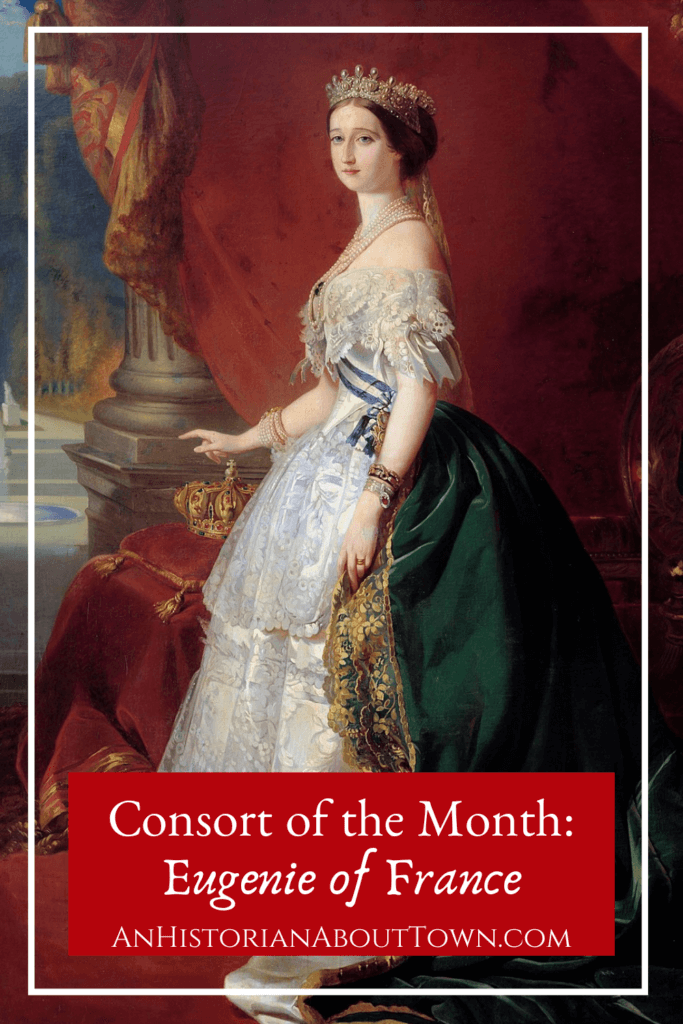
Consort of the Month: Eugenie of France Fast Facts
Birth Date: 5 May 1826
Death Date: 11 July 1920
Tenure: 30 January 1853 – 4 September 1870
Birth Name: María Eugenia Ignacia Agustina de Palafox y Kirkpatrick
Spouse: Emperor Napoleon III of France
House: Bonaparte (by marriage)
Father: Cipriano de Palafox y Portocarrero, 8th Count of Montijo
Mother: María Manuela Kirkpatrick de Grevignée
Why Do We Know Empress Eugenie of France?
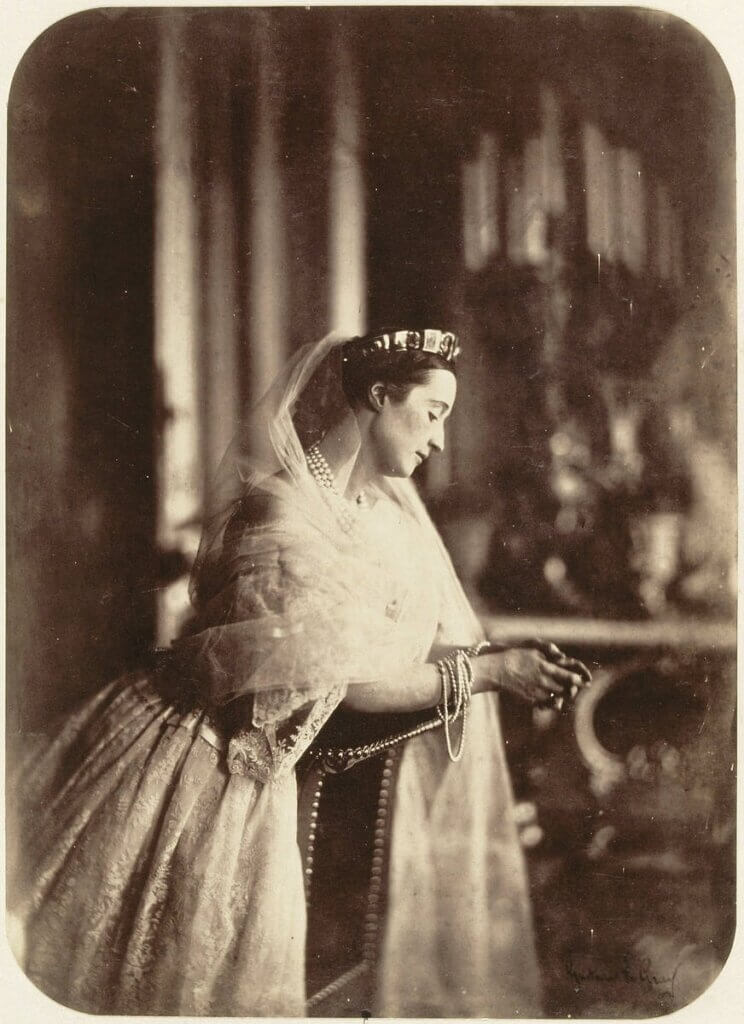
Many people do not actually know who Empress Eugenie of France was. If they do, it is often because of her close association with Charles Frederick Worth and the House of Worth. She also was the subject of several Winterhalter paintings that are incredibly popular. (You’ve probably seen her and not realised it was her!)

Empress Eugenie’s Early Life
María Eugenia Ignacia Agustina was born in May 1826 in Granada, Spain to Don Cipriano de Palafox y Portocarrero and María Manuela Enriqueta Kirkpatrick de Grevignée. Her father had several titles, including the Duke of Peñaranda de Duero. Eugenie’s elder sister, known to the family as “Paca” inherited most of their father’s title, meaning Eugenie would need to look elsewhere.
Eugenie was educated like many aristocratic girls in the nineteenth century; she was educated at various times in Spain, France, and England. (More on that below!) She was an outgoing and active girl, something that would stay with her for the rest of her life.

Escaping Spain
The First Carlist War began in 1833. The civil war spread across Spain and in July 1834, the war was very close to home for Eugenie and her family. After witnessing a riot outside of their home, Maria chose to take her daughters to Paris to avoid further bloodshed. (Looking back, it does seem somewhat ironic to choose to flee to France to avoid war, but hindsight is always 20/20.)
Much of Eugenie’s education took time in this period. She studied at the Covent of the Sacré-Coeur in Paris. Although it was popular with those high in society, it perhaps was not the best fit for the athletic young woman. She then moved to the Gymnase Normal, Civil et Orthosomatique which allowed her to explore her less academic interests. In 1837, Paca and Eugenie attended school in Bristol. However, Eugenie was bullied for her red hair and attempted to run away to India, though it was unsuccessful. The pair finished their education back in Paris, under English governesses.
Marrying the Emperor
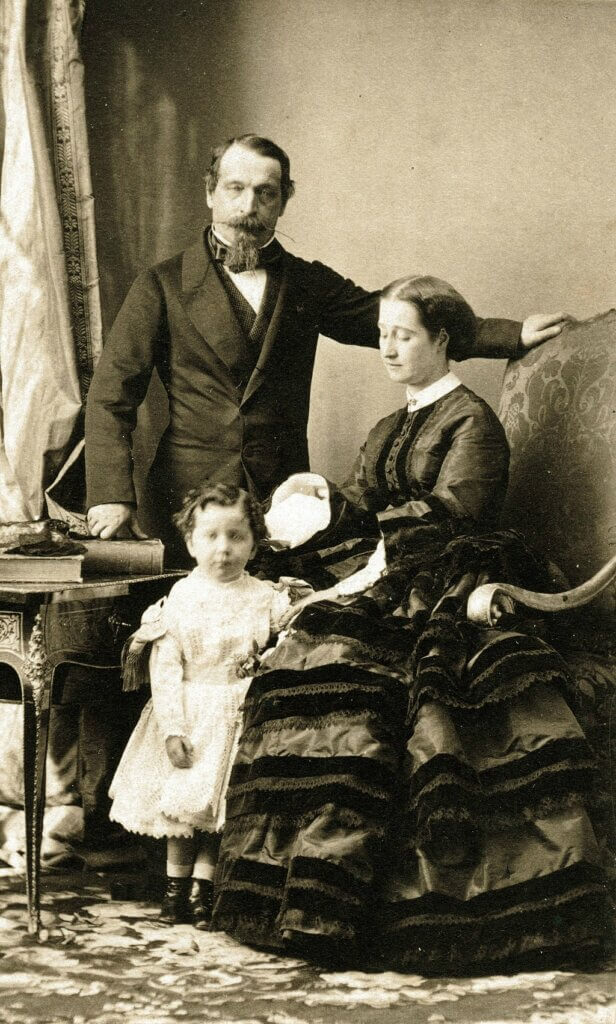
In 1849, Eugenie met the then-Prince-President of the Republic, Louis-Napoleon Bonaparte. It was reported that he was immediately taken with the beautiful aristocrat, but the sentiment was not shared. However, he continued to pursue her, and by 1853, he announced their engagement.
By this time, France once again was an empire, meaning that the Prince-President was now Emperor Napoleon III. Many in the government, in society, and elsewhere considered the match a poor choice. Eugenie was considered a minor aristocrat by many, and at this time, royal marriages were very much political tools.
Eugenie had a miscarriage in 1853 that left her nervous about pregnancy and childbirth (understandably). In 1856, she trialled through two days of a complicated labour and both she and her son survived. Prince Imperial Louis-Napoleon would be their only child. The Empress found sex disgusting and difficult to bear; after their son’s birth, Napoleon sought intimacy elsewhere.

Moving Through Society With Style
Although many questioned their union, Eugenie was excellent in her role as Empress. She supported her husband wholeheartedly; she travelled abroad to represent him and acted as regent in France during his absences. Interestingly though, she was far more conservative than her husband and disagreed with several of his choices. Eugenie believed in the right of hereditary monarchy, and thus would try to offer any help possible to those monarchies being challenged (or abolished).
The Empress was also a notable social figure. She regularly hosted salons, attended society events, and was at the ballet and the opera regularly. She was a patron of the arts, and established the Musée Chinois at the Palace of Fountainbleu.
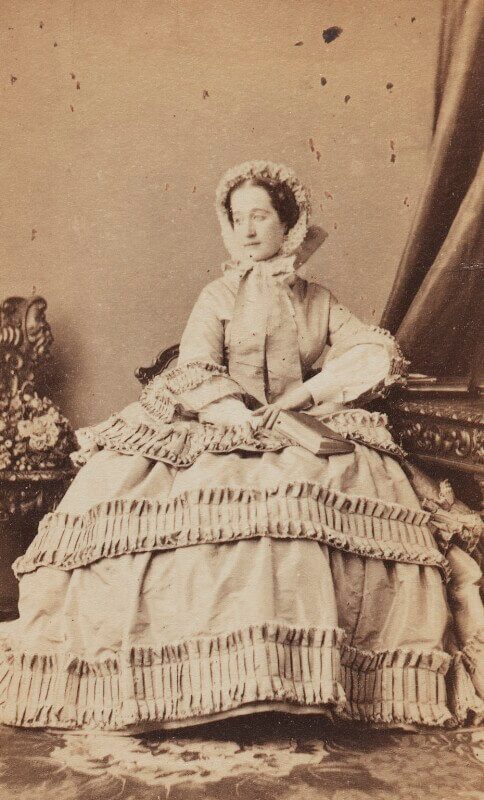
As I mentioned above, Eugenie is largely remembered for her close relationship with Charles Frederick Worth and his eponymous fashion house. Worth dominated fashion in the second half of the nineteenth century, and this place was cemented largely because of the Empress’ support. She was known as the “Queen of Fashion” across Europe, and fairly earned that title.
A Former Empire
In what I’m sure has been the subject of many PhD theses and entire careers, the Second Empire was overthrown when the French lost the Franco-Prussian War. Eugenie held strong anti-Prussian views and was thus closely associated with the losses.
The former Imperial family fled to England, and they spent much of their time in Kent. Napoleon died in 1873, and Louis-Napoleon died in battle in 1879 while fighting for the British in the Anglo-Zulu War. After losing her husband and her son in a relatively short span, her health deteriorated. She then spent much of her time travelling around the United Kingdom to different spa towns.
Remaining Royal
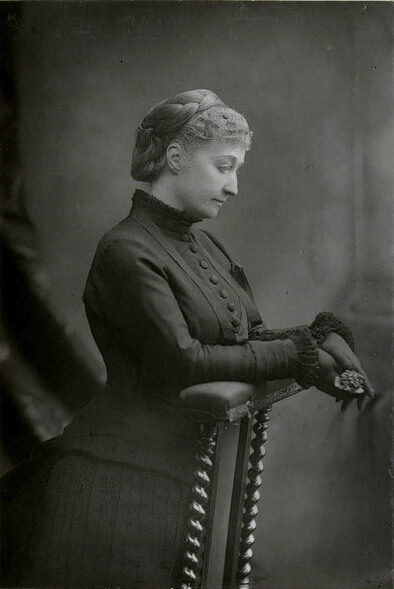
Although she no longer was Empress of France, Eugenie did remain close to her royal friends and relatives across Europe. She was made godmother to the future Queen Victoria Eugenia of Spain, and enjoyed a close relationship with Alexandra Feodorovna, the last Russian Empress. Eugenie did not pass away until 1920, meaning that she saw the downfall of several different monarchies after her own.

Eugenie of France: Interesting Facts
-Eugenie was fascinated by Marie Antoinette which seems a rather tragic instance of foreshadowing.
-She was considered to have a strong influence over the overthrowing and execution of Emperor Maximillian I of Mexico.
-Eugenie set the style for bustles in the 1860s when she quickly adopted Worth’s new style.
-The Empress’ memoirs survive, and you can read much of her own correspondence and journals still.
Further Readings on Empress Eugenie of France
“Eugénie De Montijo.” Palace of Versailles, February 17, 2023. https://en.chateauversailles.fr/discover/history/great-characters/eugenie-montijo.
Geraghty, Anthony. The Empress eugénie in England: Art, Architecture, Collecting. London: The Burlington Press, 2022.
Seward, Desmond. Eugénie: The Empress and Her Empire. Stroud: Sutton, 2005.
♠
Looking for my earlier Monarch of the Month posts? Read about:
Mary I
Anne
Edward the Confessor
William IV
Edward IV
James I
George V
Mary, Queen of Scots
George IV
Henry VII
Mary II
James II
Edward VII
George III
George I
Louis XIV of France
Elizabeth I
Catherine the Great
Edward VIII
Charles I
George VI
Victoria
Elizabeth II
I hope you have enjoyed our first Consort of the Month: Eugenie of France!
Cheers,
The Historian
Facebook | Twitter | Instagram | Pinterest

.jpg)


