I knew that I wanted to focus on a female monarch for Women’s History Month, and I had a few different options. I specifically chose Queen Mary II because she really gets no attention. Queen Anne has come into the spotlight in the last few years with The Favourite, and Queen Victoria is always popular. (And I think it goes without saying, the Tudor Queens are ALWAYS at the top of people’s lists.) However, Mary’s life and reign deserve our attention, too- she played a pivotal role in British history. Let’s get into our Monarch of the Month: Queen Mary II!

Monarch of the Month: Mary II Fast Facts
Birth Date: 30 April 1662
Death Date: 28 December 1694
Reign: 13 February 1689- 28 December 1694
Coronation Date: 11 April 1689
Predecessor: James II
Successor: William III
House: Start
Father: James II
Mother: Lady Anne Hyde
Spouse(s): William III (co-monarch; House of Orange)
Why Do We Know Mary II?
The short answer? We don’t. She is most often grouped together with her husband and co-monarch, William III. (You will notice that in a lot of secondary sources, they are often studied together and considered one.) However, when you search “Queen Mary II”, you will are inundated with results for “Queen Mary 2”, an ocean liner built to replace another ocean liner named after Queen Mary of Teck. And it is fairly unfortunate that Mary isn’t really known, because her life was fascinating (and tragic).
Queen Mary II’s Early Life
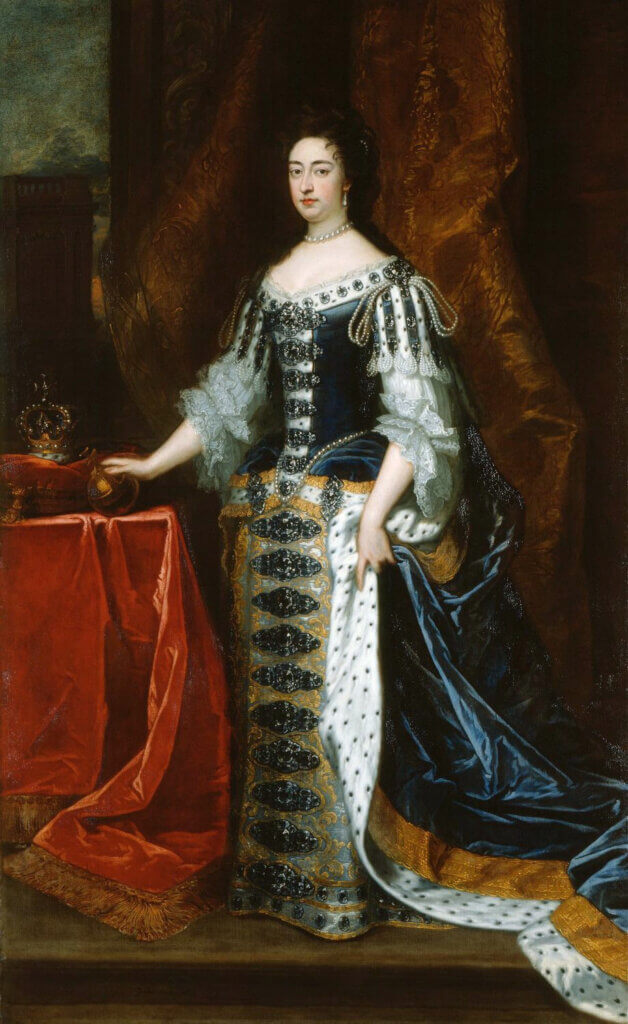
Mary was born on 30 April 1662 at St. James’s Palace in London, to James, Duke of York and his wife, Anne Hyde. They had met while living in exile in the Netherlands, and had conceived their first child (who died in infancy) out of wedlock. It was because of this and Hyde being a commoner that people disapproved of the marriage, but upon the monarchy’s restoration in Britain, they returned as the Duke and Duchess of York. She was baptised as an Anglican, but despite her parents converting to Catholicism, Mary remained an Anglican for the rest of her life under the direction of her uncle, Charles II. She was second in line to the throne after her father.
Like many other royals of the period, Mary was educated by a private tutor, and learned dancing, drawing, music, and French, in addition to religious education. She was very close friends with Frances Apsley, and carried on a lengthy correspondence with her. Apsley was concerned about the passionate tone of the correspondence, and distanced herself.

William III of Orange
When Mary was told that she was engaged to William III of Orange (Stadtholder of Holland), she was not happy about it, and apparently wept for days. They were married at St. James’s Palace on 4 November 1677, and were a bit of a mis-matched pair. He was approximately 5’6” and 27 years old, she was 15 and almost 6’ tall: he was soft-spoken and shy, while she was light-hearted and easy-going. They set out for the Netherlands, and on 14 December 1677, they formally entered the Hague.
They quickly made a new life together and were quite happy. Although William was away on military campaigns quite often, Mary conceived quickly. Sadly, she miscarried and it is thought that the miscarriage caused permanent damage- the couple never had any children. Still, Mary was adored by the Dutch people for her wonderful temperament, and the British loved their Protestant princess.
James II and the Glorious Revolution
Upon her uncle’s death, her father became King James II/VII, thus making Mary the heir presumptive. Being a Catholic, James sought to spread religious freedom and tolerance across Britain, largely by suspending Acts of Parliament that punished non-Anglicans. Mary was against these actions, and so was most of Parliament. James’ second wife, the Catholic Mary of Modena gave birth to a son in 1688, meaning that there was a Catholic heir to the throne.
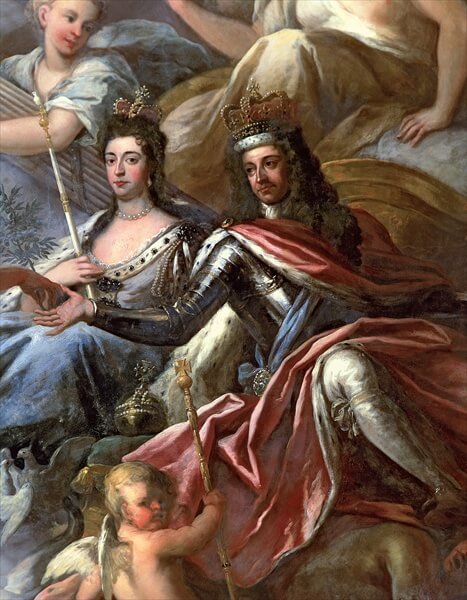
The Immortal Seven, a group of leading English politicians, went to the Netherlands and delivered a letter to Mary and William, asking him to invade England and depose James. William was originally unsure because of his lower position in the Line of Succession, but he was convinced- they would be offered the Crown together. He left to invade and Mary followed a few months later. She was torn between her husband and her father; she thought that her husband was the better option for Britain, though. On 13 February 1689, after James fled, the Crown was formally offered to William and Mary. Their coronation followed in April.
A New Britain?
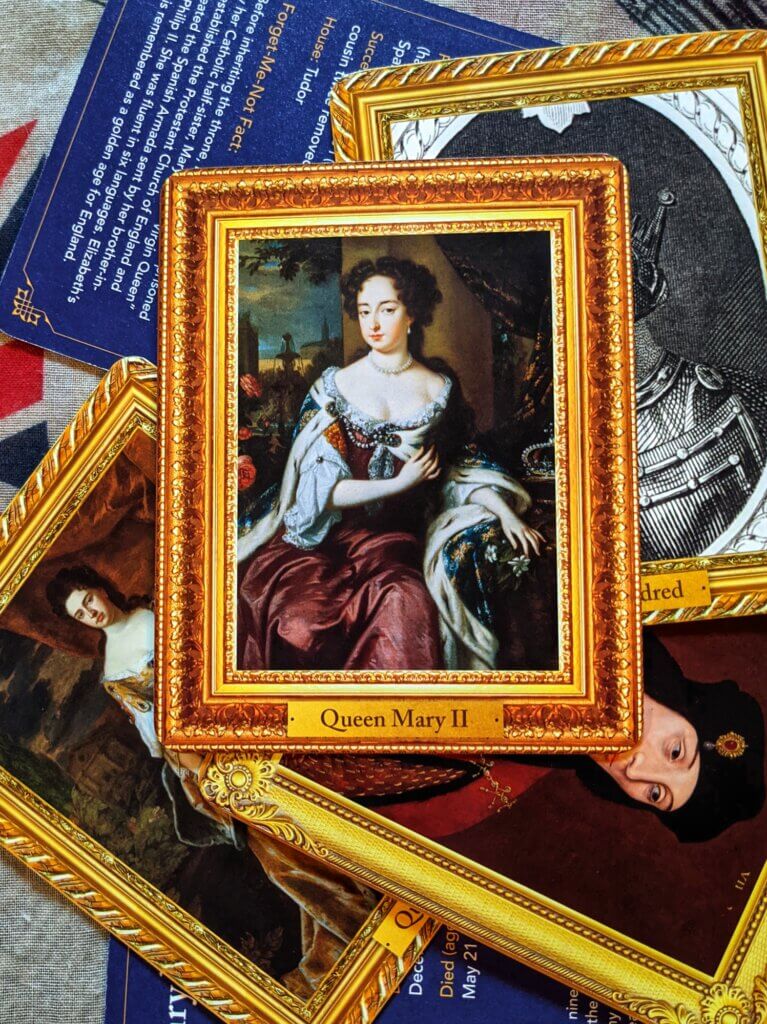
In December 1689, Parliament passed the Bill of Rights- it crucially limited the royal prerogative, and confirmed Parliament’s power. The Monarch could no longer raise a standing army during peacetime or levy taxes without first having Parliament’s consent, among many other things. It also confirmed that the succession would pass through William and Mary’s line, meaning that it would pass to her sister Anne and her heirs rather than reverting back to James’ Catholic line.
Mary was fairly independent, as William was away on military campaigns much of the time. From 1690 to 1692, he fought Irish Jacobites in Ireland, and afterwards waged several campaigns against France. She had both her uncle, Henry Hyde, and the Duke of Marlborough arrested for plotting to restore James to the throne, and her popularity fell. Although she was close with her sister in their childhood, they had drifted apart and Mary hated Anne’s friendship with the Duchess of Marlborough. After a long separation, Mary went to visit Anne after a difficult birth and she didn’t comfort her, but rather criticised her friendship with Sarah- the sisters never saw each other again.
An Unexpected Virus
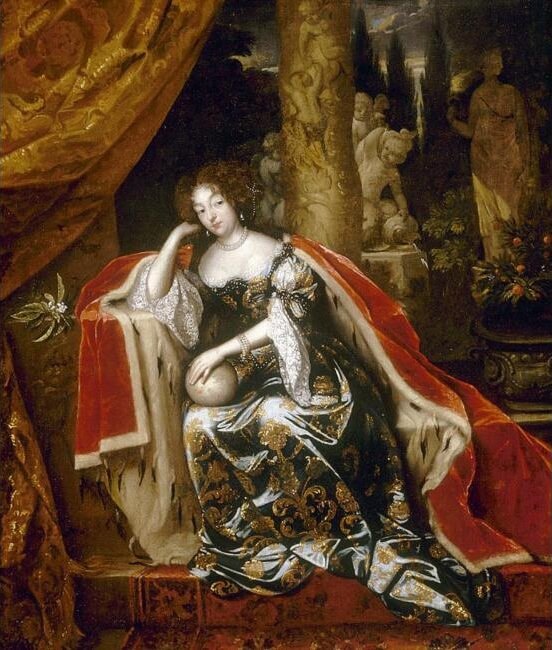
Mary was a healthy person- she regularly walked between Kensington Palace and Whitehall, and was in far better health than both her husband and her sister. In late 1694, she contracted smallpox. At first, she thought she was improving as the lesions disappeared, but the virus was reaching its final and fatal stage. Mary died at the age of 32, early in the morning of 28 December 1694 at Kensington Palace. William was devastated, and swore that he would remain miserable for the rest of his life.
Mary II: Interesting Facts
– Mary was named after her Stuart ancestor, Mary, Queen of Scots!
– She adored pugs (like our current Queen loves corgis), and she actually started a craze for pugs in England.
– Kensington Palace became what we now know it as because of Mary and William- they wanted a house in the country, and the then-Kensington House was their choice. Sir Christopher Wren was commissioned to enlarge the palace, and now the Queen’s Apartments are the oldest surviving part of Kensington.
– Mary and her husband were the first (and only to date) co-monarchs in Britain.
– In addition to picking up several languages while living on the Continent, Mary also learned how to ice skate.

Further Readings on Mary II
Keates, Jonathan. William III and Mary II: Partners in Revolution. London: Allen Lane, 2015.
Chapman, Hester W. Mary II: Queen of England. Westport, CT: Greenwood Press, 1976.
Rex Factor Podcast. William and Mary (Glorious Revolution) episode
Looking for my earlier Monarch of the Month posts? Read about:
Mary I
Anne
Edward the Confessor
William IV
Edward IV
James I
George V
Mary, Queen of Scots
George IV
Henry VII
Were you familiar with Queen Mary II?
Cheers,
The Historian
Facebook | Twitter | Instagram | Pinterest | Bloglovin’