With it being Women’s History Month, I made an executive decision to feature another female monarch for my Monarch of the Month series. (Back to random drawing next month!) I put all remaining female monarch flashcards and randomly drew… Queen Anne! Despite The Favourite garnering media attention in the last year and a bit, most people don’t know much about Anne. Well, I’m here to change that! This post is all about her early life, adulthood, reign, and what you really need to know about the key players in her life. Without further adieu, our second Monarch of the Month: Queen Anne!

I will admit, I was quite excited to cover Anne for this series. The Stuarts are my favourite dynasty, and Anne is one of my favourite monarchs. She sadly gets the short end of the stick a lot of the time; when she is discussed, she is immediately dismissed as emotional and useless. Today, I give her the spotlight she deserves!

Monarch of the Month: Queen Anne Fast Facts
Birth Date: 6 February 1665
Death Date: 1 August 1714
Reign: 8 March 1702- 1 August 1714
Coronation Date: 23 April 1702
Predecessor: King William III
Successor: George I
House: Stuart
Father: James II
Mother: Anne Hyde
Spouse(s): Prince George of Denmark

Why Do We Know Queen Anne?
If you have been around any sort of media in the last year or so, you will have heard the buzz around The Favourite. Based on Ophelia Field’s biography of the same name, the movie looks at the relationship between Anne and her favourite, Sarah Churchill, Duchess of Marlborough. While the actual biography is completely accurate (though is through the lens of Sarah and not Anne), the film took quite a few liberties.
Anne also tends to be remembered for her lack of children. With seventeen pregnancies, she had no surviving children. Due to the 1701 Act of Settlement, this meant that the crown would go to the Hanoverians (aka the Georgians).

Anne’s Early Life
Anne was the daughter of James II and Anne Hyde. Hyde’s parents fled to the Netherlands after Charles I was executed. James was also living in exile in the Netherlands, and the pair quickly fell in love. They were forced to marry once Hyde fell pregnant. It wasn’t a perfect marriage, with James keeping several mistresses (and the resulting illegitimate children). Hyde gave birth to seven children but only two survived out of infancy- Anne and her older sister Mary.
Anne was born at St. James Palace in 1665, and was the niece of the king. She had an eye condition as a young child, and was sent to live with her grandmother, Henrietta Maria in France. Anne returned to England in 1670; her mother died shortly thereafter. As was common, Anne and Mary had their own separate household. Despite their parents being Catholic, the sisters were given Anglican educations and both would remain staunchly Anglican throughout their lives. In 1671, Anne met Sarah Jennings, who would go on to marry John Churchill, and remain one of the most important figures in Anne’s life.

Anne’s Adulthood
Anne’s early adulthood continued to pass much the same as her childhood. Her sister married their cousin, William of Orange, in 1677 but Anne could not attend as she was stricken with smallpox. She would recover but could not go visit Mary in the Netherlands until the following year. However, the focus would shift to her own marriage. In 1683, Anne wed Prince George of Denmark and Norway (to be made Duke of Cumberland). Despite it being an arranged marriage for political purposes, Anne and George loved each other and were incredibly supportive.
They were given a set of buildings upon their marriage called, the Cockpit, at Whitehall. Sarah also became one of Anne’s Lady of the Bedchamber, further cementing their friendship. (Anne gave the Churchills the Cockpit as a residence after she took the throne.)

Anne’s Family
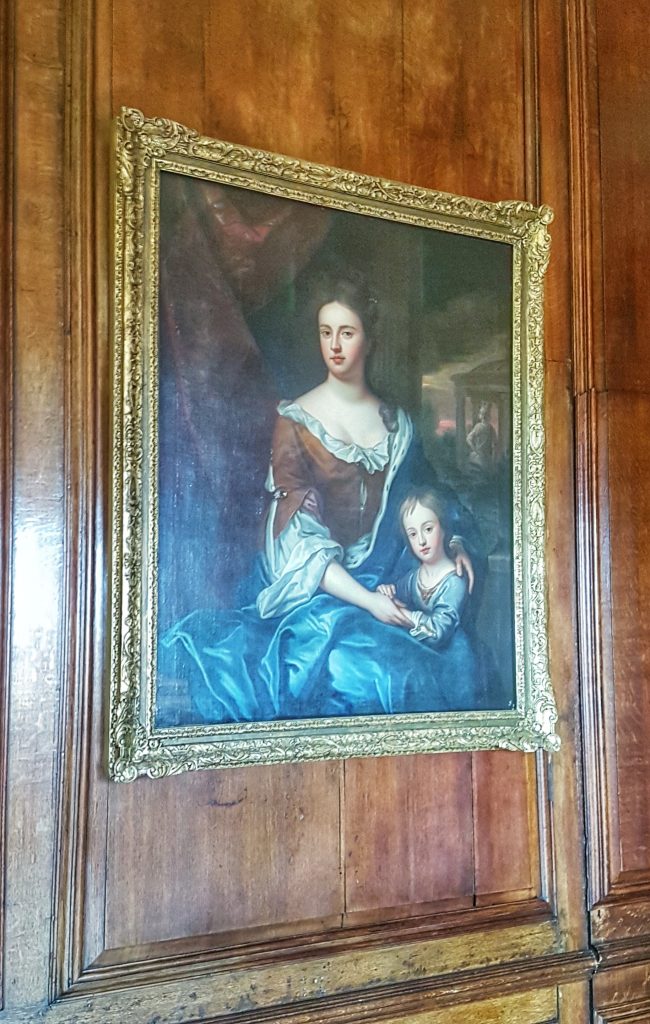
Anne is largely known for her seventeen pregnancies. She gave birth to her first child in 1684, though sadly she was stillborn. Anne and George would go through seventeen pregnancies in total, with only five live births. Two of these children would die within minutes and hours, with another two living to 1-2 years. George, Duke of Gloucester, was her only child to make it out of early childhood, though he died at the age of 11. People still frequently dismiss Anne for being emotional and unstable, but seventeen pregnancies and no surviving children would take their toll on anyone.
Charles II, Anne’s uncle, died in 1685. Which means that her father, the Catholic James II ascended the throne. When he first took the throne, most people accepted his Catholicism, as her heir (Mary) was Anglican and he had no children from his second, Catholic marriage. However, his wife gave birth to a Catholic son, and the tides quickly turned. William of Orange, Anne’s brother in law, invaded in 1688, ushering in the Glorious Revolution. Parliament was in favour of William and Mary taking the throne, and reigned from 1689 to 1702. (William reigned alone from 1694 to 1702.)
Due in large part to her continual pregnancies, Anne was physically in a lot of pain. She suffered from severe gout, and as a result of limited mobility, gained a significant amount of weight. This would plague her for the rest of her life, with her “favourites” spending much of their time entertaining and amusing her.
Anne and The Acts of Union
Upon William’s death in 1702, Anne took the throne. Due to the 1700 Act of Settlement, the English and Irish crowns could only pass to a Protestant heir. And after the 1707 Act of Union, that also included Scotland. From a historical perspective, I think that the Act of Union is absolutely Anne’s greatest accomplishment. Although it was very much argued and passed by politicians, Anne did take an active role in politics. The 1707 Acts of Union united the crowns of Scotland and England, meaning that there would be one parliament and one set of laws governing both. (Up until 1707, Scotland maintained its own separate parliament and code of law.)
And Anne’s active role in politics was not limited to Union. She attended more cabinet meetings than any monarch before or since her, and held daily meetings with ministers. She had to walk a difficult line between the developing two party system (Tory and Whig), and maintained quite a precarious situation for much of her reign.

Anne: Interesting Facts
-Anne had a fairly well developed network of spies, including author Daniel Defoe
-St. Paul’s Cathedral was finally completed under Anne
-Anne is thought to be responsible for the “warming pan baby” rumour- a rumour that alleged that Mary of Modena’s son was not hers and was smuggled in via a warming pan… It wasn’t true but did a lot of damage.
-You can see Anne’s apartments still at Kensington Palace…
-Anne is one of three British/English monarchs who don’t have a regnal number.
Further Readings
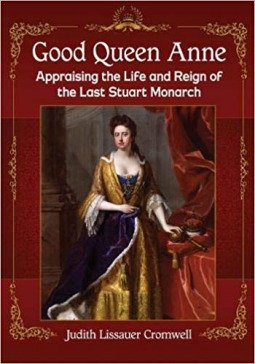
Cromwell, Judith. Good Queen Anne: Appraising the Life and Reign of the Last Stuart Monarch. McFarland & Company, Inc, 2019.
Somerset, Anne. Queen Anne: The Politics of Passion. Knopf, 2013.
Field, Ophelia. The Favourite: The Life of Sarah Churchill and the History Behind the Major Motion Picture. Weidenfeld & Nicolson, 2018.
Rex Factor Podcast, Anne episode.
♠
Looking for my first Monarch of the Month post? Read about Mary I here!
For Women’s History Month, I hope you’ve enjoyed this Monarch of the Month: Queen Anne!
Cheers,
The Historian
Facebook | Twitter | Instagram | Pinterest | Bloglovin’

1 thought on “Monarch of the Month: Queen Anne”