October is Women’s History Month in Canada, so I thought that it was the perfect time to feature Elizabeth I for this series! I have to admit, I struggle with Elizabeth I. Many of her victories in politics, international relations, and her personal life came from luck or waiting- she wasn’t inept as a ruler, but I also don’t see total domination like others. I also find it frustrating that even to this day in 2021, many historians and history buffs will put down any woman in her orbit to prop her up. (Her sister, Mary Tudor, was a bitter shrew; her cousin, Mary Stuart, was an emotional mess; Bess of Hardwick was too calculating, the list goes on.) So I’ve challenged myself to dive deeper this month and challenge my opinions. Let’s get into our October Monarch of the Month: Queen Elizabeth I.
*Note: I am not going to discuss Mary, Queen of Scots in Elizabeth’s MOTM, as it will definitely take over.
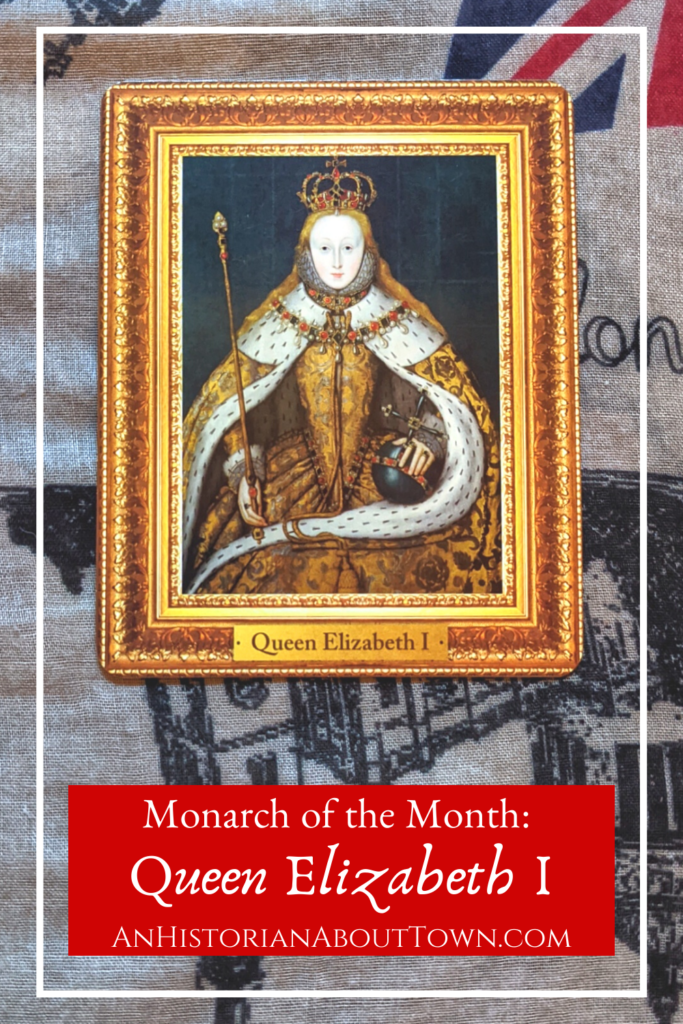
Monarch of the Month: Elizabeth I Fast Facts
Birth Date: 7 September 1533
Death Date: 24 March 1603
Reign: 17 November 1558- 24 March 1603
Coronation Date: 15 January 1559
Predecessors: Mary I & Philip II of Spain
Successor: James I/VI
House: Tudor
Father: Henry VIII
Mother: Anne Boleyn
Spouse(s): N/A
Why Do We Know Elizabeth I?
We know Queen Elizabeth I for the most elaborate and lasting PR campaign ever waged. Okay, that is an exaggeration. However, the persistent myth of Gloriana, the Virgin Queen is still loud and proud today. (The Spanish Armada victory is mentioned far more frequently than any other sixteenth century event…)
We also know Elizabeth for her parents. Henry VIII’s turbulent personal life is a popular topic, particularly his relationship with Anne Boleyn. Though it is entirely tragic, people are fascinated by it, and Elizabeth by association.
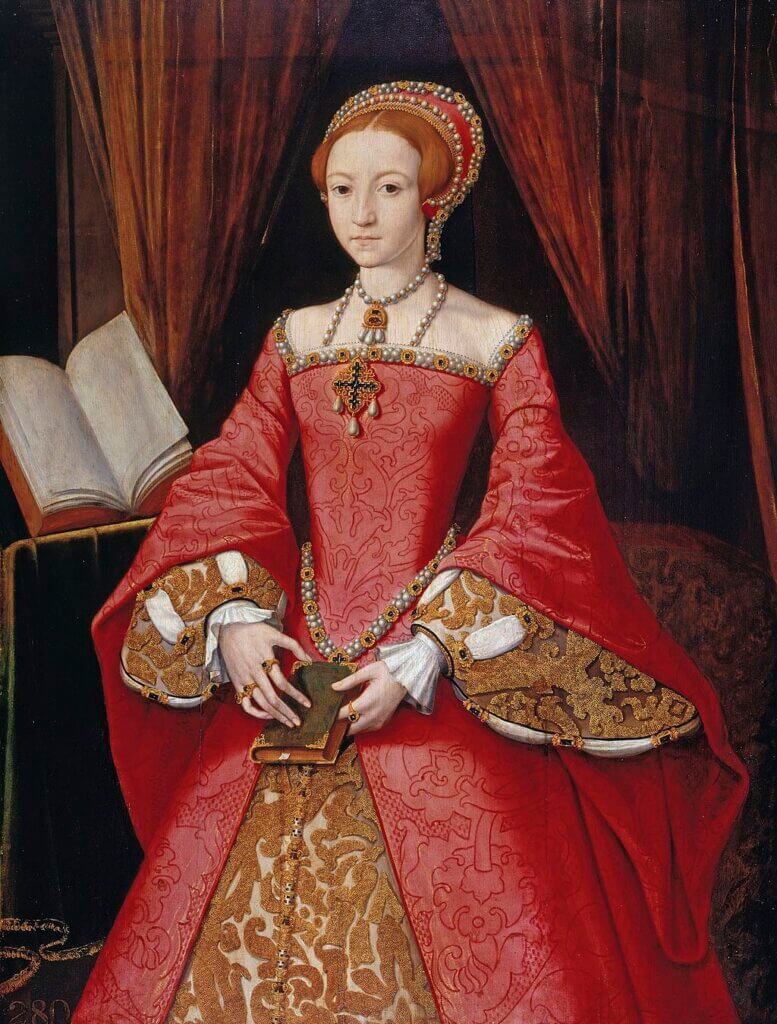
Queen Elizabeth I’s Early Life
Elizabeth was born on 7 September in 1533 at Greenwich Palace (now the site of the Old Royal Naval College) to Henry VIII and his second wife, Anne Boleyn. Elizabeth was the heir presumptive to the throne (first in line but could be displaced by the heir apparent, aka a boy). Unfortunately, one of the major reasons his father had annulled his marriage to Catherine of Aragon was her inability to provide him with a male child, so the female Elizabeth was not particularly lauded. By 1536 her parents’ marriage had broken down, and in May of that year, Anne was beheaded at the Tower of London after being convicted of treason.

An Uncertain Childhood
Before the age of three, Elizabeth had lost her mother and her world changed drastically. Her elder half-sister, Mary, had been forced to serve in Elizabeth’s household after being made a bastard. Less than two weeks after her mother’s beheading, Henry married Jane Seymour, and the long-awaited son was finally born in 1537. Thus Elizabeth was pushed aside like Mary.
Much of Elizabeth’s childhood and teen years were spent in lessons. She learned to read, write, and was fluent in multiple languages. In her teens, she would often give translations of works as gifts to her family. This included a translation of her last step-mother’s own works.
Elizabeth tended to get along with her step-mothers for the most part. She was particularly close with Anne of Cleves (and would be until her death in 1557), and Catherine Parr. Her relationship with Catherine was difficult in her teens, as most historians believe that while Elizabeth was living in Catherine’s household after her father’s death, Catherine’s husband, Thomas Seymour, was attracted to her and the pair were caught in an embrace. (It’s really unclear as to whether or not Elizabeth was a willing participant…) Catherine sent her away after.

A Protestant in Catholic England
When Mary Tudor took the throne in 1553, things again changed for Elizabeth. Mary Tudor was a staunch Catholic, and believed that as Catherine of Aragon’s daughter, she was the rightful heir to the throne all along. Elizabeth, daughter of the theoretically-Protestant Anne Boleyn, remained Protestant. While Elizabeth did support Mary’s reign, she refused to attend Catholic mass (along with Anne of Cleves), and due to her plan to marry the Catholic Philip II of Spain, Mary quickly became unpopular.
In 1554, rebels attempted to stage a rebellion to place the Protestant Elizabeth on the throne instead of Mary (Wyatt’s Rebellion). The rebellion failed, but it did place a target on Elizabeth’s back, and she was imprisoned in the Tower. In 1555, she was called back to court to attend on Mary in her pregnancy, but it turned out to be a phantom pregnancy. And when Mary died in 1558, Elizabeth ascended the throne.
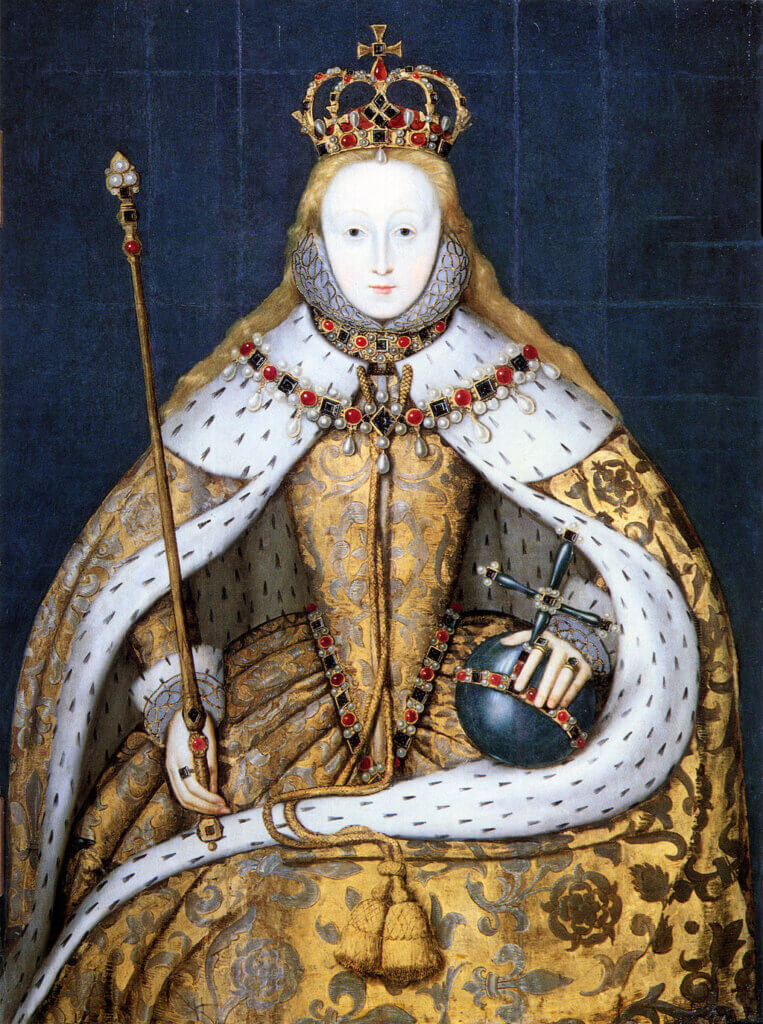
Elizabeth’s Court and Favourites
Elizabeth’s court was quite different from her sister’s. Given that she was only 25 when she ascended the throne (as opposed to Mary’s 37), and a Protestant, it was quite a shift. That isn’t to say that Elizabeth was a fully committed Protesant; she often kept Catholic symbols around, and she wasn’t as dedicated to attending service as some Protestants.
Elizabeth had various favourites throughout her life. Walter Raleigh, Robert Dudley, Francis Bacon, and Robert Devereux were all her favourite at various points, though they tended to not meet the best of ends. No one knows if she was romantically linked with any of these men, but they each held a fair amount of power when in her favour.
Given that Elizabeth’s reign was four and a half decades long, she had her fair share of rebellions, battles, and political tensions. She is famously known for the 1588 Armada victory, where the English navy defeated the Spanish Armada (with the help of some stormy weather), where she gave a particularly rousing speech to troops before battle.

The Lack of an Heir…
Although Elizabeth is now lauded for being the Virgin Queen who didn’t bow down to any man, that was not the general vibe during her reign. She was constantly pushed to make an alliance through marriage, and produce an heir to continue the Tudor dynasty. Unfortunately for Elizabeth, the example of her step-uncle potentially assaulting her and her father ordering her mother’s beheading were her romantic examples… I think we can all understand why she would not be thrilled to get married. (Not to mention seeing two of her step-mothers die from childbirth complications.)
Elizabeth made several tentative alliances, but none of them resulted in a marriage or a child. Many historians think that she was in love with Essex and was hoping to marry him but also knew that she could not marry an English nobleman. Although Elizabeth did behead her cousin in 1587 for treason, her son was particularly useful. Elizabeth waited until the last minute to name James VI of Scotland as her heir, but upon her death, he also became James I of England.

Jane Austen on Elizabeth I
Interestingly, Jane has a lot to say about Elizabeth in her early project, The History of England by a partial, prejudiced and ignorant historian, but much of the entry has to do with her cousin, Mary, Queen of Scots. (Jane agrees with me on Mary Stuart- vindication!) Here are some of my favourite sections relating to Elizabeth specifically:
Elizabeth I’s Character
“It was the peculiar Misfortune of this Woman to have bad Ministers – Since wicked as she herself was, she could not have committed such extensive mischeif had not these vile and abandoned men connived at and encouraged her in her Crimes.”
Elizabeth and Essex
“Thought of a different profession, and shining in a different Sphere of Life, yet equally conspicuous in the Character of an Earl, as Drake was in that of a Sailor, was Robert Devereux Lord Essex. This unfortunate young Man was not unlike in Character to that equally unfortunate one Frderic Delamere. The simile may be carried still farther, and Elizabeth the torment of Essex may be compared to the Emmeline of Delamere… It is sufficient to say he was beheaded on the 25th of Febry… Elizabeth did not long survive his loss, and died so miserable that were it not an injury to the memory of Mary I I should pity her.” (Emmeline is a gothic novel by Charlotte Smith, published in 1788.)
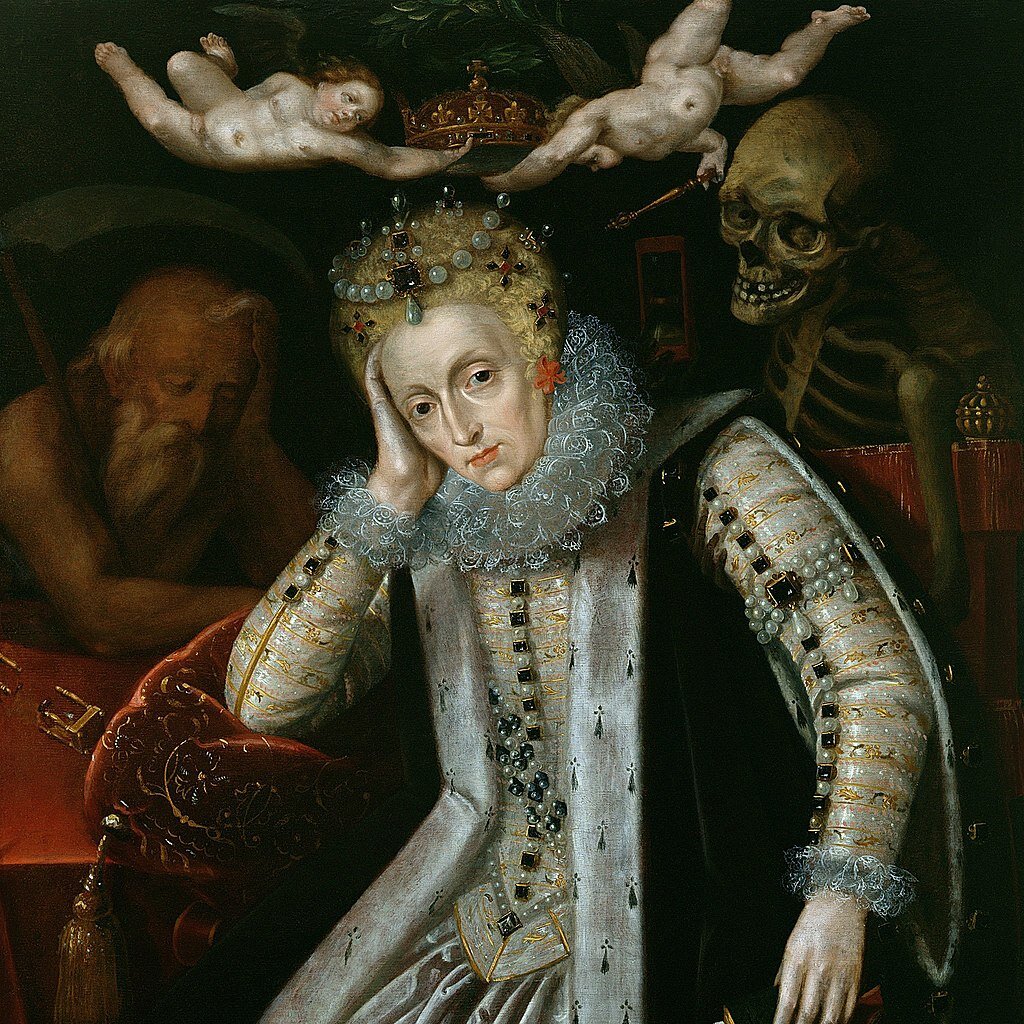
Elizabeth I: Interesting Facts
-Historians believe that Elizabeth could speak English, French, Italian, Latin, Spanish, Irish, Cornish, Welsh, Greek, and Flemish.
-She believed in astrology, and even kept a court astrologer (John Dee).
-Elizabeth was rather preoccupied with appearing to be younger than she was and hiding her smallpox scars, but her make-up most likely contributed to her death as it contained a great deal of lead.
-She had a room decorated with gold, silver, and precious jewels made for her at Hampton Court Palace called “Paradise”.
-Elizabeth’s wardrobe and make up rituals took four hours every day to get her ready for the day and then remove it again.

Further Readings on Elizabeth I
Castor, Helen. Elizabeth I: A Study in Insecurity. London: Penguin Books, 2019.
Somerset, Anne. Elizabeth I. New York (N.Y.): Anchor Books, 2003.
The Rex Factor podcast. Elizabeth I episode
♠
Looking for my earlier Monarch of the Month posts? Read about:
Mary I
Anne
Edward the Confessor
William IV
Edward IV
James I
George V
Mary, Queen of Scots
George IV
Henry VII
Mary II
James II
Edward VII
George III
George I
Louis XIV of France
How do you feel about our Monarch of the Month: Queen Elizabeth I?
Cheers,
The Historian
Facebook | Twitter | Instagram | Pinterest


_-_Portrait_of_Queen_Elizabeth_I_-_Google_Art_Project.jpg)


