As I keep repeating ad nauseum, October is Women’s History Month in Canada. And it also happens to include the anniversary of Marie Antoinette’s trial and execution. (All over a swift three days…) When deciding which court painter to explore this month, I knew that I wanted to highlight an artist that immortalised the doomed French Queen. Luckily for us, there is one female artist who was incredibly familiar with Marie Antoinette and produced several portraits of her. Known for her work bridging the High Rococo and Neoclassical staples, let’s get into October’s Court Painters: Élisabeth Vigée Le Brun!

Élisabeth Vigée Le Brun’s Early Years
Élisabeth Louise Vigée was born on 16 April 1755 to artist Louis Vigée and his wife, Jeanne nee Maisin. Élisabeth began to quickly unofficially train under her father, and quickly began to develop as an artist in her early childhood. From five to ten, she lived at a convent for schooling and then began working as an assistant to artist Pierre Davesne.
Sadly, her father died in 1767 from surgical complications and she felt her father’s absence keenly. Her mother remarried quickly but it was difficult for Élisabeth. She hated her stepfather, Jacques-François Le Sèvre, and struggled with his attempt to replace her father.
The Working World
Despite her unhappiness, Élisabeth’s career began to take off. Her mother continued to take her to different public galleries to see the works of different artists and to develop her skills and knowledge.
Élisabeth first began working professionally in her early teen years. Her portraits were highly sought after; she worked in a new style that differed from the popular High Rococo, one that featured scarves and shawls rather than elaborate outfits.
At the age of 19, she was allowed to join the Académie de Saint-Luc, a guild for painters. She created several portraits for various high-ranking members of the French aristocracy. In 1776, she was commissioned to paint her first royal portrait, that of the future King Louis XVIII.

A New Family
1766 was a big year for the artist as she married fellow artist and art dealer Jean-Baptiste-Pierre Le Brun. The two had formed somewhat of a bond over art though Élisabeth was still sceptical of the marriage on her wedding day. In any case, the marriage allowed her to escape her stepfather and create a new family.
Now known as Vigée Le Brun, her marriage was not overly happy. Her husband forced her to begin tutoring to earn more money, and he claimed most of the money that she earned from both her paintings and her tutoring.
In February 1780, Vigée Le Brun gave birth to their only surviving child, Jeanne Lucie Louise.
The Patron: Marie Antoinette
The Queen of France, Marie Antoinette, appointed Vigée Le Brun as her official artist in 1776, only further securing her future. The Queen would go on to be her royal patron- at the time, there were few people in France who would have made a more impressive patron.
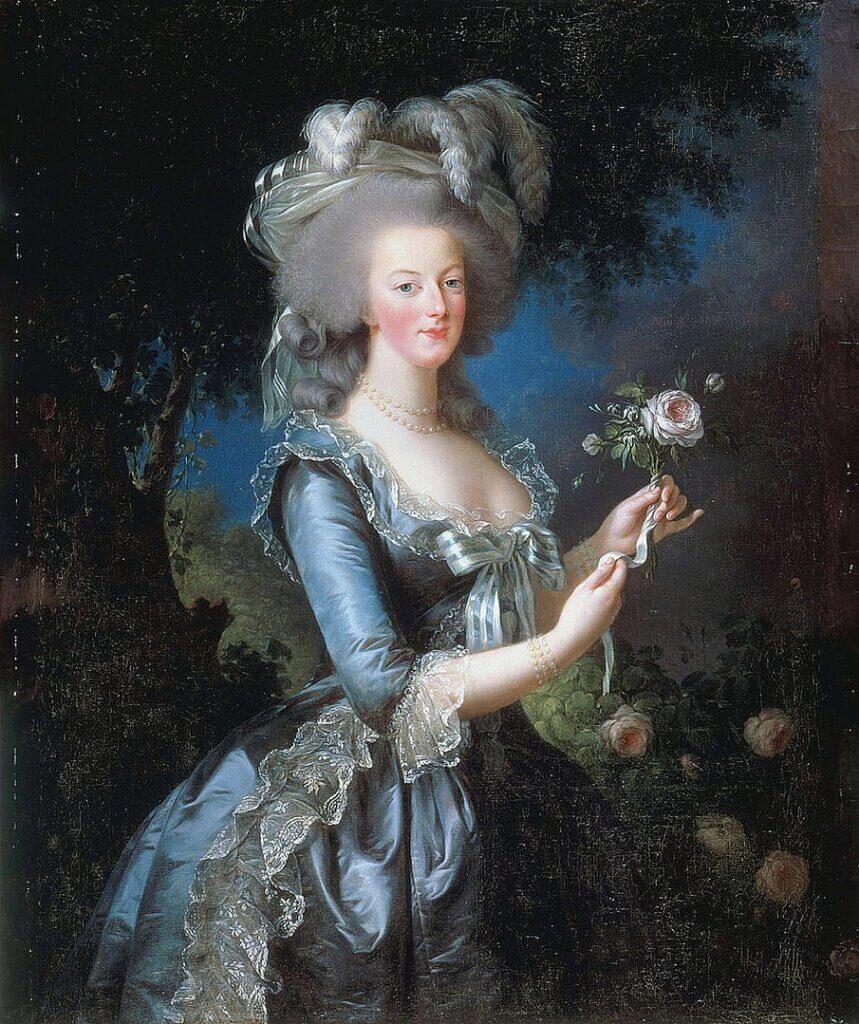
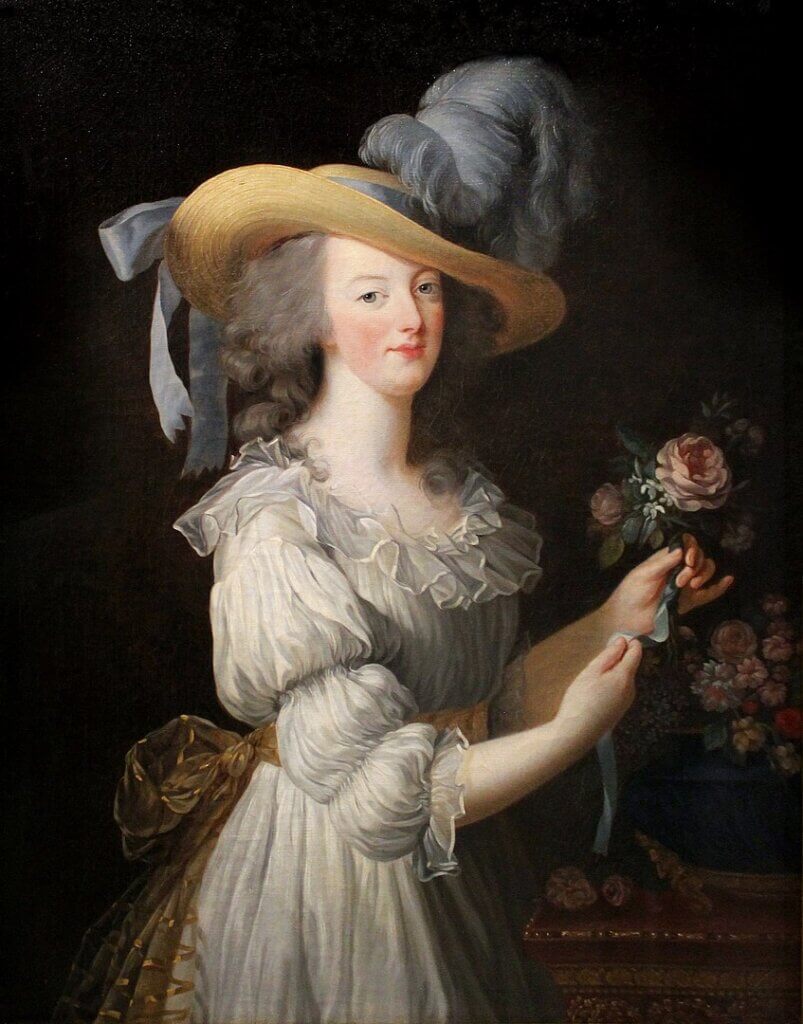
Vigée Le Brun painted over thirty portraits of Marie Antoinette and her family members, and they are some of the most enduring portraits of the queen. She created one very controversial portrait in 1783 that showed the French Queen in a muslin dress that would have been considered an undergarment. (The artist chose to recreate the portrait showing Marie Antoinette in a blue silk dress, another famous portrait.)
“Marie Antoinette and Her Children” was an influential painting, as it was part of a PR push (so to speak) to make her appear more favourable to a public with growing disdain for her. Both the King and Queen adored the portrait, though Marie Antoinette had it removed after the death of her elder son.

Interested in more book previews, period dramas, royal news, and more? You can subscribe to my biweekly substack newsletter here: https://anhistorianabouttown.substack.com/!
Escaping Revolutionary France
Unshockingly, Vigée Le Brun’s future became very uncertain with the French Revolution. Because she was so closely associated with Marie Antoinette and the French Royal Family as whole, she quickly became a target herself. In October of 1789, she, her daughter, and her daughter’s governess left Paris. They first headed for Lyon and then continued to the French border. After some travel, they made it to Turin, Italy where Vigée Le Brun was able to continue her career.

Rebuilding in Europe
While in Italy, Vigée Le Brun was able to meet Marie Antoinette’s sister, Maria Amalia, who had married the Duke of Parma. She continued to travel around Italy to see many of the Old Masters’ paintings and worked as an artist for many aristocrats and society figures in Rome. (She painted one of the best known paintings of Lady Hamilton.)
She also worked in Austria, Russia, and Prussia where she was highly sought after for her royal portraits. However, she was able to return to France in 1802 after her name was cleared of being a counter-revolutionary émigré. She spent the early nineteenth century travelling around Europe, including spending time in the United Kingdom, before she settled finally.

Vigée Le Brun’s Later years and Death
Vigée Le Brun spent her later years between Louveciennes (a French commune) and her home in Paris. She spent much of her time with her nieces and continued to paint for enjoyment. She died in March of 1842 in Paris at the age of 86 and was buried in the cemetery in Louveciennes.

Interested in more court painters?
Court Painters: Anthony van Dyck
Court Painters: Philip de László
Court Painters: Sofonisba Anguissola
Court Painters: Sir Godfrey Kneller
Court Painters: Sir Thomas Lawrence