With Jane Austen’s novels (and associated adaptations) as popular as ever, and Bridgerton further working its way into everyone’s hearts, there is no better time to return to the Regency. While the Regency strictly is only the period between 1811 and 1820, it is widely considered to be 1795 to 1837. (Although George was only Regent for nine years, he had influence prior to that and we don’t see a sharp change until the start of Victoria’s reign.) And there is one artist that we can absolutely look to as the leading portraitist of the Regency. Let’s get into May’s Court Painters: Sir Thomas!
Thomas Lawrence’s Early Years
Thomas Lawrence was born on 13 April 1769 in Bristol to Thomas Lawrence and Lucy Read. When he was 4, the family moved to Devizes so that Lawrence (sr) could work as an innkeeper. Lawrence quickly learned to entertain inn guests with recitations, dancing, drawings, and more, with a particular talent for drawing.
The family had to move again in 1779 so that Lawrence (sr) could find work after his previous job fell through. The family capitalised on the young Lawrence’s talents and at only the age of ten he began selling crayon portraits. The 30x25cm portraits were incredibly popular, with well-known aristocrats and politicians like the Duchess of Devonshire and Sir Henry Harpur.
The Royal Academy as a Teenager
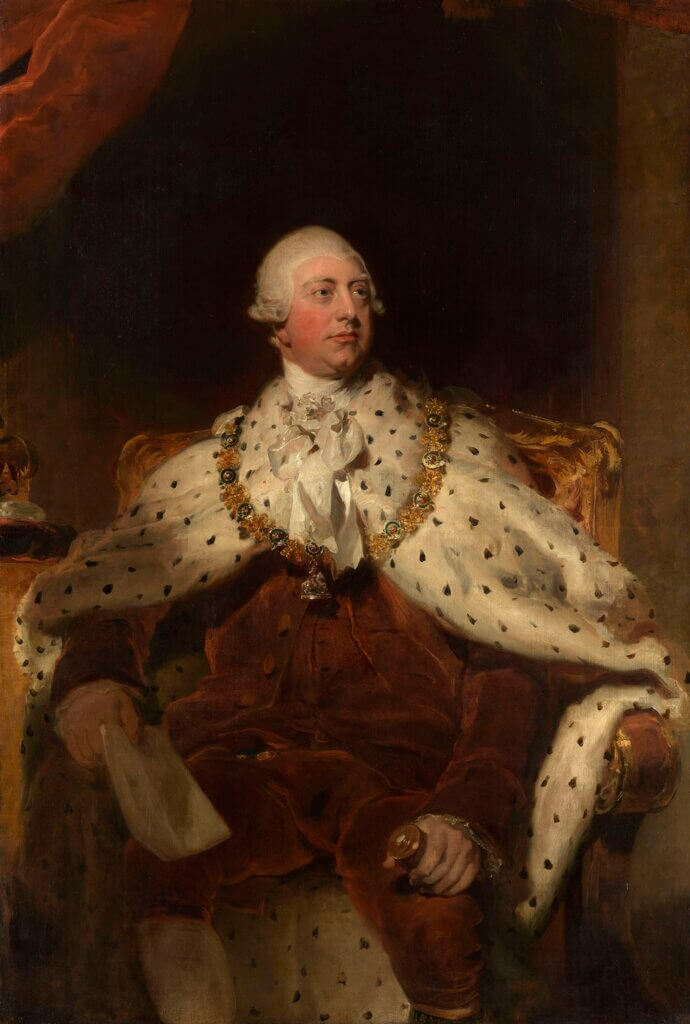
In 1787, Lawrence moved to London after finally taking up paint as a medium in 1786. He lived near to the popular 18th century artist, Joshua Reynolds, who would influence Lawrence’s style. He was briefly a student at the Royal Academy in 1787 and even had pieces in the 1787 RA exhibition. However, he did not stay for long as he left to launch a formal career in portraits. He would continue to showcase paintings in the RA exhibition each year until his death in 1830 save for a handful of years.
Royal Portraits
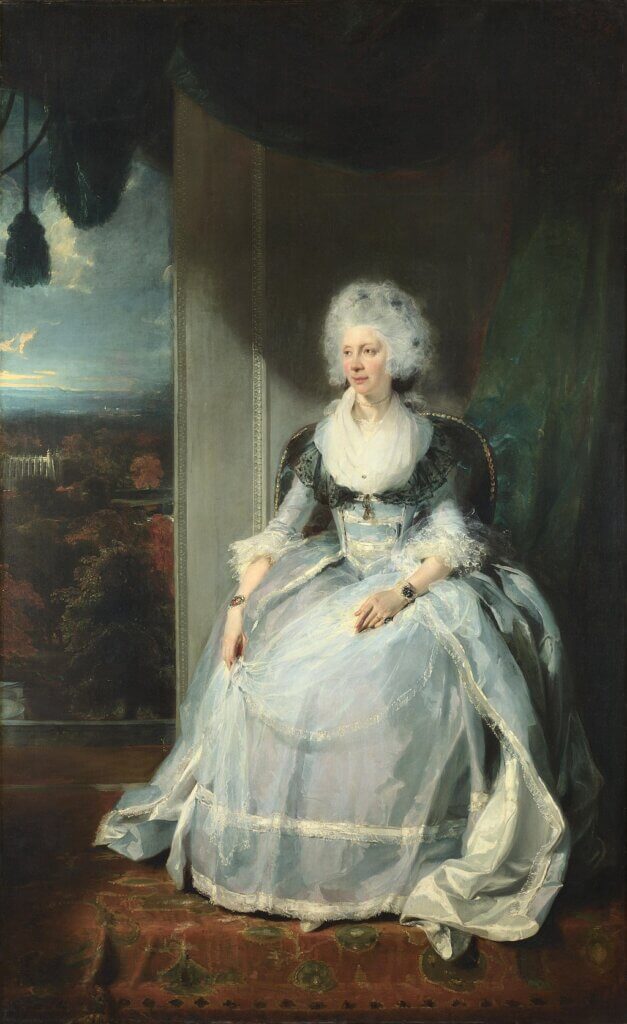
Lawrence’s “big break” came in 1789 when Queen Charlotte commissioned him to create a portrait of herself, as well as one of Princess Amelia. (You can see the painting above.) According to records, Charlotte only sat once for Lawrence at Windsor Castle and it took the artist several attempts to record her expression. Notably, though this remains one of the best known portraits of the Queen, neither Charlotte nor her husband liked it. It notably shows the queen in a realistic state- she is aged and clearly tired. While the portrait of Princess Amelia was purchased and added to the Royal Collection (where you can find it today), Queen Charlotte declined to purchase her own. (It is now held by the National Gallery.)
Despite the Royal Family’s feelings about his portrait of Queen Charlotte, King George did name Lawrence as Principal Painter-in-Ordinary to the King in 1791.
The Siddons Sisters
Although his professional life was progressing nicely, Lawrence’s personal life was not so smooth. Lawrence had relationships with both Sally and Maria Siddons, the daughters of stage actress Sarah Siddons. Siddons was one of the most celebrated performers of the later half of the nineteenth century, known for her interpretation of Lady Macbeth. Lawrence first was interested in Sally, and then Maria, and then Sally again. After Maria’s death in 1798, Sally swore to never see Lawrence again. The artist never married.
“Pictorial chronicler of the Regency”
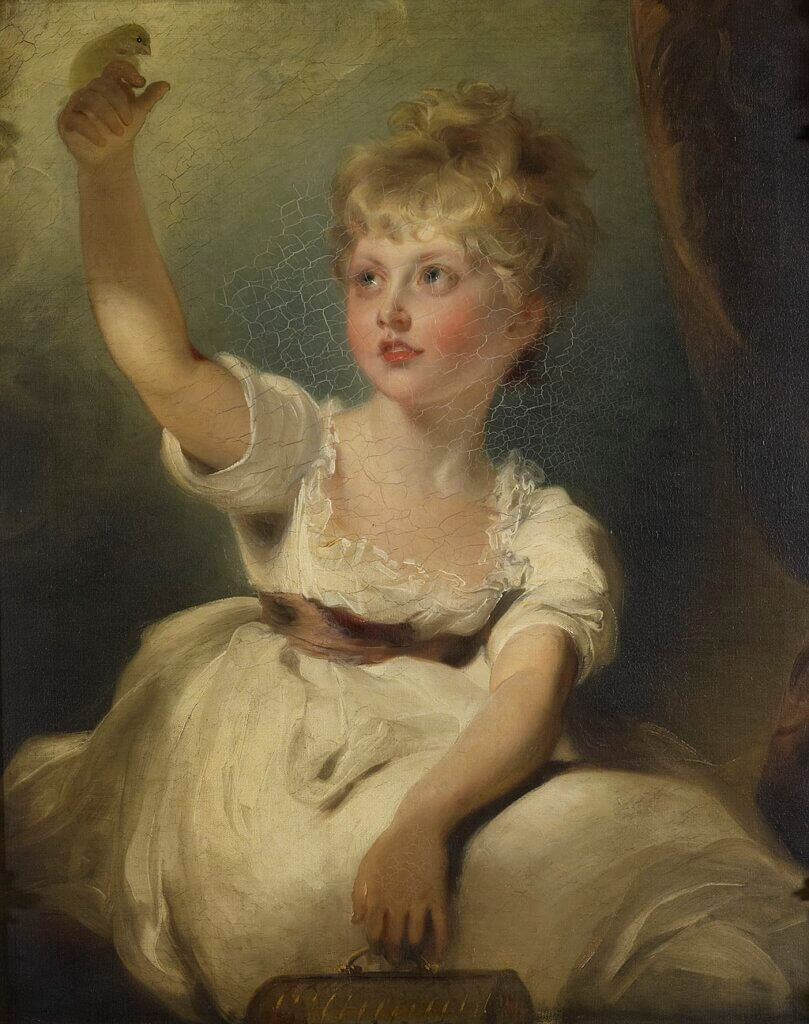
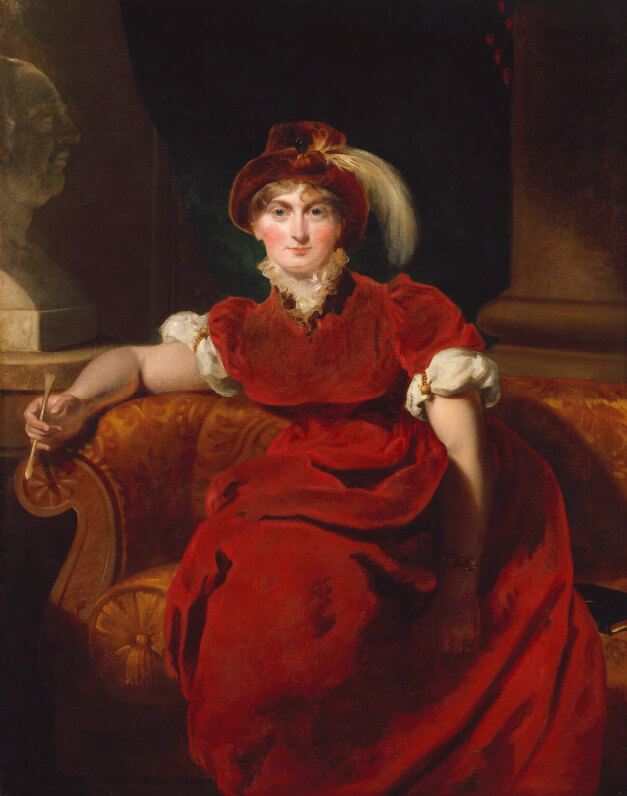
King George commissioned further royal portraits from Lawrence, including one of his daughter-in-law, Princess Caroline of Brunswick, and his granddaughter, Princess Charlotte of Wales. Caroline’s portrait is particularly notable as it was created after her separation from the Prince of Wales and shows an independent Caroline.
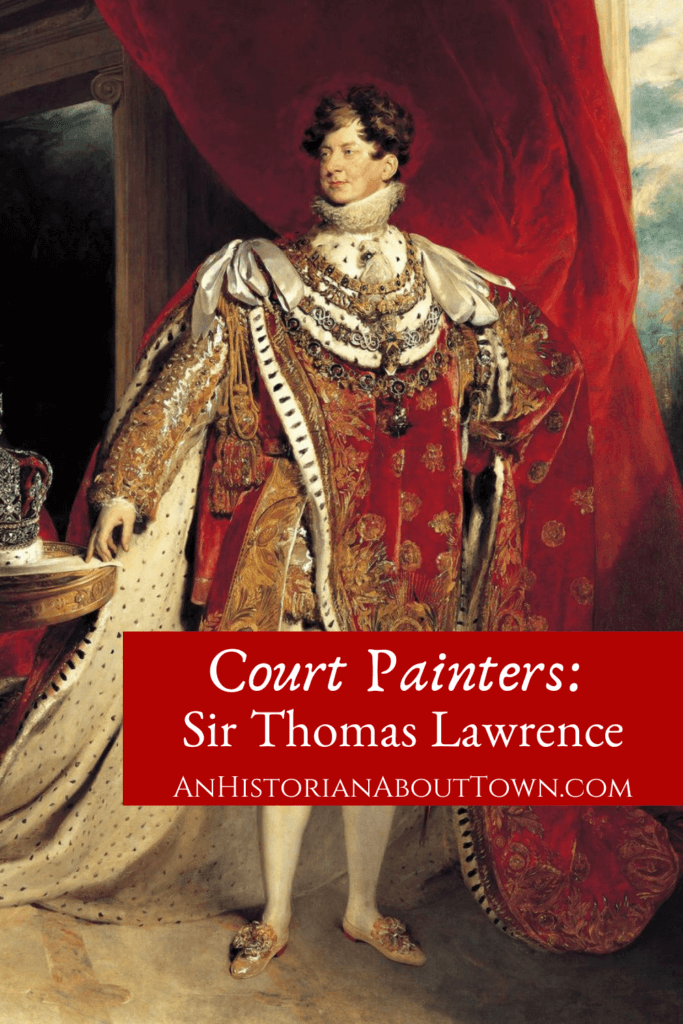
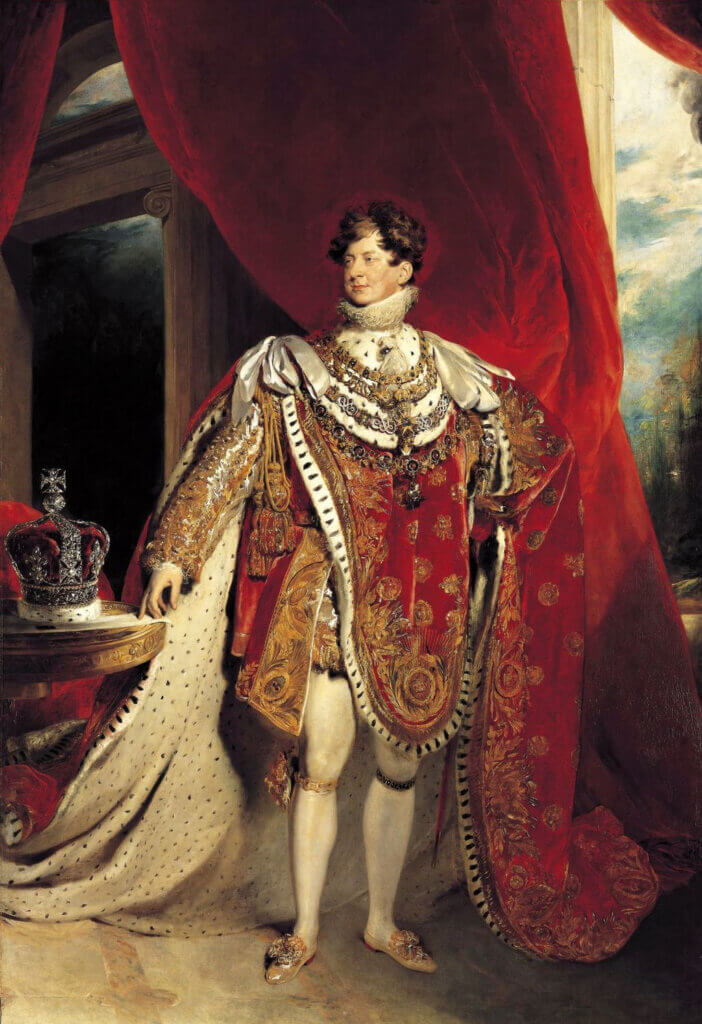
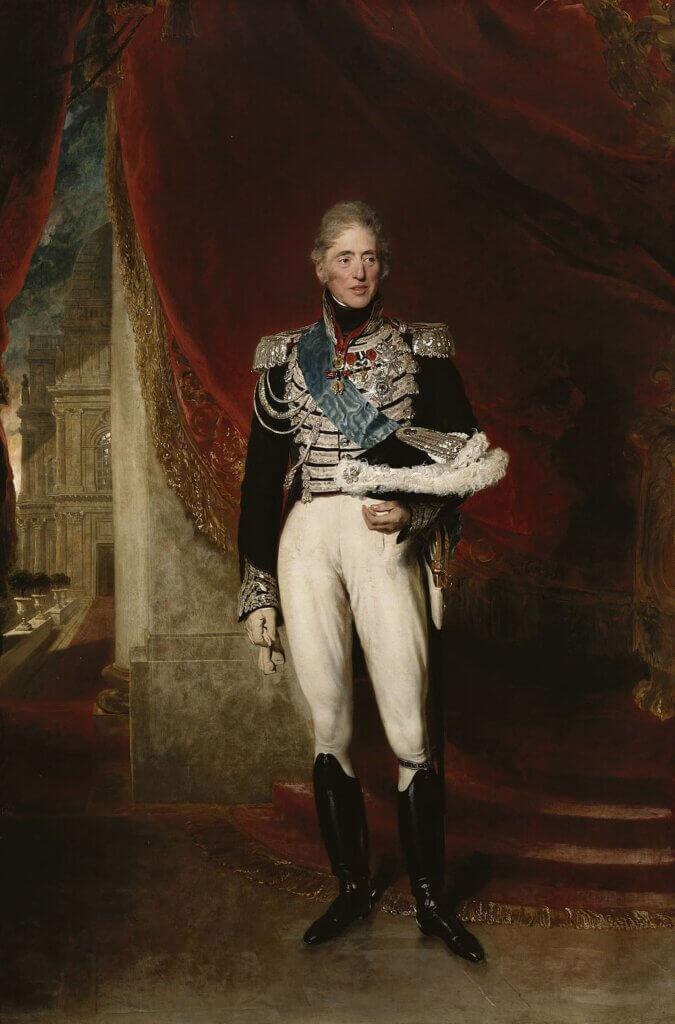
Lawrence was later known as the “pictorial chronicler of the Regency”, and for good reason. His portraits of several members of the Royal Family, including King George IV’s coronation portrait, and a portrait of the pregnant Princess Charlotte, cemented that status. George commissioned a series of portraits of the allied leaders against Napoleon for the Waterloo Gallery at Windsor. He remained a favourite of the new King.
The Royal Academy as President
Although he had only been a student for a few months, Lawrence was elected President of the Royal Academy in 1820. In 1822, he was then elected as a Fellow of the Royal Society, further celebrating his talents and career.
Lawrence died on 7 January 1830 after complaining of chest pains a few days earlier. Interestingly, the man for which the Regency was named died shortly after the artist responsible for recording much of it- King George IV died in June of 1830.
Interested in more court painters?
Court Painters: Anthony van Dyck
Court Painters: Philip de László
Court Painters: Sofonisba Anguissola
Court Painters: Sir Godfrey Kneller
Are you a fan of Sir Thomas Lawrence’s royal portraits?
Cheers,
The Historian
Facebook | Twitter | Instagram | Pinterest

_-_George_III_(1738-1820)_-_RCIN_402405_-_Royal_Collection.jpg)


