Welcome to the first instalment of a new series here on An Historian About Town! Each month we are going to be partaking in some literary travel and walking in the footsteps of different authors. While many buildings and sites are gone or at least look nothing like they would have for these authors, we can still visit many of the places that they lived, worked, visited, and more. If you know me, you will not be surprised by the first author or location chosen. For our first Literary Travel: Jane Austen in Bath!

Why Bath?
I recognise that Winchester or Chawton would be a go-to choice for Jane Austen. However, I’m being selfish- I love Bath! It has centuries and centuries of history that you can explore, not only the Regency period. And I do love that you can see much of the Regency city even today. Don’t worry though, there will be more Jane Austen instalments coming later.

Following Jane Austen in Bath
Austen lived in Bath for five years, but visited prior to moving there. She first visited the city in the summer of 1799 when she stayed for a month. The Austen family then moved to Bath in December of 1800 after her father retired, and they stayed there until 1806.
Bath was not Austen’s favourite city; by the time she left Bath permanently, she was happy to see it in her rear-view mirror, so to speak. However, as an Austen fan, I do love being able to visit a city that she would have walked, and one that features prominently in both Northanger Abbey (my favourite novel) and Persuasion.

Where Did Jane Austen Live in Bath?
The Austen family first moved to 4 Sydney Place in Bath in 1800 and lived there for three years. The three story houses were built in the late eighteenth century and are in the Bathwick area of the city. You can visit them today, and can actually stay in 4 Sydney Place- it is now an Austen-themed B’n’B.
After their lease lapsed, the family moved to 27 Green Park Buildings. Austen was not a particular fan of these lodgings and had originally refused to live there when her family was looking for a home in 1800. However, they had less of a choice. When Austen’s father died in 1805, Jane, her mother, and her sister were forced to move again.

The trio then lived at 25 Gay Street, and then finally at a home on Trim Street briefly. They finally left in July of 1806. If you want something of the Austens’ view from Green Park, take a wander down to the Pulteney Bridge!

Where Did Jane Austen Socialise in Bath?
Jane Austen was twenty four when she first visited Bath, and took advantage of social opportunities like any young lady would. And that of course included the Assembly Rooms.
Originally called the Upper Assembly Rooms, you can visit the surviving Assembly Rooms on your visit to Bath. There is a ballroom, a tea room, and an octagonal room. Hundreds of people would have attended balls, concerts, and gatherings at the Assembly Rooms, much like where Catherine Morland met Henry Tilney for the first time in Northanger! Although I will admit, Catherine and Henry meet at the Lower Assembly Rooms that no longer exist. (Bridgerton among other productions have used the building for a setting.)
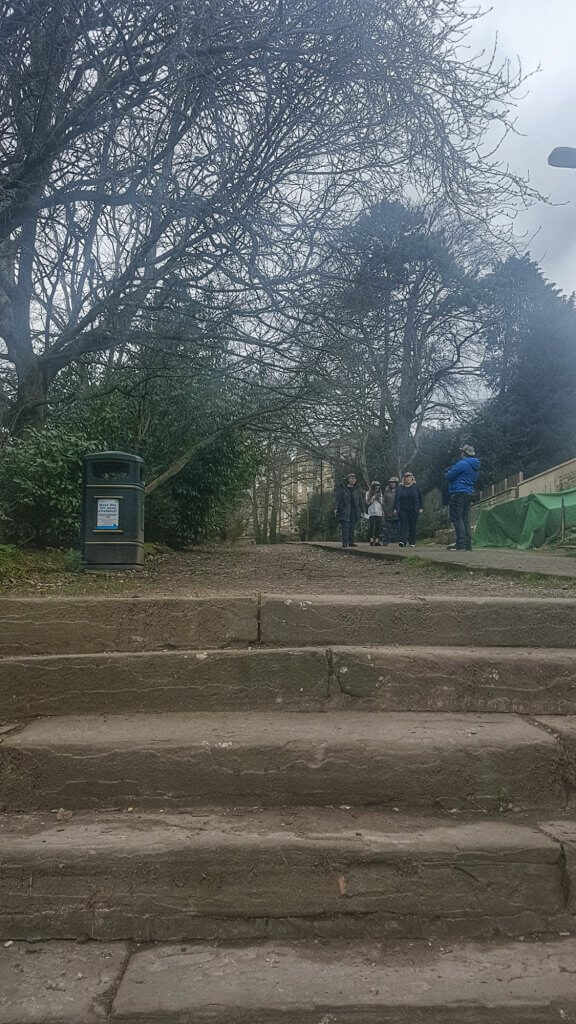
Austen was also more than familiar with the Gravel Walk in Bath, quite close to the Royal Crescent. The gravel path was popular with young people in the Regency period. It was a somewhat secluded walkway where you can look at the back of the houses of the Royal Circus (as it was originally known), Gay Street, and Brock Street. Conveniently, those looking for romance were able to find some privacy there. Austen featured the walk in Persuasion.

Where Did Jane Austen Eat in Bath?
When you want to be seen, eating provides yet another opportunity. The Grand Pump Room survives as a restaurant and tea room to this day, and it is another place of note in both Northanger Abbey and Persuasion. The ton often ate at the Pump Room, as you were able to drink from the mineral water fountain. (Theoretically everyone was in Bath to take the waters- the healing waters from the hot springs that were the basis of the name “Bath”.)
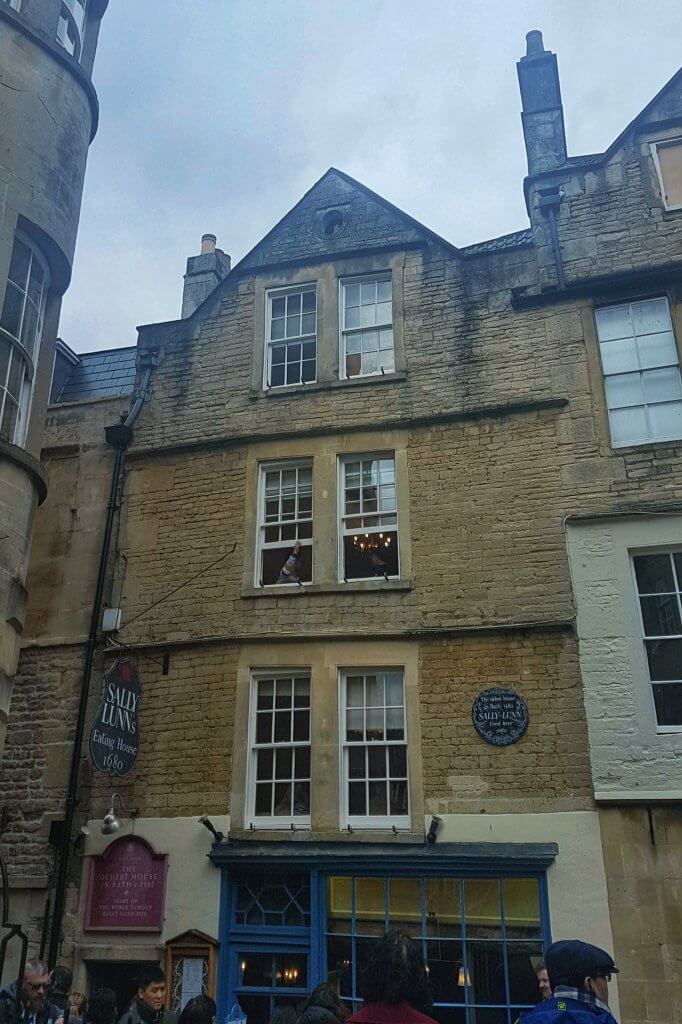
Sometimes you do not want to be on display, though. Austen loved to have a Bath Bun, much like those made at Sally Lunn’s. (If you are in Bath, you absolutely need to stop and try a Bath Bun!)
Want more of Austen’s world? These are my best book recommendations for the Jane Austen reader!
Have you seen any of Jane Austen in Bath?
Cheers,
The Historian
Facebook | Twitter | Instagram | Pinterest