I would be shocked if another monarch was more popular than Henry VIII and his six wives. No matter what, they always draw attention. People visit the Tower of London and Hampton Court Palace to see where they lived and died. They rewatch things like The Tudors and The Other Boleyn Girl in an attempt to get their fix. However, there are also more than enough books to keep you occupied with Henry and his wives. These are the best books about the six wives of Henry VIII and their stories!

Although I think it is a shame that other monarchs don’t get the same amount of attention, I can’t deny that Henry VIII and his wives still have an undeniable hold over people today. Trends in history come and ago, and Henry VIII’s court remains… Over the years, I’ve done a good amount of reading on them, and I’ve built up a fairly extensive bibliography. These are the most interesting, engaging, and fascinating non-fiction books of the six wives of Henry VIII, and why you should be reading them. (I’m not a huge of fan of Tudor historical fiction, so there aren’t any on this list.)
Admission time: I’ve not read any Jane Seymour biographies. I know, I know, it is a gap in this post, but I hopefully will have some read by the end of 2019! (And then it/they will be added to this post if it is warranted.) I’m currently waiting on three from the library, but so far, no notifications!
Collective Biographies
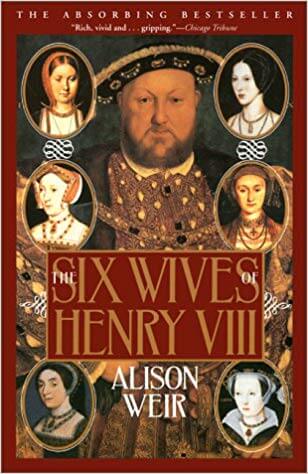
The Six Wives of Henry VIII, Alison Weir
16th Century court politics and intrigue through the eyes of six of the most important women of their time.
One of the most powerful monarchs in British history, Henry VIII ruled England in unprecedented splendour. In this remarkable composite biography, Alison Weir brings Henry’s six wives vividly to life, revealing each as a distinct and compelling personality in her own right. Drawing upon the rich fund of documentary material from the Tudor period, The Six Wives of Henry VIII shows us a court where personal needs frequently influenced public events and where a life of gorgeously ritualized pleasure was shot through with ambition, treason and violence.
If you follow me on Instagram, you will know that I polled my followers to decide if I should read this biography or the Starkey, and this won. I will be reading the Starkey hopefully later this year, but I figured this was a good place to start. Published in 1991 originally, this book was researched and written in the 1970s but publishers felt that it was too long. This is the revised and edited version. I am quite torn on this book. Overall, I do think that this is certainly worth reading. If you know nothing more than “Divorced, Beheaded, Died, Divorced, Beheaded, Survived,” it will give you a fantastic starting point. However, it truly does feel of the 1990s.
Women’s history has made quite large strides in the past 30 years. However, Weir’s treatment of the queens doesn’t read quite as well given those strides. It is fantastic that she has given space to each queen, but Cleves, Howard, and Parr are all rushed through quickly, and she gives Boleyn the largest amount of space. Recent scholarship has focused attention on Henry’s later wives who all played their own important roles, regardless of their time in his life. She also immediately dismisses “Katherine Howard [as] an empty-headed wanton” (p 3), quite a disappointing statement to read now. In the last few years, there has been more attention and light cast on women’s agency and choice, and she makes statements like that throughout that read as lacking any analysis. (I would be curious to see if she would make any changes to it if it were republished in 2019.)
There isn’t a great deal of analysis in this book, but it is somewhere to start. If you also don’t want to read six or more books to cover the queens, it will give you the most bang for your reading time.
Individual Biographies

Catherine of Aragon- Catherine of Aragon: An Intimate Life of Henry VIII’s True Wife, Amy Licence
Catherine of Aragon continues to fascinate readers 500 years after she became Henry VIII’s first queen. Her life was one of passion and determination, of suffering and hope, but ultimately it is a tragic love story, as circumstances conspired against her. Having lost her first husband, Henry’s elder brother Prince Arthur, she endured years of ill health and penury, to make a dazzling second match in Henry VIII. There is no doubt that she was Henry’s true love, compatible with him in every respect and, for years, she presided over a majestic court as the personification of his ideal woman.However, Catherine’s body failed her in an age when fertility was a prerequisite of political stability. When it became clear that she could no longer bear children, the king’s attention turned elsewhere, and his once chivalric devotion became resentment. Catherine’s final years were spent in lonely isolation but she never gave up her vision: she was devoted to her faith, her husband and to England, to the extent that she was prepared to be martyred for them. Banished and close to death, she wrote a final letter to her ‘most dear lord and husband’. ‘I pardon you everything… mine eyes desire you above all things.’ The fidelity of this remarkable woman never wavered.
There are several biographies of Catherine, that focus on the deterioration of her marriage and her later life. However, Amy Licence examines Catherine from birth to death, in her own right. Catherine is often described as Spanish, and then left as is to pick up her life when she arrives in England. However, Licence begins with Catherine’s grandparents and parents, and her childhood. This is where the book’s true strength lies- she sets you up to understand why Catherine felt the way she did and did the things she did once she arrived in England. (Her parents are fascinating in their own right.) I also appreciated the chapters that looked at her relationship with Arthur. It didn’t fall into the trope of did they/didn’t they, but gave all of the available information that we have. And finally, Catherine’s time as Queen, and the power that she did have. I knew that she was Regent in Henry’s absence but I had no idea the extent to which she controlled military matters, including war with Scotland.
This biography is a time investment- at 534 pages, it isn’t short. That isn’t a bad thing, though. It just means that it isn’t really the best introduction for a new-to-the-Tudors reader.. The only difficult part of Catherine of Aragon is the amount of lengthy quotations. There are many times that entire letters are quoted, which can drag it a bit. (However, I will absolutely take full length letter quotations over not having any at all.) It is useful to read Catherine’s own words (and those she knew), and gives you a direct connection to her. There is also a fair amount of explanation of life in the period. It can feel slightly repetitive if you know the period, but it doesn’t detract from the strengths of the book at all.

Anne Boleyn – The Lady in the Tower: The Fall of Anne Boleyn, Alison Weir
The imprisonment and execution of Queen Anne Boleyn, Henry VIII’s second wife, in May 1536 was unprecedented in English history. It was sensational in its day, and has exerted endless fascination over the minds of historians, novelists, dramatists, poets, artists and film-makers ever since.
Anne was imprisoned in the Tower of London on 2 May 1536, and tried and found guilty of high treason on 15 May. Her supposed crimes included adultery with five men, one her own brother, and plotting the King’s death.
Mystery surrounds the circumstances leading up to her arrest. Was it Henry VIII who, estranged from Anne, instructed Master Secretary Thomas Cromwell to fabricate evidence to get rid of her so that he could marry Jane Seymour? Or did Cromwell, for reasons of his own, construct a case against Anne and her faction, and then present compelling evidence before the King? Or was Anne, in fact, guilty as charged?
I’ve read many Anne Boleyn biographies, but none of them grabbed me quite the way that The Lady in the Tower did. My issue with most Anne Boleyn biographies is that they are either firmly for or against Anne. I personally am not a fan of Anne Boleyn, but that does not mean that I don’t want to read a balanced biography. This book does not debate whether or not she slept with Henry before marriage or if she flirted with other men, but chronicled the last few months of her downfall.
A lot of people take issue with Weir’s writing as a whole. Some of her non-fiction comes across as a fiction, and can be reaching. (It appears that she only writes fictional books now, though.) This book used quite a lot of primary sources, which I think grounds it well. She does seem to avoid laying any of the blame on Henry, placing it on Wolsey and others around him. This is the one downfall of the text, and I don’t know that it would have been done if she wrote it in 2019. (The study of women’s history has come a long way in the last decade.) However, she redeems herself with the inclusion of so many firsthand accounts of Anne, and what those at court thought of her.
A note with this book: I wouldn’t jump directly into Anne Boleyn with this book. If you’ve read a collective biography of the queens, or a basic biography of Anne, you will be fine. However, it picks up the story at the last three months of her life, meaning that anyone new to Anne would have no idea how we got to that point. This is for the Tudor aficionado, who wants to dig into Boleyn and her downfall.

Anne of Cleves- Anne of Cleves: Henry VIII’s Unwanted Wife, Sarah-Beth Watkins
Anne of Cleves left her homeland in 1539 to marry the king of England. She was never brought up to be a queen yet out of many possible choices, she was the bride Henry VIII chose as his fourth wife. Yet from their first meeting the king decided he liked her not and sought an immediate divorce. After just six months their marriage was annulled, leaving Anne one of the wealthiest women in England. This is the story of Anne’s marriage to Henry, how the daughter of Cleves survived him and her life afterwards.
Oh, Anne of Cleves, always left to the shadows. I’ve always thought that people tend to ignore her because she didn’t have a dramatically tragic end. (That shouldn’t be a reason to not study someone…) Sarah-Beth Watkins brings Henry’s fourth wife to the forefront, and examines her life from birth to death. Watkins does a fantastic job of sharing Anne’s childhood and life before moving to England, which I loved. You can’t necessarily extrapolate for her early life like his English wives, and it does play a role in her story. There isn’t a huge wealth of information but there is enough to give you more of a picture of who she was.
Watkins also discusses Anne’s relationship with her family. For some reason, it isn’t an issue with other wives, but it always appears that Anne was born out of thin air. It isn’t hard to imagine that the king divorcing her would have affected her relationship with her family, and it is interesting to read about that aspect of her life. (And slightly sad to read about their treatment of her.) And if you are a fan of Six the Musical, you may think that Anne was rolling in luxury after her divorce. Watkins goes into detail in what properties and assets she actually had and what debt she owed. This is for anyone who wants to truly be able to say they have studied each wife, as it is the best Anne of Cleves biography I’ve read!

Catherine Howard- Young and Damned and Fair: The Life of Catherine Howard, Fifth Wife of King Henry VIII, Gareth Russell
Written with an exciting combination of narrative flair and historical authority, this interpretation of the tragic life of Catherine Howard, fifth wife of Henry VIII, breaks new ground in our understanding of the very young woman who became queen at a time of unprecedented social and political tension and whose terrible errors in judgment quickly led her to the executioner’s block.
On the morning of July 28, 1540, as King Henry’s VIII’s former confidante Thomas Cromwell was being led to his execution, a teenager named Catherine Howard began her reign as queen of a country simmering with rebellion and terrifying uncertainty. Sixteen months later, the king’s fifth wife would follow her cousin Anne Boleyn to the scaffold, having been convicted of adultery and high treason.
The broad outlines of Catherine’s career might be familiar, but her story up until now has been incomplete. Unlike previous accounts of her life, which portray her as a naïve victim of an ambitious family, this compelling and authoritative biography will shed new light on Catherine Howard’s rise and downfall by reexamining her motives and showing her in her context, a milieu that goes beyond her family and the influential men of the court to include the aristocrats and, most critically, the servants who surrounded her and who, in the end, conspired against her. By illuminating Catherine’s entwined upstairs/downstairs worlds as well as societal tensions beyond the palace walls, the author offers a fascinating portrayal of court life in the sixteenth century and a fresh analysis of the forces beyond Catherine’s control that led to her execution—from diplomatic pressure and international politics to the long-festering resentments against the queen’s household at court.
This is my favourite Tudor biography, period. And quite possibly, my favourite biography, period. Catherine Howard is a fascinating case study of a Tudor queen. Exceptionally young for one of Henry’s wives and with little to no family guidance, Catherine had no thought of consequences in much of her life. And if I’m honest, I don’t particularly blame her. Chosen by Henry after he divorced Anne of Cleves, in reality, she had no say in the matter of marrying the king. Gareth Russell’s study of Catherine and those around her shine light onto a teenager who is often dismissed as a flibberty-gibbet.
The research behind this book is impeccable. Russell studied Catherine’s household accounts for his PhD, meaning that he has more knowledge on the subject than most of us could ever hope to. And although Young and Damned and Fair is based on his dissertation, it is not dry or boring in the least. He brings Catherine, her friends and family, and her servants to life. In any biography, that usually serves an important role. However, in Catherine’s even more so, as they played a direct role in her downfall.
This book’s biggest strength is Russell’s determination not to write Catherine off as a stupid, young girl. Yes, she was a teenager when she married Henry. However, she also arguably had more experience with adults than most people her age. (Not that this was a good thing, but she wasn’t a simple child.) Several impactful episodes of her life were out of her control, but by the time she married Henry, she did make some choices for herself. Catherine Howard should not be written off either way. This is a deftly written biography of a complex woman, and sheds light on those around her that contributed to her downfall.
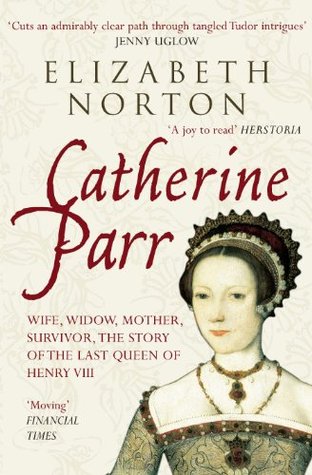
Catherine Parr- Catherine Parr: Wife, Widow, Mother, Survivor, the Story of the Last Queen of Henry VIII, Elizabeth Norton
Wife, widow, mother, survivor, the story of the last queen of Henry VIII. The sixth wife of Henry VIII was also the most married queen of England, outliving three husbands before finally marrying for love. Catherine Parr was enjoying her freedom after her first two arranged marriages when she caught the attention of the elderly Henry VIII. She was the most reluctant of all Henry’s wives, offering to become his mistress rather than submit herself to the dangers of becoming Henry’s queen. This only served to increase Henry’s enthusiasm for the young widow and Catherine was forced to abandon her lover for the decrepit king. Whilst Catherine was reluctant to be a queen she quickly made the role a success, providing Henry VIII with a domestic tranquillity that he had not known since the early days of his first marriage. For Henry, Catherine was a satisfactory choice but he never stopped considering a new marriage, to Catherine’s terror. Catherine is remembered as the wife who survived but, without her strength of character it could have been very different. When informed that the king had ordered her arrest for heresy, she took decisive action, defusing the king’s anger and once again becoming his ‘own sweetheart’. It was a relief for Catherine when Henry finally died and she secretly married the man she had been forced to abandon for Henry, Thomas Seymour. During her retirement, Catherine’s heart was broken by her discovery of a love affair between her stepdaughter, Princess Elizabeth, and her husband. She never recovered from the birth of her only child and, in her fever accused her husband of plotting her death. Catherine Parr is often portrayed as a matronly and dutiful figure. Her life was indeed one of duty but, throughout, she attempted to escape her destiny and find happiness for herself. Ultimately, Catherine was betrayed and her great love affair with Thomas Seymour turned sour.
Elizabeth Norton has written biographies of four of six of the wives (for some reason, my two favourites- Catherine of Aragon and Catherine Howard- didn’t make the cut), and I think that her Catherine Parr biography is my favourite. Catherine Parr does get a decent amount of attention, as she was married to Henry and then cared for the future Elizabeth I. However, it is often only in relation to those monarchs that she is discussed. Norton studies Parr on her own, and examines her life from start to finish.
This is one of the only Catherine Parr biographies that I’ve read that doesn’t try to cover every single person that was connected to her. In the case of Catherine Howard, the people around her directly affected her fate. In Catherine Parr’s case, she was very much an independent woman and her own person. Norton easily discusses her family members and husbands without losing Catherine in the process. (And Catherine was a very impressive and accomplished woman with much to discuss.) This biography is perfect for anyone who wants to learn about the woman who wrote her own religious meditations, schooled some of the most influential young woman at the time, and adroitly navigated her way through four husbands and their families.

And, if you want a pop concert retelling of all six wives, Six is the answer!
What are your favourite books about the six wives of Henry VIII?
Cheers,
The Historian
Facebook | Twitter | Instagram | Pinterest | Bloglovin’

Just wanted to say I’m about to finish up this entire book list and have enjoyed every one!! Thank you for excellent picks.