Ballet is a difficult position right now. I have seen multiple TikToks where people state that ballet is almost as irrelevant as opera*. And as always in December and January, the news articles about ballet companies making the majority of their budget from Nutcracker ticket sales. (This is true for most companies, unfortunately.) However, social media has also allowed dancers and companies to share more behind-the-scenes content and what daily life is like as a dancer, and that is drawing in more interest. I also receive a lot of DMs with questions, only further proving that it is not fading away!
Today I am sharing some of the best ballet history books that anyone can enjoy– no previous knowledge needed!
*Opera is not irrelevant and not as “remote” as people believe- there are almost always translations shown on screens, and opera has some of the most creative productions on the stage.

The Best Ballet History Books
You absolutely do not need to know the history of ballet to fully enjoy a performance! However, I know that it can help what we see on stage for many people. I do have a comprehensive list of books on the history of ballet, but several do require a background knowledge of ballet. These books here don’t require any previous experience or knowledge of ballet, and for the most part, tend more towards general interest than specialist books!
I’ve noted which “aspect” each book covers for quick reference.

General History: Apollo’s Angels: A History of Ballet, Jennifer Homans
For more than four hundred years, the art of ballet has stood at the center of Western civilization. Its traditions serve as a record of our past. A ballerina dancing The Sleeping Beauty today is a link in a long chain of dancers stretching back to sixteenth-century Italy and France: Her graceful movements recall a lost world of courts, kings, and aristocracy, but her steps and gestures are also marked by the dramatic changes in dance and culture that followed. Ballet has been shaped by the Renaissance and Classicism, the Enlightenment and Romanticism, Bolshevism, Modernism, and the Cold War. Apollo’s Angels is a groundbreaking work—the first cultural history of ballet ever written, lavishly illustrated and beautifully told.
Ballet is unique: It has no written texts or standardized notation. It is a storytelling art passed on from teacher to student. The steps are never just the steps—they are a living, breathing document of a culture and a tradition. And while ballet’s language is shared by dancers everywhere, its artists have developed distinct national styles. French, Italian, Danish, Russian, English, and American traditions each have their own expression, often formed in response to political and societal upheavals.
From ballet’s origins in the Renaissance and the codification of its basic steps and positions under France’s Louis XIV (himself an avid dancer), the art form wound its way through the courts of Europe, from Paris and Milan to Vienna and St. Petersburg. It was in Russia that dance developed into the form most familiar to American audiences: The Sleeping Beauty, Swan Lake, and The Nutcracker originated at the Imperial court. In the twentieth century, émigré dancers taught their art to a generation in the United States and in Western Europe, setting off a new and radical transformation of dance.
Why You Should Read This…
This is arguably the “toughest” read, and it is still meant for a general audience! This is a history of ballet that spans over four centuries. It covers it’s Italian courtly beginnings in the sixteenth century through to the twenty-first century. Admittedly, it cannot cover everything, so not every country/school is covered completely but this is still a comprehensive and fascinating exploration of ballet.
My one qualm with this book is that she does tend to worship George Balanchine. He is a problematic figure in ballet’s history but many dancers trained in the Balanchine method tend to overlook his personal history. In any case, it is still a wonderful book- I would just take the last few chapters with a grain of salt.

Company Specific: The Royal Ballet: 75 Years, Zoë Anderson
This book is a perceptive and critical account of the first 75 years of The Royal Ballet, tracing the company’s growth, and its great cultural importance – an indispensable book for all lovers of ballet.In 1931, Ninette de Valois started a ballet company with just six dancers. Within twenty years, The Royal Ballet – as it became – was established as one of the world’s great companies. It has produced celebrated dancers, from Margot Fonteyn to Darcey Bussell, and one of the richest repertoires in ballet.The company danced through the Blitz, won an international reputation in a single New York performance and added to the glamour of London’s Swinging Sixties. It has established a distinctive English school of ballet, a pure classical style that could do justice to the 19th-century repertory and to new British classics.Leading dance critic, Zoë Anderson, vividly portrays the extraordinary personalities who created the company and the dancers who made such an impact on their audiences. She looks at the bad times as well as the good, examining the controversial directorships of Norman Morrice and Ross Stretton and the criticism fired at the company as the Royal Opera House closed for redevelopment.
Why You Should Read This…
By and large, ballet is produced by companies- a ballet company will perform different ballets throughout their season with a fairly set group of dancers. The direction, finances, politics, location, and more can all affect a company’s trajectory, and focusing on one company can be a great lens into ballet. (Remember Breaking Pointe on the CW, anyone?)
While there are many company histories you can turn to, I really enjoyed Zoë Anderson’s history of the Royal Ballet.
The Royal Ballet is arguably one of the most successful ballet companies in the world, but their history is not all smooth sailing. Anderson covers the key moments in Royal Ballet history without it feeling weighed down. This is a shorter book, so it’s a great introduction if someone is mostly unfamiliar with ballet.

Dancer Specific: Margot Fonteyn, Meredith Daneman
Margot Fonteyn began life on the 18th of May, 1919 in Reigate, Surrey, as plain Peggy Hookham. She ended it on the 21st of February, 1991, as Prima Ballerina Assoluta, Dame of the British Empire and the most legendary dancer since Pavlova. Meredith Daneman, with her own extensive background in ballet, tells Fonteyn’s story in vivid prose with insight and sensitivity.
Drawing upon extensive research, countless interviews, and exclusive access to never-before-seen letters and diaries—including those of Fonteyn’s extraordinary and devoted mother—Daneman presents firsthand remembrances of Fonteyn from a vast array of people who knew her and danced with her during the course of her lengthy career. Margot Fonteyn contains revelations not found in any other account of the ballerina, from insights into Fonteyn’s private world (especially regarding her relationship with her mother, the “Black Queen”) to her feelings about her fellow dancers and, of course, the men in her life—including choreographer Frederick Ashton, her husband Roberto Arias, and her long-time dance partner and rumored lover Nureyev.
Why You Should Read This…
What would ballet be without dancers? Looking at ballet through the career and life of a particular dancer is also a great way to get-to-know the ballet world. Margot Fonteyn is one of the most talented dancers in ballet history, and she remains one of the best known dancers. (For good reason, too!) While her dance career had many highs and lows, her personal life was also incredibly captivating. (There is gun running- I will leave it at that.) This is a must-read biography, and it is a book that I continue to recommend widely to anyone interested in ballet or biography as a genre!
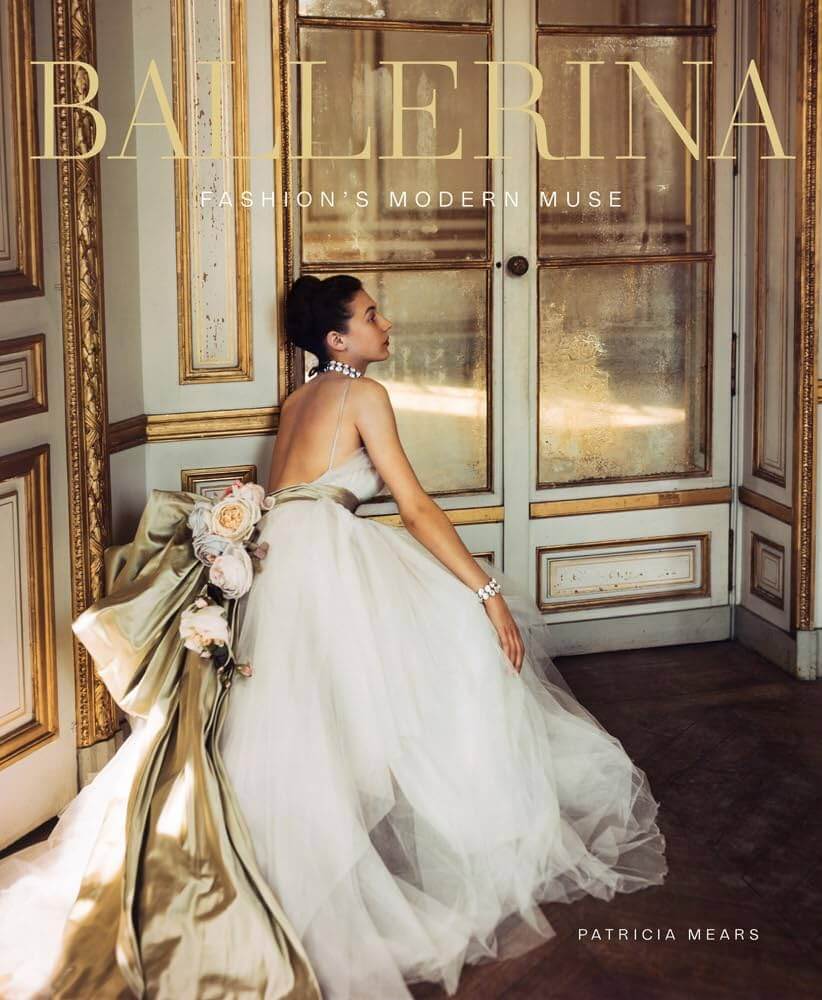
Fashion History: Ballerina: Fashion’s Modern Muse, Patricia Mears
A gorgeously illustrated look at the profound influence that classical ballet and the ballerina have had on high fashion
Fashion’s Modern Muse is a revelatory, irresistible treat for dance aficionados and fashionistas alike. Couturiers such as Balmain, Balenciaga, Chanel, Schiaparelli, Charles James, Dior, and Yves Saint Laurent designed ballet-inspired dresses and gowns, many featuring the boned bodices and voluminous tulle skirts of classical tutus. And ready-to-wear designers such as Claire McCardell found inspiration in ballet leotards and other practice clothing, creating knitted separates, bathing suits, and wrap dresses. Written by fashion and ballet experts, the book is illustrated with archival photography by such masters as Richard Avedon, Edward Steichen, Irving Penn, Man Ray, and Cecil Beaton, along with newly commissioned photography of contemporary ballerinas wearing ballet-influenced couture.
Why You Should Read This…
I know that many of my lovely readers are also interested in fashion history, so this is a must-read for you. This book accompanied MFIT’s exhibition of the same name that explored the relationship between ballet and fashion. While some of the essays examine the social ties between fashion and ballet, such as ballet dancers being called on to act as models for designers, others focus on the fashion of ballet itself. While balletcore is a trend that seems to cycle back around every three to four years nowadays, the costumes that dancers wear also evolve throughout the years. (And yes, designers do create pieces for ballet productions!) And not only is the book captivating, it is also gorgeous. The photography included truly highlights why this is such an important relationship.

General Knowledge: The Ballet Companion: A Dancer’s Companion to the Technique, Traditions, and Joys of Ballet, Eliza Gaynor Minden
The Ballet Companion is a fresh, comprehensive, and thoroughly up-to-date reference book for the dancer. With 150 stunning photographs of ballet stars Maria Riccetto and Benjamin Millepied demonstrating perfect execution of positions and steps, this elegant volume brims with everything today’s dance student needs, Practical advice for getting started, such as selecting a school, making the most of class, and studio etiquette Explanations of ballet fundamentals and major training systems An illustrated guide through ballet class — warm-up, barre, and center floor Guidelines for safe, healthy dancing through a sensible diet, injury prevention, and cross-training with yoga and Pilates Descriptions of must-see ballets and glossaries of dance, music, and theater terms Along the way you’ll find technique secrets from stars of American Ballet Theatre, lavishly illustrated sidebars on ballet history, and tips on everything from styling a ballet bun to stage makeup to performing the perfect pirouette. Whether a budding ballerina, serious student, or adult returning to ballet, dancers will find a lively mix of ballet’s time-honored traditions and essential new information.
Why You Should Read This…
Finally, if you are the type of person who watches a ballet and goes, “what was that turn that she was doing?”, this would be the book for you! The Ballet Companion was written by Eliza Gaynor Minden, of the Gaynor Minden pointe shoe fame, meaning she knows what she is talking about. This book breaks down positions and steps, and provides the names across multiple ballet schools. (The Royal Academy of Dance will call a position one thing, the Cecchetti school will call it another, and the Vaganova yet a different one.)
I also love that this book has many different history insights, too. There are yellow pages throughout the book that feature the history of different productions, dancers, and events in ballet history that also help provide some interesting context!

Want more ballet history? Check out my series here!
A New Star and Different Schools
What are your favourite ballet history books?
Cheers,
The Historian
Facebook | Twitter | Instagram | Pinterest