There are many artists over the centuries who dedicated their career to one or two courts, spending years and years with one monarch and those around them. Many of these artists received official titles. However, many artists were unofficial court painters who worked with many royal and noble families. One of these painters of the twentieth century was a favourite artist across Europe- Philip de László. An Anglo-Hungarian artist, he worked with many royal families that would lose their thrones in the early twentieth century. Onto our February Court Painters: Philip de László!
Philip de László’s Early Years
Fülöp Laub was born in Budapest in 1869 to Adolf and Johanna Laub, a tailor and seamstress. Both Fülöp and his younger brother changed their last name to László in 1891. Although László’s parents were both Jewish, he was baptised into the Hungarian Catholic Church in 1894.
László originally studied photography under Bertalan Székely and Károly Lotz at the National Academy of Art. His painting work was quickly acclaimed, and he continued his studies in Munich and then in Paris. Impressively at the International Exhibition in 1900, his portrait of Pope Leo XIII was given the Gold Medal Award. After moving to Vienna in 1903, he finally settled in London in 1907.
A New Bride and a New Title
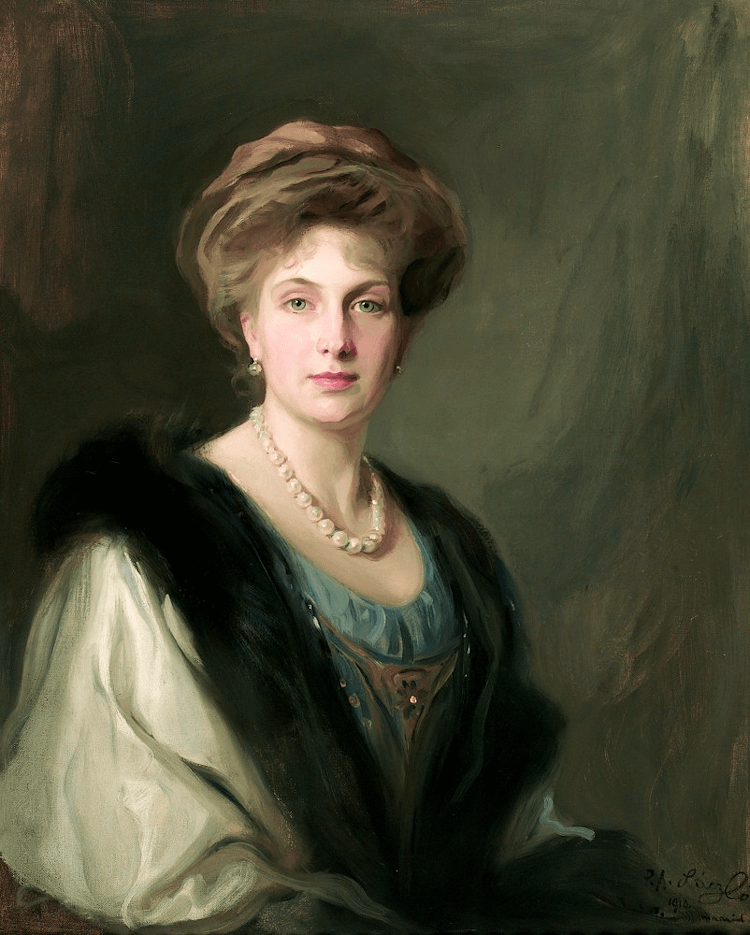
In 1900, László married Lucy Madeleine Guinness. Guinness was a member of the Guinness banking family and was a prominent Anglo-Irish socialite. The pair met in Munich in the early 1890s where László was studying art and Guinness was studying music. Guinness’ parents disapproved of the match, as László was a student with little to his name. However, the Guinness family would go on to approve of László as a match after he created portraits of Emperor Franz Joseph I, Empress Augusta Victoria, and many other royals.
In 1912, Emperor Franz Joseph ennobled the artist- as a part of the Hungarian nobility, he was able to use the title “László de Lombos”. King Edward VII also made László a Member (MVO) of the Royal Victorian Order in 1909.
WWI Internment
During the First World War, László was interned in 1917 and 1918 on the grounds of contacting the enemy when he had been writing letters to family in Austria despite living permanently in England, becoming a British citizen in 1914, and raising his children in England. He was held at Brixton Prison until a possible nervous breakdown at which point he was put under house arrest. László was released in 1919 when there was no evidence to support a case against him.
de László’s Style
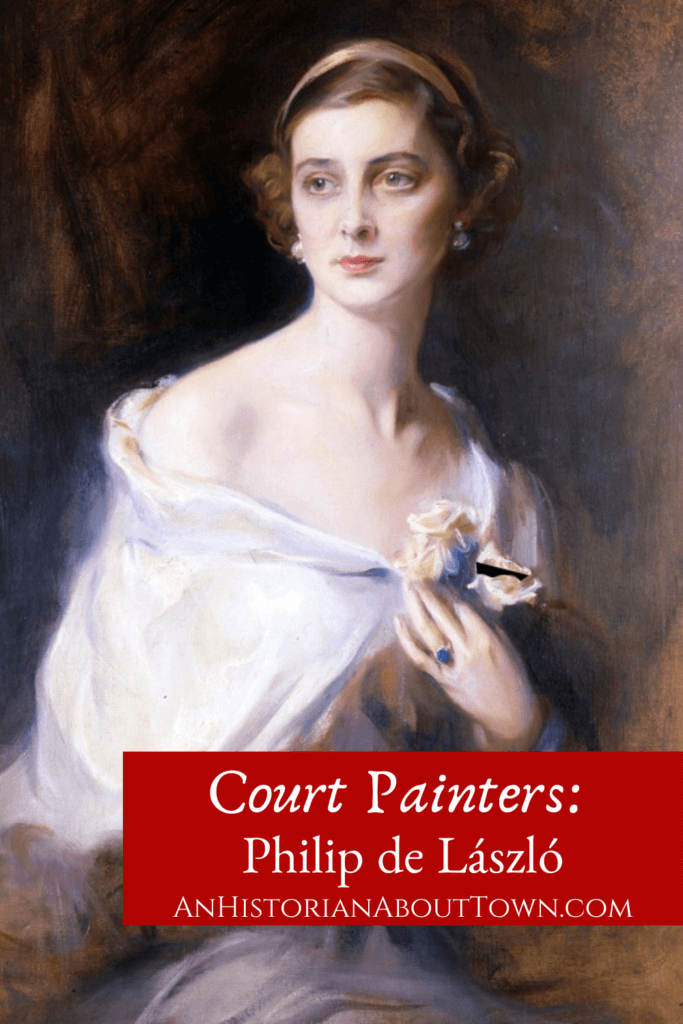
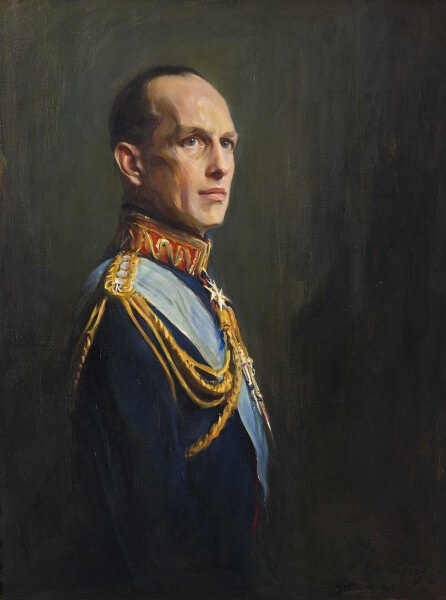
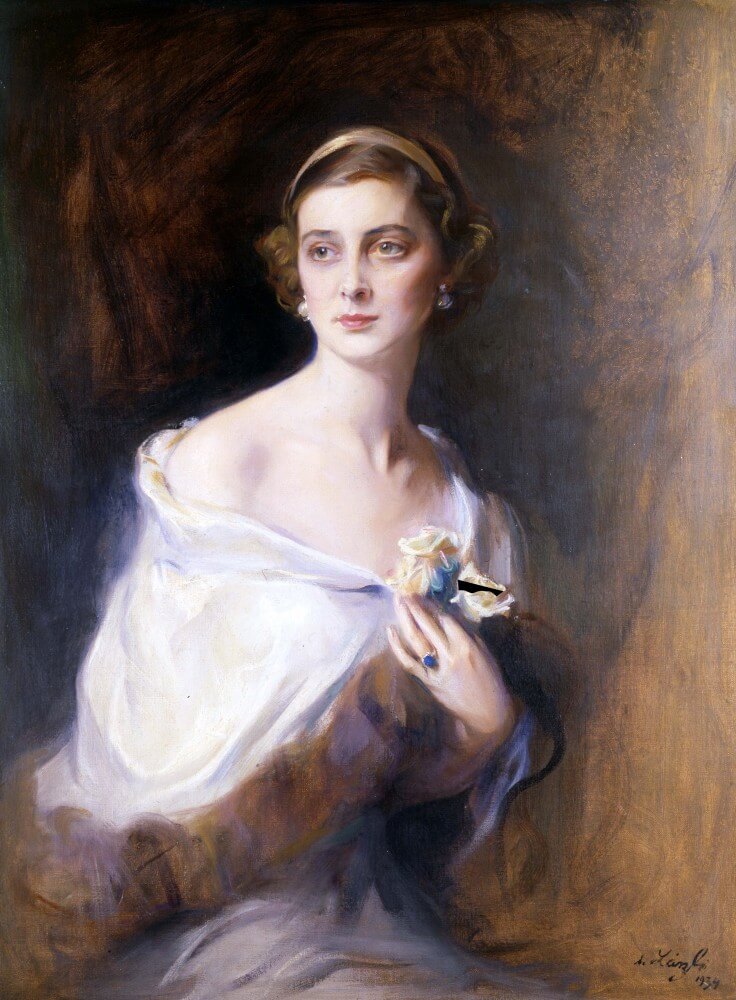
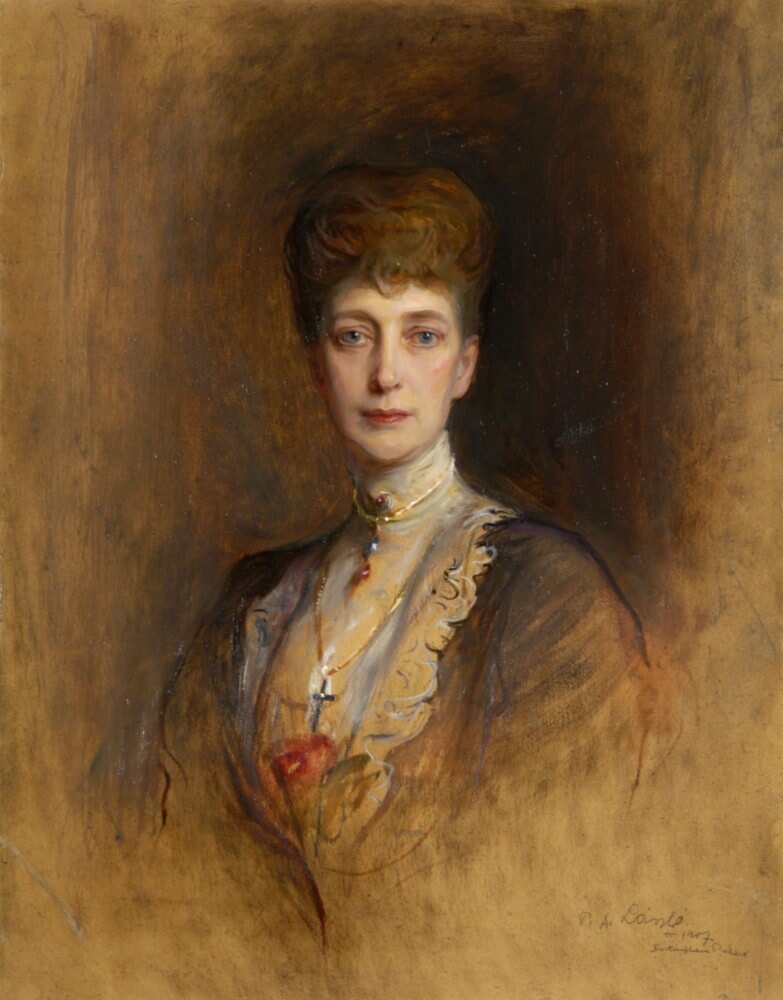
Although he did begin his career as a photographer, László quickly established himself as a portrait painter. He claimed to have produced over 2,500 portraits and hundreds of them are still held in collections to this day. His subjects included members from the British Royal Family, the Russian Royal Family, the Spanish Royal Family, the Austrian Royal Family, members of the British aristocracy, politicians, and more. (His entire body of work is really a “who’s who” of Europe in the 1910s, 1920s, and 1930s.) His catalogue does feature far more female sitters than male. Notably his portraits feature a bravura style of brushwork and wash in the background.
Later Years and Death
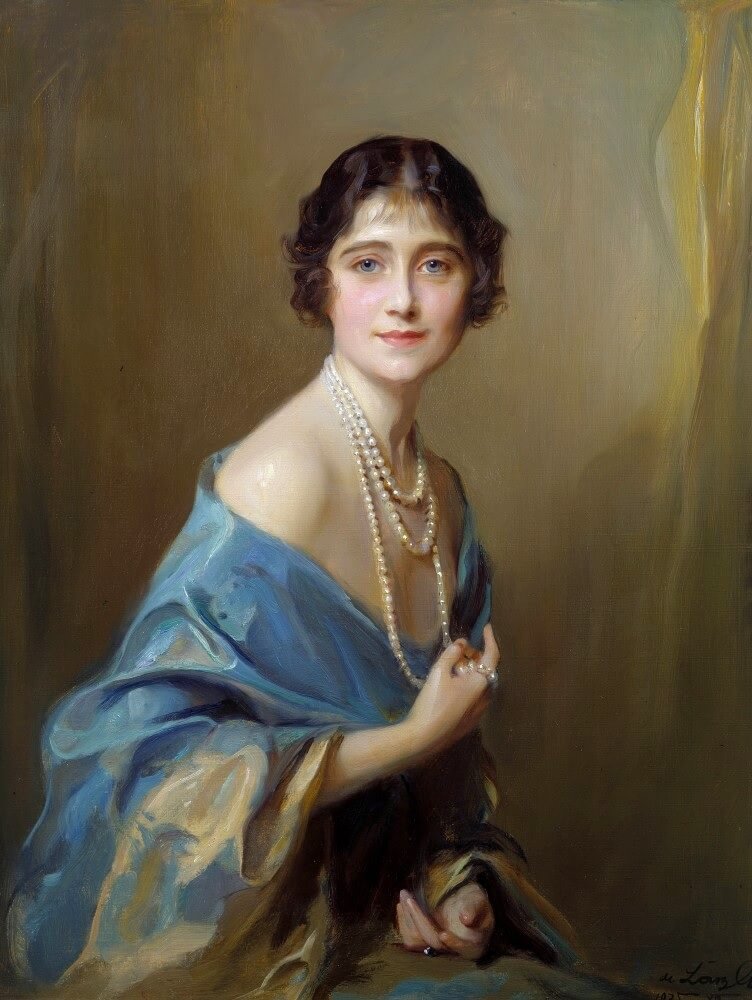
László pushed himself to his limits in the 1920s and 1930s and worked tirelessly creating portraits across Europe. He also continued to hold weight amongst his peers. In 1930, he was elected President of the Royal Society of British Artists, and in 1937, he was named Vice-President of the Royal Society of Arts. Tragically, he died of a heart attack on 22 November 1937, leaving behind an incredible body of work. I was lucky enough to see his portrait of the Duchess of York (the future Queen Elizabeth the Queen Mother) in the Russia: Royalty and the Romanovs exhibition at the Queen’s Gallery. (Many of his works are now held in the Hungarian National Gallery’s collections.)
Interested in more court painters?
Court Painters: Anthony van Dyck
♠
Were you familiar with Philip de László’s works?
Cheers,
The Historian
Facebook | Twitter | Instagram | Pinterest