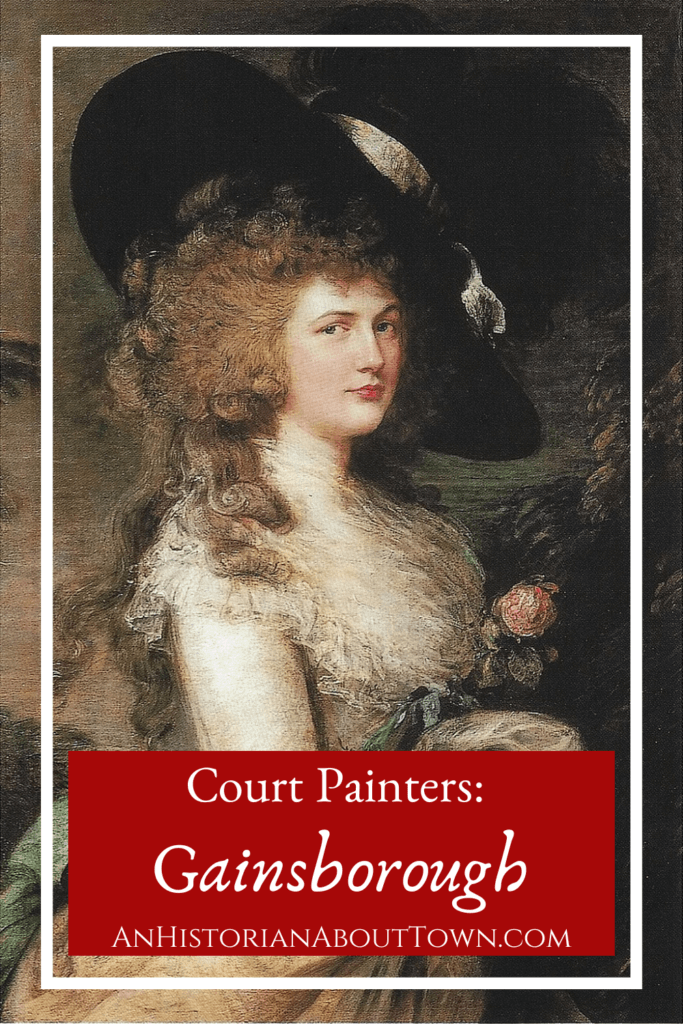
Last month I launched a new series on the blog: the history of court painters! Although photography has largely taken over in the realm of royal portraits, court painters, both official and unofficial reigned for centuries. Monarchs and courtiers would commission portraits that would help establish their public image and oftentimes play a siginifcant role in their lasting legacy. Different artists approached their role as court painter… well, differently. There is no one “right or wrong” way to create royal portraits, and we certainly see an evolution throughout the centuries. Thomas Gainsborough was never given the title of court painter, but he was a popular Georgian artist. As we are finishing up Georgian History Month on the blog, let’s get into Court Painters: Gainsborough!
Thomas Gainsborough’s Early Life
English artist Thomas Gainsborough was born in May 1727 in Sudbury, Suffolk. His father, John, was a weaver, and the family lived on Gainsborough Street. (That’s handy…) He started sketching and drawing at a young age and had progressed to smaller portraits and landscapes by ten. At only thirteen Gainsborough moved to London to start training, originally working under an engraver, Hubert Gravelot, and eventually began working under William Hogarth. He also studied under Francis Hayman, and Gainsborough worked with him on decorations at the Vauxhall Pleasure Gardens (an incredibly popular Georgian attraction).

Gainsborough’s Early Career
Gainsborough married in 1746, and his new wife, Margaret Burr, was an illegitimate daughter of the Duke of Beaufort. Not only did the union bring money with her annuity but that also brought social connections. However, he still needed to work his way up. His landscapes weren’t selling overly well so he moved his young family back to Sudbury where he decided to focus on portraits instead. Interestingly, there are several surviving self-portraits from the first fifteen years of his career, including a self-portrait with his family.
Bath is the Place to Be
After spending several years in Ipswich, Gainsborough then moved to Bath. In the second half of the eighteenth century and the early nineteenth century, Bath was an exceptionally fashionable city. (See Jane Austen’s Northanger Abbey and Persuasion.) Much of the ton spent several weeks and even months in Bath, with November to early June the “best time” to visit and take in the restorative waters. (And yes, while he was in Bath, the family lived in at Number 17 The Circus!)
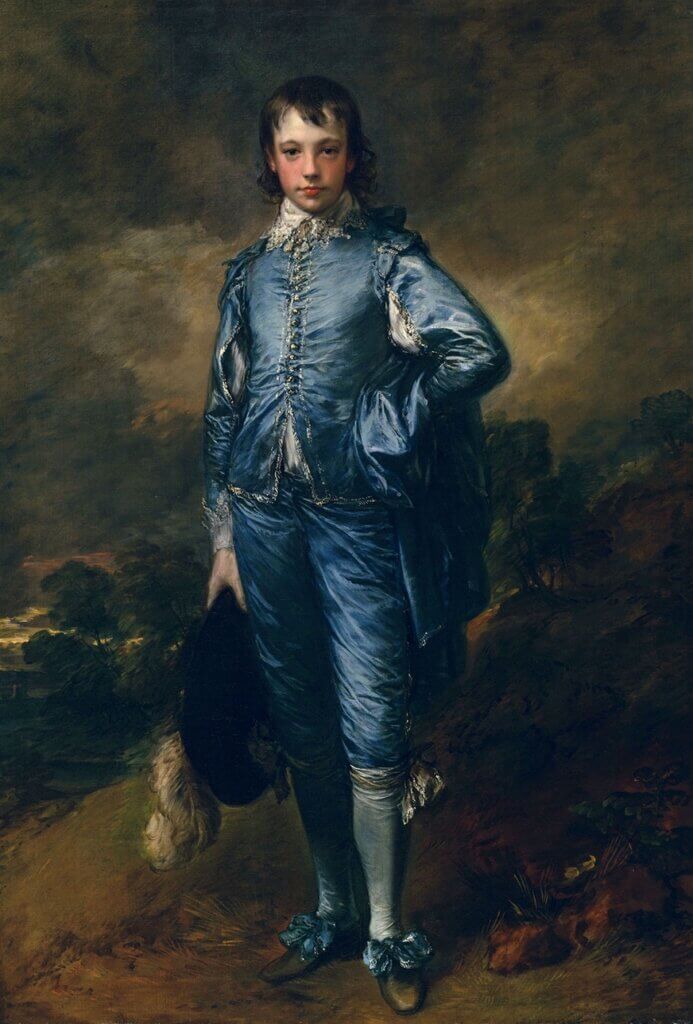
Gainsborough lived in Bath for nearly fifteen years, and he became a popular artist that the fashionable sought out for commissions. While he lived there, he submitted several of his works to the Society of Arts exhibitions in London, which only helped to further catapult his career.
The Royal Academy
Along with thirty-three other artists, Gainsborough was one of the founding members of the Royal Academy of Arts in 1768. His continual exhibitions allowed him to network (as we would now call it) and to build connections with different artists. With a Royal title, obviously, King George was involved in its founding- he signed the groups founding documents and would have been familiar with Gainsborough as an artist.
Gainsborough then moved to London in 1774. He continued to be a popular artist with the aristocracy, including the Duke and Duchess of Cumberland. In the 1770s, he first began placing his subjects within landscape paintings creating a distinct new style.
A Royal Relationship
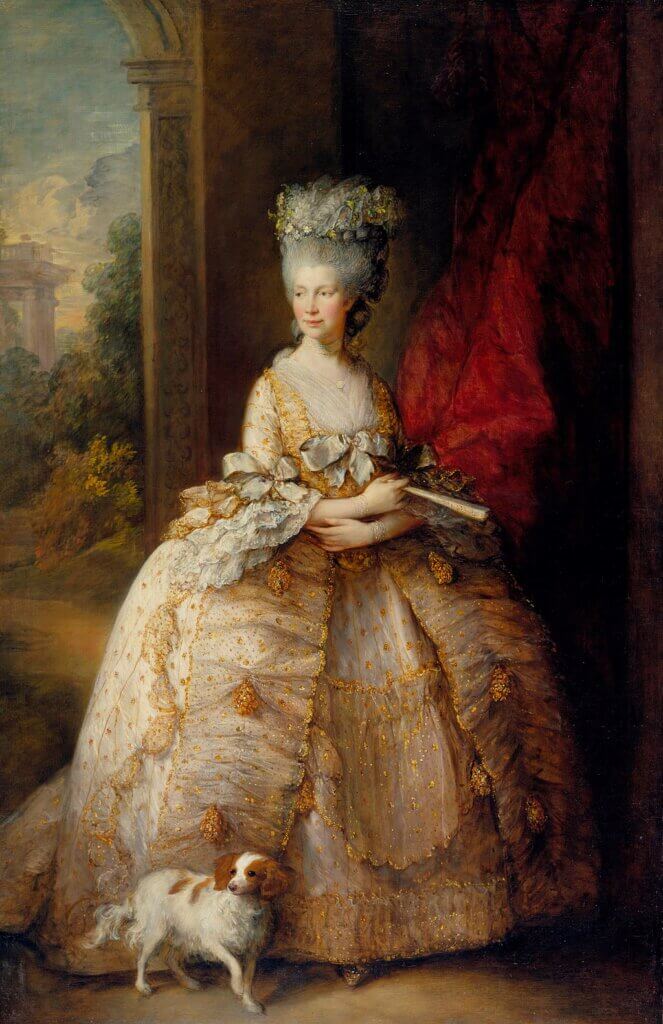
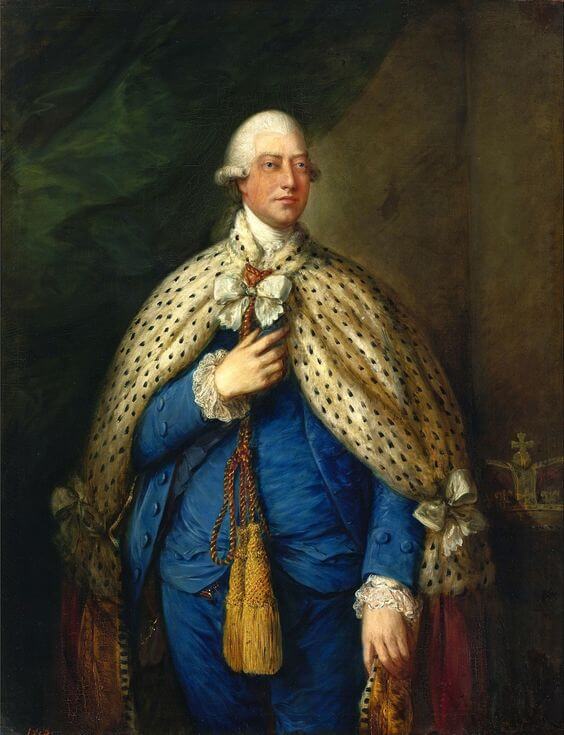
Allan Ramsay was King George III and Queen Charlotte’s official court painter (aka Principal Painter to the King) until his death in 1784, and George then appointed Gainsborough’s contemporary and rival, Joshua Reynolds, to the official position. Reynolds had been elected as President of the Royal Academy and received much critical acclaim from his peers and patrons. However, George and Charlotte both personally preferred Gainsborough to Reynolds and commissioned several portraits from the artist. (He is a perfect example of why the official title is not always needed.)
Gainsborough created portraits of both George and Charlotte in 1780. He would create another portrait of George, a portrait of their son, the future Duke of Kent, and a joint portrait of the couple’s three eldest daughters. (It remains one of my favourite royal portraits.) Gainsborough passed away in 1788, most likely from cancer, predating the Regency period and the King’s death.

Are you a fan of Gainsborough’s royal portraits?
Cheers,
The Historian
Facebook | Twitter | Instagram | Pinterest