Unsurprisingly, most count painters (both official and unofficial) were/are male (like so many other roles). For much of western history, it was rather unlikely that girls and young women would receive the same education that their brothers received, including apprenticeships in crafts. However, that does not mean that there were no female court painters. Continuing on with our (much-needed) theme of women’s history for Women’s History Month, we are exploring a sixteenth and seventeenth century artist who captured the Spanish court. Let’s get into March’s Court Painters: Sofonisba Anguissola!

Sofonisba Anguissola’s Early Years
Sofonisba Anguissola was born in 1532 to an Italian noble family- the Anguissola family was obviously titled but did not have a lot of money. She was one of seven children, six girls and one boy. Her parents ensured that all of their children were thoroughly educated to the standards of the time. Five of the six girls were talented painters and the sixth was a writer; Sofonisba would be the best known of the sisters.

Connections in the Art World
Anguissola studied under numerous artists in her teens and early twenties. She first studied with Bernardino Campi, and then Benardino Gatti. She was one of the first women to study art officially in the region and would set a precedent. Most notably, she met Michaelangelo who recognised that she was an exceptionally talented artist. She would continue to correspond with him.
Because she was not able to study the nude form as a woman, it did affect her work. Aguissola did not choose larger mythological or religious scenes like many of her contemporaries, as these would often feature precise anatomy. Instead, she focused on portrait work and on building her commissions there.
Interested in more book previews, period dramas, royal news, and more? You can subscribe to my biweekly substack newsletter here: https://anhistorianabouttown.substack.com/
The Spanish Court Calls
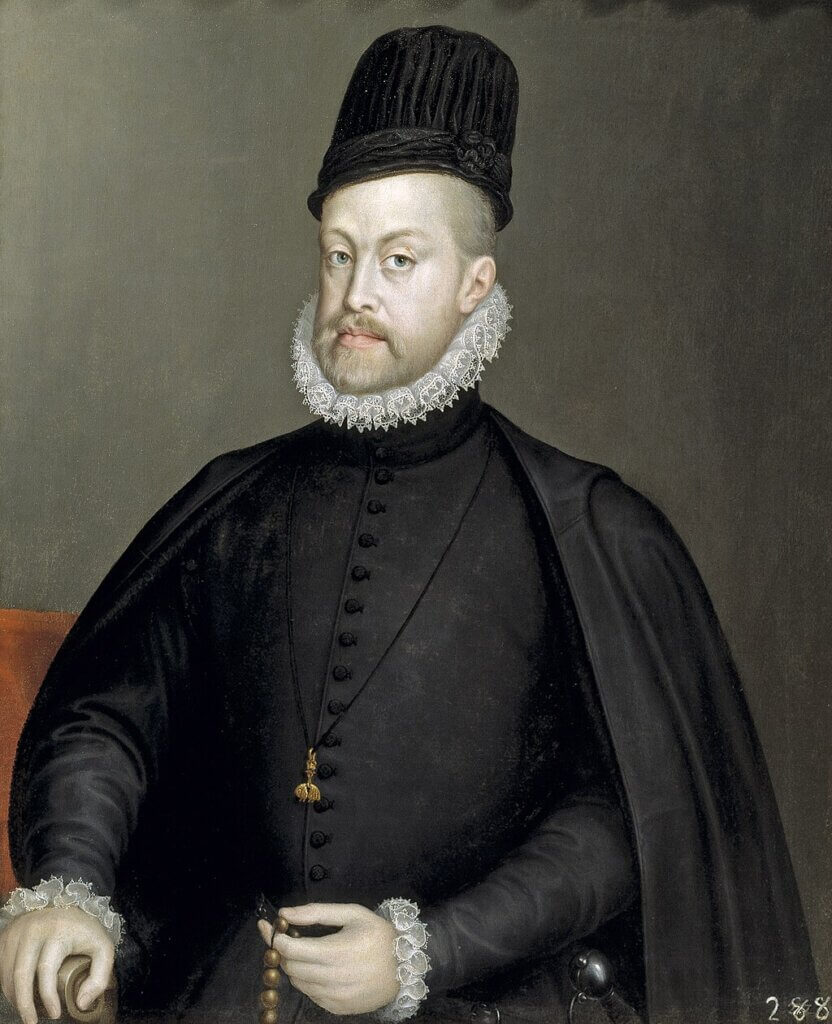
By the late 1550s, Anguissola had established herself as a talented portraitist. She was well-known in Italy for her portraits of various nobles, including her portrait of Marquess Massimiliano Stampa. In 1559, King Philip II of Spain asked that she come to the Spanish court to act as a lady-in-waiting to the Queen and serve as the court painter.
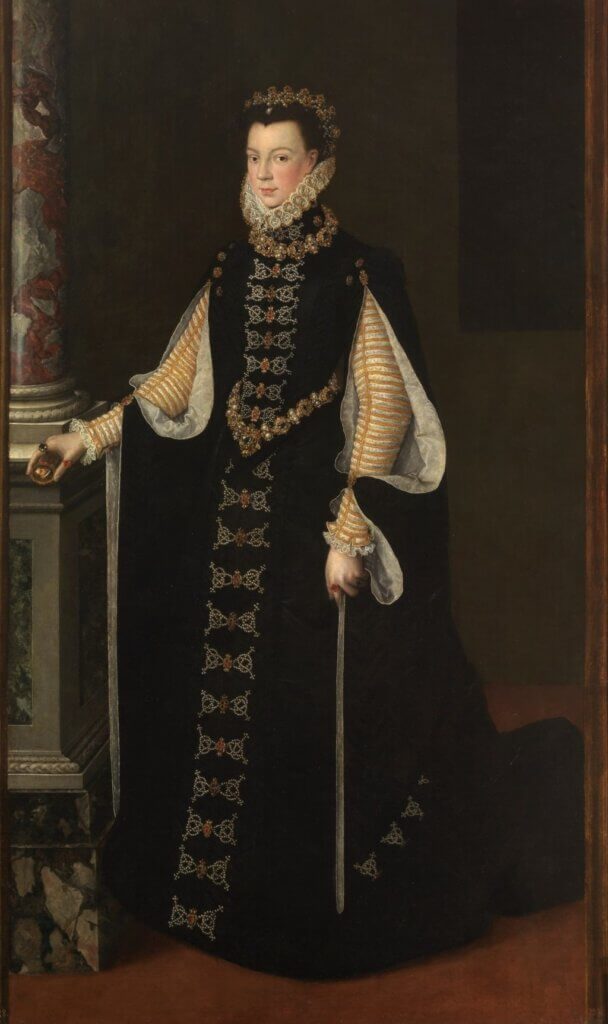
Queen Elisabeth de Valois was the fourteen year old third wife of the Spanish King, and she was also known for her painting skill. Not only did Anguissola help Elisabeth develop her style as an artist, she also influenced Elisabeth’s daughters, as well. She remained at the court for fourteen years and developed a strong network there.
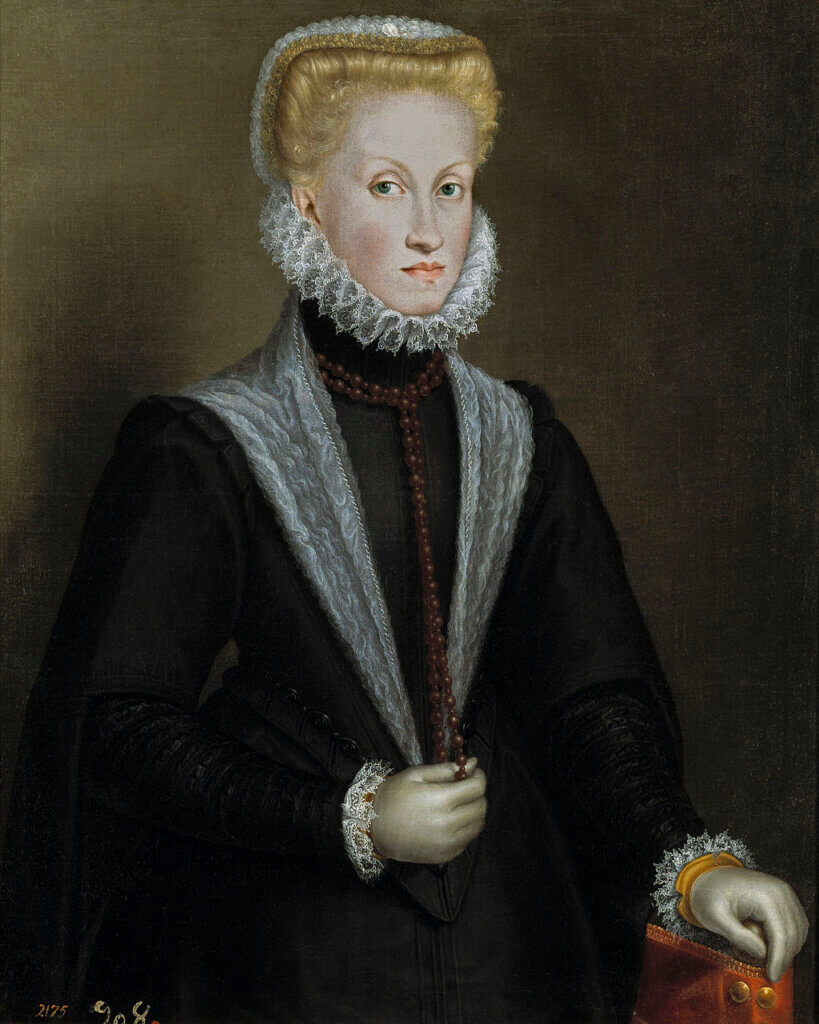
Philip commissioned several portraits from her of several members of his family- his sister, his third and fourth wives, and his son. One of the best known portraits of Philip, known as the Prado Philip II portrait, has now been attributed to Anguissola.
Anguissola’s Style
As mentioned above, Anguissola’s training, or lack thereof in certain areas, did have an effect on her style. While her earlier portraits were more simplistic, she continued to grow as an artist. Her portraits from the Spanish court are highly detailed and use vivid colours contrasted against darker backgrounds. As is common in the time, the portraits were formal in nature. Notably, her portraits of her own family are considered some of the best in her catalogue. She would influence future generations of painters, included Caraveggio and Peter Paul Rubens. (Yes, Rubens’ works are those that are on display of the ceiling of Banqueting House in London.)
Later Years and Death
Anguissola married first in 1571 and after her husband died in 1579, she remarried again in 1584. She most likely left Spain somewhere around 1574. She spent much of the remainder of her life in Genoa and continued to paint. She also tutored young artists and when she was unable to continue painting herself, she served as patroness to several artists. In 1624, Anthony van Dyck visited her to ask her advice on painting. She died in November of 1625 at the age of 93.

Interested in more court painters?
Court Painters: Anthony van Dyck
Court Painters: Philip de László
♠
Were you familiar with Sofonisba Anguissola’s works and life?
Cheers,
The Historian
Facebook | Twitter | Instagram | Pinterest