We return back to Britain for our art history series and jump forward a century. The seventeenth and eighteenth century saw some fairly prolific painters in Britain; several are notably connected with the British Royal Family, much like Thomas Gainsborough. Unfortunately, not all of these painters are as well known now. Sir Godfrey Kneller is known among some who are interested in art history and royal history, but not as much as he should be. His Stuart and Georgian portraits remain very recognisable, and you have probably seen more than one.Let’s get into April’s Court Painters: Sir Godfrey Kneller!

Godfrey Kneller’s Early Years
Gottfried Kniller was born in the Free and Hanseatic City of Lübeck (a German city-state) on 8 August 1646. His father Zacharias Kniller was a portraitist himself, and ensured that Gottfried and his elder brother, John, were educated well. Gottfried moved to Leiden to study mathematics first; however, he then turned to painting. He moved to Amsterdam where he was able to study under Ferdinand Bol (one of Rembrandt’s pupils), among other artists. The two brothers then moved to Rome and then Venice early in the 1670s to broaden their training further. Notably, he studied a number of different styles of painting.

Patronage in Great Britain
Known as Godfrey Kneller in Great Britain, Kneller arrived in England sometime between 1674 and 1676. He had established himself in Italy as a portraitist, creating many portraits for the Italian aristocracy. When he was introduced to the Duke of Monmouth, he was quickly able to secure his patronage. As the Duke was the illegitimate son of King Charles II, this was an important connection.
Kneller established his own style of portraits. It typically shows the sitter in formal dress and wig in one of few poses. Because he only needed a brief sketch of the sitter to create a portrait, he was able to produce many in a short span of time.
King Charles II quickly began to commission pieces from Kneller, and appointed him Co-Principal Painter in Ordinary (with John Riley) in 1680.

The Hampton Court Beauties
Kneller’s predecessor as Principal Painter, Sir Peter Lely, is largely known for his series known as “The Windsor Beauties”. Charles II commissioned this series of portraits of some of the most beautiful women at his court who also happened to be Charles’ mistresses in several cases.
Queen Mary II commissioned Kneller to create the Hampton Court Beauties in the 1690s, a similar series of portraits meant to hang at Hampton Court Palace. These women were not mistresses but were instead considered the glamorous and upstanding women of the court. These portraits have a very different feeling from the Windsor Beauties and far more formal. (That makes complete sense given the difference between Charles’ court and Mary and William’s court.)

Painting a Seventh British Monarch
Kneller may have begun his royal career working with Charles II, but he would continue to work with several more monarchs. He created a portrait of King James II, Charles’ younger brother.
King William III and Queen Mary II also favoured Kneller, and William gave Kneller a knighthood in 1692 to thank him for his work. He also created several pieces for Queen Anne, the last Stuart monarch, and then transitioned into the Georgian dynasty.
King George I continued on, and Kneller’s portraits were actually used for George’s coinage. The first Hanoverian King chose to make Kneller a baronet in 1715 to further mark his accomplishments. Although Kneller died in 1723, four years before King George II would reign, he did paint the second Hanoverian monarch when he was Prince of Wales.
Branching Out From Royalty
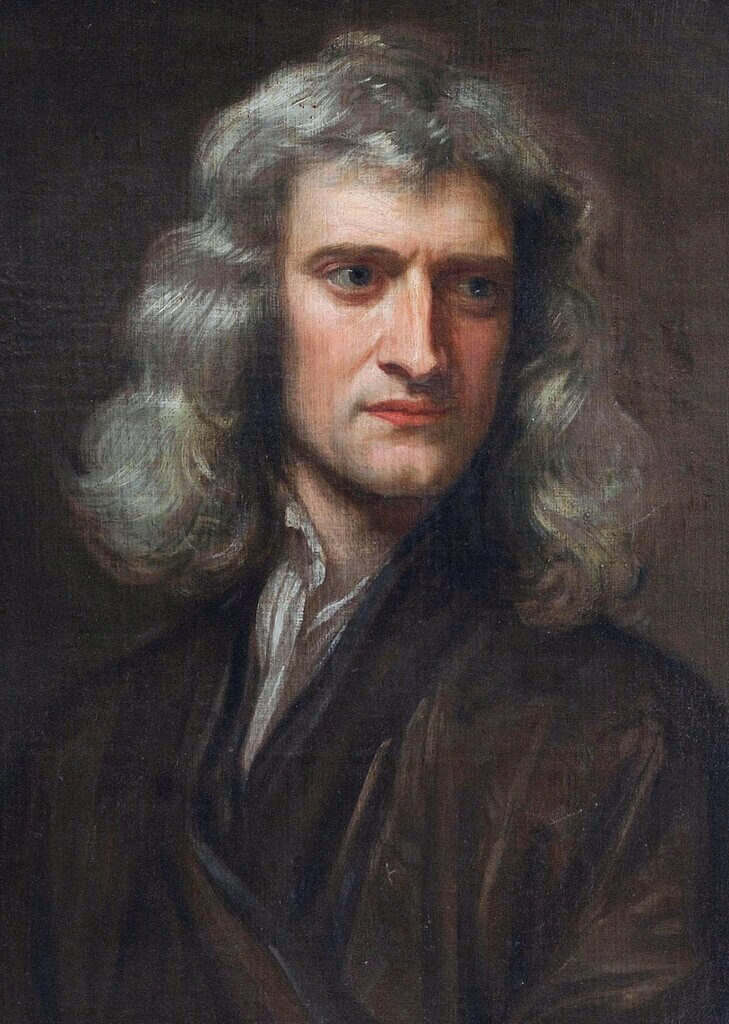
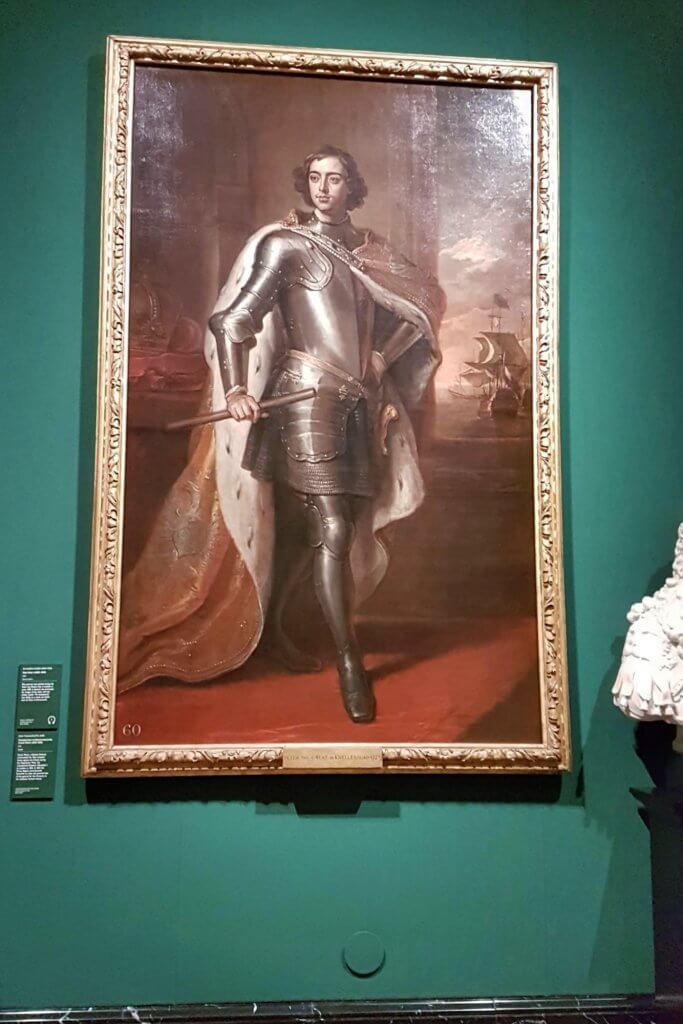
While Kneller did make portraits of several members of the British Royal Family, and other royals, like Tsar Peter I, he also produced portraits of several notable figures. There are surviving portraits and copies of his portraits of scientist and philosopher Isaac Newton, philosopher and physician John Locke, and architect and playwright Sir John Vanbrugh.
Kneller was known to be arrogant by some, but it is clear that he was favoured by many throughout British society beyond the Royal Family.
Interested in more court painters?
Court Painters: Anthony van Dyck
Court Painters: Philip de László
Court Painters: Sofonisba Anguissola
♠
Were you familiar with Sofonisba Anguissola’s works and life?
Cheers,
The Historian
Facebook | Twitter | Instagram | Pinterest | Threads

_-_Diana_De_Vere,_Duchess_of_St._Albans_(d.1742)_-_RCIN_404722_-_Royal_Collection.jpg)
