We are back for more literary travel! We kicked off the series with Jane Austen in Bath, a Georgian experience for any Austenite. Given that we find ourselves in April, we obviously have to look to the stage: William Shakespeare. He was born on 23 April (1564) and died on 23 April (1616). Just in time to celebrate this auspicious literary date, we are going to be tracing Shakespeare’s path. While we could look to Stratford-Upon-Avon, we will instead be spending today in what we consider London but was once the City of Southwark. Onto Literary Travel: Shakespeare’s Southwark!
 The George Inn
The George is the sole surviving galleried coaching inn in London; coaching inns allowed private travellers to bring their house and carriage with them to remain at the attached stables. There used to be many in Southwark and London, but The George is the one to survive! This particular structure dates back to the late 1670s; the previous inn was destroyed by a massive fire in Southwark in 1677.
While we are not 100% sure whether or not Shakespeare chose this pub as his daily watering hole, he did mention it in King John. And if you are not only interested in Shakespeare, there are other literary connections: Chaucer had his pilgrims set off from The George in The Canterbury Tales, and Dickens mentioned it in Little Dorrit.

Southwark Cathedral
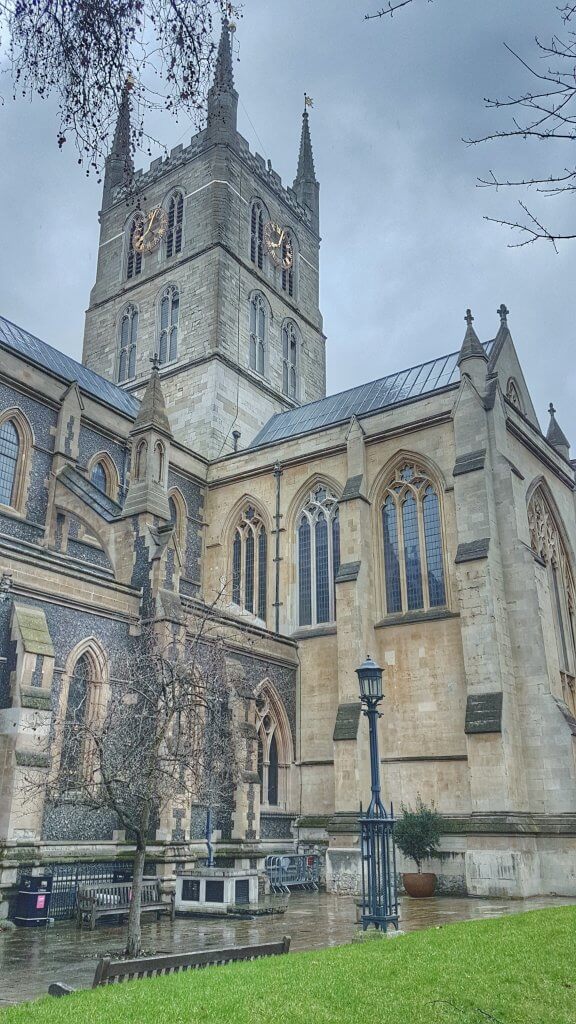
Southwark Cathedral is a fascinating building that gets ignored for Westminster Abbey and St. Paul’s Cathedral but it deserves our attention. The site first served as home to Southwark Priory, an Augustinian priory, from 1106 to 1538. After the dissolution of the monasteries in 1538, it became a parish church known as St. Saviour’s. Shakespeare would have known the church as St. Saviour’s and lived within the parish. He paid for his brother Edmund to be buried in the then-church in 1607.
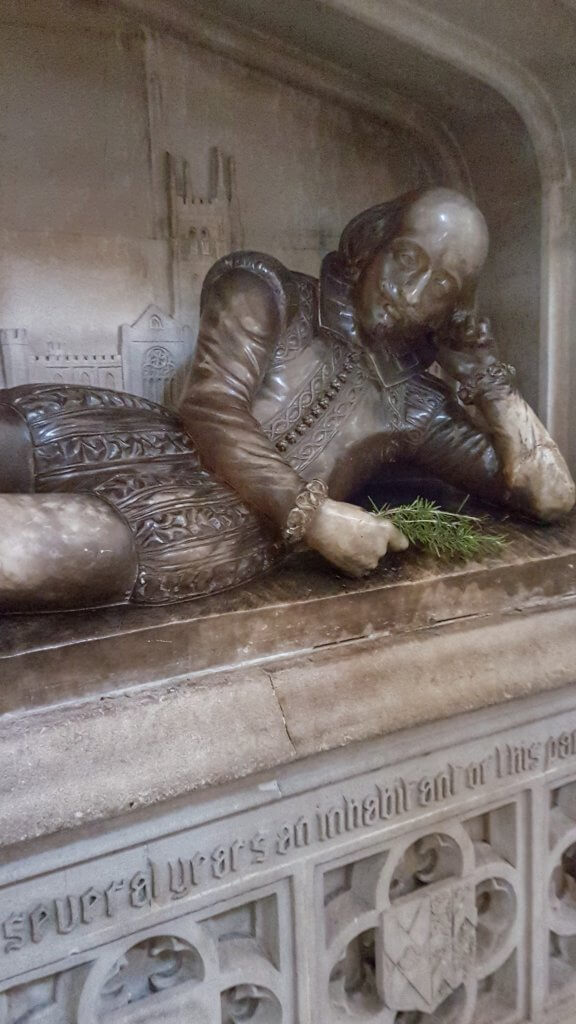
There is now a stained glass window to celebrate Shakespeare’s career with scenes from various plays represented. There is also a statue of Shakespeare lounging with a quill in his hand; the statue itself is now over a century old. You will often find a sprig of rosemary in his hand.
Another must-see for literary history fans: there is an incredible monument for the mediaeval poet John Gower!
Bear-Baiting
While I think that all of us are justifiably horrified to hear of bear-baiting, it was a favoured pastime in Elizabethan England. There were different bear-baiting pits around Southwark at various times where patrons would pay to watch bears and other animals fight. Interestingly, the theatres and baiting pits essentially fought over the same customers and would often try to out-do the other in an attempt to draw a larger crowd. Shakespeare even mentioned several different well-known bears in various plays, include George Stone.
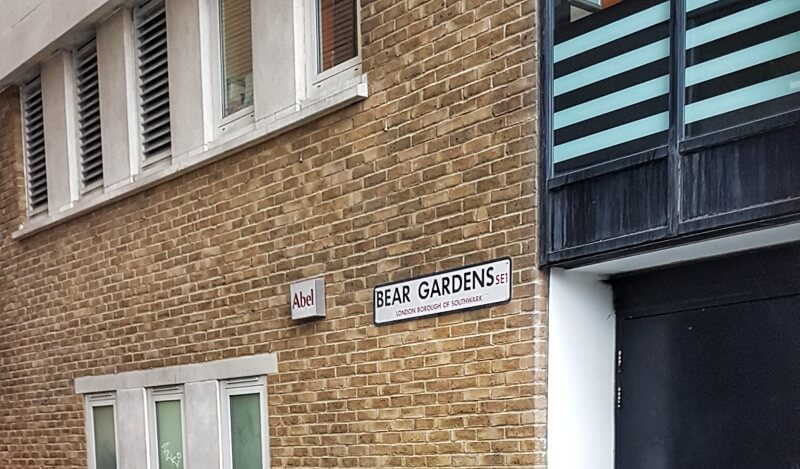
You can find the street sign that marks where one of these bear baiting pits used to exist, but thankfully the actual pit did not survive. Bear-baiting was not actually made illegal in the United Kingdom until the mid-nineteenth century, but it did fall out of favour in the later seventeenth century.
The Globe Theatre
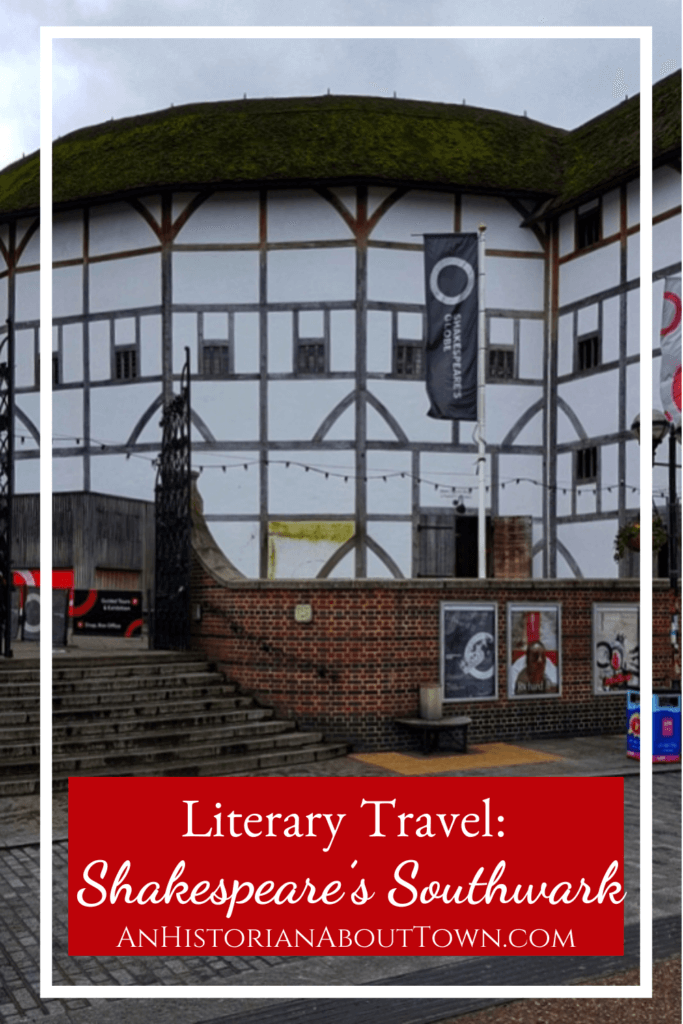
Obviously, what would Shakespeare’s Southwark be without The Globe? The original Globe theatre was built in 1599; there were several owners, Shakespeare himself had a 12.5% share. It is not clear whether or not the first production was hosted in the summer or the autumn of 1599. The first confirmed performance was on 21 September 1599 and was actually a Ben Jonson production and not a Shakespearean play. This theatre burnt down in 1613 during a production of Henry VIII. (It seems fitting given that Henry metaphorically set fire to a lot…)
It was rebuilt again in 1614 and remained open until 1642 when Parliament ordered all theatres closed during the Civil War. In the 1660s, this second theatre was torn down to create more space for tenements.
The Globe Theatre that you can visit today is a recreation. Director Sam Wanamaker founded the new theatre which was officially completed in 1997. The design is based off of both the 1599 and 1614 theatres, and is roughly 250 metres from where the original site. (It took nearly two decades to put together the design- Wanamaker wanted to stay true tot he original theatres but also had to deal with modern fire regulations.) The Globe now hosts numerous Shakespearean productions throughout the year, and you can also take tours!

Want to explore Southwark more? You can find more highlights on my Saucy Southwark walking tour post!
Have you visited Shakespeare’s Southwark?
Cheers,
The Historian
Facebook | Twitter | Instagram | Pinterest | Threads