I’ve chatted about my love of Look Up London several times here on the blog. I first discovered Katie’s walking tours on London when I was looking through London history hashtags on Instagram, and quickly became obsessed. (I’m hoping that isn’t weird…) There are a million walking tours of London available, but I love that Katie’s tours focus on a) the history of London and b) the history hidden above your eye-line. So, the very first thing I did on my trip back to the UK was a walking tour with Katie, and my only regret is not doing another! I went with the Southwark tour, and I couldn’t have been happier.
A little bit of background on Look Up London to begin. Katie has a degree in Art History but that isn’t all that qualifies her to lead you through London- she is a certified Blue Badge Guide! Blue Badge Guides are regulated, and take an 18 month course, in addition to having to sit several exams. This means that they know London like many of us could only dream, and they are continually learning more about the city. Katie is great fun, and her tours always take you somewhere that you wouldn’t normally expect.
Southwark is one of those places that I had always read about, but never strung the pieces together. I did an upper-level Chaucer class at university, and as to be expected, Southwark comes up quite a bit. I also studied quite a bit of Shakespeare in AP English, so as you can imagine, the Globe comes up. However, I never really looked any further into it… And I should have. Southwark is just as old as much of London, but has quite a colourful history. Because it was outside of the control of the City of London proper, it was an excellent place for criminals, bootleggers, and various ne’er-do-wells to ply their trade without the bother of law enforcement. And as you can imagine, that leads to some interesting episodes of history. I’ve picked out some of my favourite spots on the walk that show off Southwark’s best!
Guy’s Hospital, London
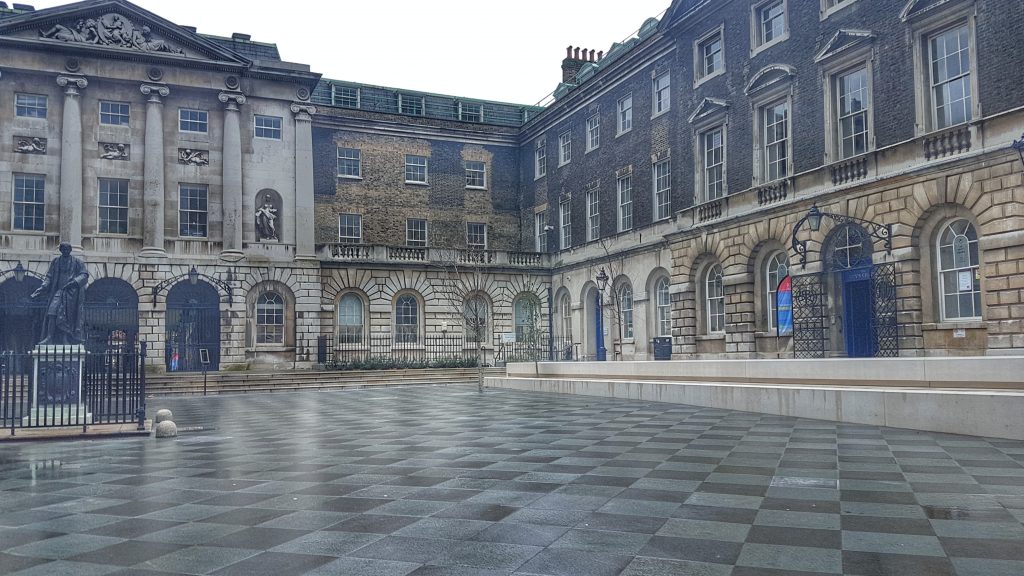
I hadn’t ever heard of Thomas Guy before this walk, but I need to read more about him! Guy was originally a book seller, and bought shares in the later infamous South Sea Company. The company was responsible for transporting almost 5,000 slaves annually from Africa to Spanish plantations, and he made a significant amount of money from this.
Guy sold his shares before the bubble burst, meaning that he amassed quite the fortune from what would be a life ruining company for many, many people in so many ways. Legend has it that he felt bad for that and so founded Guy’s Hospital in Southwark in 1721. It was a hospital for “incurables” (aka lunatics) from the close-by St. Thomas’ Hospital (where he was also a governor and benefactor). As of June 2020, there are serious questions on whether or not his statue should be taken down, and the hospital re-named, because of his strong connections to the slave trade.

Thomas Guy, the man himself. Apparently he originally started his career by selling poorly-printed Bibles, which seems an odd way to start a career as a stock spectator. However, I think it really emphasises the fact that people weren’t always tied to one career or activity in past centuries, not the way we tend to be now. (I know that is finally changing but I think a lot of us stick within one general arena.)
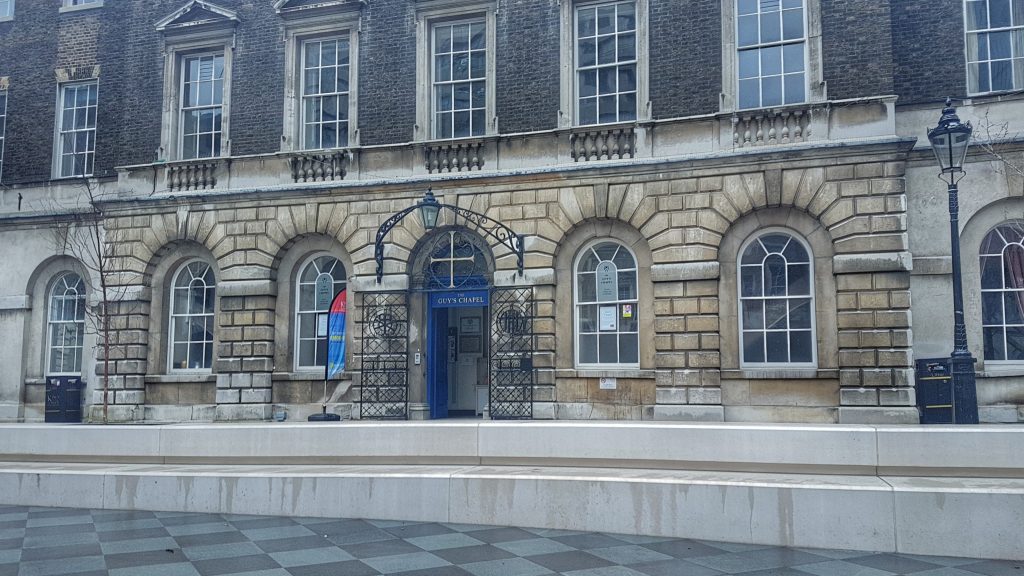
There is also a chapel in the original hospital when Guy is entombed. It is quite a small chapel but still beautiful. Most modern hospitals will have a prayer or multi-faith room, or quite a plain chapel, but this was quite different. I’ve never thought of looking into historic hospitals, but I’m now curious if there are similar chapels elsewhere!
King’s College London, Guy’s Campus
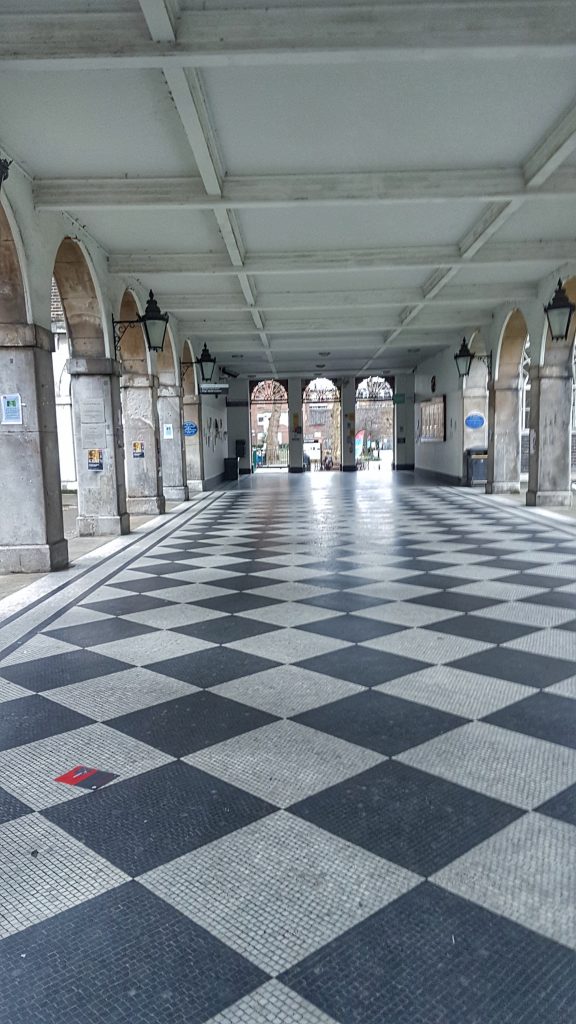
And you step right next door into Guy’s Campus of King’s College London. It was a pretty quiet Sunday morning in February, but if you are there at the right time, you can see drama and dance students rehearsing. (That flooring! Why don’t you see that more in Canada?!)
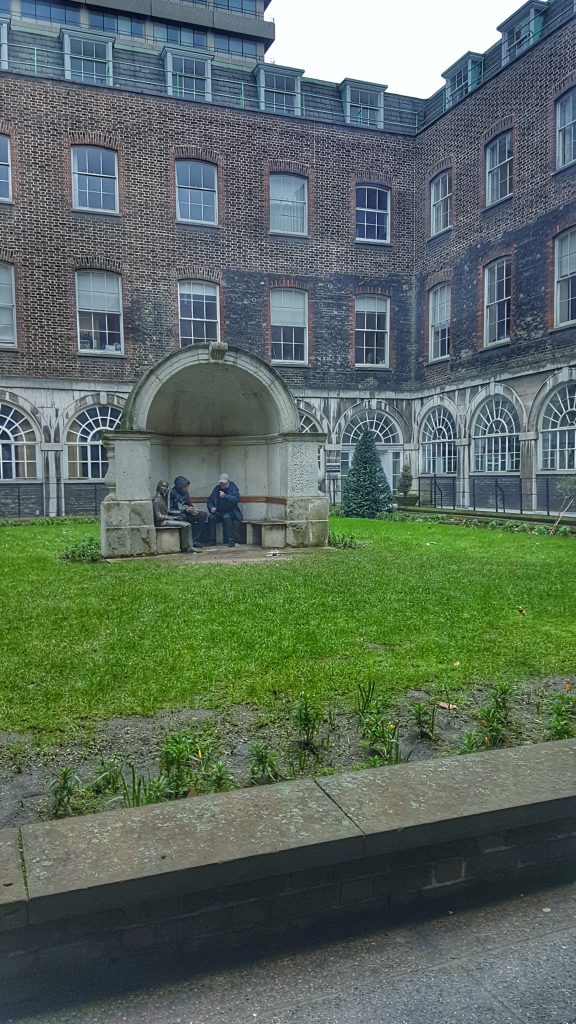
You can ignore the gentlemen taking an…er, break… and take in a true piece of London history. One of the past London bridges (yup, there has been more than one!) had these small niches for people to sit in. It seems rather crazy that there were fourteen of these lining the bridge in the Georgian period, as this is not a tiny structure. It is made of Portland stone and was bought for the very reasonable price of 10 guineas. And my favourite bit is that it is a statue of John Keats (not enjoying a “break” haha) there on the left. Given that he lived quite nearby, I think it is the perfect historical touch!
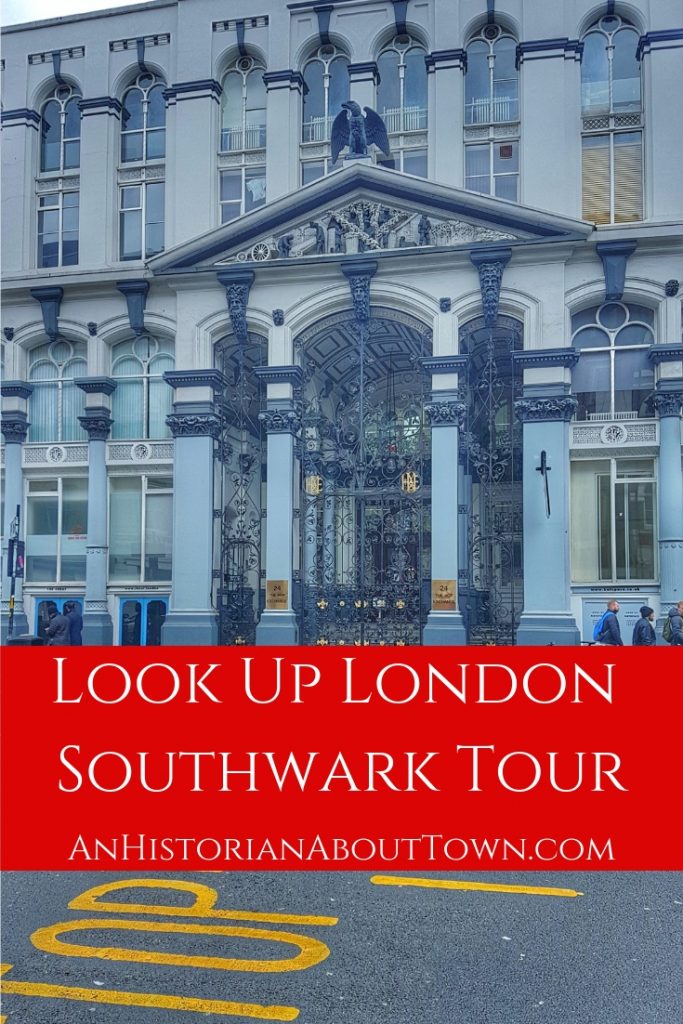
The Hop Exchange
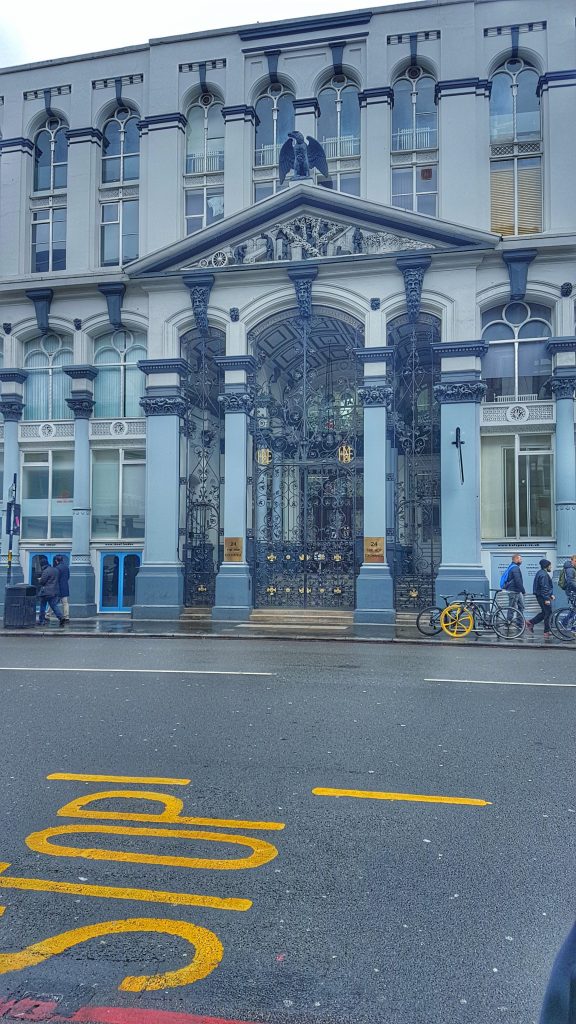
Given that Southwark was known for pubs, breweries, and all sorts of alcohol related things, I shouldn’t be surprised that one of the most prominent buildings in the area is a hop exchange. Hops is used when making beer, and is used to give beer a specific flavour palette (depending on the hops used). This exchange opened in 1867 and allowed traders to deal their hops under natural light, due to a glass ceiling. However, unfortunately due to a fire in the 1920s, the building is now only used for office space and a few pubs. As someone who quite literally lives in the middle of a field, it is interesting to see agricultural taking such a prominent spot in London’s space!
Cross Bones Graveyard
The Cross Bones Graveyard was absolutely the most heartbreaking part of the tour (as much of history is). Located on Redcross Way, it is now a disused graveyard that holds the remains of over 15,000 people. Many of the burials were children between 22 weeks old and a year.
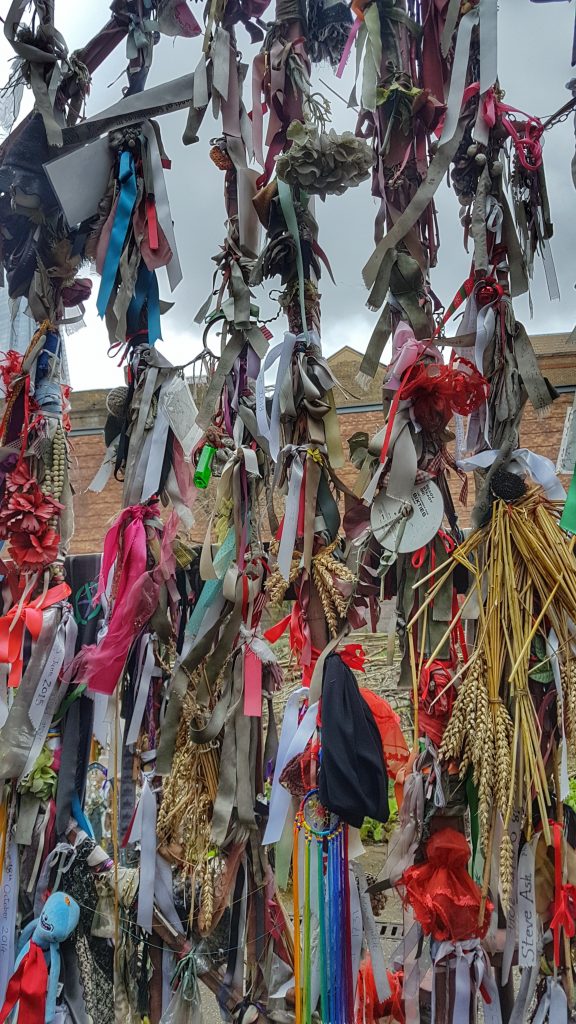
It was a graveyard for those in the Liberty of the Clink, an area that was under the control of the Bishop of Winchester rather than the county’s high sheriff. Because this area was “outside” of the law, many brothels, theatres, bear-baiting arenas, and other areas of disrepute were located there. This particular graveyard was the final resting place for many sex workers, as they could not be buried in a consecrated graveyard. It’s truly heartbreaking to think that the end of their life was still marked by exclusion.

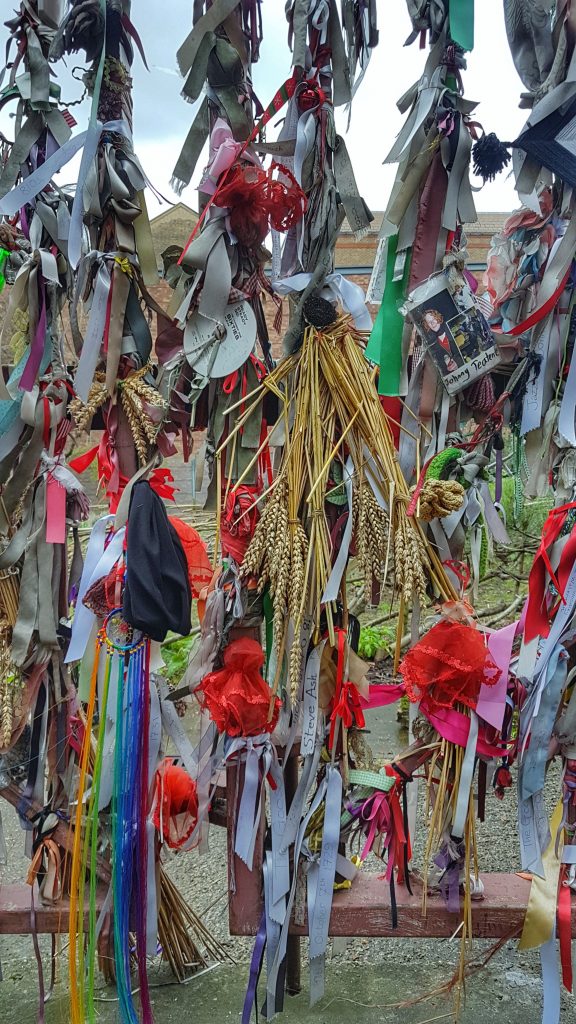
These women were often referred to as the “Geese of Southwark”, due to being under the control of the Bishop of Winchester who taxed and regulated their activities. The gates of the graveyard are covered in ribbons and memorials; some are for sex workers who have recently died or gone missing. Some are also for women in history who were buried here, and some are simply for the Geese. If you have a few moments, I would recommend taking the time to read some of the ribbons and tokens and think on them. If you are interested in learning more about the inhabitants of Cross Bones, the Southwark Mysteries are a collection of poems and mystery plays that have been performed in the Globe theatre, as well as Southwark Cathedral.
Have you been to Southwark before? And if you are in London, you absolutely must do a Look Up London tour with Katie!!
Cheers,
The Historian
Facebook | Twitter | Instagram | Pinterest | Bloglovin’

1 thought on “Look Up London Saucy Southwark Walk”