Another series returns after hiatus! Until the mid-nineteenth century, portraits (and sketches, drawings, etc) were some of the only ways for us to have an idea of what people in the past looked like. Or at least what they wanted everyone to think they look like. While some artists specifically worked under one monarch, others painted several different sovereigns. This month, we are looking at a High Renaissance painter who also happened to serve as a court painter for multiple monarchs. This artist was known for his dynamic work across many styles and his peers referred to him as “The Sun Amidst Small Stars”. Let’s get into August’s Court Painters: Titian!
Titian’s Early Years
Tiziano Vecellio’s early life is shrouded in mystery, as historians still do not know when he was born. He stated in a letter later in life that he was born in 1474 but scholars think that it was closer to 1488-1490. His parents, Gregorio and Lucia Vecellio are also largely unknown.
It isn’t until Titian was roughly ten that he was sent to be a painter’s apprentice in Venice, along with his brother.
They studied under Gentile and Giovanni Bellini, two well-known Venetian artists. This allowed them to mix and study with several other up-and-coming artists in Venice.
State and Church Commissions
By 1507, the state was commissioning Titian to create frescoes- he worked on the Fondaco dei Tedeschi to begin with. He also began working outside of Venice and was commissioned to create several religious frescoes for the Carmelite church in Padua. After he completed these, he returned to Venice to be a superintendent who oversaw government paintings and works of art. (This also meant that he was able to finish uncompleted paintings.)
By 1516, he had finished one of the pieces he is best known for, at the Basilica di Santa Maria Gloriosa dei Frari in Venice. The Assumption of the Virgin, better known as the Assunta, is an altar painting that is roughly 7 metres by 3.5 metres. This painting shows off Titian’s striking style, and it was finally displayed to the public in 1518. It is thought that the ambassador of Emperor Charles V of Spain may have been there when it was first displayed.

Mythological Subjects
Titian did not focus on one particular subject matter but rather developed his style across themes. He created Bacchus and Ariadne in the mid-1520s for the Duke of Ferrara, part of a larger collection of mythological paintings.
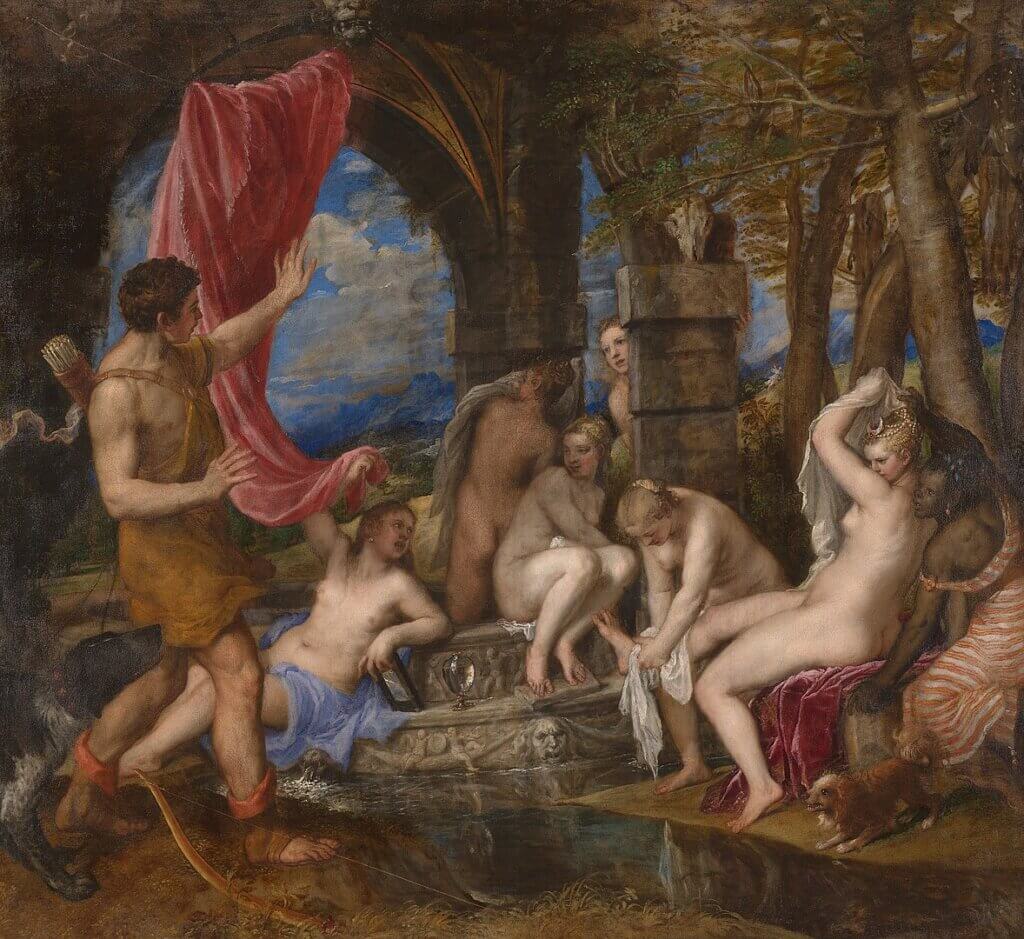
He would continue to paint mythological scenes for years to come, creating paintings around Diana and Actaeon and Venus and Adonis, among other figures. These were popular among the aristocracy and royalty of Europe and given that Titian’s impeccable talents were known across the continent, it is not surprising that several royals and nobles wanted his paintings for their galleries.
Interested in more book previews, period dramas, royal news, and more? You can subscribe to my biweekly substack newsletter here: https://anhistorianabouttown.substack.com/!
 By Titian – The Prado in Google Earth: Home – 7th level of zoom, JPEG compression quality: Photoshop 10., Public Domain, Link
Called to Augsburg
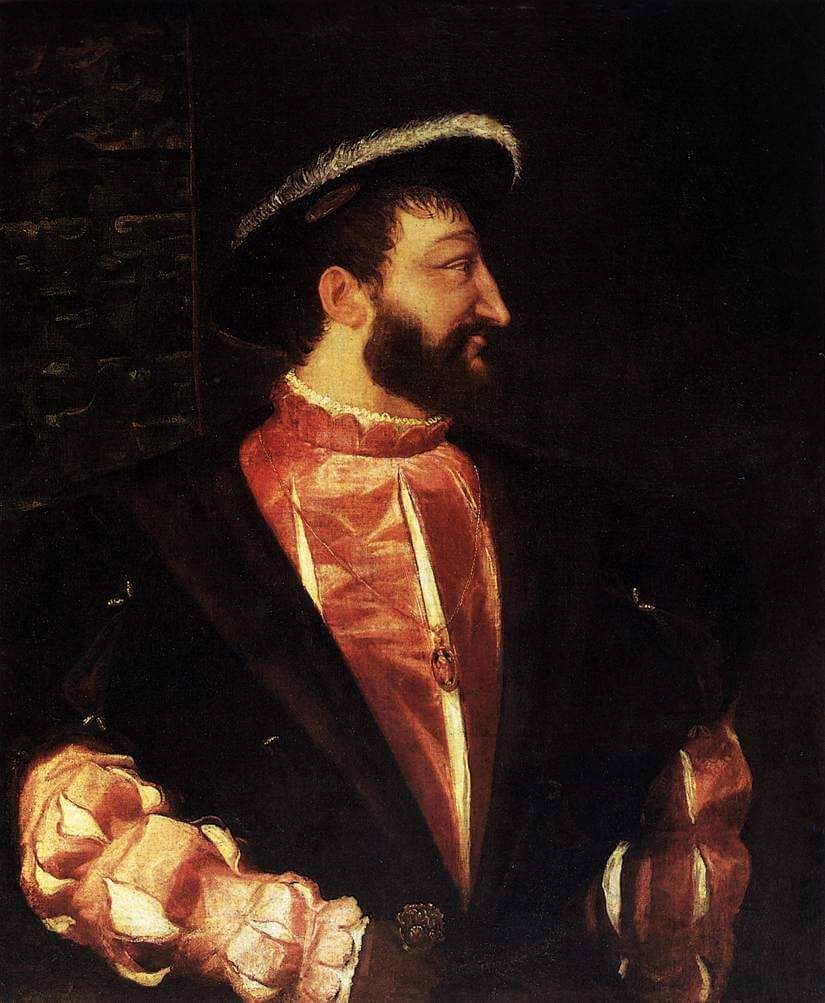
In 1547, Charles V, Holy Roman Emperor, summoned Titian to Augsburg to paint for him. He spent several years there and was there during the 1548 Imperial Diet. (The Imperial Diet was a sort of forum/loose governing body in the Holy Roman Empire.)
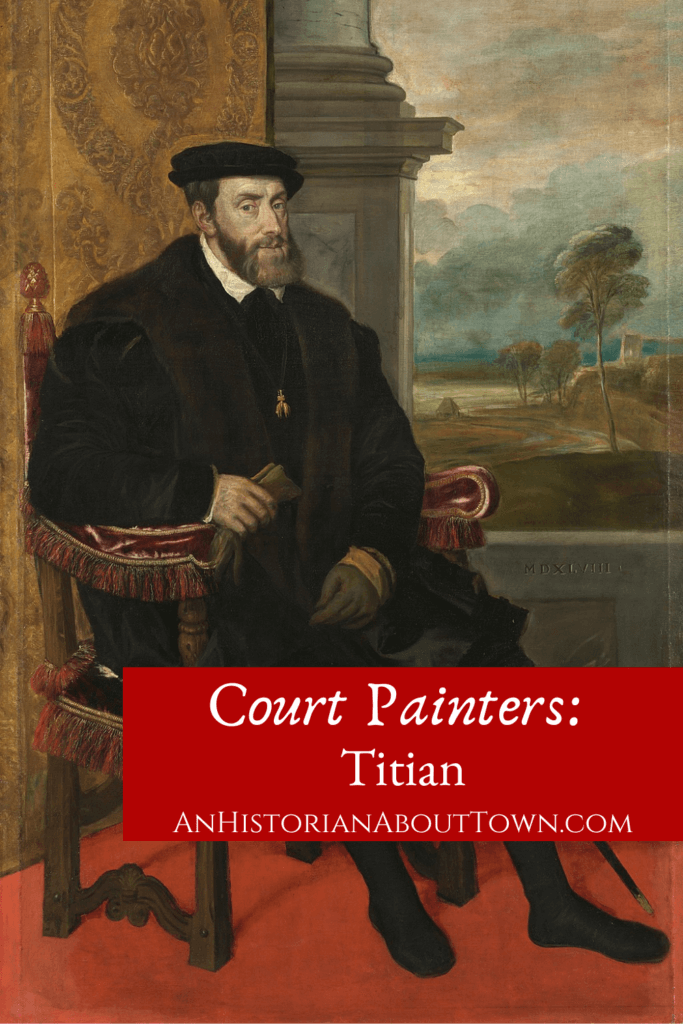
Titian had originally met Charles in 1530 when he painted a now-lost full length portrait. He reportedly was very happy in Augsburg and kept busy with several portraits of the Emperor, as well as the late Empress. His equestrian portrait of Charles, as well as his portrait of the Emperor in an armchair are some of the best known of the emperor.
King Philip II of Spain
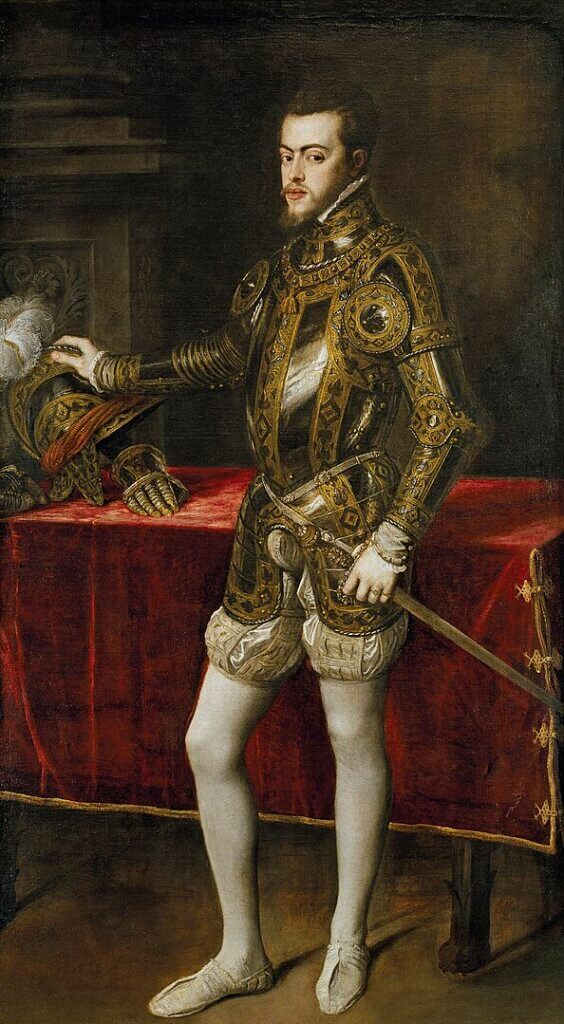
Prince Philip, the Emperor’s son, commissioned several mythological paintings from Titian in 1551. (Philip referred to the series as a “poesie”- this group of paintings was not reassembled for display as a whole group until 2020.) These paintings included several different scenes of Diana, the Roman goddess of wild animals and the hunt. The Emperor also requested that Titian create a portrait of Philip, one that was sent to Queen Mary of England who would marry Philip in 1554 (though she would die in late 1558).
Upon his father’s death in 1556, Philip became King Philip II of Spain. Titian continued to work for him, adding to the poesie.
Titian’s Later years and Death
Titian remained active as a painter for the rest of his life, working for Philip and carrying out other private commissions. However, he sadly died on 27 August 1576 in Venice of the plague. He was suitably interred in the Basilica di Santa Maria Gloriosa dei Frari.

Interested in more court painters?
Court Painters: Anthony van Dyck
Court Painters: Philip de László
Court Painters: Sofonisba Anguissola
Court Painters: Sir Godfrey Kneller
Court Painters: Sir Thomas Lawrence
Do you have a favourite Titian painting?
Cheers,
The Historian
Facebook | Twitter | Instagram | Pinterest | Threads



,_formerly_attributed_to_Titian_(Alte_Pinakothek,_Munich).jpg)