We are back with the history of another royal palace! While I obviously enjoy exploring former working palaces and castles, I do find twenty-first century working palaces particularly interesting. Monarchies have evolved so much over the centuries and particularly so in the last century and a half. (Spain more than most, you could say…) I wanted to look at a palace that truly is an office (rather than a home) and I landed on the Spanish Royal Family. Today we are diving into the history of the Royal Palace of Madrid, the largest royal palace in Europe.

The History of the Royal Palace of Madrid
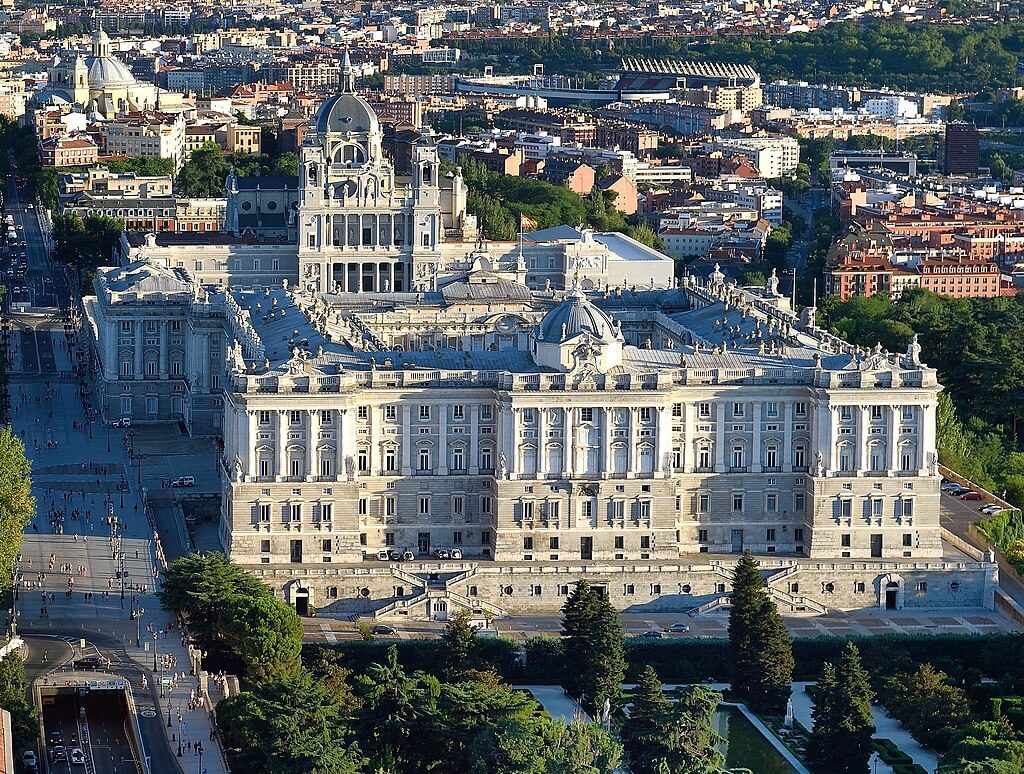
The Early History of the Royal Palace of Madrid
The first royal house built on this site was built in the late ninth century by Muhammad I, Umayyad Emir of Cordoba. Although the Moors were forced out of the area in the eleventh century, Castilian rulers kept the castle and continued to add to it for several centuries.
King Philip II made Madrid the capital of Spain, further elevating the palace’s status. While each King left his mark on the palace known as the Alcázar, by the early eighteenth century, it was not considered to be anything of note. (Comparatively to Louis XIV’s Versailles- although I don’t know that many would have been.)
24 December 1734 was a fateful day for the palace, though- a fire that would last four days swept through the palace.
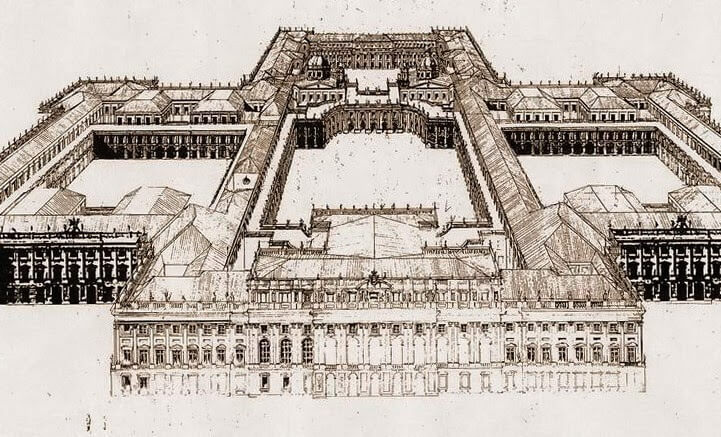
The Baroque Palace is Born
It took quite some time for the old palace to be torn down, and in the meantime, King Philip V turned to Italian architect Filippo Juvarra to create a new baroque palace to rival Versailles and the Louvre. Unfortunately he died in 1736 and the project was carried out by Giovanni Battista Sacchetti- his original design would have been even larger than the current palace, but Sacchetti chose to create a square courtyard instead.
In 1760, King Charles III (of Spain) then called on architect Francesco Sabatin to create two neoclassical wings to surround the square palace, further enlarging its footprint. It was not until 1764 that Charles actually lived in the palace.
The Napoleonic Wars and Several New Looks
Napoleon chose to depose King Ferdinand II of Spain (as he did with several European leaders), but Ferdinand would eventually find his way back to the Spanish throne. He had spent much of his time in captivity in French chateaus and brought back those styles back with him.
Much of the redesign under Ferdinand features a much more ornate and detailed style, a much different look than the neoclassical style from the eighteenth century. This was not the only redesign, though, as King Alfonso XII (his son) carried out his own changes.
Alfonso died at the age of 27, but not before making some alterations. He preferred a more Victorian style of design and had hoped to move away from the overly ornate styles that his father had chosen. Sadly, Alfonso would be the last Spanish monarch to actually live in the Royal Palace of Madrid.
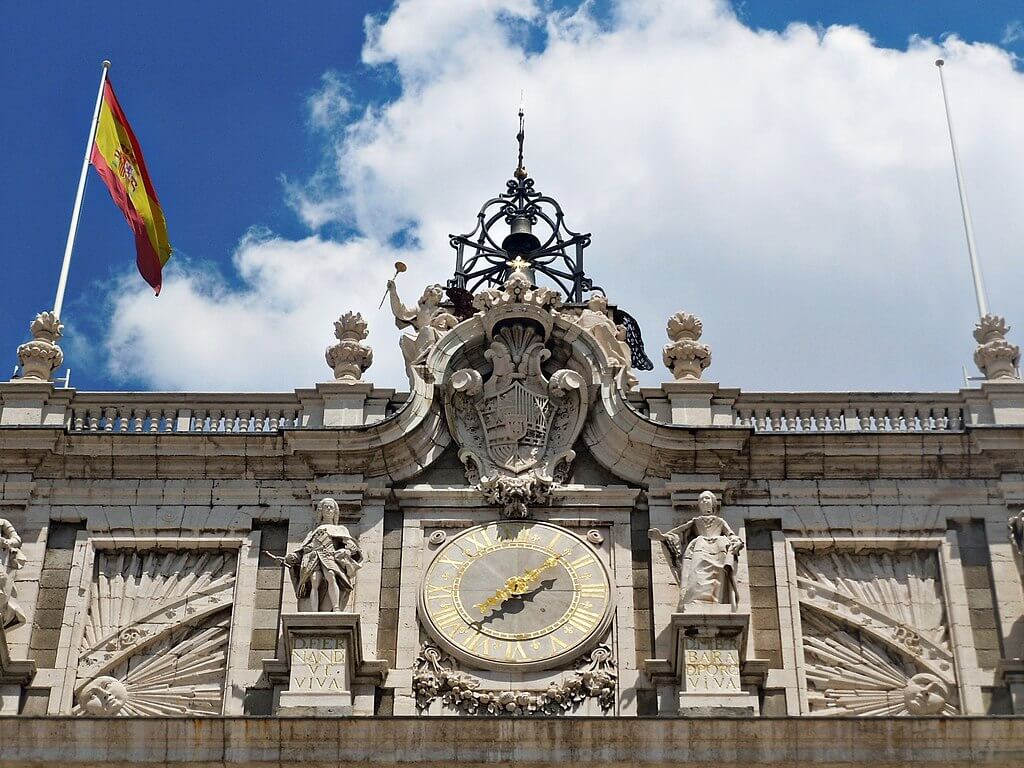
A Civil War and an Open Palace
The Spanish Civil War (1936 to 1939) left its mark throughout Madrid, and the palace is no exception. The palace was hit by several bombing raids, resulting in significant damage. However, extensive restoration work was done between 1944 and 1964. The restoration designs were created in the original styles to better emulate the original palace.
When King Juan Carlos I was sworn in when the monarchy was restored in 1975, the ceremony was carried out in the Throne Room of the Royal Palace. While neither Juan Carlos, nor his son (and current King) King
Felipe V have lived at the palace, they both use the palace for official state events and as an office of sorts. (Felipe and his family live at the Palace of Zarzuela.) For example, this is where Felipe will officially receive ambassadors. His 2005 wedding banquet when he married Letizia Ortiz Rocasolano was also held at the Royal Palace.
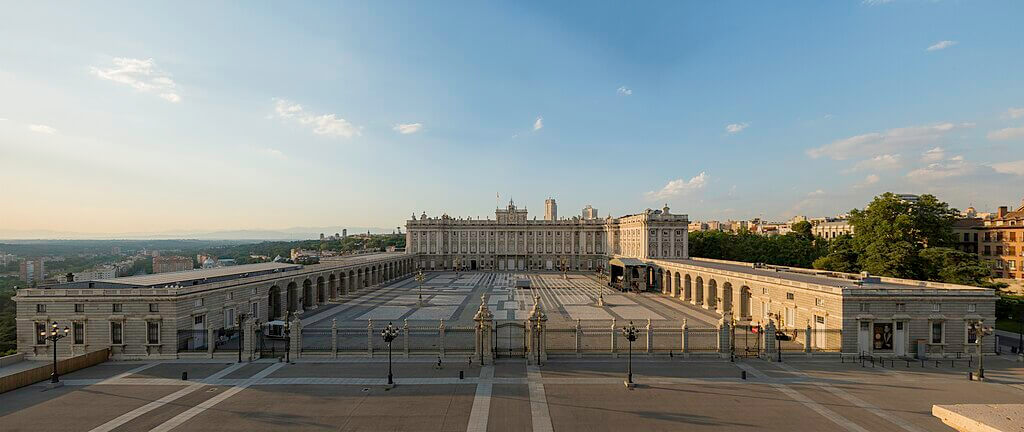
Guests can visit the Royal Palace of Madrid, if they would like. Aside from a few closures, the palace is open year round for visitors. (This is not overly common for working palaces, but it helps if your monarch does not actually live there.) The palace is over 135,000m2, has almost 3,500 rooms, and 870 windows.
Want to know more about the history of other royal palaces?
The History of Buckingham Palace
The History of Amalienborg Palace
The History of the Palace of Brussels
Have you visited the Royal Palace of Madrid?
Cheers,
The Historian
Facebook | Twitter | Instagram | Pinterest | Threads

.jpg)


I spent a good chunk of a day exploring the palace with my girlfriend…and neither one of us took a single picture! LOL 25 years later and I hardly remember what it looks like on the inside.
Haha, that is me from some of the places I explored in 2012/2013! Even though we had Blackberries and the first smartphones, I found that a lot of places didn’t allow photos then and if they did, I sometimes didn’t want to get out my digital camera. However, I absolutely should have!