Many series are going to be returning for April, including our explorations of the history of palaces! I find palaces to be fascinating, and I make it a point to visit any that I may come across. However, it still seems that outside of Buckingham Palace, Windsor Castle, and the Palace of Versailles, few palaces are widely known. Today we are going to turn to a younger monarchy, Belgium- the Belgian monarchy is less than 200 years old, as it was formed in 1831. We are going to explore the history of the Palace of Brussels today! This is a working palace, meaning that the Belgian Royal Family use this for their work but live elsewhere.
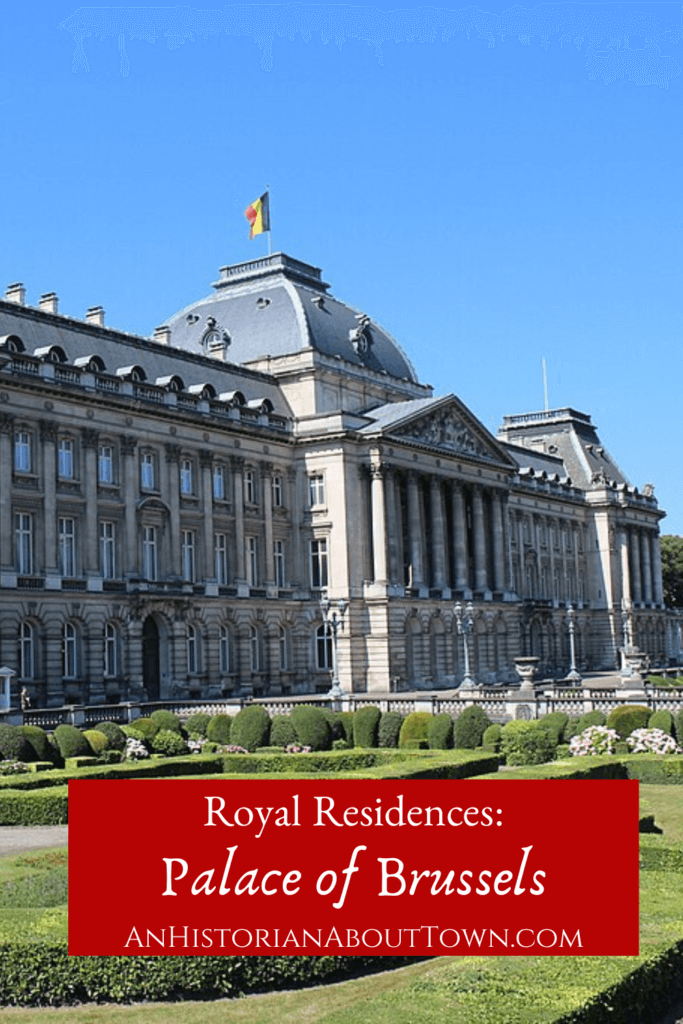
The History of the Palace of Brussels

The Early History of the Palace of Brussels
The Royal Palace of Brussels was built on the site of a former palace that belonged to the Dukes of Brabant. The first palace built on the site was begun in the 11th century with continual building work throughout the centuries. Several fires in the seventeenth and eighteenth centuries destroyed the building.
The current palace was created out of two mansions built in the late eighteenth century with construction beginning in 1821. At this time, Belgium was included in the newly-formed United Kingdom of the Netherlands with King William I of the Netherlands on the throne. Architect Tilman-François Suys led the project, creating a neo-classical facade and a classical type of porch in between the mansions.

The First King of the Belgians
After the Belgian Revolution in 1830, a separate Belgian throne was created. (You will notice that in Belgium, it is the King/Queen of the Belgians, not of Belgium.) Prince Leopold of Saxe-Coburg-Saalfeld was chosen and became King Leopold I of the Belgians on 21 July 1831. He held the throne through his death in 1865, and he made relatively few changes to the Palace during his reign. The first king largely lived at the Palace of Laeken (where the Belgian royals live now), and used the Royal Palace in Brussels as his office for official duties.

King Leopold II
Before we get into the next phase of the palace’s life, we have to acknowledge King Leopold II’s reign. Leopold founded and owned the Congo Free State, where he enslaved much of the native population to harvest any available resources, namely ivory and rubber. His private police brutalised the enslaved Congolese people, with mutilation and murder common tactics used. It is only in the last decade that the true horror of Leopold’s legacy has been widely recognised.
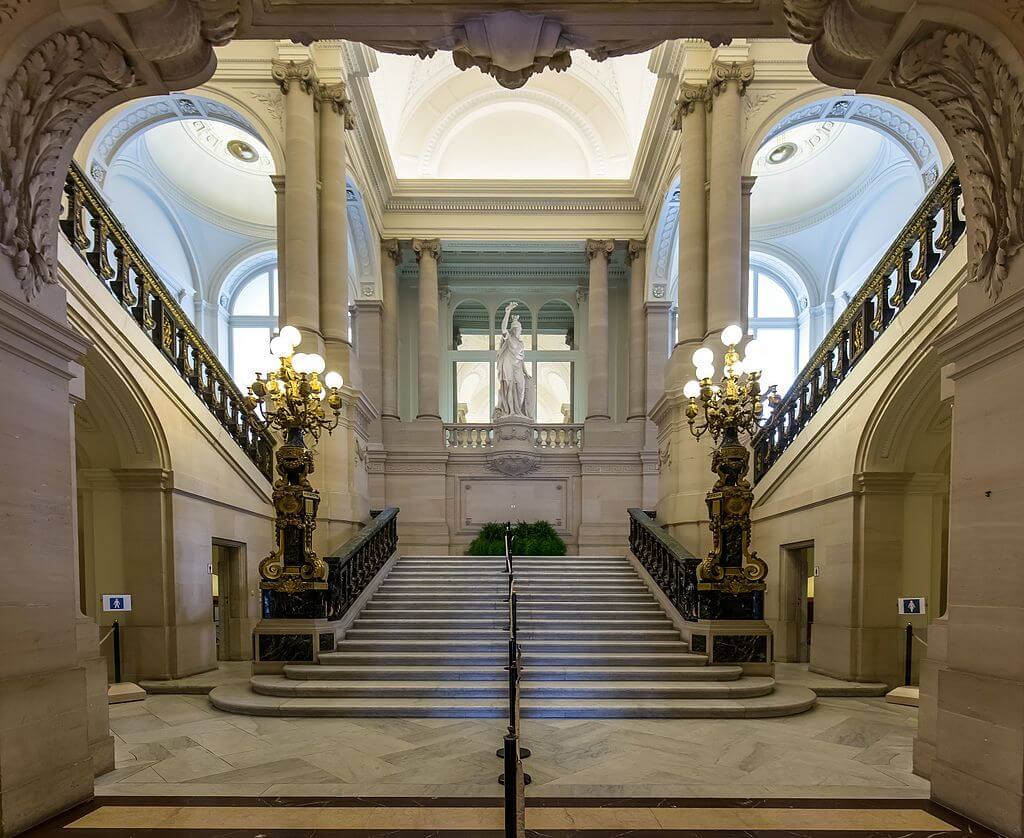
In addition to furthering his economic portfolio, the second Leopold also doubled the size of the Palace of Brussels. He added two curved galleries, as well as several notable elements of the current palace: the Grand Staircase, the Grand Gallery, and the Throne Room were all added during his reign. He also is responsible for the exterior of the palace that we now see. After his death in 1909, several planned changes were not made.
The Twentieth and Twenty-First Century Palace
King Albert I oversaw some changes to the Palace, largely interior changes. In the 1930s he had the east wing redone and his second son, Prince Charles, took the greenhouse in the west wing of the palace and created the Flemish Room.
In the mid-1950s, the Palace’s interior was once again redone. Albert was the last Belgian monarch to live at the Royal Palace, so further changes have been limited. From 2010 on, some rooms have been altered to serve as meeting rooms and offices- this further highlights its role as the monarch’s “office” rather than home. Continual work is also being done on the exterior, as is common with most historic buildings.
Visitors can currently tour inside the Royal Palace of Brussels in the summer when it opens from the end of July to the end of August.
Have you visited the Royal Palace of Brussels?
Cheers,
The Historian
Facebook | Twitter | Instagram | Pinterest