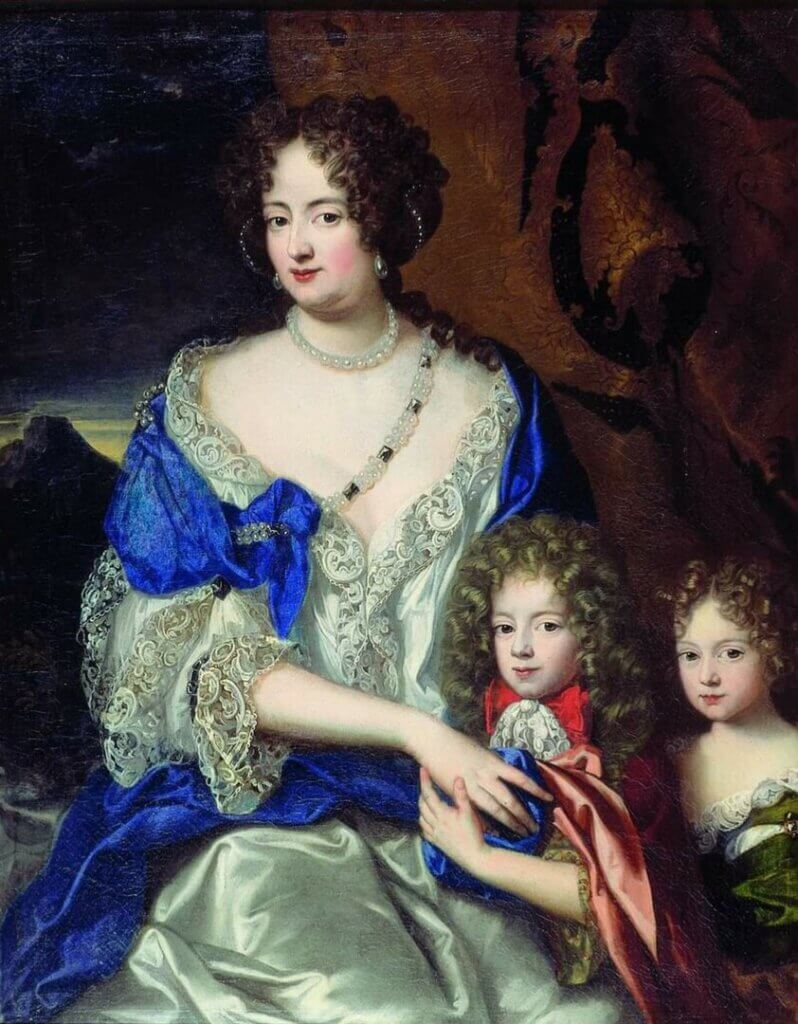
We have covered twenty four different consorts in this series, and I think that that is fairly impressive. The stats show, people are interested in women’s history, and these royal women even more so. Consorts often play a bigger role in the life and reign of a monarch than people give them credit for. However, I thought that we could look at an almost-consort who never became queen but still made quite an impact on both her husband and son. Onto our June Consort of the Month: Sophia Dorothea of Celle!
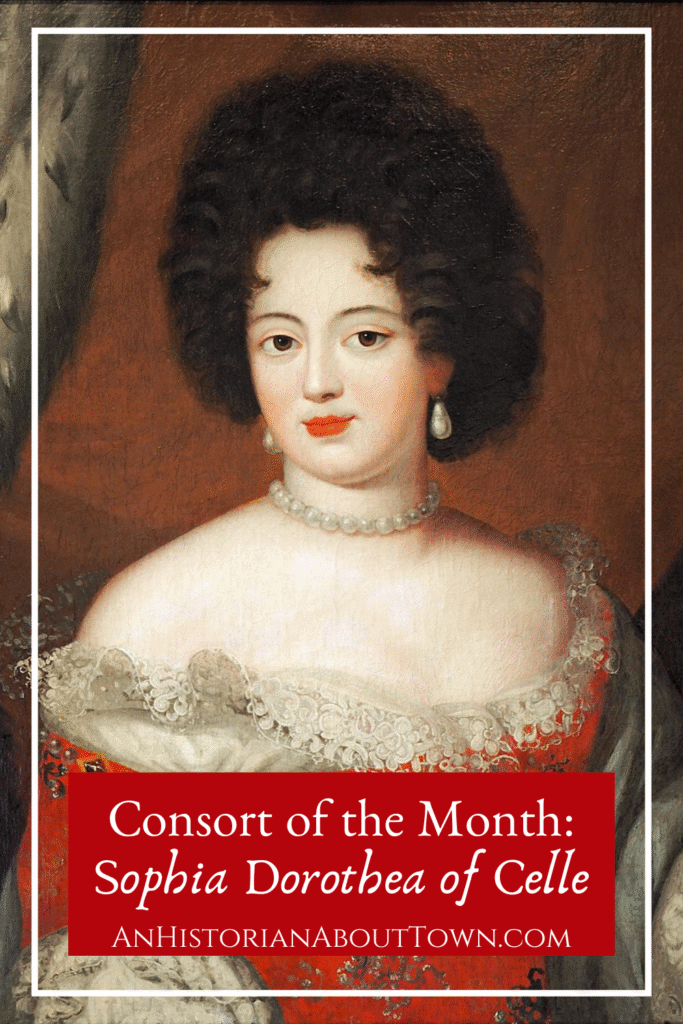
Consort of the Month: Sophia Dorothea of Celle
Birth Date: 15 September 1666
Death Date: 13 November 1726
Tenure: N/A
Birth Name: Sophia Dorothea of Brunswick-Lüneburg-Celle
Spouse: Prince George Louis, Electoral Prince of Hanover
House: Hanover
Father: George William, Duke of Brunswick-Lüneburg
Mother: Éléonore Desmier d’Olbreuse
Why Do We Know Sophia Dorothea of Celle?
As I noted above, Sophia Dorothea of Celle is largely known for the breakdown of her marriage and not becoming queen. She had an affair (more on that later) and her husband, the future King George I of Great Britain, refused to have anything to do with her. (King George I and King George IV rather bookend the Georgian period with their highly dysfunctional marriages.) Britain should have found their first Hanoverian queen in Sophia Dorothea but it was not to be.
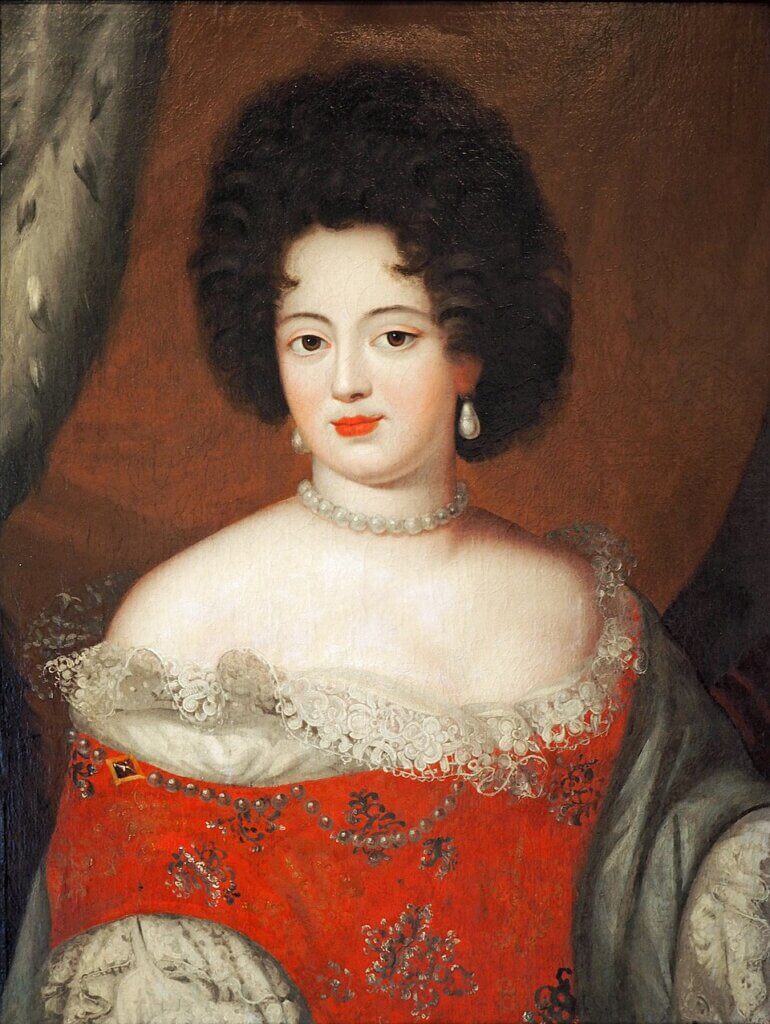
Sophia Dorothea of Celle’s early life
Sophia Dorothea was the result of a morganatic marriage, meaning that she wouldn’t inherit her father’s status or wealth. Her father had renounced his claim on the Principality of Lüneburg and also promised to not marry. However, he had a long term relationship with Éléonore, leading to Sophia Dorothea’s birth.
From what we know from surviving records, she did have a fairly happy childhood. She normally spoke in French but also knew German and Dutch. In addition to languages, she also learned embroidery, etiquette, and music, but preferred to be playing rather than learning.
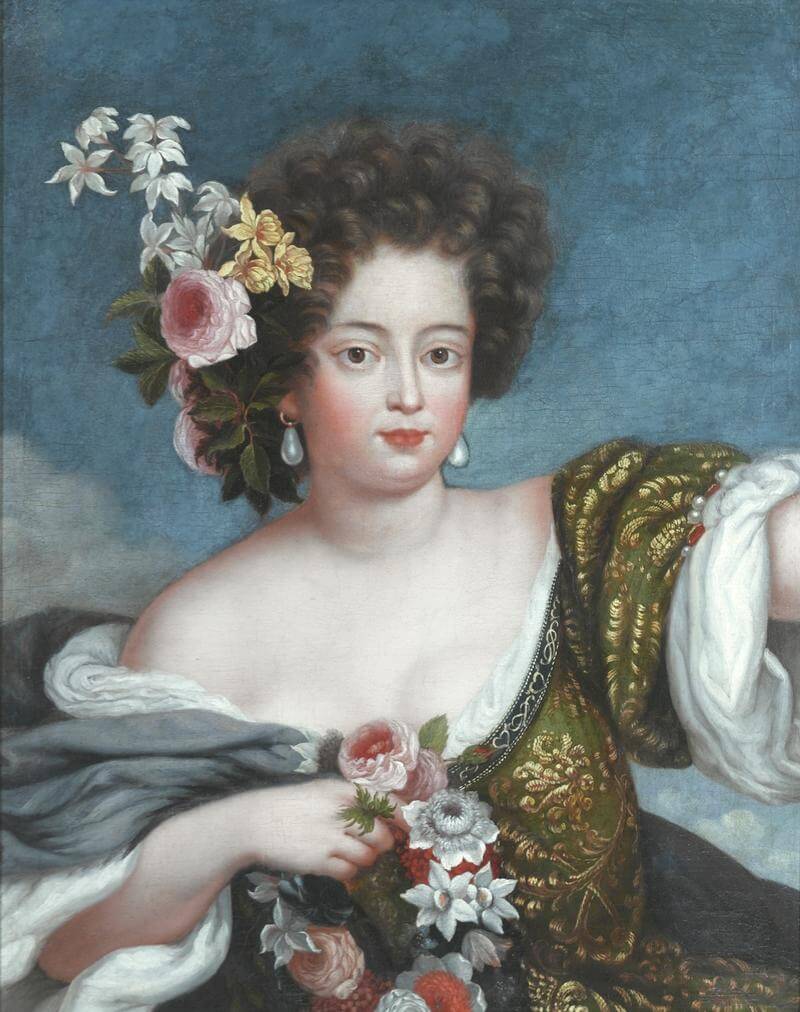
A wealthy but questionable bride
In late 1675, Sophia Dorothea was engaged to the Duke of Brunswick-Wolfenbüttel but he died after sustaining injuries in battle in August of 1676. Her father knew that he would have to make some changes to secure her future.
Sophia Dorothea’s parents legally married when she was nine, making her legitimate. In addition to this, George William transferred several valuable assets over to his daughter to help ensure that she would have stronger marriage prospects. While there were several objections on both sides (including from Sophia Dorothea herself), George William signed a betrothal contract between Sophia Dorothea and George Louis (the future George I). Sophia Dorothea’s large dowry was the major draw of the match but that does not ensure a happy marriage by any stretch.
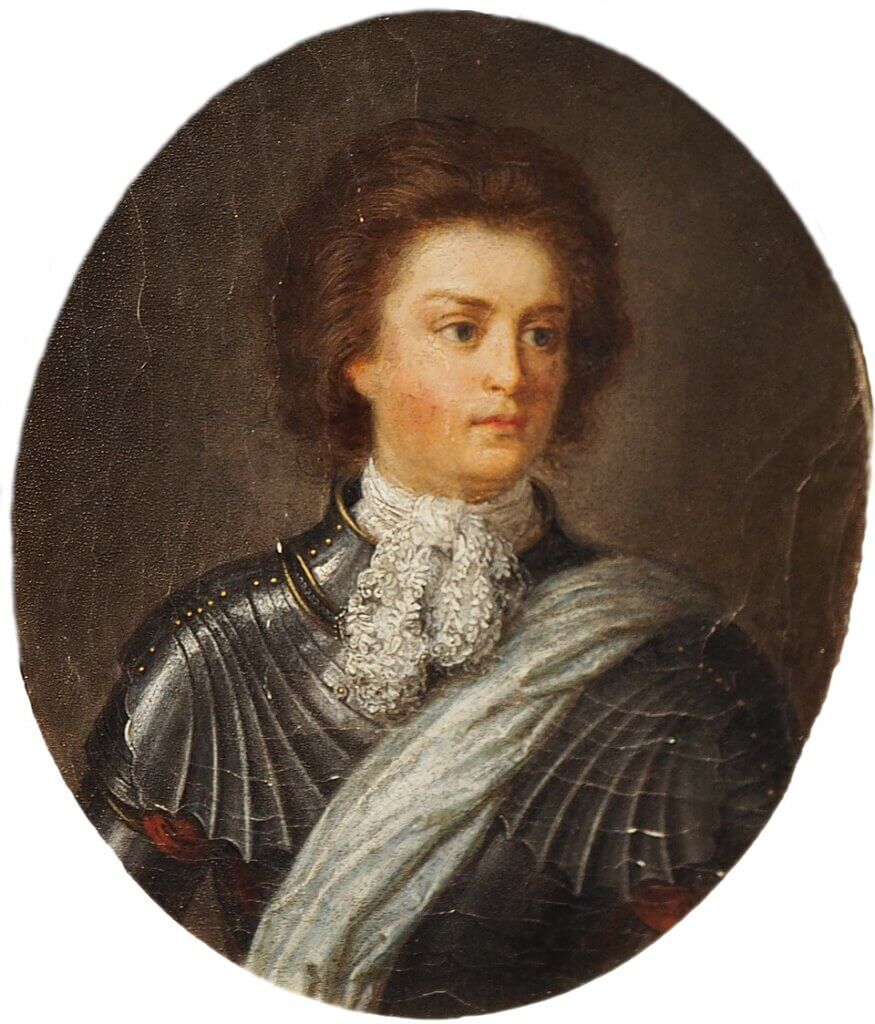
Adultery and abandonment
The pair married on 21 November 1682 when Sophia Dorothea was sixteen. George Louis disliked her from the start, and the couple were known to frequently argue. They did have two children- in 1683, George Augustus was born and in 1687, Sophia Dorothea. While he was happy to accept the money from her dowry, George Louis could not tolerate his wife. personally. Despite his parents’ objections, he made Melusine von der Schulenburg his mistress.
Sophia Dorothea was not willing to live without love and struck up a friendship with the Swedish Count Philip Christoph von Königsmarck in 1690. The two had originally met in childhood but she was taken with him. It is believed that their romantic and sexual relationship began in 1692 but by 1694 it was common knowledge in Hanover.
While Sophia Dorothea had attempted to convince her parents of her need for a divorce from George Louis, they refused their support. In July 1694 after a night together, Königsmarck disappeared. Historians believe that either her husband or his father ordered his murder and that his corpse was weighted with stones and tossed into the river.
A life of imprisonment
By late 1694, George Louis officially filed for divorce from his wife on the grounds of adultery and abandonment. (Yes, he also had a mistress but she was the only one to face punishment for adultery. Thanks, patriarchy…)
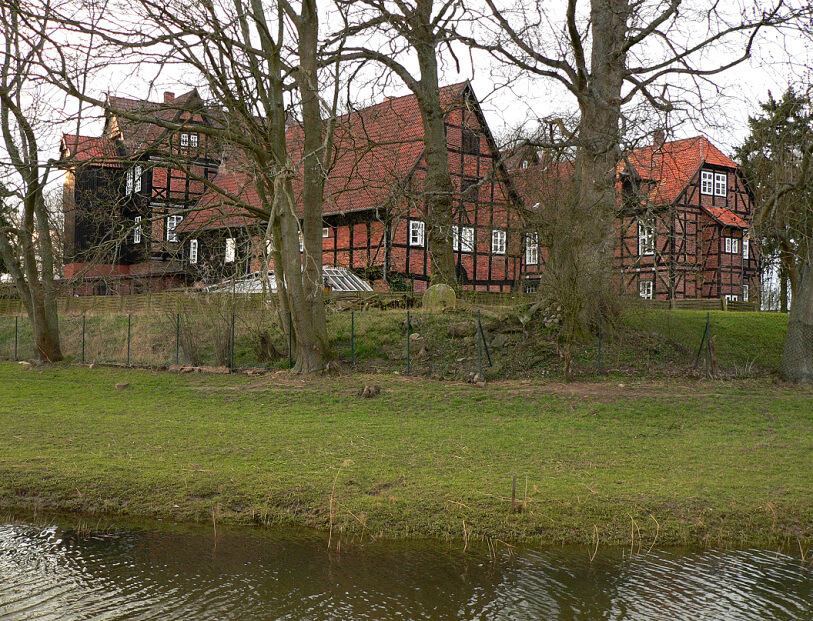
After the divorce, Sophia Dorothea was imprisoned at Ahlden Housse after being stripped of her titles, access to her children, and the right to remarry. Her husband and father split the cost of her imprisonment (yes, her father agreed to this all- patriarchy…), and her mother was the only person allowed to freely visit her. She was also guarded twenty four hours a day by multiple guards.
Sophia Dorothea would write to her husband throughout her life, asking for forgiveness and to be released from Ahlden but he refused. He left for Britain in the summer of 1714 following Queen Anne’s death. His former wife lived out the rest of her days without ever seeing her children again, and after her mother’s death in 1722 spent most of her days alone.
Sophia Dorothea died in November 1726 from liver failure and gallbladder issues. The now-King George I refused to allow any mourning in either England or Hanover. She was not buried for six months, when she was secretly buried with her parents in Celle.
Sophia Dorothea of Celle: Interesting Facts
– Sophia Dorothea’s dysfunctional marriage actually had a positive impact upon her son’s marriage- he was allowed to marry for love, and adored his wife (Caroline of Brunswick).
– King Charles XI of Sweden considered her as a wedding prospect.
– As a young princess, she was considered one of the great beauties of Europe.
Interested in more book previews, period dramas, royal news, and more? You can subscribe to my biweekly substack newsletter here: https://anhistorianabouttown.substack.com/!
Further Readings/Listenings on Sophia Dorothea of Celle
Curzon, Catherine. The imprisoned princess: The scandalous life of Sophia Dorothea of Celle. Barnsley: Pen & Sword History, 2020.
The Rex Factor podcast. “S3.57 Sophia Dorothea of Celle” episode
♠
Looking for my earlier Consort of the Month posts? Read about:
Empress Eugenie of France
Queen Charlotte of Mecklenburg-Strelitz
Queen Marie Antoinette
Catherine de Medici
Queen Adelaide
Catherine de Valois
Marie de Guise
Queen Alexandra of Denmark
Empress Josephine of France
Queen Elizabeth of York
Queen Elisabeth de Valois
Queen Catherine of Braganza
Queen Caroline of Brunswick
Queen Josephine of Leuchtenberg
Elizabeth Stuart
Queen Elisabeth of the Belgians
Saint Margaret of Scotland
Queen Maud of Wales
Empress Sisi of Austria
Queen Marie of Romania
Queen Astrid of Belgium
Queen Maria Eleanora of Brandenburg
Queen Ena of Spain
Queen Mary of Modena
I hope you have enjoyed Consort of the Month: Sophia Dorothea of Celle!
Cheers,
The Historian
Facebook | Threads | Instagram | Pinterest