Now that An Historian About Town is back from summer hiatus, we of course need to jump back into our Consort of the Month series. Royal consorts can have a lasting legacy in a number of ways- long tenure as consort, mother of a monarch, cultural impact, and more. However, this consort was only very briefly a consort and her legacy took several decades to come to fruition. (This does not mean that she did not have a notable impact, though). For our August Consort of the Month: Elizabeth Stuart!

Consort of the Month: Elizabeth Stuart Fast Facts
Birth Date: 19 August 1596
Death Date: 13 February 1662
Tenure: 4 November 1619 – 8 November 1620
Birth Name: Elizabeth Stuart
Spouse: Frederick V, Elector Palatine
House: Stuart
Father: James VI/I
Mother: Anne of Denmark
Why Do We Know Elizabeth Stuart?
Elizabeth Stuart is somewhat well-known among royal historians and history fans, as it was through her that the Hanovers were in line for the British throne and would form one of the longest reigning dynasties in British history. (Yes, the Plantagenets ruled for longer but the Hanoverians are no slouches.) In the general public, unfortunately she is far less known. However, we can change that!

Elizabeth Stuart’s Early Life
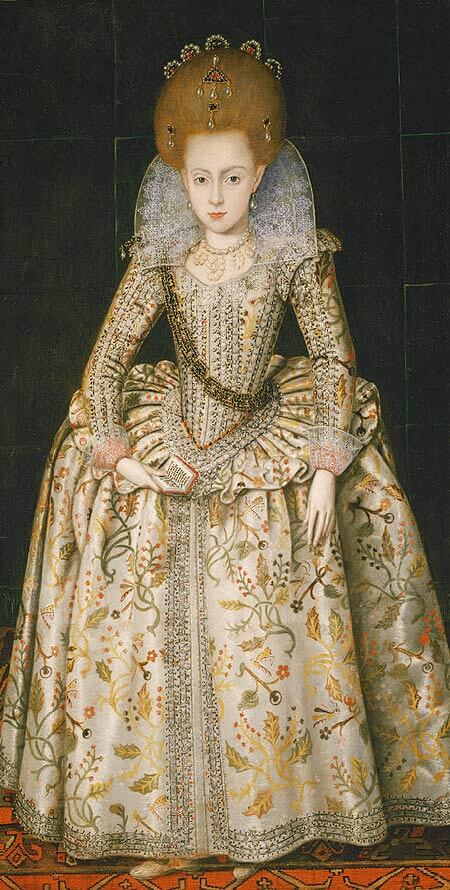
Elizabeth Stuart was born to Queen Anne of Denmark and King James VI of Scotland on 19 August 1596 at Dunfermline Palace in Fife. She was named for Queen Elizabeth I of England and Ireland who also happened to be her godmother.
From a young age, Elizabeth was incredibly close with her older brother, Henry (the future Prince of Wales). They spent a great deal of time together until they were sent to separate houses with different nobles (a common practice among the aristocracy in the sixteenth century).
Life changed for the whole family in 1603 when her father became King James I of England upon Queen Elizabeth’s death. Elizabeth and her siblings were at court for a short while before they were moved to the country after a plague outbreak.
The Gunpowder Plot
Although she was not even ten years old, Princess Elizabeth was at the heart of a plot. The Gunpowder Plot largely aimed to assassinate King James and then place Elizabeth on the throne in his place as a puppet and have her raised as a Catholic (as James was raised as a Protestant by those around him). The plot failed as we know, but it did throw the young Princess’ life into turmoil.

A Popular Wedding
Elizabeth was one of the most sought-after royal brides in Europe at the turn of the seventeenth century. Several royal suitors came to meet her and attempt to secure her hand, including King Philip III of Spain and the future King Gustavus Adolphus of Sweden.
Unfortunately, any Catholic suitors were immediately disqualified due to the continued issues between Protestants and Catholics in England and Scotland. Several Protestant suitors also came with problems, such as Sweden being at war with Denmark (the home of Elizabeth’s mother). However, they settled on Frederik V, Court Palatine of the Rhine.
Although Queen Anne was not a fan of Frederik, everyone else was happy with the match. When he arrived in October 1612, Frederik immediately got on well with Elizabeth and her beloved brother.
The couple married on 14 February 1613 at the Palace of Whitehall with royalty attending from across Europe. The King and Queen spent almost £50,000 on the celebration (more money than they had to spend), and the marriage was celebrated in multiple cities.
Electress, then Queen
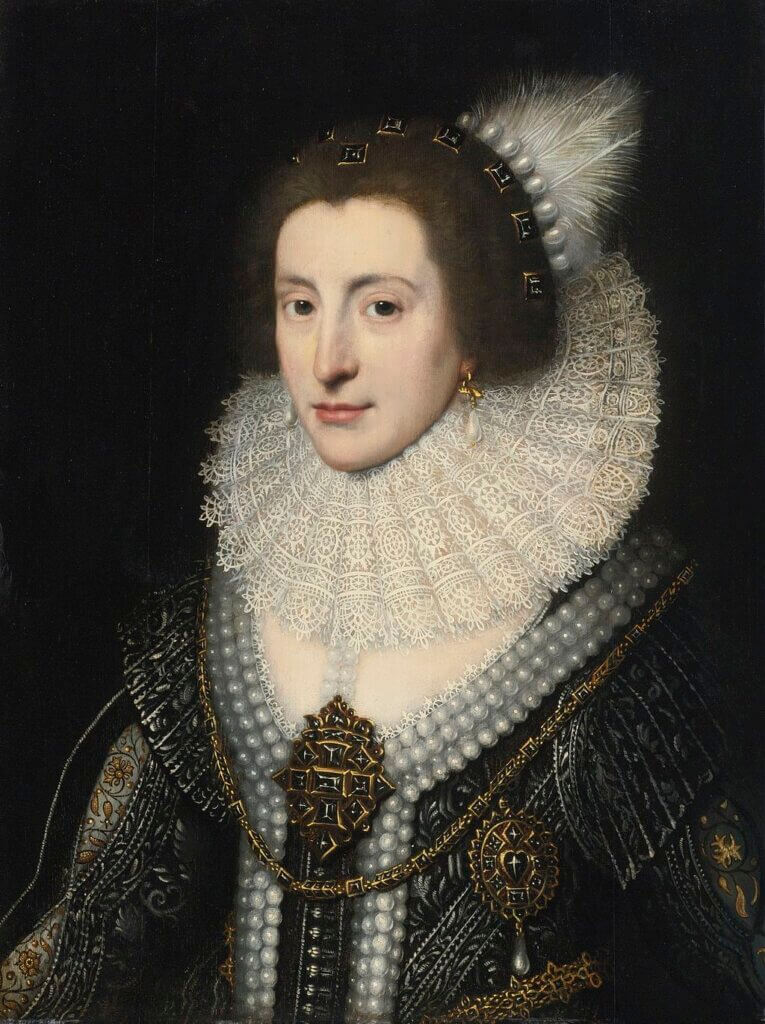
The couple spent the first years of their marriage in Heidelberg where Elizabeth gave birth to their first three children. Although Elizabeth struggled with her relationship with her mother-in-law, their marriage was generally a happy one. As Electress Palatine, she spent most of her time at Heidelberg Palace.
In 1619, Frederik was offered the Bohemian throne. While Frederik originally did not want to claim the throne,Elizabeth and others persuaded him to take the throne. His coronation was held at St. Vitus Cathedral in Prague on 4 November 1619, with Elizabeth’s coronation on 7 November 1619.
Elizabeth had been fairly popular in her youth in England and remained popular as Electress and Queen.
Exile and Widowhood as the Winter Queen
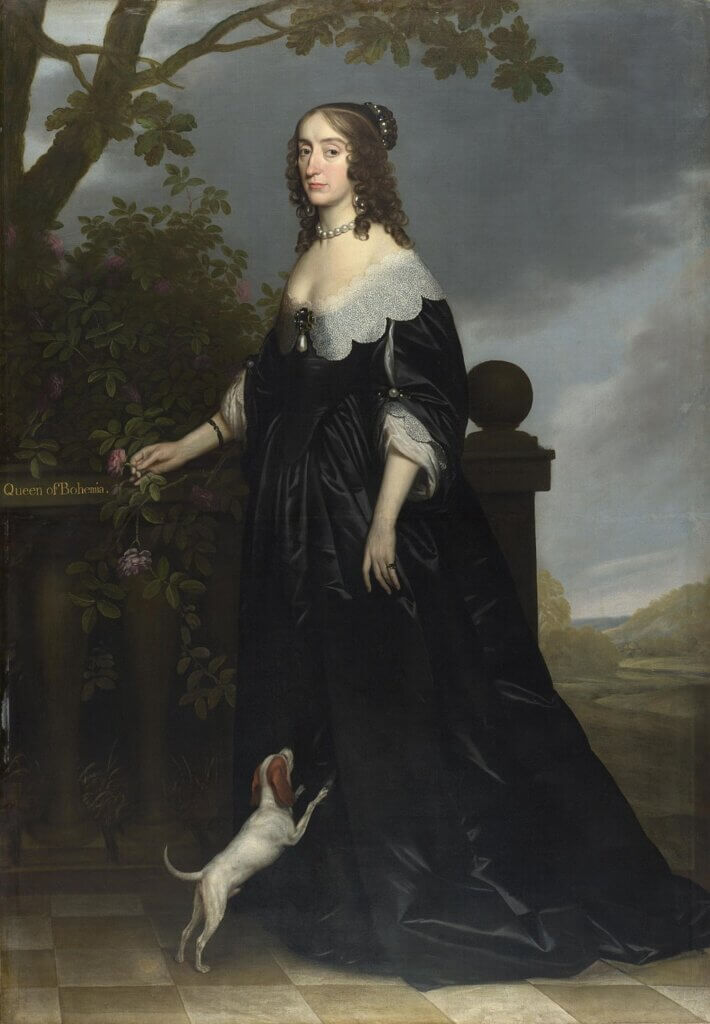
King Frederik and Queen Elizabeth were known as the Winter King and Winter Queen because their reign only lasted a single winter as Frederik’s reign ended on 8 November 1620. Holy Roman Emperor Ferdinand II refused to accept that Bohemia was not part of the HRE, and his armies defeated Frederik’s at the Battle of White Mountain.
Elizabeth had already escaped to Prague but the entire family was forced to flee to the Hague with Ferdinand’s army advancing on Prague quickly.
Her husband died in 1632; Elizabeth spent much of her widowhood in the Hague, dedicating much of her time to supporting culture and the arts. Her younger brother, King Charles I, was beheaded in 1649 and she was joined by some of his family in the Hague.
The Winter Queen arrived in England in 1661 to see her nephew, King Charles II, on the restored throne. She died less than two years later of pneumonia on 13 February 1663.
It was through her daughter, Sophia, Electress of Hanover, that her line inherited the English throne half a century later.
Elizabeth Stuart: Interesting Facts
– Although she was incredibly well-educated, her father did not allow her to learn any of the Classical languages as he believed it made women too “cunning”.
– Although we now know her as the Winter Queen, she was also known as the Queen of Hearts.
– Elizabeth is buried in the Lady Chapel at Westminster Abbey.
Interested in more book previews, period dramas, royal news, and more? You can subscribe to my biweekly substack newsletter here: https://anhistorianabouttown.substack.com/!
Further Readings/Listenings on Elizabeth Stuart
Akkerman, Nadine. Elizabeth Stuart. Oxford University Press, 2022.
Goldstone, Nancy. Daughters of the winter queen: Four remarkable sisters, the Crown of Bohemia, and the enduring legacy of Mary, Queen of Scots. New York: Little, Brown and Company, 2018.

Looking for my earlier Consort of the Month posts? Read about:
Queen Charlotte of Mecklenburg-Strelitz
Queen Marie Antoinette
Catherine de Medici
Queen Adelaide
Catherine de Valois
Marie de Guise
Queen Alexandra of Denmark
Empress Josephine of France
Queen Elizabeth of York
Queen Elisabeth de Valois
Queen Catherine of Braganza
Queen Caroline of Brunswick
Queen Josephine of Leuchtenberg
I hope you have enjoyed Consort of the Month: Elizabeth Stuart!
Cheers,
The Historian
Facebook | Twitter | Instagram | Pinterest | Threads