The running theme of this series seems to be “consorts who have been largely forgotten”. While I wish it wasn’t true, I’m happy to do my part to help correct that. This Queen’s life was full of chaos, intrigue, and danger from start to finish essentially, and I don’t know how there has not been more dramatic retellings of her life. Let’s look at our February Consort of the Month: Elizabeth of York!
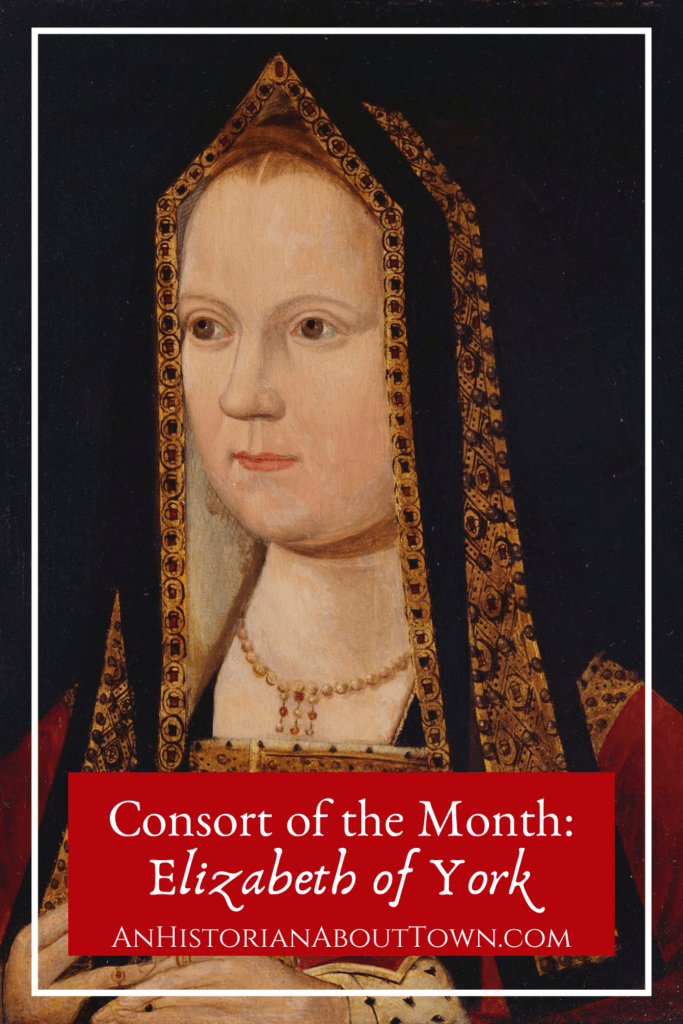
Consort of the Month: Elizabeth of York Fast Facts
Birth Date: 11 February 1466
Death Date: 11 February 1503
Tenure : 18 January 1486 – 11 February 1503
Birth Name: Elizabeth of York
Spouse: King Henry VII
House: York
Father: King Edward IV
Mother: Elizabeth Woodville
Why Do We Know Elizabeth of York
Sadly, Elizabeth of York is a fascinating Tudor figure that does not receive anywhere close to the amount of attention that she does. (The early Tudors lived dramatic and exciting lives like the later generations, but somehow everyone but Henry VIII and Elizabeth I get forgotten.) If you do know who Elizabeth is, it is most likely from the Starz show The White Princess. Elizabeth (as Princess Elizabeth) is a figure in the previous series, The White Queen, but The White Princess focuses on Elizabeth and Henry’s courtship and marriage.

Elizabeth of York’s Early Life
Elizabeth was the eldest child of the Yorkist King Edward IV and his wife, Elizabeth Woodville. In 1466, she was born at the Palace of Westminster, a place that she would become very familiar with. She began her education at five as expected of her status, and she learned reading, writing, history, alchemy, dancing, needlework, and music.
Edward was deposed in 1470, and the rest of the family took sanctuary at the Palace of Westminster. He was restored less than a year later, and Elizabeth and her siblings took their place again. Elizabeth was engaged to multiple people throughout her childhood, including the newly created Duke of Bedford when she was only three and the Dauphin of France six years later.

An Early Death of a King
The King died in 1483 at only the age of forty. Some historians have argued that he died of pneumonia, while others have posited that it was his excessive lifestyle of heavy eating, many mistresses, and drinking that led to his death. In any case, Elizabeth Woodville became the queen dowager.
Elizabeth’s brother, Edward, became King Edward V. However, the young king only held the throne from 9 April to 25 June 1483. Elizabeth and Edward’s uncle, King Richard III, seized the throne, and both Edward and younger brother Richard were taken to the Tower of London. They were seen periodically until October of that year after which they were not seen again.
Elizabeth and her mother and surviving siblings sought sanctuary at Westminster Abbey. They suffered a significant fall in status under Richard’s reign; however, Elizabeth was still the niece of the King and was popular at court. There were rumours that her uncle planned to marry her but there is no concrete evidence of that. (This rumour features heavily in The White Queen and The White Princess.)
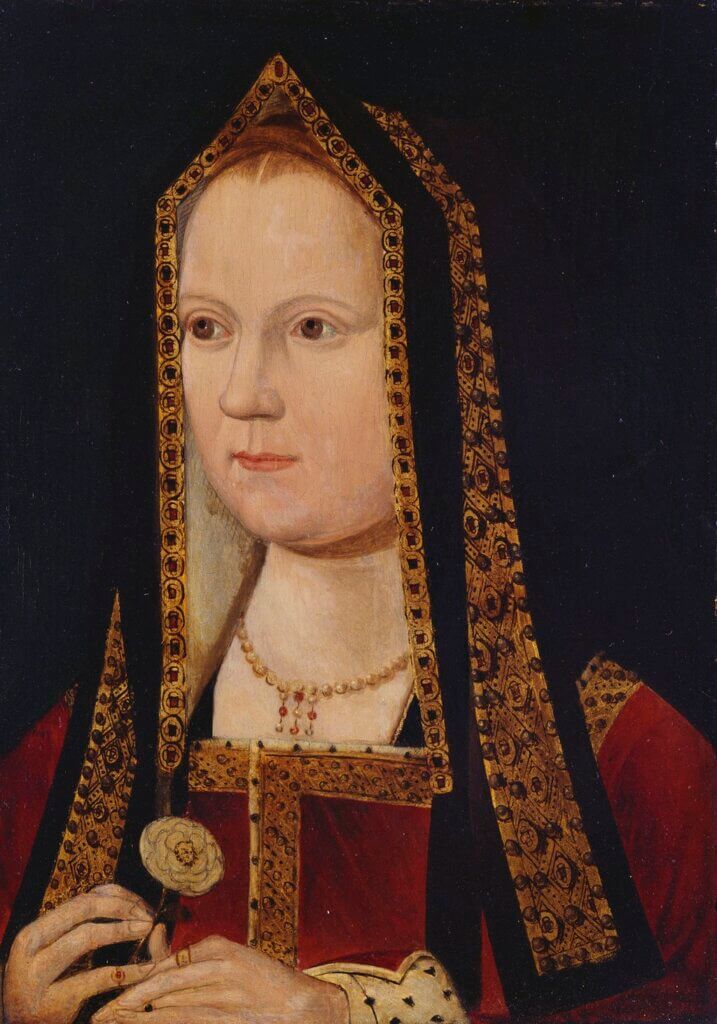
Beginning a New Dynasty
Henry Tudor had questionable claims to the throne that traced back through Catherine de Valois’ second marriage to Welsh nobleman Owain Tudor, thus many had difficulty accepting King Henry VII. Henry was advised by his mother, as well as many others, that marrying Elizabeth of York would secure his throne by uniting the Tudor and the York dynasties. (That would helpfully bring Yorkists on side.)
Henry had applied for a papal dispensation to marry Elizabeth, as they were both descended from John of Gaunt. They married on 18 January 1486, and their first child, Arthur, was born in September of that year. Notably, neither Elizabeth nor Henry were particularly enamoured with the other when they married. They both understood that it was a necessary political marriage, but it was not based on love.
An Eventual Love Match
While the couple did not immediately love each other, many historians believe that they did eventually come to love each other very much. After Arthur, Prince of Wales, was born in 1486, more children came. Margaret was born in November 1489 and she went on to become Queen (consort) of Scotland, and the future King Henry VIII was born in 1491. Elizabeth followed in 1493 but died in 1495; Mary was born in 1496 and would become Queen (consort) of France. Edmund in 1499 and Katherine in 1503 both died young.
Elizabeth had a large coronation in 1487, and she would leave her mark on royal spaces, including Greenwich Palace. Elizabeth was not known to play a large role in politics, but Henry was known to listen to her opinions.

A Tragic Death
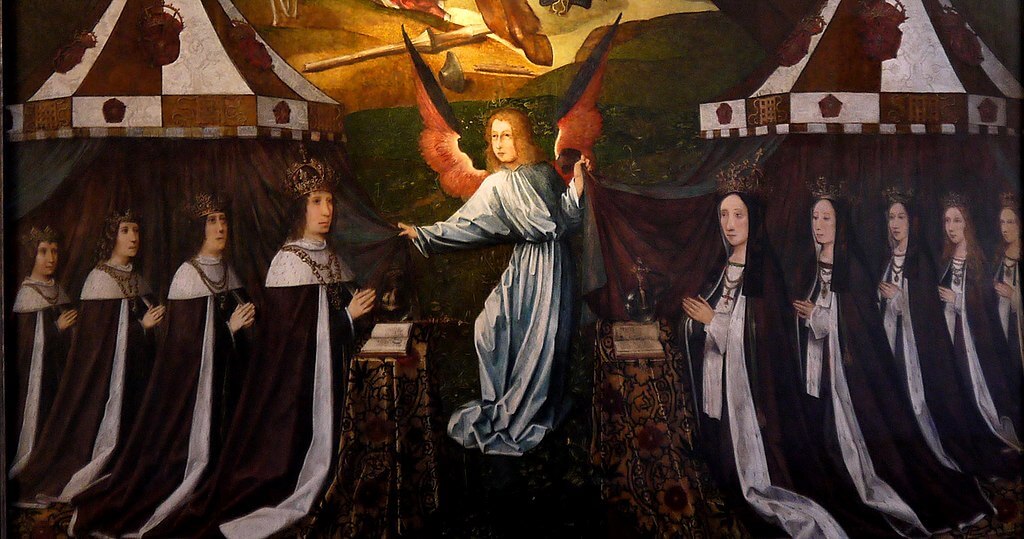
Elizabeth died shortly after giving birth to Katherine; most historians believe that she died of infection. Notably she died on her birthday. Henry grieved his wife deeply and spent months in mourning. Their children also mourned their mother; there are records of Henry VIII’s despair over losing his mother. The Vaux Passional, an illuminated manuscript, has several depictions of Elizabeth’s passing and her family’s mourning her loss.

Elizabeth of York: Interesting Facts
– Elizabeth was the daughter of a King, the sister of a King, the niece of a King, the wife of a King, and the mother of King.
– She enjoyed keeping dogs; greyhounds in particular were her favourite.
– Following the disappearance (and death) of her brothers, many in England considered that Elizabeth of York was the rightful Queen of England.
– She was the grandmother of Queen Mary I and Queen Elizabeth I, and the great-grandmother of Mary, Queen of Scots.
Interested in more book previews, period dramas, royal news, and more? You can subscribe to my biweekly substack newsletter here: https://substack.com/profile/34734695-anhistorian-abouttown!

Further Readings on Elizabeth of York
Licence, Amy. Elizabeth of york: The forgotten Tudor Queen. Stroud: Amberley, 2014.
Weir, Alison. Elizabeth of york: A Tudor Queen and her world. New York: Ballantine Books Trade Paperbacks, 2014.
Looking for my earlier Consort of the Month posts? Read about:
Queen Charlotte of Mecklenburg-Strelitz
Queen Marie Antoinette
Catherine de Medici
Queen Adelaide
Catherine de Valois
Marie de Guise
Queen Alexandra of Denmark
Empress Josephine of France
I hope you have enjoyed Consort of the Month: Elizabeth of York!
Cheers,
The Historian
Facebook | Twitter | Instagram | Pinterest


_-_RCIN_403447_-_Royal_Collection.jpg)
.jpg)
