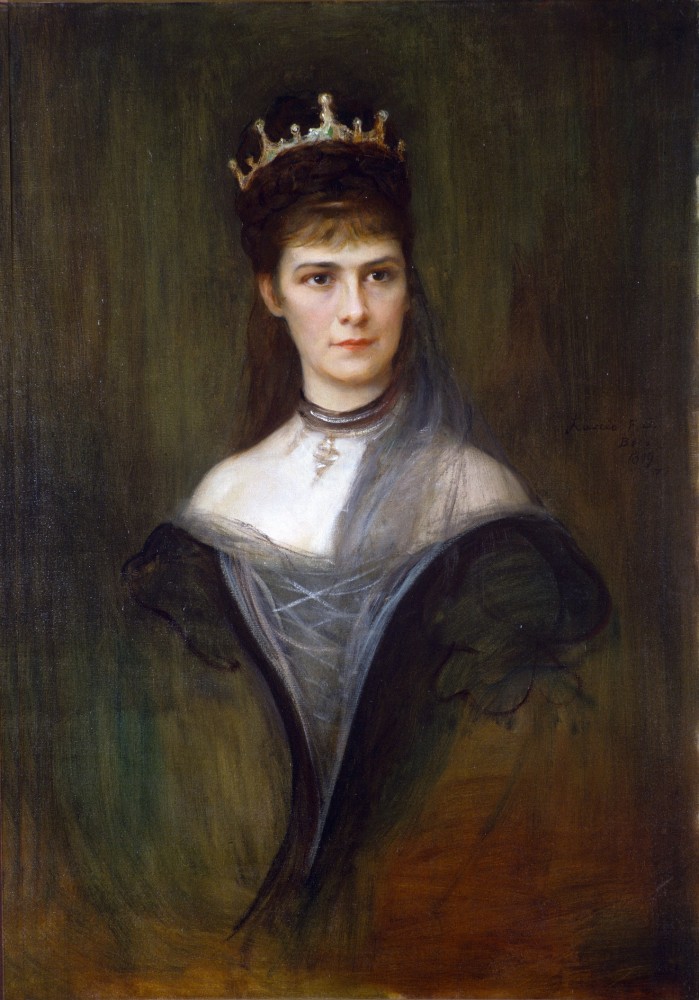
With her birthday on 24 December, I knew that there was no other choice for our December Consort of the Month other than Duchess Elisabeth of Bavaria. Interestingly, while some consorts are known by their birth kingdom than their spouse’s (ie. Queen Mary of Teck), others by their title by marriage. And that is exactly what happened with Empress Elisabeth of Austria. To make it doubly interesting, she is known by her nickname rather than her given name. Let’s get into one of the most fascinating consorts of the nineteenth century: our December Consort of the Month: Empress Sisi of Austria!

Consort of the Month: Empress Sisi of Austria
Birth Date: 24 December 1837
Death Date: 10 September 1898
Tenure: 24 April 1854 – 10 September 1898
Birth Name: Elisabeth Amalie Eugenie
Spouse: Franz Joseph I of Austria
House: Wittelsbach
Father: Duke Maximillian Joseph in Bavaria
Mother: Princess Ludovika of Bavaria
Why Do We Know Empress Sisi of Austria?
Empress Sisi of Austria (aka Empress Elisabeth of Austria) has become a marquee name over the last decade or so, joining the likes of Mary, Queen of Scots and Marie Antoinette. People see her name and at least recognise her. (Or at least the people reading this site…) She was brought into popular culture in the 1950s when Romy Schneider starred in a trilogy of movies about the tragic empress. She rather receded a bit until she became a subject in historical fiction in the 2010s (with books from Daisy Goodwin and Allison Pataki). And then in the last three-ish years, we have a Netflix series about Sisi (aka The Empress), a series from German network RTL (aka Sisi), and a 2022 film (Corsage).

Empress Sisi of Austria’s Early Life
Duchess Elisabeth was born on Christmas Eve in 1834 to Duke Maximillian Joseph in Bavaria and Princess Ludovika of Bavaria, their third child. Elisabeth’s father was rather a peculiar person, at least for the aristocracy of the time. And as such, he indulged Sisi’s want for freedom and informality. She spent much of her time outdoors with her horse, with her summer months spent at Possenhofen Castle.
However, her mother was determined to secure strong, dynastic marriages for her children. In 1853, Archduchess Sophie, the mother of Franz Joseph I, was also searching for an appropriately diplomatic marriage for her son. She invited Ludovika and her eldest daughter, Helene, to Bad Ischl in Austria to meet the emperor. Fatefully, a fifteen year old Sisi accompanied them.

Catching the Emperor’s Eye
After a lengthy journey, the two duchesses and their mother met the archduchess and the emperor at Bad Ischl. Although Helene was the intended fiance for Franz Joseph, Sisi immediately caught his eye. Unfortunately, the Bavarian family was dressed in black for mourning after visiting the Queen Dowager of Bavaria who had lost her brother and black was not Helene’s colour. It also did not help that Sisi had beautiful floor-length hair and was widely known as a beauty.
Franz proposed quickly and their engagement was announced only five days after their meeting. They married on 24 April 1854 at the Augustinerkirche, the church beside the Hofburg Palace.

A 16 Year Old Empress
Sisi struggled in her new role almost immediately. Not only was she incredibly young, the exceptionally formal court of Vienna was essentially the opposite of her life in Bavaria. The teenager developed health problems soon after her wedding; looking back, we can also recognise that she struggled with mental health issues, as well. (I am not a huge fan of diagnosing historical figures. However, this is a case where I believe we can recognise this category of issues.)
Sisi strongly disliked her mother-in-law who was very involved with the day to day business of reigning. While there isn’t evidence that Sophie felt the same way, she did limit Sisi’s role as mother by immediately taking her children after birth to largely raise them, choosing her first daughter’s name, and not allowing Sisi to have any meaningful day-to-day involvement with her children’s lives.
Throughout her time as empress, Sisi would remain fixated on her beauty and figure. She spent hours every day caring for her hair and complexion, in addition to exercising considerably.
The Draw of Hungary
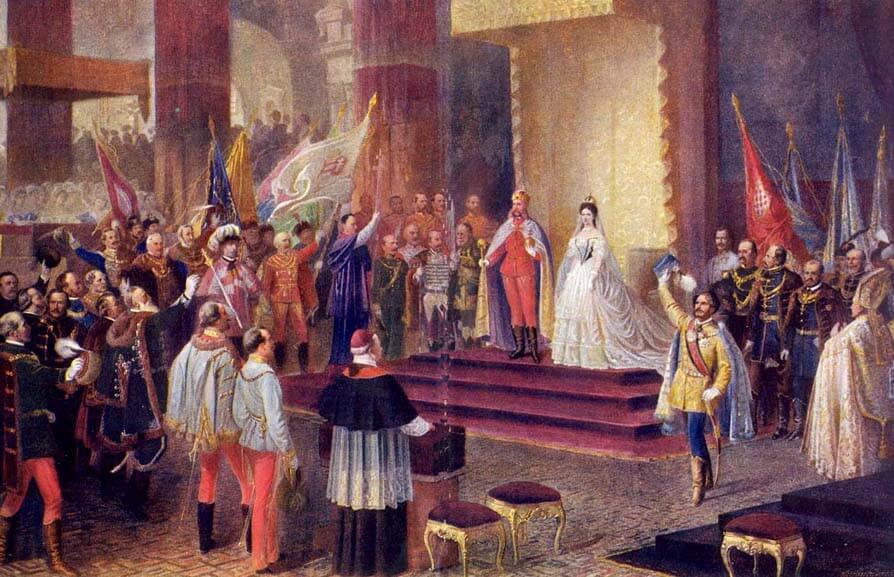
In 1857, Franz Joseph and Sisi visited Hungary, one of their realms, and Sisi fell in love with the country. Not only was the Hungarian court far more relaxed than the Habsburg court in Austria, she found the people to be much more lively. It also did not hurt that Sisi’s mother-in-law hated Hungary, making it all the more attractive to her.
She threw herself into learning Hungarian and spent as much time as possible there. In 1867, Sisi and Franz Joseph had a Hungarian coronation. She had spent a decade essentially acting as a go-between for her husband and the Hungarian Count Gyula Andrássy, a politician. (It was rumoured that he was her lover, but there is no confirmed evidence for that.)
Mayerling: The Turning Point
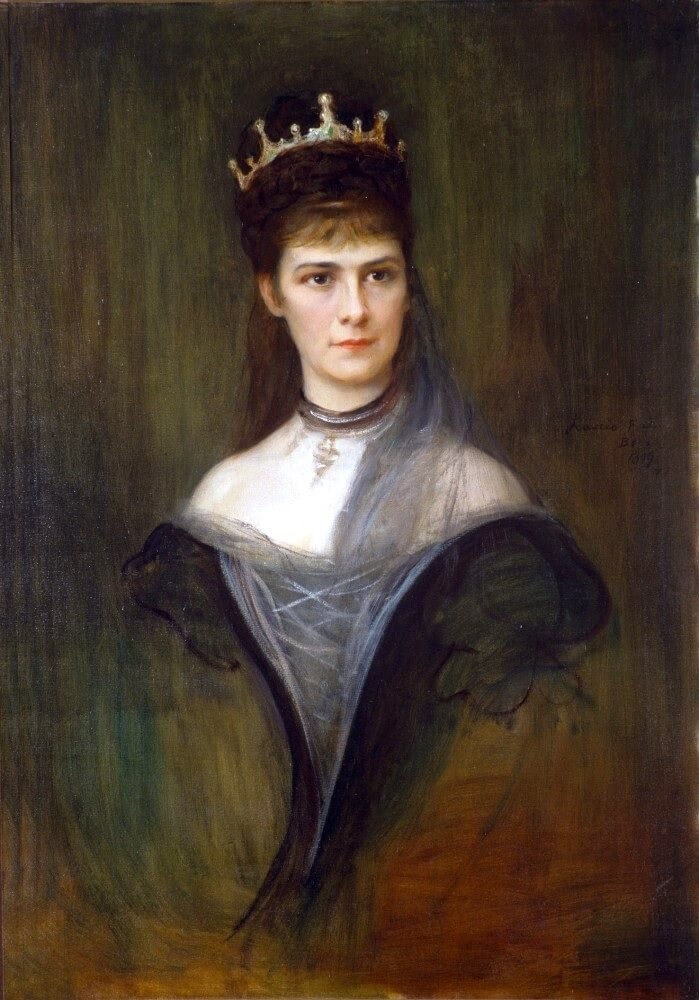
Elisabeth gave birth to four children. Archduchess Sophie was born in March 1855 and died of what was most-likely typhus in May 1857. Archduchess Gisela was born in July 1856 and died in July 1932 after marrying into the Bavarian royal family. Crown Prince Rudolf was born in August 1858, and Archduchess Marie Valerie was born in April 1868.
Rudolf had a somewhat difficult upbringing. Not only was he kept separate from his mother, his father appointed tutors and governors who were what we could consider abusive. His relationship with his conservative father as heir was largely strained, as he was rather liberal.
The Crown Prince married Princess Stephanie of Belgium in 1881 and their marriage turned quickly unhappy. They had one daughter together; after that, Rudolf continued to seek out extra-marital affairs and liaisons. He most likely infected Stephanie with a sexually transmitted infection, and she was unable to have more children (an issue if you are meant to carry on a royal bloodline.)
In January 1889, Rudolf went to his hunting lodge, Mayerling, with his new mistress, Baroness Marie von Vetsera. On the 30th of January, they were discovered dead at the lodge, most likely from suicide. His parents were able to have him declared mentally unbalanced to allow him burial in a Catholic church.
Despite not being close with her son, Sisi was heartbroken by his death. She remained in mourning clothing for the remainder of her life. While she had already spent a considerable amount of time traveling, she spent even less time in Vienna after his death.

The Target of an Anarchist
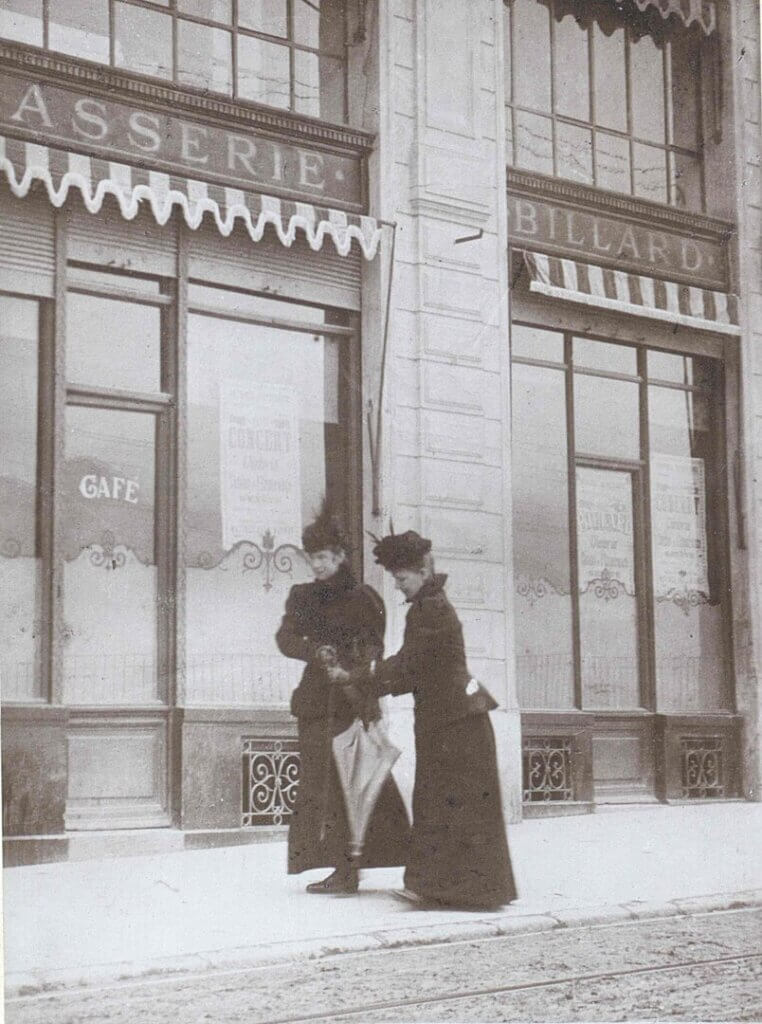
While traveling privately in 1898, Sisi was murdered by Luigi Lucheni, an Italian anarchist. She was walking from her hotel in Geneva to the pier to board a ship and the disgruntled anarchist stabbed her with a thin, sharp file. Neither Sisi nor her lady-in-waiting had realised what had happened. By the time they boarded the ship, the Austrian empress collapsed and died on 10 September 1898.
Sisi was widely mourned across Austria and beyond, with thousands gathering on her funeral route.
Empress Sisi of Austria: Interesting Facts
– Sisi was not actually Lucheni’s target; he had originally intended to assassinate the Duke of Orleans.
– She was an exceptionally talented equestrian rider.
-The Empress often travelled under the name of “Countess Hohenembs” to avoid the press following her.
– Sisi was one of the “it-girls” of her day, with her fashion being widely copied across Europe.
Interested in more book previews, period dramas, royal news, and more? You can subscribe to my biweekly substack newsletter here: https://anhistorianabouttown.substack.com/!

My Sisi ornament!
Further Readings/Listenings on Empress Sisi of Austria
Goldstone, Nancy. Rebel empresses: Elisabeth of Austria and Eugénie of France, power and glamour in the struggle for Europe. US: Little Brown and Company, 2025.*
Hamann, Brigitte. The reluctant empress Brigitte Hamann. transl. from the German by Ruth Hein. Frankfurt am Main: Ullstein, 1995.
The History Chicks Podcast. “Empress Sisi, Mega-revisit”
Vulgar History. “Empress Sisi, part one (with Lana Wood Johnson)”, “Empress Sisi, part two (with Lana Wood Johnson)”, and “Empress Sisi, part three (with Lana Wood Johnson)”.
*This is an upcoming book- I have an eARC that I’ve just started and it is brilliant.
Looking for my earlier Consort of the Month posts? Read about:
Empress Eugenie of France
Queen Charlotte of Mecklenburg-Strelitz
Queen Marie Antoinette
Catherine de Medici
Queen Adelaide
Catherine de Valois
Marie de Guise
Queen Alexandra of Denmark
Empress Josephine of France
Queen Elizabeth of York
Queen Josephine of Leuchtenberg
Queen Elisabeth of the Belgians
I hope you have enjoyed Consort of the Month: Empress Sisi of Austria!
Cheers,
The Historian
Facebook | Twitter | Instagram | Pinterest | Threads