This week marks the final post in our Royal Jewellers series for Style File Friday! We have really crisscrossed Europe throughout this series. Starting off with Fabergé in Imperial Russia, we were then travelling to France for Cartier. After a quick hop across the English Channel to visit Garrard in London, we were back to Paris for Boucheron. Another lengthy journey back to Russia and to Sweden for Bolin, and now our final week, we finish in France again with Chaumet. To cap off our series, let’s get into the history of Chaumet.

Those Invisible Royal Jewellers
If there is a jeweller that we know has done substantial work for any royals-past or present- with larger pieces like tiaras, stomachers, etc, please let me know. I am happy to cover more houses*. Unfortunately, the names and identities of many royal jewellers have been lost to the years.
*I have not covered Van Cleef and Arpels and Tiffany because royals tend to wear smaller pieces from both of these companies for day engagements.

The Early History of Chaumet
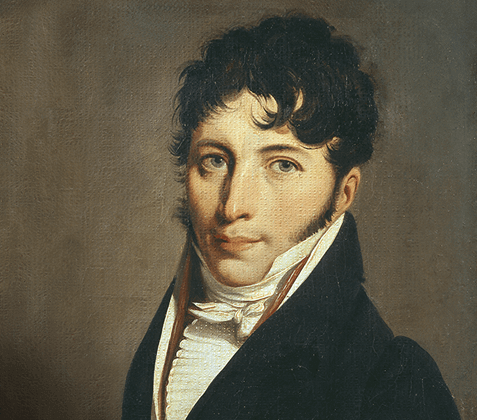
Marie-Étienne Nitot, a goldsmith who apprenticed under Aubert- Marie-Antoinette’s jeweller-, opened his own firm in 1780. He absolutely would have understood the importance of networking and making connections, as his business took off immediately when many court clients followed him to his new business. However, when the French Revolution happened a decade later in 1789, there really were not any French aristocrats to order jewels. (And if they were around, they most likely would not have been ordering jewels to wear publicly…)
The French Empire
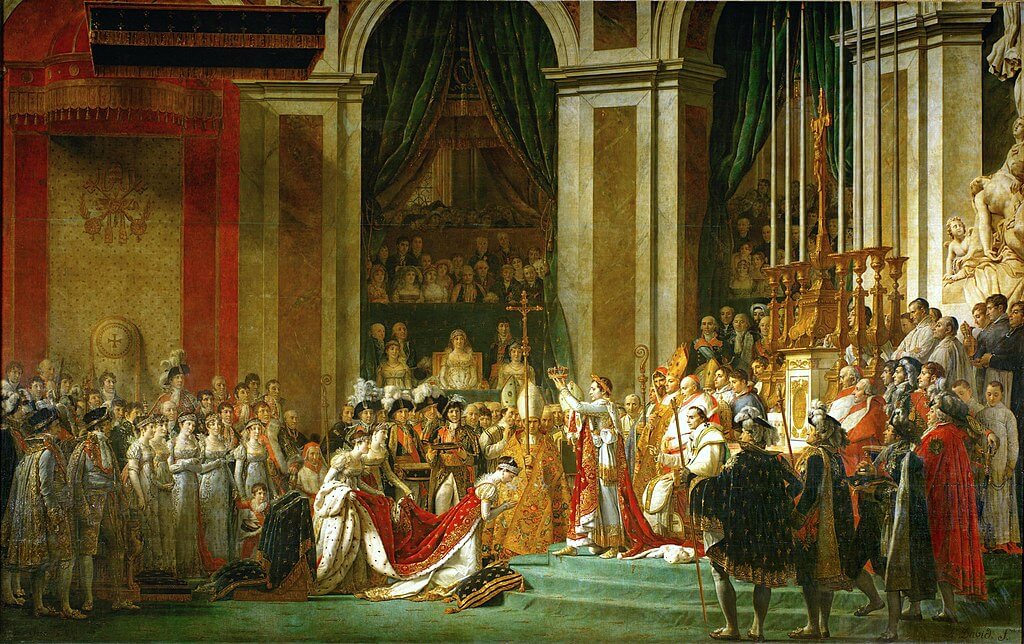
Nitot’s business truly took off in 1802, when Emperor Napoleon I chose Nitot as his official jeweller. By this time, Nitot’s son was also working with him. And as one might expect, Chaumet played an important role at Napoleon’s December 1804 coronation.
As far as coronations go, it was pretty spectacular- Napoleon wanted to question as to the weight of his power. Pope Pius VII officiated, and Napoleon and his wife, Josephine, were magnificently attired. The jeweller worked on the Coronation Sword which featured a 140.5-carat diamond known as the “Régent”. He also created a new papal tiara for Pius, as Napoleon wished to thank the pope for his involvement. (Jewellers rarely get to say they’ve made a papal tiara.)
Although Josephine and Napoleon would divorce in 1810, Chaumet would continue to be Josephine’s jeweller of choice, and the empress would be the house’s muse two centuries later.
A Busy Nineteenth Century
When the French Empire was abolished in 1815 and Napoleon was exiled, Nitot sold his business to Jean Baptiste Fossin, his foreman. Chaumet continued to create pieces for French elites, as well as continuing to outfit royals across Europe.
In the mid-nineteenth century, Chaumet opened a store in London and won the support of Queen Victoria. The house had several pieces on display at The Great Exhibition in 1851, only furthering their name and popularity in the UK.
In the last two decades of the nineteenth century, the house shifted into an art deco style that would continue for much of the first half of the twentieth century. This style would very much become the Chaumet trademark.
Moving to LVMH
Chaumet closed during the Second World War, as many businesses did, and reopened in 1944/1945. Like Dior, Givenchy, and Balenciaga, Chaumet did flourish in the 1950s and the 1960s as France once again became the epicentre of fashion. The Nitot family had married back in into the business in the early twentieth-century, but the business was bought out after fraudulently declaring bankruptcy in 1987. They were bought again in 1999 by LVMH and have remained under that umbrella company since.
The Chaumet Emerald Tiara
The Luxembourgish Grand Ducal Family has some of the strongest Chaumet pieces in their jewellery vaults. The Chaumet Emerald Tiara is one of my favourites, and I think it perfectly showcases Chaumet’s art deco style. The first grand duchess to wear this was Grand Duchess Charlotte of Luxembourg who reigned as Grand Duchess from 1919 to 1964. (Think the Queen Elizabeth II or Queen Victoria of Luxembourg.) The jaw-droppingly massive emerald looks stunning, and it is quite easy to see why Grand Duchess Maria Theresa wears this tiara frequently.
Princess Caroline of Monaco’s Chaumet Stomacher
Monaco’s jewel collection is nothing to slouch at. Princess Charlene of Monaco often wears more avant-garde and modern pieces. However, her sister-in-law, Princess Caroline of Monaco, has a fantastic antique Chaumet piece. There is not a lot of information available on this stomacher, but this article here dates it to 1893. The large diamond piece is shaped into a sheaf of wheat, a not uncommon design for jewellery. Caroline has been quite creative with her styling; if you Google her appearances, she has worn it in a number of ways.
The Chaumet Choker Tiara
This is another Luxembourgish piece, and a versatile one- it can be worn as a necklace or a tiara. In the image I’ve linked above, Grand Duchess Maria Theresa is wearing it as a necklace, but she has worn it as a tiara several times. (Hereditary Grand Duchess Stephanie, her daughter-in-law, has also worn the tiara setting.) This is another piece that Grand Duchess Charlotte debuted, a strong indicator that Chaumet were her jeweller of choice. Interestingly, the Dutch Royal Family has a similar necklace, the Dutch Diamond Trellis Necklace (only a necklace), that was made by a German jeweller!
Were you familiar with the history of Chaumet?
Cheers,
The Historian
Facebook | Twitter | Instagram | Pinterest

.jpg)
.png)
.jpg)