We started our new Style File Friday series last with a look at one of the most well-known jewellery firms in the world, Fabergé. While Fabergé has largely stopped trading- the firm stopped trading for several decades and now makes small pieces- Cartier has been the opposite. In the 175 years since their founding, Cartier has continued to grow. As of 2023, they still remain one of the best-known luxury jewellers, and you can see many of their pieces on royals around the world. For this week’s Royal Jewellers post, we are looking at the history of Cartier!

Royal Jewellers
Some royal families share more information about the jewels and pieces kept in their vaults, while others keep it quite private. We do not know the makers of many pieces that different royals wear. However, with Cartier, we do generally tend to know. (That is- if we know the piece exists. The British royal family in particular likes to keep many of their jewels private and we have no idea what is in their full collection, Cartier or otherwise.)
The Beginnings of Cartier
Louis-François Cartier took over his master’s shop in 1847, beginning what would become a glittering dynasty. The late 1840s were a difficult time in France (and across most of Europe), with many different socialist revolutions happening. The Cartier shop continued on slowly, but it was not until Louis-François’ grandsons, Louis, Pierre, and Jacques, who grew the business exponentially.

Big Moves
As of 2023, Cartier has over 200 different stores operating across the world. However, in the nineteenth century, they began with just one. Much of Louis, Pierre, and Jacques’ development came in the form of moving and travelling. In 1899, the brothers moved their Paris shop to the incredibly fashionable Rue de la Paix. With a mind for much further expansion, the brothers opened a store in London in 1902 (more below), one in St. Petersburg in 1908, and another in New York in 1909.

Three Brothers, Three Roles
Each brother had a fairly defined role in the business. Louis spent most of his time on the Paris shop, though he travelled a lot, and was the main source of creativity. He embraced a lot of trends early on, and was able to translate this trend forecasting into decades of success. (One example- in 1907, he had a scarab-style ring designed, which ballooned in popularity in the 1920s with the discovery of King Tutankhamun’s tomb.)
Jacques pushed to establish the London store, and spent much of his time there. Cartier’s popularity in the UK skyrocketed during the reigns of King Edward VII and King George V. When not in London, Jacques spent a good amount of time in India and throughout Asia both buying diamonds and working with royals there to reset and recreate their jewels with Cartier.
Like Jacques wanted to open a store in London, Pierre chose to open a store in New York. Their US store also grew very quickly, though its business plan differed from its European counterparts. Throughout the years, he bought and sold several famous (and infamous) stones, like the Hope Diamond.
Cartier- The Jeweller of Kings and the King of Jewellers
By the time we arrive at the turn of the twentieth century, Cartier is firmly ensconced as the royal favourite. The royal families of Europe were (and still are) interconnected through marriages, and Cartier trinkets and jewels were very common presents.
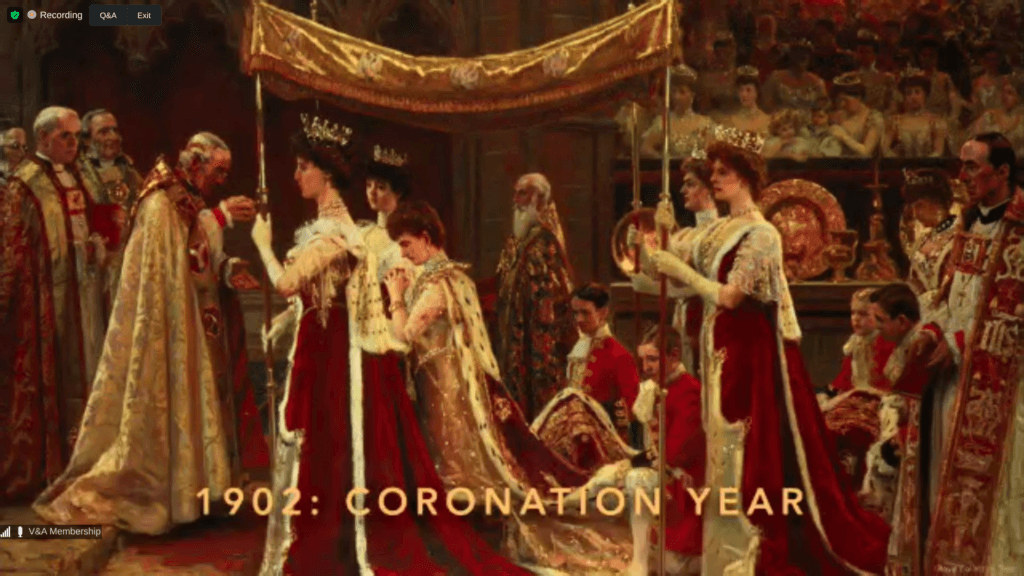
King Edward VII of the United Kingdom inherited the throne in 1901, and his 1902 coronation was a major social event. He was already a loyal Cartier customer (he granted Cartier a royal warrant in 1904) and their London shop opened in 1902, meaning that he was able to order almost 30 different tiaras from Cartier for the big day.
A Family Business No More
In 1964, Pierre was the last of three brothers to die. After his death, the family members who owned each of the branches sold the Cartier firm in 1972 (Paris), 1974 (London), and 1976 (New York). The Cartier brand has remained immensely popular and is still an immediately-recognisable name.

The Manchester Tiara
While the Cartier Halo Tiara has become an icon in the twenty-first century after The Queen loaned it to then-Kate Middleton for her 2011 wedding to Prince William, I think that the Manchester Tiara is one of the firm’s most impressive.
In 1903, Consuelo Vanderbilt, the American Dowager Duchess of Manchester commissioned a new tiara. She brought over a thousand diamonds to Cartier and asked them to create a scroll-style tiara for her. Cartier added over four hundred diamonds, and created this heart-scroll piece that lives in the V&A’s collections today. The V&A describes the tiara as:
Diamond tiara composed of seven graduated heart-shaped openwork motifs with ‘C’ scroll ends, with detachable collet and scroll surmounts, each centre suspending three diamond drops. The smallest heart motif and the ‘C’ scrolls at each end are set with paste, except the three collet diamonds at the centre of each heart and their two outer borders.

The Cartiers, Francesca Cartier Brickell
If you are interested in an in-depth history of the Cartier family and firm, I would recommend The Cartiers by Francesca Cartier Brickell. It is a lengthy read (the audiobook is over 20 hours), but is bursting with information from the family’s private archives. (It is also a fantastic peek into nineteenth and twentieth-century society.) You can find my review here!
And if you want more royal jewellers, you can find my Fabergé piece here!
Were you familiar with the history of Cartier?
Cheers,
The Historian
Facebook | Twitter | Instagram | Pinterest