Our Royal Jewellers series is well underway. We started with the well-known Russian jewellers, Fabergé, whose Easter eggs are still priceless collectors’ items. Then we moved to the French family firm, Cartier– a business that is still leading the jewellery industry to this day. Given that I started this series ahead of the May 2023 coronation, it seemed fitting to turn to a British firm this week. Garrard has long been a royal favourite in the UK, and they have played a significant role in modern royal history. For Style File Friday, let’s get into the history of Garrard & Co!

How Do We Know Which Royal Jewellers Made What?
Once again, I must emphasise that we do not know the maker of many royal jewels. Some pieces are centuries old, and the records of any makers have been lost over the decades. In other cases, like the British Royal Family, the family simply chooses to keep the bulk of their collection private. However, we do know that Garrard & Co have worked closely with the British Royal Family for over a century.
The Beginnings of Garrard & Co
Although Garrard is not as well known as Cartier and many other jewellers, they are actually quite a bit older. Goldsmith George Wickes registered his mark and opened his business in 1722 in the City of London. After a series of purchases and inheritances, Robert Garrard became a partner in 1792, and held sole control of the company by 1802. His sons, Robert II, Sebastian, and Jacques all worked with their father, and the three sons inherited the business upon his retirement. In the nineteenth century, they were known as Robert Garrard & Brothers and R., J., and S. Garrard.

Catching the Royal Eye
Like most royal jewellers, the company’s big break came when they caught the monarch’s eye. (Nicholas II cemented Fabergé’s position, and Edward VII did the same for Cartier- there is nothing like the magic of monarchy.)
Queen Victoria appoint R., J., and S. Garrard as the official Crown Jewellers, meaning that they were given the responsibility of caring for and maintaining the Crown Jewels. In addition to making sure that the Crown Jewels looked their best, they created several different pieces for the royal family over several generations. Notably, Victoria requested that Garrard create a smaller crown for her that she could wear over her widow’s cap. Garrard explains, “Set with more than 1,000 diamonds and featuring alternating crosses and fleur-de-lis motifs, Garrard created the crown so that the arches could be removed. Queen Victoria wore the Small Diamond Crown for the first time at the opening of Parliament in 1871 and frequently thereafter for state occasions.”
The Koh-i-Noor Diamond
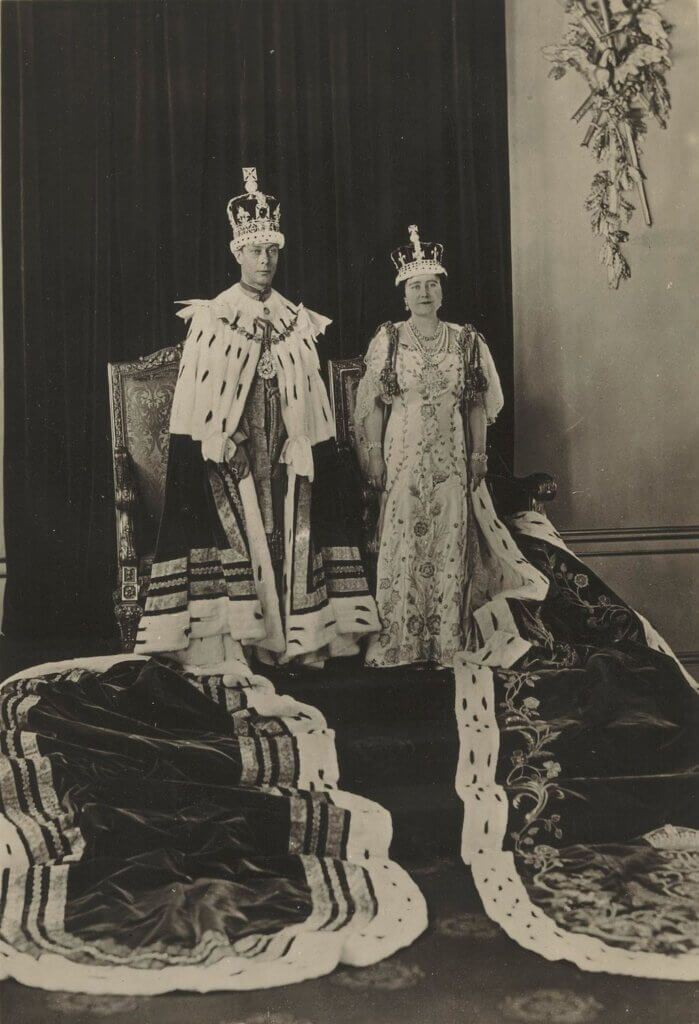
One of the firm’s biggest tasks involves an infamous diamond. Prince Albert asked the firm to recut the Koh-i-Noor diamond in 1852. The process took over eight weeks. The Koh-i-Noor diamond is still set in the Queen Mother’s crown, though it remains to be seen if that will change. It is one of the largest diamonds in the world, and India, Pakistan, Iran, and Afghanistan have all stated their ownership of the diamond, and have asked it to be returned. The stone has a long and complex history, and this will remain a legal matter for decades. (Britain continues to claim that their ownership of the diamond is absolutely non-negotiable.)
Even More Crowns
Queen Victoria’s miniature crown was only the beginning of Garrard’s work with crowns. In 1911, they created the Imperial Crown of India- a crown that has not been used since George’s crowning in India. (A single-use crown seems… odd… now that we are at a point in time when we are banning single-use products ha!) They were also commissioned to create Queen Mary’s crown for the 1911 coronation, and Queen Elizabeth’s crown for her 1937 coronation (she would later be known as Queen Elizabeth the Queen Mother).*
*I do not believe that we will see new crowns created for coronations going forward. In the twenty-first century, it feels extravagant and quite frankly, ridiculous when you have several options at your disposal.
Tiaras and Brooches for Every Occasion
If you have seen the Lotus Flower Tiara (most recently seen on the Princess of Wales), you have seen Garrard’s work. She wore it for the third time (publicly) in December 2022 for King Charles III’s first diplomatic reception as monarch. The future-King George VI originally bought this piece as a necklace for his wife as a wedding present. In 1924, Elizabeth went back to Garrard though, and requested that they reset the necklace as a tiara.
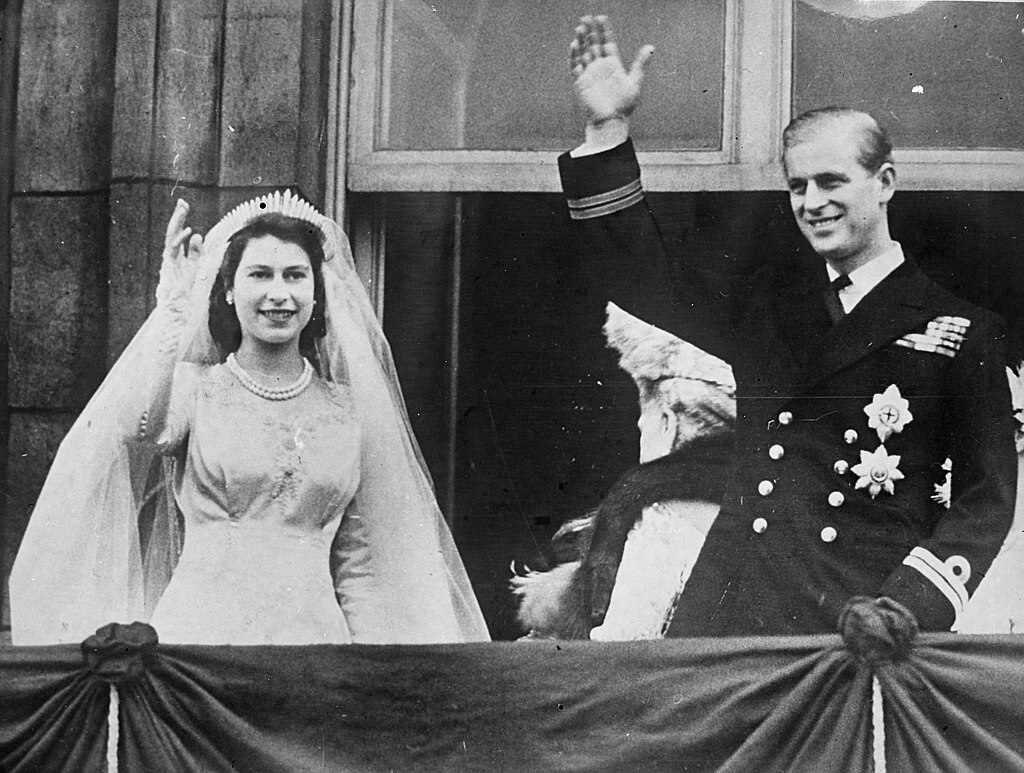
The Queen Mary Fringe Tiara is also a Garrard creation. Queen Mary commissioned the kokoshnik-style piece in 1919, and asked that it be convertible. The then-Princess Elizabeth wore this tiara for her 1947 wedding to the Duke of Edinburgh, Princess Anne wore it to her 1973 nuptials, and Princess Beatrice of York wore it for her 2020 wedding at Windsor.
I won’t bore you with tiara after tiara, but the Politmore Tiara (worn by Princess Margaret on her wedding day), the Lover’s Knot Tiara (worn by the then-Duchess of Cambridge/now-Princess of Wales on several occasions), and the Dehli Durbar Tiara (worn by Queen Mary in India) are all Garrard pieces, as well.
In addition to the Koh-i-Noor, Garrard also worked with the Cullinan diamond. Though a Dutch firm hadnled the cutting, Garrard was tasked with creating several different pieces with the resulting Cullinan diamonds. The late Queen Elizabeth II often wore the Cullinan V brooch, a gift from her grandmother.
Were you familiar with the history of Garrard?
Cheers,
The Historian
Facebook | Twitter | Instagram | Pinterest



.jpg)