With it being a new year and with many new followers joining us, I thought I would re-introduce myself a little. Obviously the blog title tells you I am an historian, but I am also a dancer. I’ve danced my entire life, and still attend the ballet as often as I can. I thought that for this week’s culture post I will share some of my favourite ballet biographies. Although ballet and the performing arts largely take a backseat to television, film, and streaming services, it has a fascinating history and fascinating figures. (And yes, you probably have heard of several of these dancers.) These are the best ballet biographies and memoirs available!

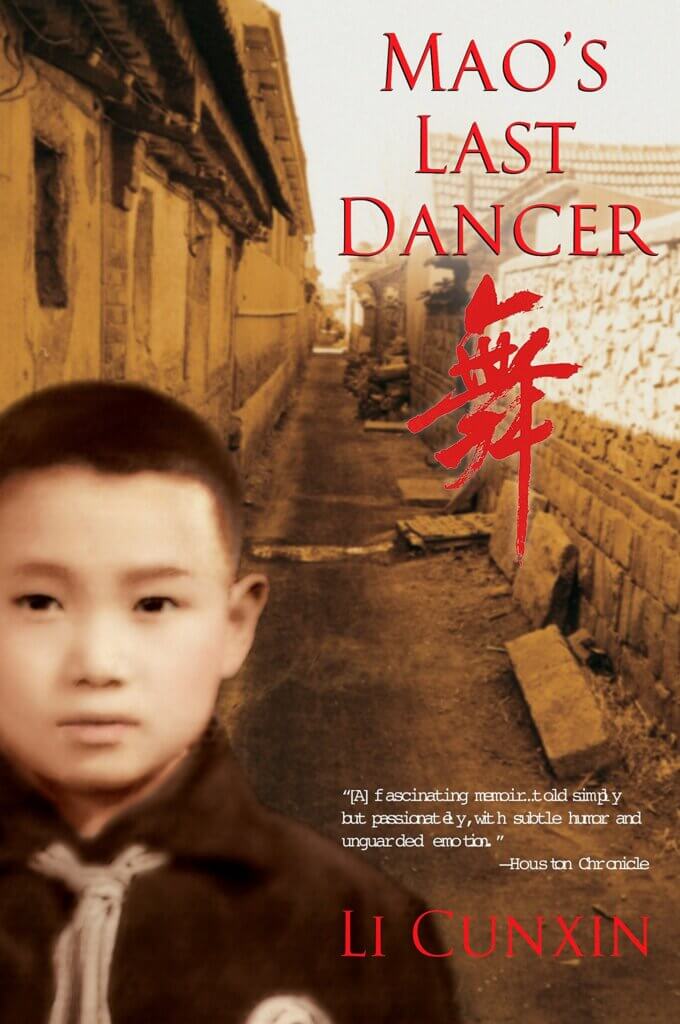
Mao’s Last Dancer, Li Cunxin
Raised in a desperately poor village during the height of China’s Cultural Revolution, Li Cunxin’s childhood revolved around the commune, his family and Chairman Mao’s Little Red Book.
Until, that is, Madame Mao’s cultural delegates came in search of young peasants to study ballet at the academy in Beijing and he was thrust into a completely unfamiliar world.
When a trip to Texas as part of a rare cultural exchange opened his eyes to life and love beyond China’s borders, he defected to the United States in an extraordinary and dramatic tale of Cold War intrigue.
Told in his own distinctive voice, this is Li’s inspirational story of how he came to be Mao’s last dancer, and one of the world’s greatest ballet dancers.
Why You Should Read This…
If this book sounds familiar to you, it is probably because it was made into a film in 2009. (And that film won several prestigious awards.) Cunxin’s life as a dancer may not be the usual story that us in the west would know, but it is fascinating nevertheless. The film is wonderful, but I found the book to be even more compelling. Not only is his dance career a captivating story, the ever-present thread of politics helps to contextualise his story. It also highlights that the dance world does not exist in a vacuum, and is very much intertwined with mainstream culture, politics, economics, and more!
Margot Fonteyn, Meredith Daneman
Margot Fonteyn – born plain Peggy Hookham – was dreamed into existence by the architects of British ballet: Ninette de Valois, Frederick Ashton and Constant Lambert. Carried to fame on a wave of wartime patriotism, Margot’s sense of duty rather than ambition propelled her forward. Yet her gifts were such that her pre-eminence would come to eclipse the careers of subsequent generations.Ballet is a fairytale world; if Margot, like the pure and poetic heroine of Swan Lake, was a natural Odette, she would also have to contend with virtue’s raw shadow-side in the guise of Constant Lambert, Roberto Arias and Rudolph Nureyev – the men who, like Von Rothbart, were to take possession of her heart.
Why You Should Read This…
Fonteyn still remains the most important figure of twentieth-century ballet for me. I know that many people will argue with me, but I think the magnitude of her career in the dance world, the far-reaching strands of her life off-stage, and her cultural position have cemented that position.
This biography is quite in-depth. It does not shy away from the less glamorous and the outright difficult aspects of Fonteyn’s life. There are absolutely multiple dark periods in her life, and there are also many glowing periods. Nowadays, there is a strong movement towards better work-life balance for dancers, and a healthier approach to their art. The mid-twentieth century was quite different though, and Margot Fonteyn provides an excellent window into that period.

Imperial Dancer: Mathilde Kschessinska and the Romanovs, Coryne Hall
Mathilde Kschessinska was the mistress of three Russian grand dukes, and the greatest ballerina of her generation. After her own memoirs, this title aims to reveal her real story by looking at what she did not say, revealing the secrets of the Romanov treasure.
Why You Should Read This…
This is one of the older biographies on the list in terms of subject matter. However, it still remains one of my favourite ballet biographies. The Imperial Russian ballet world was a very complex and often-times dangerous place. Dancers would very quickly become entertwined with members of the aristocracy, and even the Imperial family, and more often than not would drastically change the trajectory of their lives.
Not only is Kschessinska known as one of the most talented Russian dancers of the late nineteenth/early twentieth centuries, her private life is kind of bonkers (to be casual). If you want an entertaining ballet story, this is the book for you!

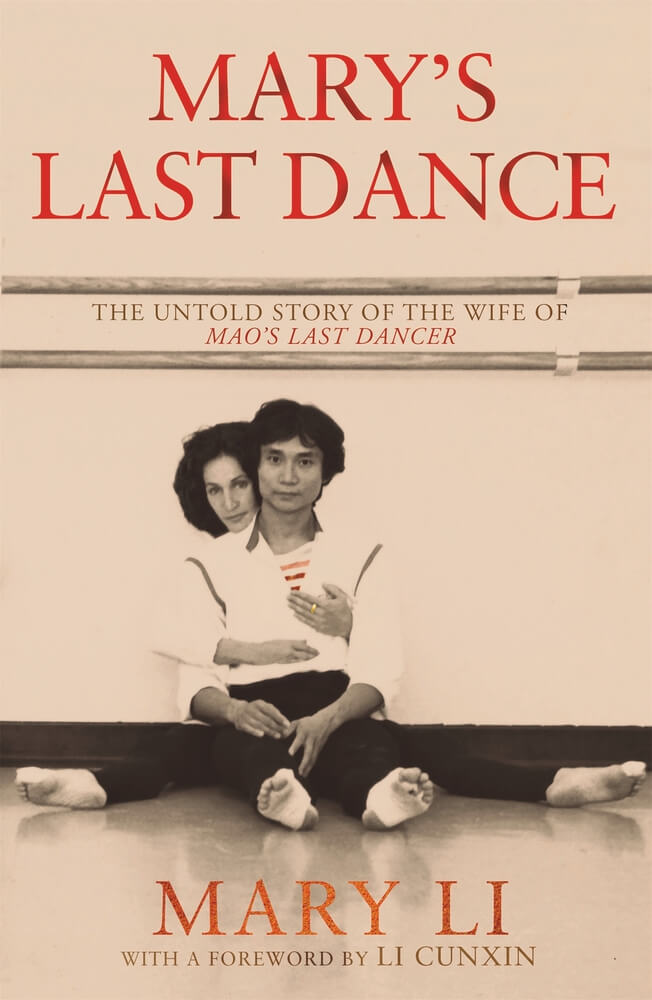
Mary’s Last Dance, Mary Li
Mary’s Last Dance is a powerful and uplifting memoir about chasing an impossible dream, and sacrificing one’s own ambition for the love of a child. It is a moving and unforgettable story of passion, dedication and devotion – and the highly anticipated sequel to one of the world’s most beloved books.
Mary Li (nee McKendry) is an international ballet star and a mother like no other. She became a household name when her husband Li Cunxin published his bestselling memoir, Mao’s Last Dancer – but that book told only half the story.
Growing up in a rambunctious family in Rockhampton, Mary discovered an extraordinary early passion for ballet. It saw her move to London at age sixteen, to study at the Royal Ballet School and dance at the London Festival Ballet with the likes of Nureyev, and later to Houston Ballet, where as Principal Dancer she fell in love with the acclaimed dancer Li Cunxin. The couple became the darlings of the dance world, and were happier than they could have imagined at the arrival of their firstborn daughter, Sophie.
Then right at the height of her international career, Mary seemingly disappeared from view. What could have happened to cause a woman so committed, so talented, to give it all away in a heartbeat? Now, almost twenty years on, we learn what happened next to this inspiring family, and why it is Mary’s turn to tell a truly remarkable tale.
Why You Should Read This…
This is the one book on this list that I have not read yet (but will be starting ASAP), but I wanted to include it anyways. I have had several people recommend this to me- if you have watched or read Mao’s Last Dancer, I think this should be a must-read!
Nureyev: The Life, Julie Kavanagh
Rudolf Nureyev had it all: beauty, genius, charm, passion, and sex appeal. No other dancer of our time has generated the same excitement, for both men and women, on or off the stage. With Nureyev: The Life, Julie Kavanagh shows how his intense drive and passion for dance propelled him from a poor, Tatar-peasant background to the most sophisticated circles of London, Paris, and New York. His dramatic defection to the West in l961 created a Cold War crisis and made him an instant celebrity, but this was just the beginning. Nureyev spent the rest of his life breaking barriers: reinventing male technique, “crashing the gates” of modern dance, iconoclastically updating the most hallowed classics, and making dance history by partnering England’ s prima ballerina assoluta, Margot Fonteyn–a woman twice his age. He danced for almost all the major choreographers–Frederick Ashton, George Balanchine, Kenneth MacMillan, Jerome Robbins, Maurice Béjart, Roland Petit–his main motive, he claimed, for having left the Kirov. But Nureyev also made it his mission to stage Russia’s full-length masterpieces in the West. His highly personal productions of Swan Lake, The Nutcracker, Raymonda, Romeo and Juliet, and La Bayadère are the mainstays of the Paris Opéra Ballet repertory to this day. An inspirational director and teacher, Nureyev was a Diaghilev-like mentor to young protégés across the globe–from Karen Kain and Monica Mason (now directors themselves), to Sylvie Guillem, Elisabeth Platel, Laurent Hilaire and Kenneth Greve.
Sex, as much as dance, was a driving force for Nureyev. From his first secret liaison in Russia to his tempestuous relationship with the great Danish dancer Erik Bruhn, we see not only Nureyev’s notorious homosexual history unfold, but also learn of his profound effect on women–whether a Sixties wild child or Jackie Kennedy and Lee Radziwill or the aging Marlene Dietrich. Among the first victims of AIDS, Nureyev was diagnosed HIV positive in 1984 but defied the disease for nearly a decade, dancing, directing the Paris Opéra Ballet, choreographing, and even beginning a new career as a conductor. Still making plans for the future, Nureyev finally succumbed and died in January 1993.
Why You Should Read This…
With the political position of Russia in 2023, this seems a rather timely read. Nureyev was the first notable Russian dancer to defect; he managed to escape in 1961 during a stopover in Paris on a tour. (Several dancers would follow in his footsteps in the next decades.)
Nureyev was an immensely talented dancer; many consider him the greatest male dancer of his generation. Much like Li Cunxin, he had a difficult childhood and ballet allowed him to change a somewhat downcast life path. However, Nureyev’s trajectory was more explosive- his celebrity and fame carried him far on and off the stage. Like his stage partner, Margot Fonteyn, his life had incredibly bright and incredibly dark periods, and Kavanagh traverses them well. This is a longer book, but a must-read for any ballet fan.

Dancing on My Grave, Gelsey Kirkland
The shattering story of a dream which became a heartbreaking nightmare for one of America’s most famous ballerinas, Gelsey Kirkland, who chronicles her brilliant start as a dancer with George Balanchine, her legendary partnership with Mikhail Baryshnikov, her agonizing descent into drugs, and her struggles to rise again.
Why You Should Read This…
This is the oldest book included on this list but provides an interesting insight into American ballet in the second half of the twentieth century. (If you cannot tell, I tend to follow British and European ballet, rather than American.) If you have watched the 2000s movie, Center Stage, you will have heard a reference to a dancer getting “Gelsey Kirkland’s part”, and if you know Kirkland, it is questionable whether that is a good thing.
Kirkland was another immensely talented dancer, but like many dancers in George Balanchine’s orbit, her life was quite a dark journey. There are a lot of measures in place to prevent figures like Balanchine from exacting this amount of control over dancers, and you tend not to see drugs feature in a company now. (I mean, that is true of most areas of life now- most of us don’t see people taking cocaine to keep up at work.) I found this book difficult to read at some points in terms of subject matter, but it is still an excellent ballet memoir.

If you are interested in reading more about ballet, you might be interested in these posts:
The Best Historical Fiction About Ballet
The Best History of Ballet Books
What books would you include on your list of the best ballet biographies and memoirs?
Cheers,
The Historian
Facebook | Twitter | Instagram | Pinterest