Although I love a lot of things about Bath, the Jane Austen history and walkability top the list. A lot of people worry about missing their regular exercise routine when on vacation but walking everyone is a wonderful workout. Bath is a UNESCO World Heritage City and is more than worth your walking time and energy. And if any author is worth your steps, it is certainly Jane Austen herself. This Walking Jane Austen’s Bath post has been requested by quite a few of my followers, so I’ve put together some of my favourite spots.

No city is as closely connected to Jane Austen as Bath. She certainly lived in several different places throughout her life, but with two of her novels set in Bath (Northanger Abbey and Persuasion) the connection is sealed. Austen lived there for over six years, so there are countless places to take in her history and life. These are some of my favourites, it is time to get walking Jane Austen’s Bath!

The Jane Austen Centre
The Jane Austen Centre in Bath is not a huge museum, but it is one of my favourites. You can find it at 40 Gay Street, off of the Queen’s Square. Jane, her sister Cassandra, and her mother lived at 25 Gay Street in 1805 from 1805 to 1806 after the death of her father, in a townhouse. (They rented rooms rather than the entire townhouse.)
The Jane Austen Centre in Bath at No. 40 Gay Street is a house very similar to No. 25, where Jane Austen lived for a few months following her father’s death. These Georgian town houses in Gay Street were built between 1735 and 1760 by the two pre-eminent Bath architexts of the period, John Wood the Elder, and his son, known as John Wood the Younger. The houses are alike in design, although this house had a large extension added, during the 20th century, which covers the whole of the garden. It is in this space that the permanent exhibition is located. (The Jane Austen Centre, Jane Austen’s Bath: A Souvenir Guide. p.5)
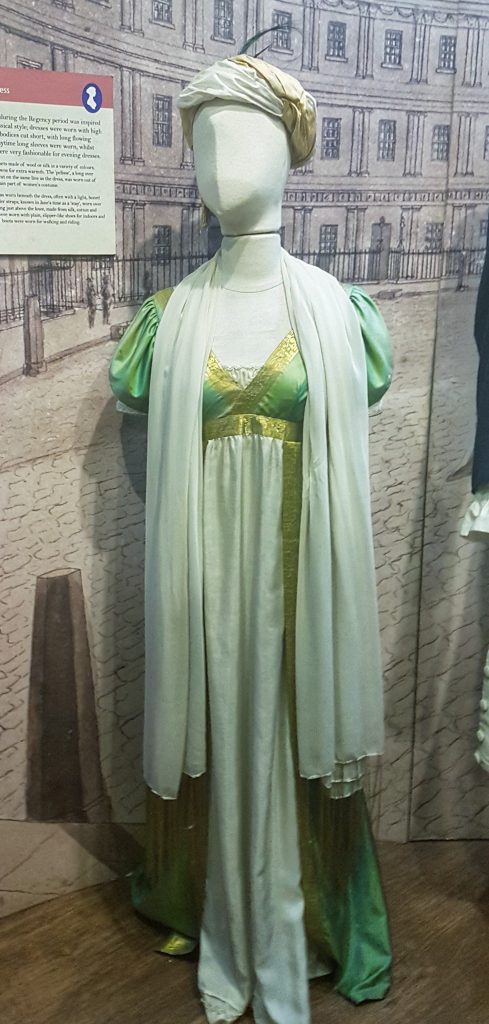
All of the staff that work at the Centre are lovely and very knowledgeable. The exhibition opens with 6 potential portraits of Austen, and the guide knew all of the potential theories and chatted with us for quite some time on it. I loved that they are as passionate about Austen as the visitors, and it truly shows. The exhibition includes information about Austen’s life, her time in Bath, her two Bath novels, and life in Bath. It is interactive and a lot of fun, but there is still a lot for serious Austenites to learn. It is the perfect place for you to start your Austen adventures in Bath!
You can read my post on Women’s Fashion at the Jane Austen Centre here.

The Pump Room
The Pump Room is part of the Roman Bath complex, on the Abbey Square. While those really committed to their health would bath in the water (henceforth… Bath…), the less committed folks would drink the water. Yes, they would drink the water coming up from the hot springs with its 43 minerals. I personally didn’t seek out any of the mineral water to drink myself, but you can still partake, should you be interested.

The Grand Pump Room (its full name) was built in the early 1790s as a restaurant. You can visit it now for break, lunch, or afternoon tea, but it was much more in the Regency period. The Pump Rooms was the place to be seen, especially for newcomers in Bath. The fashionable society set made sure to visit the Pump Rooms regularly for meals and gossip. In Northanger Abbey Catherine and Mrs. Allen visited the Pump Rooms each morning for an hour to ensure that the right people saw them.
Trim Street
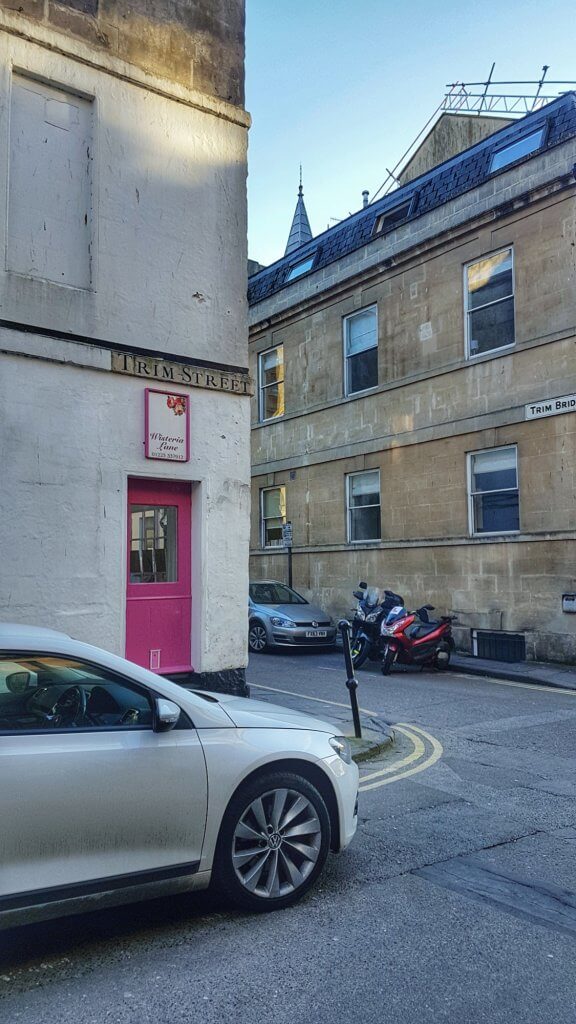
The Austen women’s last home in Bath was their lodgings in Trim Street. Trim Street is a fairly quiet street nowadays, but at the time it was mostly home to prostitutes and pimps, thieves, beggars, and others of ill-repute. Obviously it wasn’t a place that the Austens would have chosen willingly, but they had little money left and had no choice.

According to one of Mrs. Austen’s letters (from 3rd January 1801), “[she] assures you that she will do everything in her power to avoid Trim Street although you have not expressed the fearful presentiment of it which was rather expected.” Jane never really loved bath, but she was particularly unhappy when the family lived there from 1801 to 1806. Her time in Trim Street isn’t mentioned often in her letters, as it certainly was not the happiest time in her life.
*The Canary Gin Bar, home of Gin Austen cocktails is just off of Trim Street, quite a suitable location. I will have a post up soon reviewing it!

The Assembly Rooms, aka The Upper Rooms
Both Jane and her characters would have visited the Assembly Rooms while in Bath. Now known as the Assembly Rooms, the Upper Rooms were one of two sets of Assembly Rooms in Bath (with the Lower being located in medieval Bath). Catherine Morland meets her potential love interest, Henry Tilney, at the rooms in one of Austen’s more lighthearted and enjoyable meetings. Like the Pump Rooms, the Upper Rooms were the place to go to be seen by everyone important and to make social connections. And if you aren’t making connections in Bath, what are you doing there?

Although Catherine’s evenings at the Upper Rooms are some of her happiest in Bath, Austen couldn’t claim the same. In her 12 May 1801 letter, she says
By nine o’clock my uncle, Aunt and I entered the rooms and linked Miss Winstone on to us. Before tea, it was rather a dull affair; but then the before tea did not last long, for there was only one dance, danced by four couples… After tea we cheered up; the breaking up of private parties sent some scores more to the Ball, and tho’ it was shockingly and inhumanely thin for this place, there were people enough I suppose to have made five or six very pretty Basingstoke assemblies.
It is one of my favourite places in Bath. It is free to visit, and is really well maintained! (The Fashion Museum in the basement may also play a role in my opinion…)
The Gravel Walk
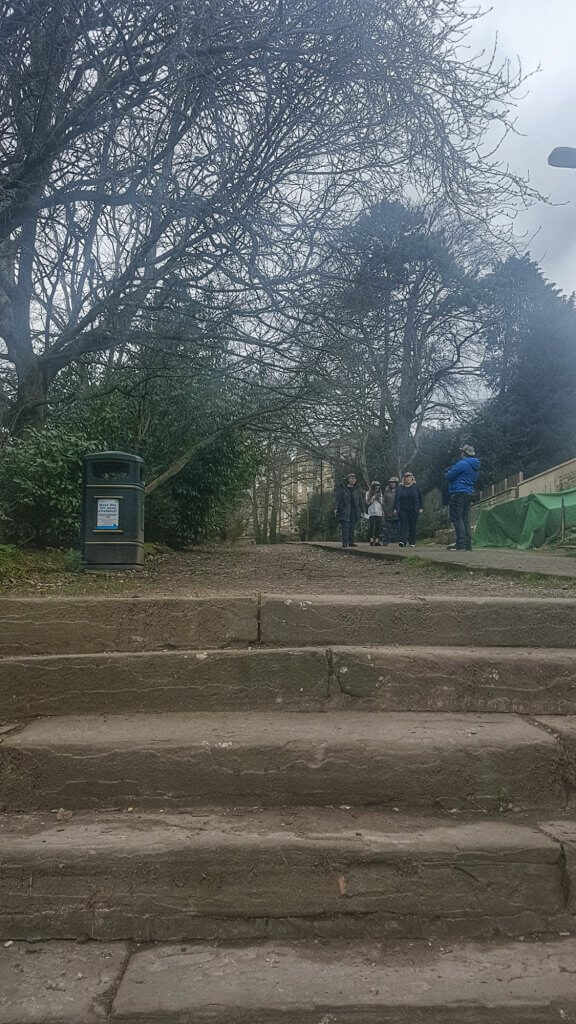
This is the beginning of the Gravel Walk, one of the most popular promenades in Regency Bath. And if you’ve read your Austen novels, you just might recognise it from Persuasion. Anne Elliot and Captain Wentworth take a certain stroll down the Gravel Walk and find themselves engaged. Although it certainly has a different feeling than Northanger Abbey, Persuasion and this scene are quite sweet. Our walking guide said that Jane may have even been able to see the Gravel Walk from her lodgings on Gay Street!
If you are interesting Bath, check out my post on the fantastic walking tour I did!
If you were walking Jane Austen’s Bath, what would you want to see?
Cheers,
The Historian
Facebook | Twitter | Instagram | Pinterest | Bloglovin’