Phones are ever present in our lives, and that includes when we visit museums. They are our address book, our maps, our letters, our notepads, and of course, our telephones. And no matter what anyone says, people will continue to use them. Etiquette-wise, I’m not sure what the answer is. Shaming people usually isn’t overly effective, especially not when it is common behaviour. But people the world across will voice their displeasure. Every year or so, another article comes out stating that people aren’t present when they are in museums and galleries because they are staring through a phone screen. Or they are taking selfies. Or whatever else their phone allows them to do at the time. Today I’m looking at two questions: should you use your phone in a museum or gallery or historical site, and should you say something if you think someone has crossed the line?

Using Your Phone in Museums, Galleries, and Historical Sites
Okay, this should not come as a shock to you- as a historian and history blogger, I love seeing people with their phones out. History, art, and culture so often are lumped together as these out-of-date, unrelatable things. Dusty old men study dusty old things and dusty old places and perform dusty old pieces, why should we care? We should care because it IS relevant, and it so often plays a role in our present. (You may not realise it, but it does.) And nothing says “stuck in the past” in 2019 like screaming at someone to put down their phone.
I find that many different organisations are working to integrate technology into their exhibitions now. From selfie spots to Instagram contests to QR code scavenger hunts, they are largely welcoming it. However, some people refuse to accept technology in historical and cultural spaces. I’ve witnessed more than one person making a rude or snarky comment upon seeing a “hashtag your photos of our exhibition!” sign. And to what end? Other than coming off as a grump and making others uncomfortable, you’ve not accomplished anything!
NOTE: This absolutely does not apply when photography is not allowed. If the cathedral, home, museum, gallery, or theatre does not allow photos, please respect their wishes.

Not Present?
I’ve noticed that a lot of people claim that you aren’t present when you are looking at something through a phone screen. Or that you aren’t connecting with someone via a message. And what that tells me is that that person has a narrow view of what being present is. I completely own up to being one of those people who takes a MILLION pictures when I visit somewhere. And at the same time, I would say that I am very present. And taking those pictures often allows me to be more present, because I can often get a closer look at things with my phone than I can just looking. Perhaps it is not the way that you yourself would engage, or the way that you would communicate, but that doesn’t make it less valid. (Also, I have noticed that few people seem to criticise people with physical cameras. Do people not realise that most on their phones are doing the same thing on a different device?)

What About Afterwards?
I very well may be the weird one, but I absolutely look at all of my photographs from past visits on a regular base. As an historian, it is often related to research. Or, obviously, for blog posts here. (My DIORama post is the perfect example!) However, it is often simply personal enjoyment. I am hesitant to admit that I took well over 10,000 pictures on my last trip (my phone gave up counting with 9999+), and I’ve actually looked through all of them multiple times. And surprisingly, I’ve discovered a lot of things that I missed when I was there (mostly things that were too tall for me to see…). St. Paul’s Cathedral now allows photography, but when I visited they didn’t, and Westminster Abbey still doesn’t. While I was completely “present”- if that is your argument- I’ve forgotten a lot of the smaller details that I saw. And although I bought the guidebooks (as always!), it does make me sad that there is so much lost to me.

Should You Say Something?
Ahhh, the intersection of all of my favourite things- etiquette, history, and culture. If you see someone wildly snapping away (on a phone, camera, ipad, or otherwise) and it is bothering you, should you say something?
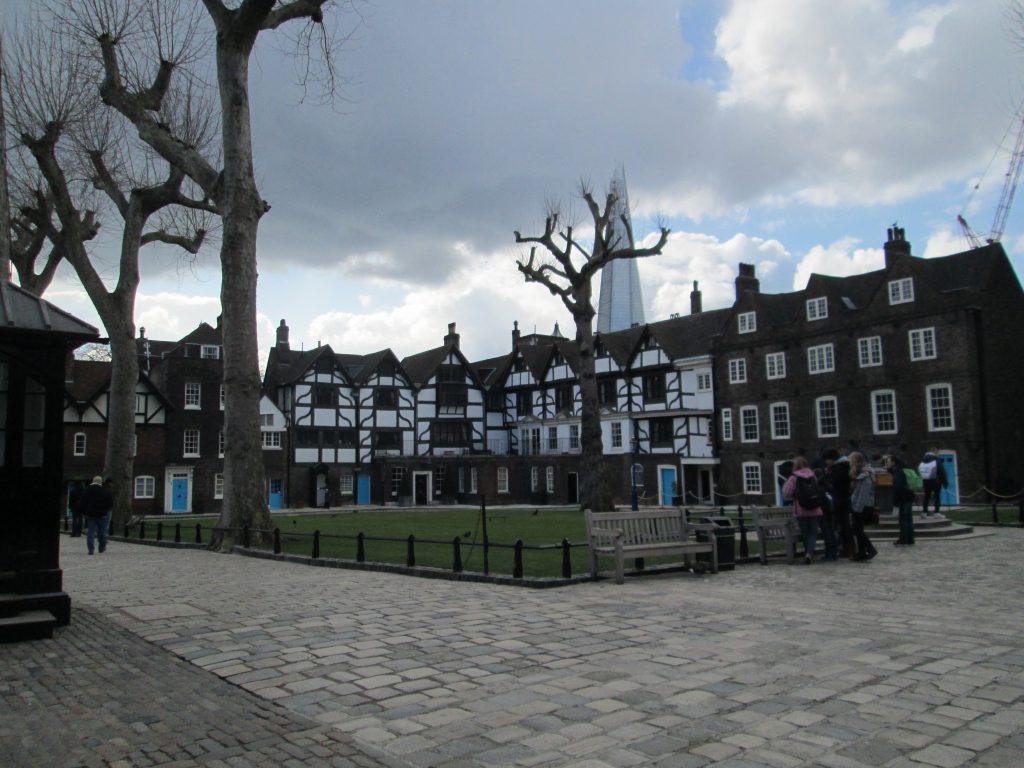
If there is a stated “No Photography” policy, it is polite to mention it to them. There is a good chance that a staff member or security guard will come up and tell them pretty quickly. (Case in point: watch someone try to take photos of the Crown Jewels at the Tower of London…) If someone hasn’t, you could calmly say something along the lines of “Just letting you know that the sign at the entryway said no photography was allowed” with a smile. If they continue taking photos, move on. And if you happen to be one of those people that can’t drop it, go and tell a staff member to take care of it. (At the end of the day, it isn’t your job to enforce their policies, though.)

If there is no policy on photography, you should not be telling people to not take photographs. If someone has spent an excessive amount of time (approaching 5 minutes) photographing one piece/exhibit and it is impeding your view, you could politely ask them if you could now see the piece. However, if it is just that you don’t think people should be taking photos there? That is your issue, and should be kept to yourself. I don’t think that people should drag giant bags through galleries but it is not my place police them. If you are really angry about (which seems a strong feeling for this), let the museum/gallery staff know on your way out. Some organisations offer “photography free” nights, so they may offer that (or decide to if enough people speak up).
If you are interested on the museum perspective, see this V&A article from 2013!
Should you use your phone in a museum or a gallery? Or has it gone too far?
Cheers,
The Historian
Facebook | Twitter | Instagram | Pinterest | Bloglovin’

Thanks for the V&A link, it’s interesting to see their perspective & the stats. I feel as long as you’re respectful of the objects and other people it’s find. I agree with what the V&A blog pointed out about looking things up. If you find something interesting when you read information in the museum and there’s no in-depth guide there the phone is so useful for that. I do it on a daily basis in a museum or not.
The issue I have is when lines are crossed- and this has to do with whether visitors are using phones or not. If a sign says no photographs respect that. If it says don’t touch, don’t touch. I recognize this gets into accessibility issues which museums need to work on (and have been).
I’ve no idea why this was marked spam!! And that is exactly what I am doing with my phone if I’m not photographing- I’m most likely looking up something to do with the history behind it or if the connection I think I’ve made is accurate. If I am going to be shamed for trying to learn more, I just won’t engage at all.
I am constantly shocked at the number of people who feel compelled to touch things when specifically directed not to. I understand more when it is a small child, but as an adult, use some common sense!!
Awesome article and beautiful photos, I believe that a person is able to take pictures whenever and wherever they choose only if it does not State please do not do so.