This week I wanted to do something a little bit different. I love sharing my larger info posts, but I also like sharing my own historical journey. I don’t specifically study women’s history; I usually gravitate towards subjects or places, rather than a certain group of people. However, there is a group of women who have made a huge impact on my own work in history. They have made it impossible for me not to study them. And as someone who started an informal practice of history at the age of 10 and studying at 30 still, that is quite an impact So, these are 4 women who have changed history for me!
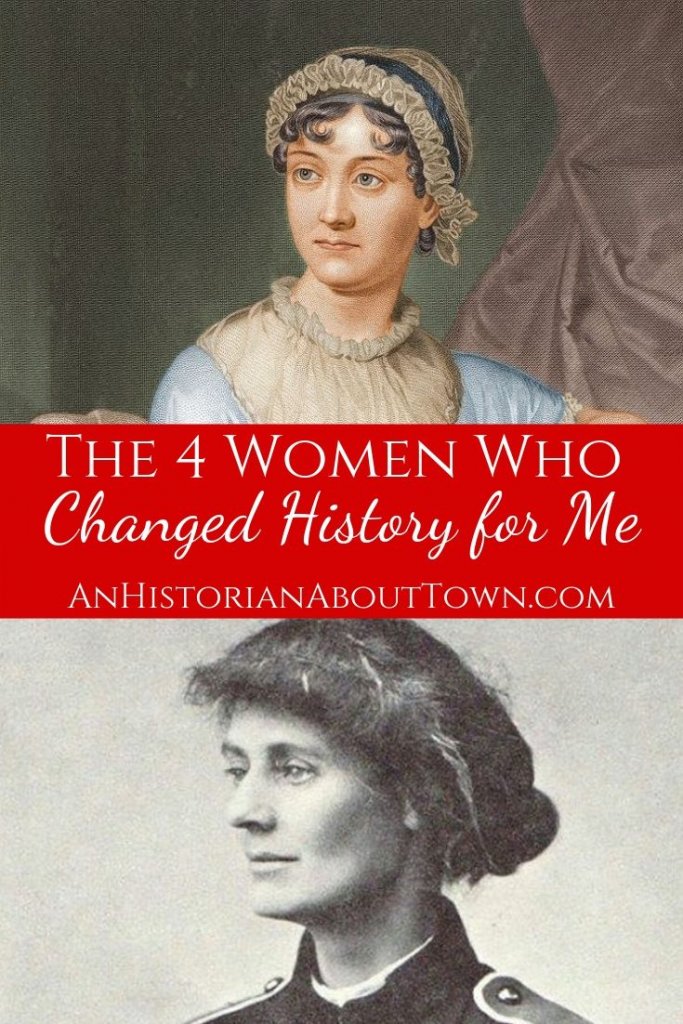
Princess Louise, Duchess of Argyll
I find it rather unfortunate that Queen Victoria overshadows all of her children, as they were all fascinating in their own right. And although it is rather difficult to focus on just one, Princess Louise has always stuck out to me. As a Canadian, most of us know her name without knowing it- she is the namesake of Lake Louise! (A lot of Canada is named after Victoria and her family…) Sadly, Louise doesn’t come up a lot in history but 10 year old me became briefly obsessed with her and away I went.

Born Princess Louisa Caroline Alberta in March 1848, she was the fourth daughter and sixth child of Queen Victoria and Prince Albert. Louise had the same strict and structured upbringing as her other siblings. However, her artistic abilities were apparent from quite a young age. At the age of 15 she went to study at the National Art Training School in South Kensington. And one of my favourite Louise facts? She was also a talented dancer, with Victoria remarking in her diary that Louise was quite talented at the sword dance. (Sadly, her request to have a debutante ball on her 17th birthday was refused.) After her father’s death, she was co-opted into being her mother’s secretary, and was surprisingly good at it. During her adolescence and early adulthood, Louise grew to be liberal and quite the feminist for her time.
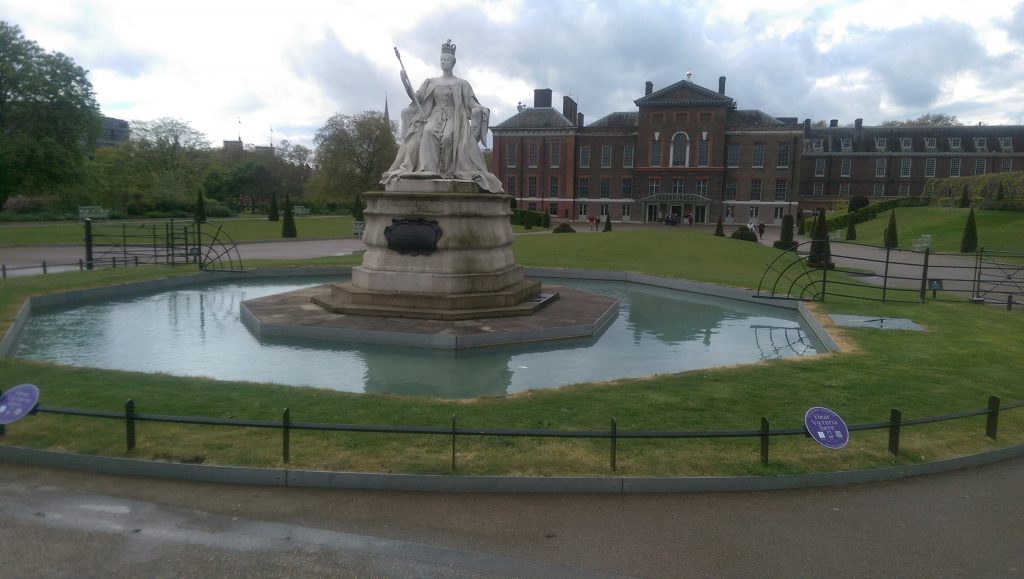
Princess Louise made an “out-of-the-box” choice for a husband- John Campbell, Marquess of Lorne. She was the first English/British princess to marry a British subject since Mary Tudor (sister to Henry VIII) married Charles Brandon in 1515. Queen Victoria supported the marriage to bring new blood into the royal family. Annnnnnnd why is her husband important to the story? Well, he was chosen to be the Governor-General of Canada, meaning that Princess Louise actually lived in Canada! It was a bit of a rocky start, though. Her favourite sister, Princess Alice, had just passed away, and Louise was homesick. However, they came to enjoy their time in Canada. Louise loved skating and sleighing, and Ottawa’s winter climate was perfect. Unfortunately a bad sleigh accident in 1880 marred their experience, but she continued to look fondly on Canada for the rest of her life. And, the statue of Queen Victoria that you see above at Kensington Palace? Created by Princess Louise!
♠
Louise was a fascinating royal, who spent most of her later life involved in artistic pursuits. She was known for being a particularly understanding person, and preferred to be treated as a British subject rather than a royal. As a 10 year old, I was rather confused as to why a Princess wouldn’t want to be treated as a Princess, but that only endeared her to me more. And if you are interested in learning more, Lucinda Hawksley’s The Mystery of Princess Louise: Queen Victoria’s Rebellious Daughter is one of my favourite books.
Constance Markievicz
Constance Markievicz, born as Constance Gore-Booth in London, and later as Countess Markievicz, is one of the best known women in the Easter Rising. She was born in to an Anglo-Irish family, and left Dublin to study as a painter in London. After meeting her husband, a Polish Count, the couple settled back in Dublin. In 1905, she was one of the founding members of the United Arts Club in Dublin, a group brought together to promote arts and literature in Dublin. It also aimed to protect and promote Irish language and culture. Within a few years, she was politically involved with nationalist groups, including Sinn Féin and Inghinidhe na hÉireann (the Daughters of Ireland).

Markievicz took place in the Easter Rising in 1916, when Irish Republicans (aka the Irish Citizen Army) attempted to seize control from the British. She fought in St. Stephen’s Green, and reportedly shot a Dublin Metropolitan Police officer who later died of his injuries. After the ICA surrendered, Markievicz and the other members were taken to Kilmainham Gaol. Out of the seventy women arrested, she was the only woman who was put in solitary confinement. She was convicted and sentenced to death, but her sentence was commuted based on her sex. In 1917, she and others who participated in the Rising were granted a general pardon from London.

In 1918, she was elected to Parliament for the Dublin St. Patrick’s riding. She was the first woman to be elected to Westminster, but was not the first woman to take her seat. She refused to take her seat, along with the other Sinn Féin members elected. She did take her seat in the First Dâil, the first Irish parliament from 1919 to 1921. In 1922, she left the Dâil to protest the Anglo-Irish Treaty, but was re-elected in 1923. She left Sinn Féin and was elected in 1927 under Fianna Fáil.
♠
Markievicz made such a large impact on because of how well-rounded her career and life were. To move from painting and literary circles to sitting in parliament and acting as a leading political figure is incredibly impressive. Ireland’s history is often difficult to study, and quite frankly, somewhat depressing. (It is a lot of failed rebellions and repression, sadly.) Markievicz and her compatriots brought Ireland into the modern, and led the final charge to an independent Ireland. To be a woman in this period and wield that influence is incredible.
Jane Austen
If you didn’t think that Jane Austen would be on this list, you must be a newer reader. (Hello and welcome!) Jane Austen certainly was not the first female author, or even the first author in the genre of narrative fiction. However, she was the first author to make an impression on me independent of her stories. Jane was born in 1775 to Revered George Austen and wife Cassandra. She was one of eight children, but Jane and sister Cassandra were the only daughters; they remained close for all of their lives. The family moved to Steventon in 1768 and she spent most of her childhood there.

The Reverend took on teaching to supplement his income, with three or four boys coming to stay with the family at a time. Jane was allowed access to her father’s library, which would influence her writings. Both Jane and Cassandra were sent away to Oxford to be educated in 1783. They were sent to a Mrs. Ann Cawley who then moved them with her to Southampton later in the year. However, the sisters both caught typhus and Jane nearly died. In 1785, they were both sent to the Reading Abbey Girls School, but returned home a year later due to the high fees. Jane started writing shortly thereafter. She started writing her Juvenalia in 1787, which included the satircal Love and Friendship and her History of England, a comical look at England’s monarchs. From 1796 to 1798, Jane wrote drafts of Susan, later called Northanger Abbey, First Impressions, later called Pride and Prejudice, and Elinor and Marianne, later called Sense and Sensibility.
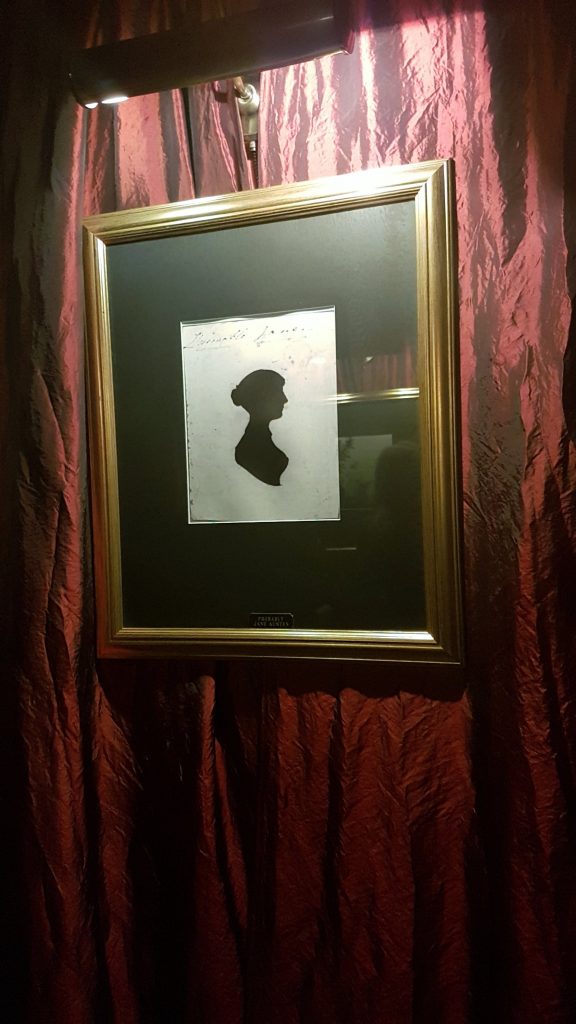
In 1801, the family moved to Bath when her father retired. Her parents enjoyed life at 4 Sydney Place in Bath, but Jane was less than thrilled with the move. She was particularly unproductive while she lived in Bath, but it does feature in both Northanger Abbey and Persuasion. Her father died in January of 1805, and Jane, Cassandra, and their mother rented in Bath until the summer of that year. They thens tayed at Steventon and a few other family homes, and then moved to Southampton in 1806, to live with her brother Frank. And finally in 1809, her brother Edward offered the three women a cottage in Chawton village. It was a quiet life, but Jane continued to work on her novels. Sadly, in 1816 she began to feel unwell, and finally passed away in July of 1837.
♠
I first read Pride and Prejudice at 14, and I fell in love with a book. And then I feel in love with Jane herself. She was the first author whose writing captivated me enough to make me want to learn more about them. It speaks volumes that her novels are still so popular today, and that her heroines still captivate audiences today. Northanger Abbey is still my favourite novel (a novel about novels!), and I will keep re-reading Austen’s work for the rest of my life.
Mary, Queen of Scots
Although many royals have held my attention over the years, no one has held it for as long as Mary, Queen of Scots. I know that a lot of people love and adore Elizabeth I, but I find Mary Stuart to be a much more human royal. And her life was certainly never boring, to be sure. Mary Stuart was the child of King James V of Scotland and his second wife, Marie de Guise. Her father died only six days after she was born in 1542, meaning that she essentially immediately inherited the throne after birth. Scotland was a particularly precarious country, with different factions continuing attempting to take power. And then there is the little matter of Mary being engaged to the future Edward II…

Mary was moved to France at the age of 5, after being engaged to the Dauphin of France. There were some… complications… with England, and that union was nullified. She spent the next 13 years in France, and her childhood was spent with the four Mary’s (four Scottish girls who would remain her companions), her future husband Francis, and his siblings. Mary was highly educated, and was known for conversing in Latin, Green, French, Italian, Spanish, and of course Scots. She also was a talented dancer, played the lute and virginals, and participated in the hunt and riding. Mary and Francis were wed in 1558, but after he died young in 1560, Mary went back to Scotland a widow.

Upon her arrival in Scotland, Mary was out of place. After living at the cosmopolitan French court for most her life, she was not used to the factionalism and decidedly Scottish (duh) court. Although Mary was decidedly Catholic, she allowed the Protestant ascendancy to continue on. It wasn’t really optional, but Mary’s toleration of both Catholics and Protestants is fairly remarkable for the time. And then she married the Protestant Lord Darnley. in 1565 Mary believed that she was the rightful heir to the English throne, and Darnley also had a claim to the throne- the ultimate power couple. However, Darnley soon turned nasty after Mary denied him the title of King of Scotland. Elizabeth in England was none too pleased with the marriage, but luckily for everyone but Darnley, he was murdered in June of 1566. (Whoops? Probably not.) Mary was accused of being behind the plot to blow him up, but nothing was proven.

Before Darnley died, he did father a child with Mary- the future King James VI/I. However, Mary then married her third husband, the Earl of Bothwell. He probably was the person behind Darnley’s murder, and it is thought that Mary only married him because he held her captive. (Oh, what a way to woo?) The Scottish nobles did not support the marriage, and forced her to abdicate in favour of her son, James. Mary thought she could ride to England for safety, and that Elizabeth would support a fellow sovereign. Unfortunately, Elizabeth and her council could not agree on what to do with her. She was held captive under house arrest from 1568 until 1586. There had been various plots to free Mary and restore her place on the throne, and it eventually was her downfall. She was beheaded at Fotheringhay Castle on 8 February 1587.
♠
A lot of people criticise Mary for being too emotional and leading with her heart, but that makes her more personable for me. It may not have been the choices I would have made, but I can understand her motivation. And if it isn’t the most exciting royal biography you have ever read, I’ve no idea whose is.
So, who are the women who changed history for you?
Cheers,
The Historian
Facebook | Twitter | Instagram | Pinterest | Bloglovin’


Mary queen of Scots is one of my favourites too.