Back again with another working palace! While most royals have spent at least part of their summer at their private summer residences (most are private), royal engagements have started up again for most families. And as such, you need an official place to host those engagements. The Dutch Royal Family has three working palaces to choose from and impressively, all three date back to the seventeenth century. This week we are going to be exploring the history of Huis ten Bosch Palace, a palace that was originally a summer residence that became the home of the Dutch Royal Family!
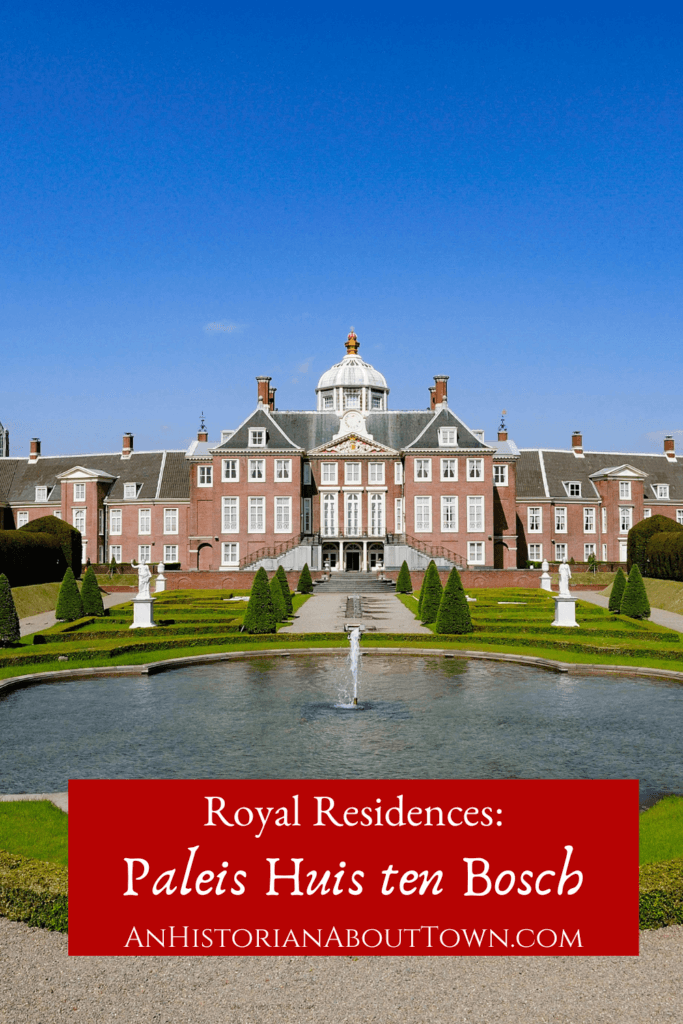
The History of the Huis ten Bosch Palace
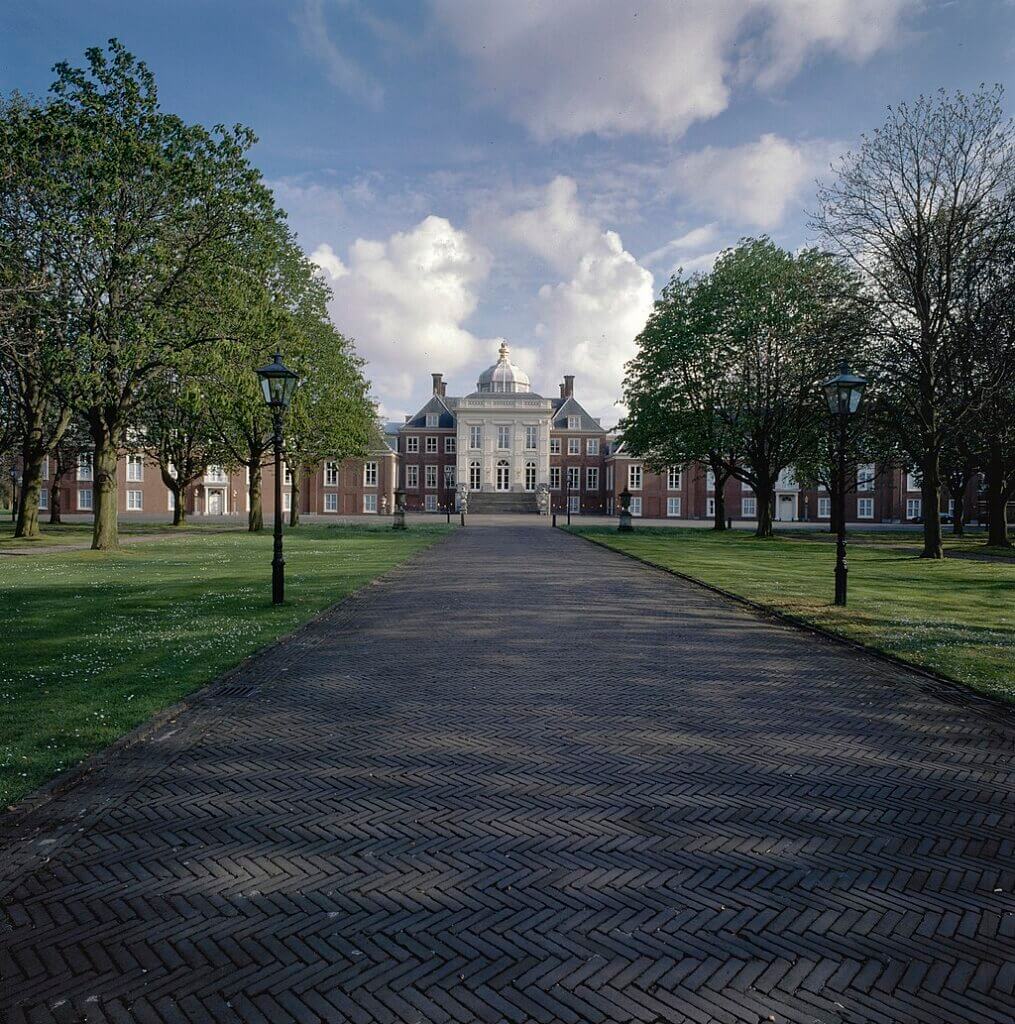
The Early History of the Huis ten Bosch Palace
Princess Amalia of Solms-Braunfels commissioned the palace for her husband, Prince Frederick Henry of Orange, Stadtholder of Holland. Dutch architects Pieter Post and Jacob van Campen designed the summer residence in an Italian style, and Queen Elizabeth of Bohemia (aka Elizabeth Stuart) laid the first stone in 1645. It was originally known as the Sael van Oranje or Hall of Orange.
However, with her husband’s passing in 1647, the palace became a memorial to the Prince with several paintings and sculptures of him with the Orangezaal serving as a gallery.
For the second half of the seventeenth century and much of the eighteenth century, the palace was used as a residence by several stadtholders who added wings/rooms and made their own modifications.
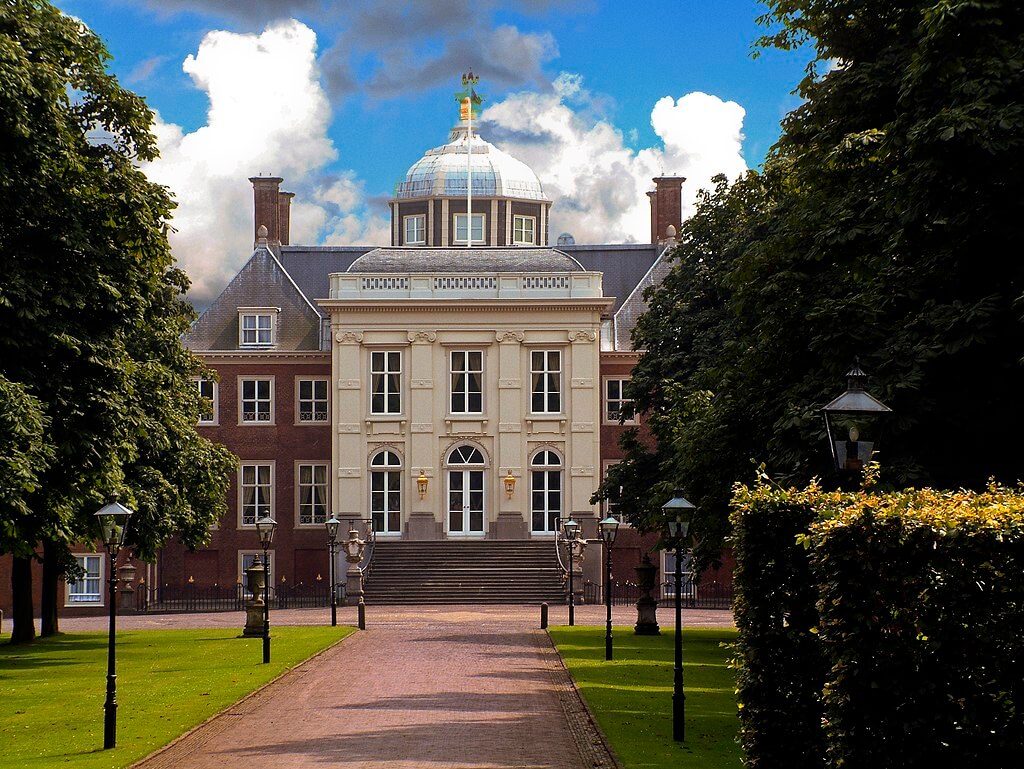
French Occupation
France occupied the Kingdom of Holland (largely what we now recognise as the Netherlands) from 1795 through 1813. The palace, along with the stadtholder’s other assets, were seized and Huis ten Bosch was given to the Dutch people. During this time, the palace served as a museum, as well as the residence for King Louis Bonaparte (yes, the younger brother of Napoleon). Louis made his own changes to the palace and introduced the Empire style of design and architecture. The palace would experience political change soon after, though.

A Summer Residence Once Again
In 1815, King Willem I of the Netherlands was declared King after being invited following Napoleon’s defeat in 1813. (Willem was a complex ruler, there was a lot of good and bad with his reign.) The new Dutch King favoured Huis ten Bosch and formally made the palace an official working residence; he spent much of his time there, as did many of members of the Dutch Royal Family. Several Dutch queens from 1815 to 1940 used the palace as their summer home. However, during the Second World War, Huis ten Bosch sustained significant damage due to bombing and the resulting shrapnel and it would take years of restoration work to bring it back to its status as a working palace.

Interested in more book previews, period dramas, royal news, and more? You can subscribe to my biweekly substack newsletter here: https://anhistorianabouttown.substack.com/!

A Royal Home
From 1950 to 1956, extensive restoration work was carried out; afterwards, it was used for official state functions.
Queen Beatrix and Prince Claus moved into Huis ten Bosch Palace with their family in August of 1981. She lived there for all of her reign and stayed for a year after her abdication in 2013 before moving to Drakensteyn Castle. King Willem-Alexander and Queen Maxima then moved in with their family in 2019.
Huis ten Bosch has one of the most unique palace staterooms from across Europe- the DNA room that was completed in 2019. The room features five individual walls that are made up of translations of the DNA of King Willem-Alexander, Queen Maxima, a past portrait, a present portrait, and a global citizen portrait. Over 80,000 individual handmade ceramic blocks were used to make the unique room that is used as a stateroom.
Want to know more about the history of other royal palaces?
The History of Buckingham Palace
The History of Amalienborg Palace
The History of the Palace of Brussels
The History of the Royal Palace of Madrid
Have you visited the Huis ten Bosch Palace?
Cheers,
The Historian
Facebook | Twitter | Instagram | Pinterest | Threads