Although it is part way through Jane Austen Month here, I wanted to make sure that I included it. I’ve met many people who have enjoyed Austen’s novels and their film adaptations but don’t know much about Austen- and that is totally okay! Everyone discovers Austen’s world in a different way, and it doesn’t always come with a full biography. Today I’m sharing the best Jane Austen biography books and sources if you want to get to know this beloved author!

The Best Jane Austen Biography Books and Sources
I’ve included both primary and secondary sources here (meaning a first-hand or contemporary account and those written after and include analysis). I find it easier oftentimes to start with a secondary source (ie. a biography book) and then move to primary sources (ie. letters, memoirs) but there is no right or wrong approach!
And I will say, if you’ve not read all of her novels, there is no better time! You can learn a lot about an author by reading their works.

The Letters of Jane Austen, collected and edited with Deirdre Le Faye
Jane Austen’s letters afford a unique insight into the daily life of the novelist: intimate and gossipy, observant and informative–they read much like the novels themselves. They bring alive her family and friends, her surroundings and contemporary events with a freshness unparalleled in modern biographies. Above all we recognize the unmistakable voice of the author of such novels as Pride and Prejudice and Sense and Sensibility. We see the shift in her writing from witty and amusing descriptions of the social life of town and country, to a thoughtful and constructive tone while writing about the business of literary composition.
R.W. Chapman’s ground-breaking edition of the collected Letters first appeared in 1932, and a second edition followed twenty years later. Now in this third edition of Jane Austen’s Letters, Deirdre Le Faye has added new material that has come to light since 1952, and re-ordered the letters into their correct chronological sequence. She has provided discreet and full annotation to each letter, including its provenance, and information on the watermarks, postmarks, and other physical details of the manuscripts, together with new biographical, topographical, and general indexes. Teachers, students, and fans of Jane Austen, at all levels, will find remarkable insight into one of the most popular novelists ever.
Why You Should Read This…
While Jane’s sister, Cassandra, destroyed many of Jane’s letters, many still survive. This collection includes many of them and allow us to get to know her better. Le Faye was also one of the Austen scholars of the twentieth and twentieth-first centuries, and she was the perfect person to edit the collection.

A Memoir of Jane Austen, James Edward Austen Leigh
A Memoir of Jane Austen is a biography of the novelist Jane Austen (1775-1817) published in 1869 by her nephew James Edward Austen-Leigh. A second edition was published in 1871 which included previously unpublished Jane Austen writings. A family project, the biography was written by James Edward Austen-Leigh but owed much to the recollections of Jane Austen’s many relatives. However, it was the decisions of her sister, Cassandra Austen, to destroy many of Jane’s letters after her death that shaped the material available for the biography.
Why You Should Read This…
Jane’s nephew was born in 1798, meaning that he knew Jane for roughly the first two decades of his life. Although he certainly had a specific idea in mind when writing it (as did Cassandra when she destroyed letters), it is still an interesting and valuable source for anyone interested in Jane’s life.

Jane Austen: A Life, Claire Tomalin
The novels of Jane Austen depict a world of civility, reassuring stability and continuity, which generations of readers have supposed was the world she herself inhabited. Claire Tomalin’s biography paints a surprisingly different picture of the Austen family and their Hampshire neighbours, and of Jane’s progress through a difficult childhood, an unhappy love affair, her experiences as a poor relation and her decision to reject a marriage that would solve all her problems – except that of continuing as a writer. Both the woman and the novels are radically reassessed in this biography.
Why You Should Read This…
This is still considered one of the most popular biographies of Jane, and for good reason. Tomalin’s biggest strength is providing very useful context. Here we get to know Jane’s immediate family, but also her friends, neighbours, acquaintances, and more. She did a massive amount of research for this and the analysis is also through but easy to read!

The Real Jane Austen: A Life in Small Things, Paula Byrne
Acclaimed literary biographer Paula Byrne takes a highly original approach in this landmark biography, providing the most intimate and revealing portrait yet of the distinguished and beloved novelist-a Jane Austen for the twenty-first century.
The Real Jane Austen: A Life in Small Things offers a startlingly original look at the revered writer through a variety of key moments, scenes, and objects in her life and work. Going beyond previous traditional biographies which have traced Austen’s daily life from Steventon to Bath to Chawton to Winchester, Byrne’s portrait-organized thematically and drawn from the most up-to-date scholarship and unexplored sources-explores the lives of Austen’s extended family, friends, and acquaintances. Through their absorbing stories we view Austen on a much wider stage and discover unexpected aspects of her life and character. Byrne transports us to different worlds-the East Indies and revolutionary Paris-and different events-from a high society scandal to a petty case of shoplifting, She follows Austen on her extensive travels, setting her in contexts both global and English, urban and rural, political and historical, social and domestic-wider perspectives of vital and still under-estimated importance to her creative life.
Literary scholarship has revealed that letters and tokens in Austen’s novel’s often signal key turning points in the unfolding narrative. This groundbreaking biography explores Jane’s own story following the same principle. As Byrne reveals, small things in the writer’s world-a scrap of paper, a simple gold chain, an ivory miniature, a bathing machine-hold significance in her emotional and artistic development. The Real Jane Austen: A Life in Small Things introduces us to a woman deeply immersed in the world around her, yet far ahead of her time in her independence and ambition; to an author who was an astute commentator on human nature and the foibles of her own age. Rich and compelling, it is a fresh, insightful, and often surprising portrait of an artist and a vivid evocation of the complex world that shaped her.
Why You Should Read This…
If you like a more specific approach to biographies, you might enjoy Paula Byrne’s book! Each chapter is centred on a different item or moment in Austen’s life, which makes history (and those in it) more familiar for many. I appreciated that The Real Jane Austen allows us to also consider beyond England- the broader Empire played a large role in Jane’s life, and it isn’t considered as often as you would think.
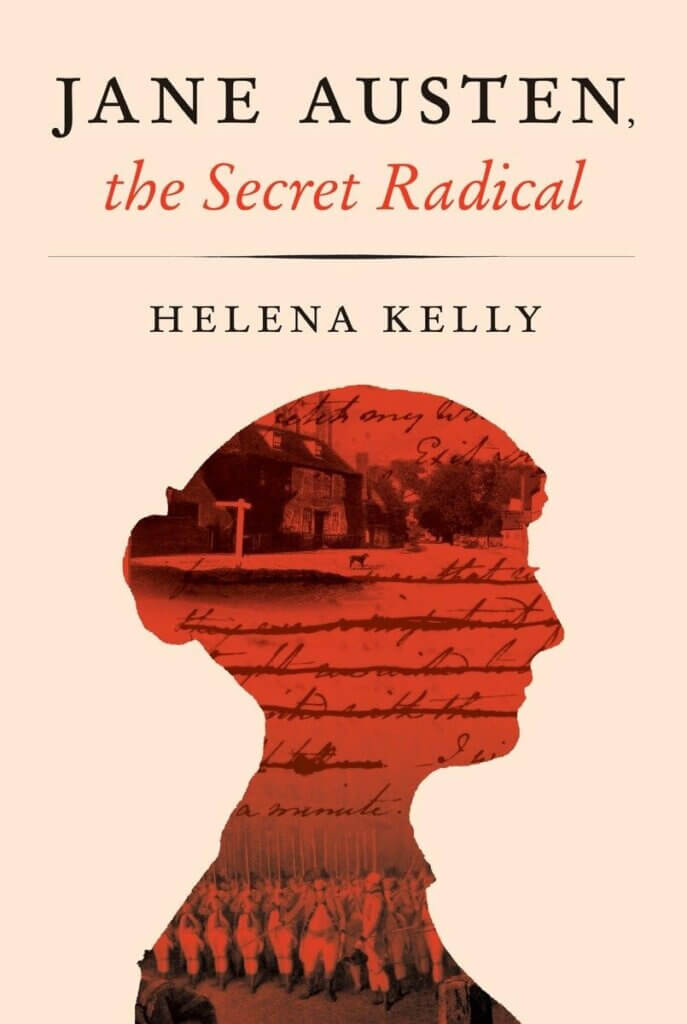
Jane Austen: The Secret Radical, Helena Kelly
A brilliant, illuminating reassessment of the life and work of Jane Austen that makes clear how Austen has been misread for the past two centuries and that shows us how she intended her books to be read, revealing, as well, how subversive and daring–how truly radical–a writer she was.
In this fascinating, revelatory work, Helena Kelly–dazzling Jane Austen authority–looks past the grand houses, the pretty young women, past the demure drawing room dramas and witty commentary on the narrow social worlds of her time that became the hallmark of Austen’s work to bring to light the serious, ambitious, deeply subversive nature of this beloved writer. Kelly illuminates the radical subjects–slavery, poverty, feminism, the Church, evolution, among them–considered treasonous at the time, that Austen deftly explored in the six novels that have come to embody an age. The author reveals just how in the novels we find the real Jane Austen: a clever, clear-sighted woman “of information,” fully aware of what was going on in the world and sure about what she thought of it. We see a writer who understood that the novel–until then seen as mindless “trash”–could be a great art form and who, perhaps more than any other writer up to that time, imbued it with its particular greatness.
Why You Should Read This…
This is definitely a radical approach to Jane’s works, and I wanted to include it even though I don’t agree with all of Kelly’s analysis. The book uses Jane’s works as an anchor to explore her life, and to look at all of the possible ways that she may have fought against social constraints in the period. I would recommend going in with an open mind, as Kelly pushes beyond the regular themes discussed in Austen-related works, but it is a must-read for anyone who is interested in the connections between the author, their works, and their world.
♠
Want more Jane Austen?
Must Visit-Places for Jane Austen Fans
Five Authors Who Inspired Jane Austen
My Favourite Austen-ish Period Dramas
Book Bite: The Friendly Jane Austen
What books would you include on this list?
Cheers,
The Historian
Facebook | Threads | Instagram | Pinterest