As we continue on with Jane Austen Month on the site, we are heading into the literary side of things today. There are many, many authors who have been inspired by Austen since Sense and Sensibility was first published in 1811. (How many current authors cite Austen as a major influence, let alone how many before?) Austen also looked to earlier authors herself, though. And they offer a great deal of insight into her works and into her life. Today we’re going to look at five authors who inspired Jane Austen and what she might have read.

Five Authors Who Inspired Jane Austen
Austen was particularly well-read. Her father had an extensive library and a young Jane was allowed to read whatever she wanted. As an adult, she also belonged to The Alton Book Society, a circulating library. She was a voracious reader who read widely, and that included the works of many authors.
One author that isn’t included on this list but you might think would be is Mary Wollstonecraft. While she is a fascinating historical figure and an impressive author, there is not any definitive proof that Austen read Wollstonecraft’s works (despite being contemporaries). It seems to reason that Austen would have been familiar with A Vindication of the Rights of Women and Wollstonecraft’s other works, but there is no confirmation of it. (If you’ve not looked into Wollstonecraft, I would highly recommend it!)
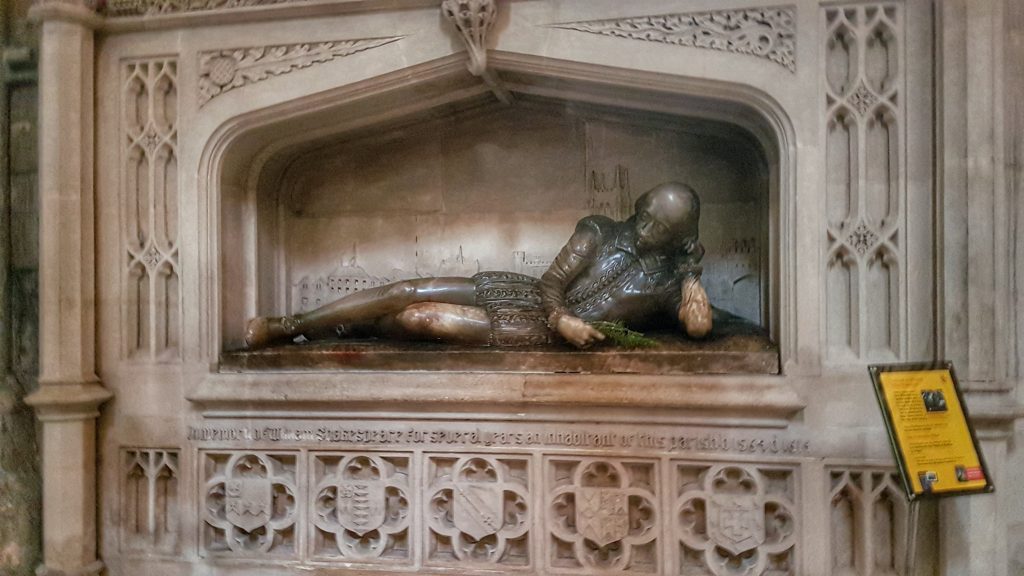
William Shakespeare
Unsurprisingly, Austen and her family were major Shakespeare fans. She read many of Shakespeare’s plays, found in her father’s library, and the family even performed many pieces in their own amateur theatricals. She also saw several productions of the Bard’s works, including an 1814 performance by the popular actor Edmund Keane in The Merchant of Venice, with her sharing in a letter “We were quite satisfied with Kean. I cannot imagine better acting”.1
In addition to many scholars seeing similar characters and themes in Austen’s works (such as Darcy and Elizabeth as Beatrice and Benedick in Much Ado About Nothing), several of Shakespeare’s plays are named in Mansfield Park, including Hamlet, Macbeth, Othello, and Henry VIII.
If you are interested, the Folger Shakespeare Library hosted an exhibition looking at the rise of both Shakespeare and Austen 200 years after they first published- there is an interesting post up!

Samuel Richardson
While Shakespeare was more an implied influence on Austen, her family confirmed her love of Samuel Richardson’s works. Richardson is considered by some to be the first English-language author (others point to Daniel Defoe) with his 1740 book, Pamela. Clarissa or the History of a Young Lady followed soon after in 1748 but it was his novel Sir Charles Grandison that had the biggest impact on Austen. She was inspired by both his techniques and his characters and you can trace several connections, especially in her Juvenalia. (A good example is her use of the epistolary structure in Lady Susan.)

Maria Edgeworth
Maria Edgeworth was an Anglo-Irish novelist (now considered one of the pioneers in children’s literature) and a contemporary of Austen. And she just happens to be another author that we can draw a direct connection to Austen. In 1801, she published a three-volume novel, Belinda, that explores courtship, marriage and society. Austen thoroughly enjoyed it and it is mentioned in Northanger Abbey.
However, the two authors actually conversed with many letters sent back and forth. While much of Austen’s correspondence did not survive, we have much of Edgeworth’s. There are several letters where Edgeworth says that she received a volume of Austen’s works directly from her, and others where she discusses her works in detail.
Note: Here is where I admit that I’ve not actually read any of Edgeworth’s novels, but I’m hoping to tackle one this year.

Charlotte Lennox
Charlotte Lennox was an 18th century Scottish novelist and literary scholar that was considered one of the best of her generation. Sir Joshua Reynolds included her in his painting “The Nine Living Muses of Great Britain” (see above, she is the upper right figure)- a painting of the most notable female authors and artists of the period. Notably, she was also closely associated with the Bluestocking movement of the period.
The Female Quixote is one of Lennox’s best known novels and is a satirical retelling of Don Quixote from Miguel de Cerventes. Jane Austen mimicked this structure and tone in Northanger Abbey; while Northanger takes a different focus (focusing on the novel as a form rather than the characters), it is another very close connection.

Fanny Burney
What would this list be without Fanny Burney, also known as Frances Burney? Burney was an eighteenth and nineteenth century novelist, playwright, and diarist who also served Queen Charlotte as her Keeper of the Robes from 1786 to 1790.
Much like Shakespeare, Jane grew up reading Burney’s works. She first published Evelina in 1778, when Jane was only three years old- she would dive into the novel as a teen. Burney was exceptionally popular as an author both with critical readers and the general population. Anyone regularly reading contemporary fiction (which Jane was) would be more than familiar with Burney.
In 1795, Jane actually subscribed at the cost of one guinea to Burney’s new novel, Camilla. This is also simply a guess on my part, but I wonder if Burney’s choice to originally publish her works anonymously inspired Jane to do the same herself.
♠
- Austen, Jane, and Deirdre Le Faye. Jane Austen’s letters, (Oxford: O.U.P, 1997) 257.
Have you read anything from these five authors?
Cheers,
The Historian
Facebook | Threads | Instagram | Pinterest

I think you would really enjoy “Jane Austen’s Bookshelf “ by Rebecca Romney. It was published in February this year. She mentions 8 women writers who influenced Austen. She’s a rare book collector and writes with wit and is highly readable.
It is on my to-read list!! I’m saving it to read during my blog hiatus in the summer because I want to be able to take my time and enjoy it 🙂