Bath does not get the historical credit that it deserves. People wax lyrical about the history to find in York and Oxford and other places, but Bath quietly holds its own. It is one of few UNESCO heritage cities in the world. (Yes, the whole city.) From pre-Roman to medieval to Regency to modern history, its all there. For me, Regency Bath is the most fascinating. The Neo-Palladian architecture of the period dominates the city, and is stunning in person. And the Circus and the Royal Crescent are certainly at the top of the list. However, visiting No. 1 Royal Crescent is the perfect glimpse into life in Georgian Bath!

Neo-Palladian Architecture
Neo-Palladian architecture has Classical roots, meaning it tends to be rather simple in design. That doesn’t make it any less impressive, though. And the Royal Crescent in Bath is absolutely the most impressive of all. All of that Neo-Palladian architecture dates back to the Regency period, with John Wood the Elder and John Wood the Younger responsible for most of it. The Royal Crescent was built between 1767 and 1774, and was planned for rentals (typically long term rentals). No. 1 Royal Crescent is on the eastern end of the Crescent, and the first known resident, Irish landowner Henry Sandford, moved in in 1776. Nowadays, luckily for us, visiting No. 1 Royal Crescent is a look into the past!

No. 1 Royal Crescent Museum
Run by the Bath Preservation Trust (whose offices are in the attic), it is a museum that is dedicated to presenting life in Regency Bath from 1776-1796. The house is furnished and presented as it would have been in that time, giving you a wonderful glimpse into that life. It is £10.60 for adult admission, and there are concessions for seniors, students, and children. No. 1 Royal Crescent is a quieter museum, but I think it pairs perfectly with the Mayor’s Guides walking tour of the city. It is amazing to see these homes from the outside, but it is even better to actually see what life inside would be like.

The townhouse is suitably grand, as one might expect. (My first thought was “The Tilneys from Northanger Abbey could live here…”.) I think that many of us have different ideas of what Regency life looked like, from various books, television shows, and movies. However, was it actually what we think it was? Well, coming from a North American home, it always shocks me to see a closed floor plan instead of an open. Each room had a very specific purpose, which tells us something about eighteenth century life!

The Parlour
The Parlour is usually one of the first rooms you walk into in a house, and it is usually considered a public room. (In a home today, it might be living room, or a formal living room if they have one.) It “functioned as a reception room for visitors, as well as a comfortable and elegantly furnished space for everyday family activities.” (Bath Preservation Trust. No. 1 Royal Crescent. p.16) This particular table is common to the period, and could be folded down and moved when not in use. The two doors in and out of this room (not pictured) are opposite each other, as Classical architecture dictates symmetry and balance. What was most interesting to me is that the most public room of the house would be used for breakfast, typically an intimate meal.

The Gentleman’s Retreat
Of course, the man of the house gets his own room… “A gentleman’s retreat was a sanctuary where a cultured Goergian might indulge his interests in science and the natural world. It would have also housed a library and would have been a quiet refuge in which to read and write.” (No. 1 Royal Crescent, p.19) It is what you would expect of a study, with the sciences and geography being featured prominently. I am curious as to where one would have found literature in the house, rather than scientific texts. So many of Austen’s heroines get their reading fix from literature. Where would they have found them here?!

The Dining Room
What is the first thing that you notice when you walk into a Regency dining room? It has got to be the pineapple! While a pineapple doesn’t seem particularly unique to us, they were quite rare and exotic in the eighteenth century. Presenting your rare and interesting food was a fantastic way to show guests that you had worldly connections. It also implied wealth, as importing a pineapples from halfway across the globe costs. A Georgian dining room was quite a formal space, with portraits taking prominence. “It tended to be sober in style, with few textiles (they tended to absorb the smell of food). A dining room was essentially a masculine space for formal entertaining; family portraits and silver made a statement to one’s guests about status and pedigree.” (No. 1 Royal Crescent, p. 20) Time to get that family crest engraved on those soup spoons, folks!

The Withdrawing Room
My first question after seeing the Gentleman’s Retreat is, where is the women’s retreat? Well, it is the Withdrawing Room… sort of. Women would retire to the Withdrawing Room after dinner to chat, play cards, and enjoy music. Annnnnnnnd then they would be joined by the men. It seems to me that it would only be fair for the women to keep it all evening! However, since it was the main entertaining room, it was often the most beautifully decorated room of the house. Once you start looking closely at all of the silverware and lighting fixtures and knick-knacks, you quickly notice quite a bit of gilt and silver detailing. With candles lit in the evening, the room would have been rather shimmery and bright! (Another handy way to imply your financial status…)

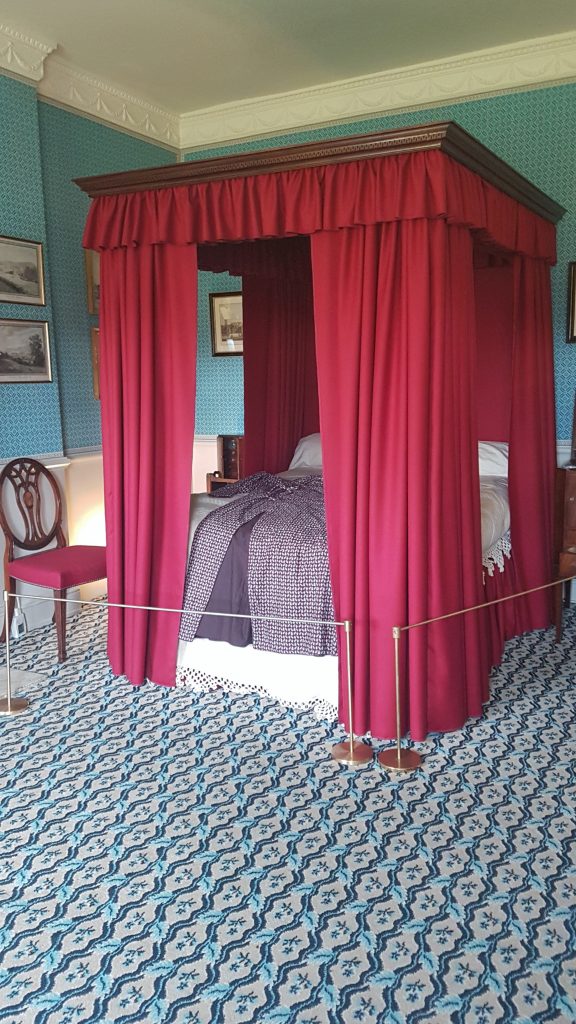
The Bedrooms
And lastly (for the upstairs), the bedrooms! Husbands and wives would have separate bedrooms, but all in all, they are pretty similar. Both have a canopy bed, chests and armoires for clothing, a small desk/table, and a washbasin. And given that both men and women wore wigs in the period, both had more than adequate space for someone to dress their hair. What shocked me the most was the amount of open space in each bedroom. Theoretically, women entertained their friends in their bedrooms, but I’m not sure if they would have just stood around or have chairs brought in. In any case, they had more than enough room to do everything they needed and more. Also, could we please bring abck fireplaces in bedrooms?
The Downstairs
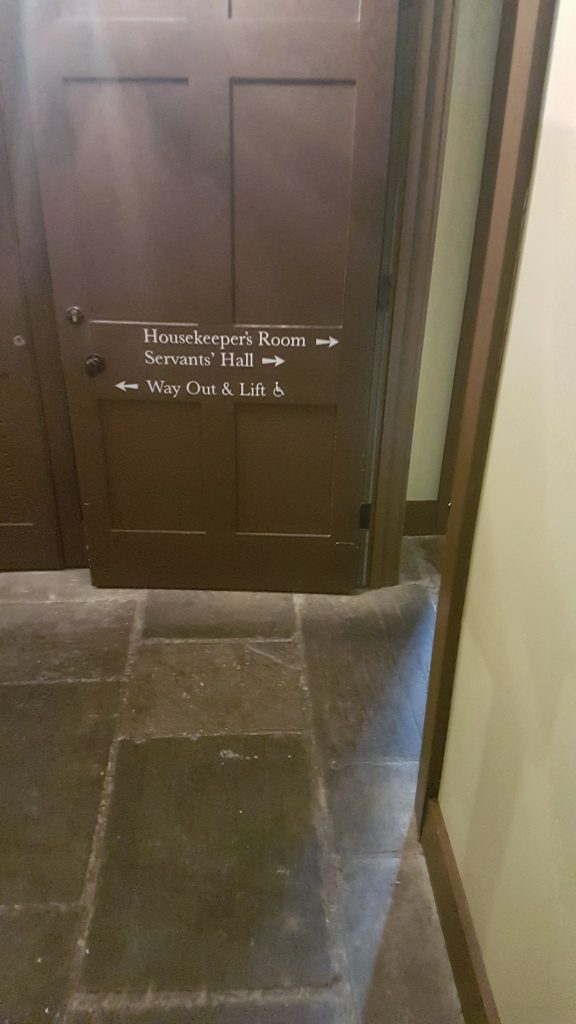
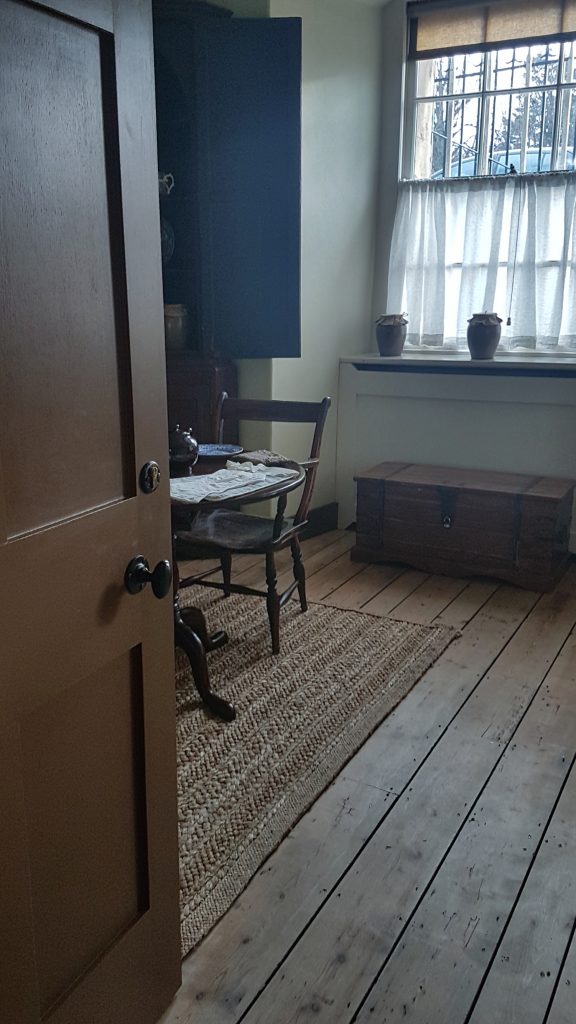
(Yes, I know that the downstairs is made up of a few different rooms…) The downstairs is pretty much what you would expect if you have ever watched Downton Abbey. I mean, it is interesting that from the late eighteenth century to the early twentieth, there seems to have been no changes there. But you have the kitchen and the scullery, where all of the food for the upstairs and downstairs would have been made and stored. The housekeeper’s quarters (shown above) is a separate room where all of the valuable spices and tea were kept. And of course, a servant’s hall where they could eat their meals and potentially enjoy any “break time” they may have had. If there are any kids with your groups, this is the perfect place for them! There are Regency clothes to try on, colouring sheets, and a few other things to try out.

There is a lot to see and learn about life in Regency Bath when you are visiting No 1 Royal Crescent! In some ways, life was quite recognisable to us- we all have to sleep and eat, right? In other ways, it was very different and it is good fun to see those differences.

If you are looking to learn about the Regency period in general, I would recommend you grab Robert Morrison’s The Regency Years. It covers that period, which is longer than a lot of people think, and covers more subjects than you would expect!
Have you visited No. 1 Royal Crescent before?
Cheers,
The Historian
Facebook | Twitter | Instagram | Pinterest | Bloglovin’

Interested in the tea cups. I, too, have read that they still used the Chinese style of cup without handles, but the photos here don’t show those, and a quick Internet search for 1814 tea cups doesn’t bring them up either. Do you know when they switched over from handle-less to handles? Thank you.
That is a great question- I’m not sure! These are actually from another room, I believe the room that discussed tea length featured the bowls, but I didn’t have a close enough photo to use ☹️