With Women’s History Month 2025 (round 1) quickly coming to a close, I wanted to spend our last Style File Friday of the month focusing on a female designer. While I’ve looked at several popular designers from the late nineteenth and twentieth century (scroll down for more!), I wanted to look further back in history. We often do not have a massive amount of information on designers from previous centuries- we might know of an outfit or two, but not much more. However, we luckily do know quite a bit about Marie Antoinette’s wardrobe and the woman who dressed her. Let’s jump into the style history of Rose Bertin!
Who Was Rose Bertin?
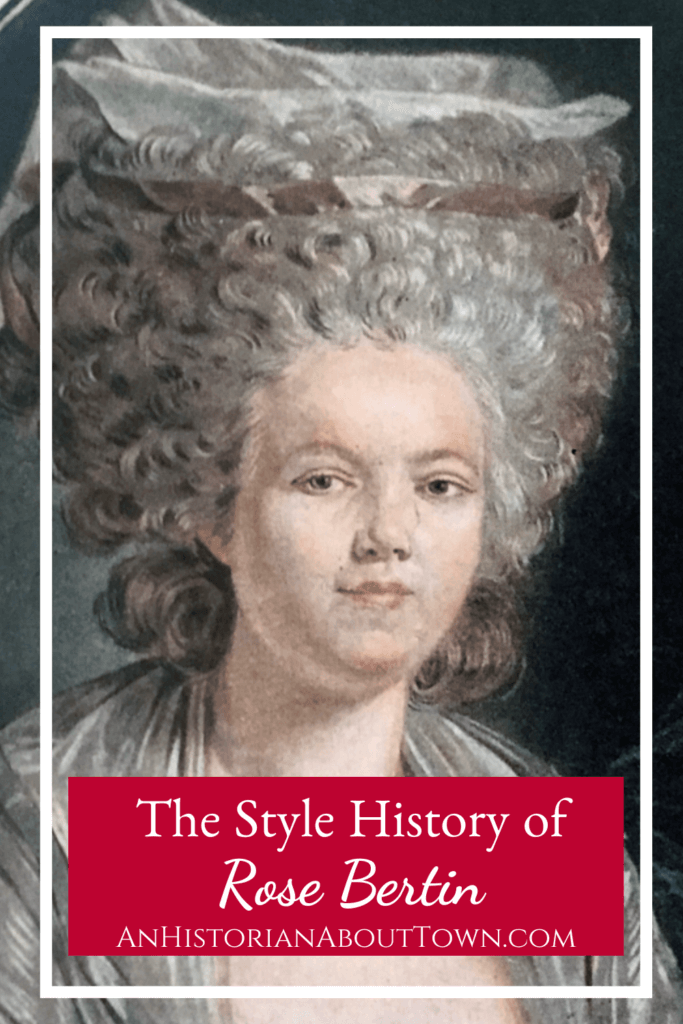
Rose Bertin, in short, was Marie Antoinette’s favourite designer. She would become a close friend of the French queen, and many of her designs have been immortalised in portraits of the tragic queen. While we know her as Rose now, that nickname was given posthumously.
Rose Bertin’s Early Life
Marie-Jeanne Bertin was born on 2 July 1747 to Nicolas Bertin, who worked for the constabulary, and Marie-Marguerite Méquignon, a nurse. The family had little money and Bertin was forced to start working from a young age. She spent much of her formative years in Abbeville, an area connected with the textile industry and trade for over a century. By the age of nine, Bertin was an apprentice to a local fashion merchant. This gave her a strong education in trade where she learned not only about textiles but also garment construction and design.

A Move to Paris
As one might imagine, moving to Paris allowed Bertin to broaden her reach. She worked under Mademoiselle Pagelle, a popular society dressmaker in Paris. This not only allowed her to learn more about the rapidly-evolved, preferred fashions for the French court and nobility, she was also introduced to several key women in French society. Her clients included the Duchesse de Chartres and the Princess de Lambelle. Lambelle was one of the wealthiest women in France and extremely well-connected- she would go on to be one of Marie Antoinette’s closest friends. The Duchesse would help Bertin open her own shop and to build up a client base at Versailles.

Designing for Marie Antoinette
While Bertin first met Marie Antoinette when she was Dauphine, their relationship flourished when she became queen. Not only did the new French queen ask Bertin to create her coronation robes for her husband’s coronation in 1775, she wore her creations several times a week. Notably, French royals historically were dressed for the day in front of a crowd of courtiers. Marie Antoinette changed this and chose to be dressed privately by Bertin, a clear demonstration of how close of a friendship they had.
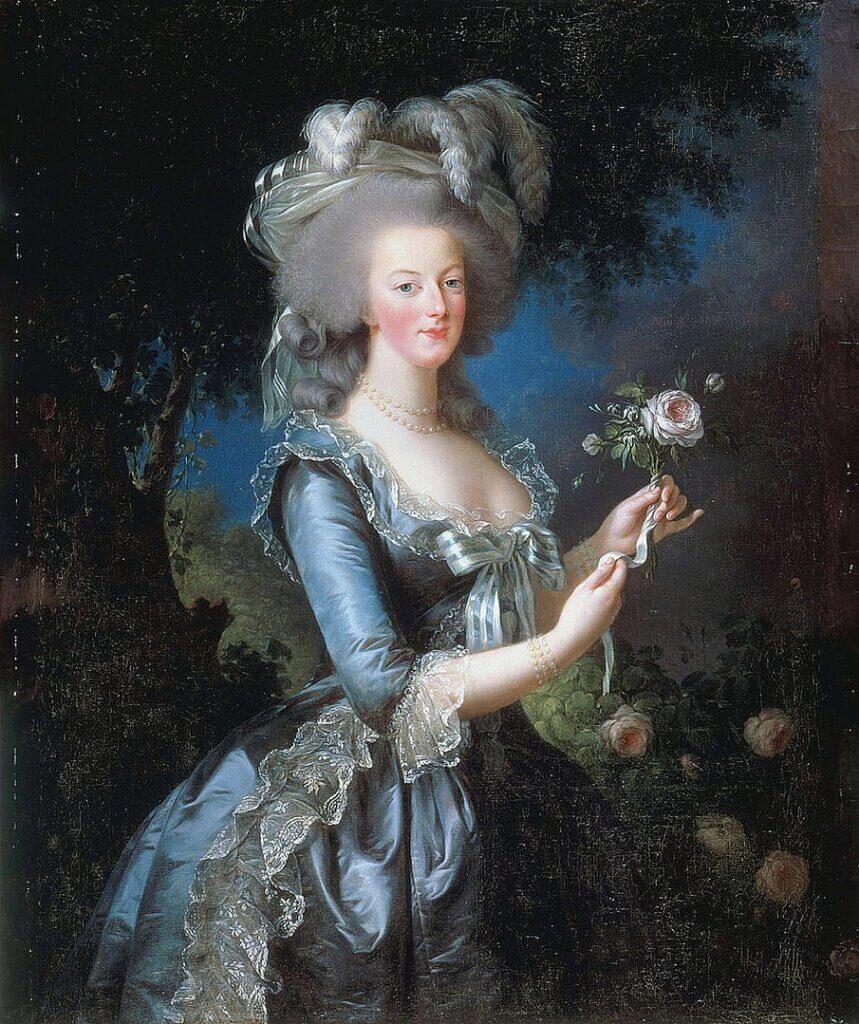
Marie Antoinette was arguably the fashionable anchor of the court, and her fashion choices dictated trends. That means that Bertin was one of the most influential people at court through her work, and was often referred to as the “Minister of Fashion”. Women’s fashion at the French court in the last quarter of the eighteenth century was quite literally massive- skirts could be more than a metre across and hairpieces and wigs would tower. These designs allowed women to physically command more and more space. (Bertin was behind the wigs that had ships and other major pieces in them.) And her work did not stay in France. She sent dolls with smaller versions of her designs to Marie Antoinette’s family and friends across the courts of Europe.
Fleeing from the Revolution
Because Bertin was so closely associated with Marie Antoinette, she was considered to be one of the “enemies”. (She contributed to excesses of court with her fashion, and encouraged the French queen to maintain her luxurious lifestyle.) Bertin travelled in and out of France throughout the French Revolution and was able to have her name removed from the list of émigrés despite this. (Émigrés were those who fled following the French Revolution, thus forfeiting their lands and property.) In 1793 she left for London where she continued to work, in addition to running her business in Paris.
She dressed several notable women of the early nineteenth century, including Napoleon’s first wife, Empress Josephine, and Queen Maria Theresa of Naples and Sicily. However, she did not adapt to the new style of dress, and fell out of favour. She died in September 1813, largely forgotten.

Want more female designers from fashion history?
The History of Madeleine Vionnet
The History of Elsa Schiaparelli

Were you familiar with the style history of Rose Bertin?
Cheers,
The Historian
Facebook | Threads | Instagram | Pinterest