Kensington Palace is known for several things. Magnificent state apartments, Princess Diana and royal fashion history, and being the current home of the Duke and Duchess of Cambridge. And Historic Royal Palaces as a whole is known for Tudor courts and Georgian feasts and engaging public history for all ages. However, Kensington Palace is home to several stunning royal portraits, and that isn’t mentioned by many visitors. These are an incredible treasure, fascinating for any royal historian. Today I’m going to be chatting about why you need to see the royal portraits at Kensington Palace and which dynasties are currently featured!
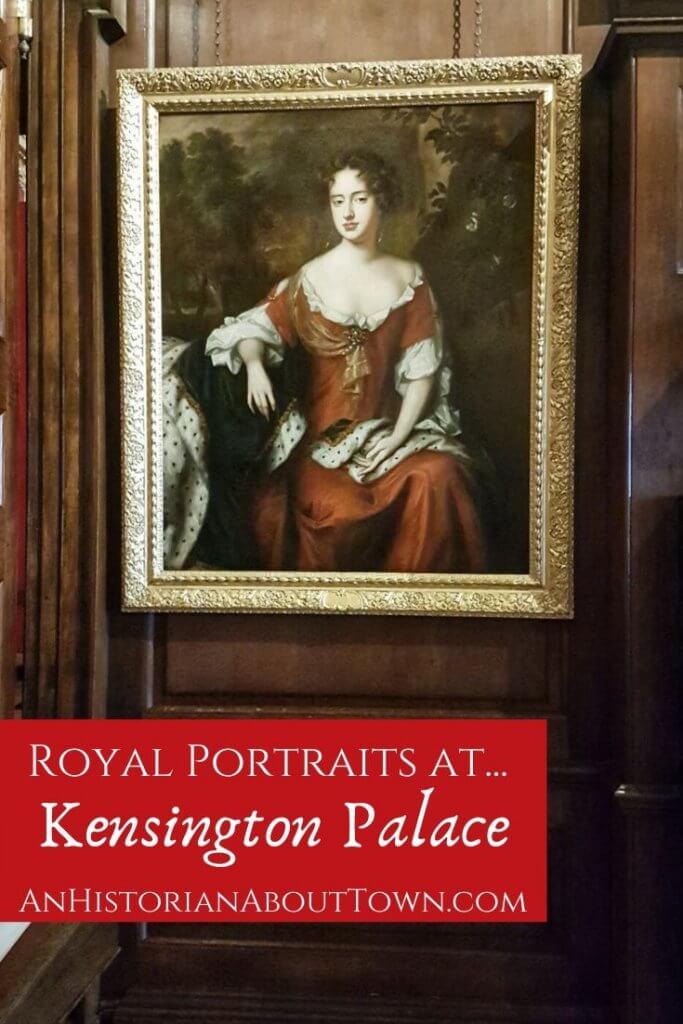
Historic Royal Palaces is an incredible organisation. They maintain the Tudor and Georgian Hampton Court Palace where you can daily run into Henry VIII and Catherine of Aragon. Banqueting House is clearly all about Peter Paul Ruben’s magnificent Stuart ceiling. The Tower of London is overwhelming impressive (and Tudor)! (Kew Palace is also wonderful, but I’ve yet to had a chance to visit when it is open. And then I need to make it to Hillsborough Castle in Northern Ireland!) Kensington Palace maintains a difficult balance between the historic royals who lived there before and the modern who have called it home in the twentieth and twenty-first centuries. The Queen’s Apartments, King’s Apartments, and the Victorian/modern exhibitions are always fantastic. However, hidden throughout the Queen’s Apartments, King’s Apartments, and Victorian exhibitions, there are several notable royal portraits at Kensington Palace.
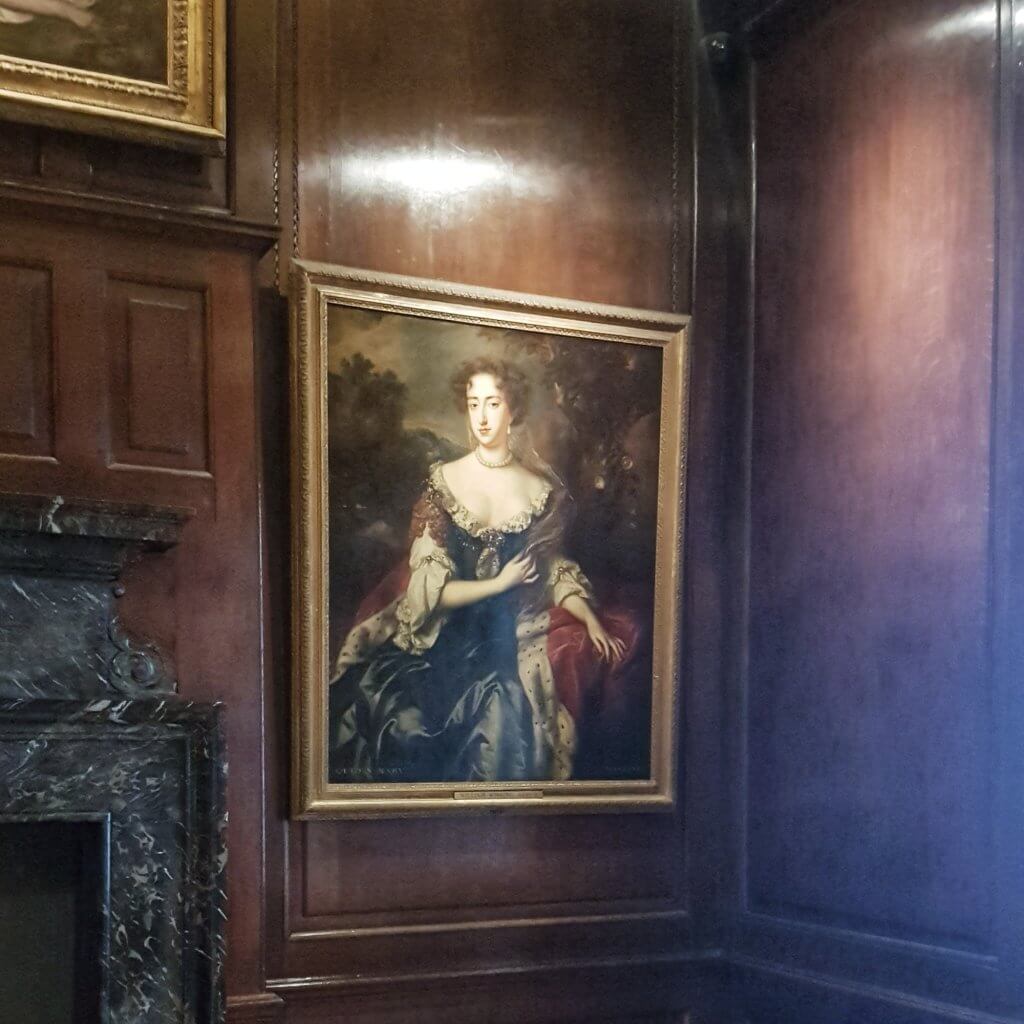
The Stuarts at Kensington Palace
The Stuarts are the first British royal dynasty to call Kensington home. William III and Mary II purchased the then Nottingham House from 2nd Earl of Nottingham in 1689, to have a family home outside of London. (Yes, at that point it was quite outside of London!) As such, it does seem quite fitting to have several Stuart portraits on display. The portrait above is Jan Verkolje’s 1688 portrait of Mary II. Verkolje was a Dutch artist, which does make sense given that she was married to the Dutch William of Orange. The English court has not particularly thrilled with their Dutch monarch, but he did stick around after her death at the end of 1694. I did not happen to see William’s portrait (I think there was a school group around it), but in fairness, he also has a statue outside of the Palace. (You can read more here on the statue- a gift from Kaiser Wilhelm II!)
Charles I
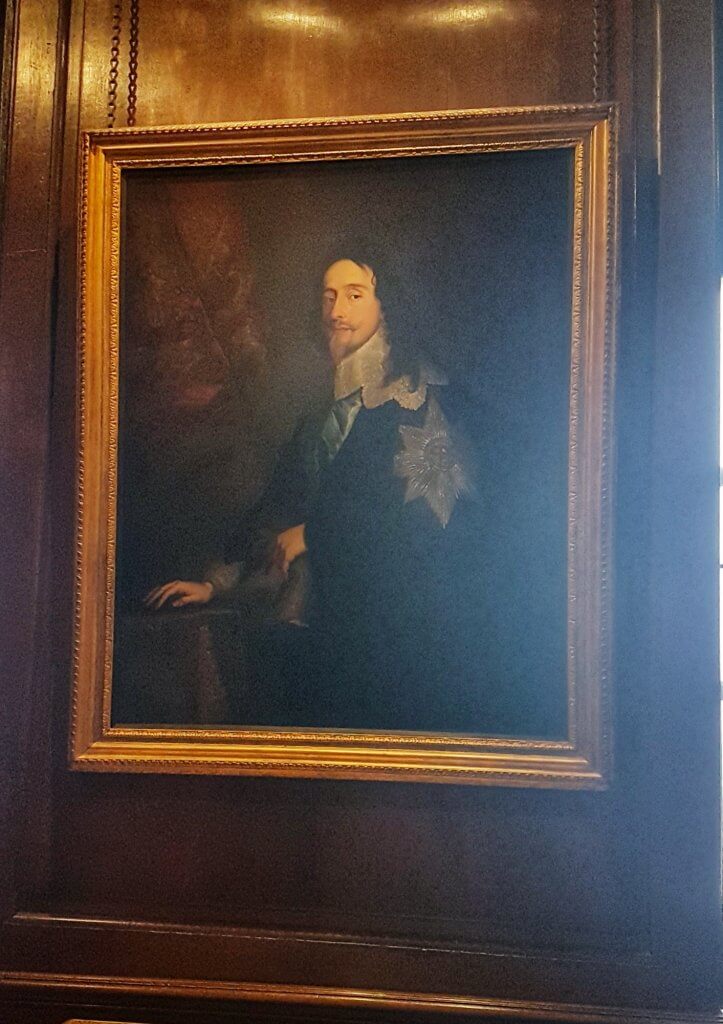
This Charles I portrait was a lucky find (though quite difficult to photograph beside a window). This is on loan from the National Portrait Gallery, and quite a lucky find. According to exhibition information at Kensington Palace,
Despite their German roots, George II and Queen Caroline worked hard to promote their Britishness. Unlike George I before them, who often spoke, German, they insisted English be spoken at Court.
The King’s long absences to the continent sometimes left Caroline as regent, ruling on George’s behalf. She made Kensington her base, arranging the paintings and furniture to her taste.
Caroline hung portraits in this room of William III, Mary II, Charles I and Henry VIII. Her selection of previous monarchs reinforced the German born couple’s legitimate right to the British throne.
I wasn’t able to see the Henry VIII portrait, but I’m grateful that the Gallery lent this portrait to HRP. It does help emphasise the continuing line of succession that the Georgians wanted to present, and it is an impressive portrait. With the Gallery going under massive renovations from 2020 to 2023, I am hopeful that more royal portraits will find a temporary home at the Palaces in the meantime. (Sidenote: it seems quite odd to pick Henry VIII as your monarch to hang your hat on, but I suppose the Georgians had a different opinion…)

This equestrian portrait of Charles I (with M. de St Antoine) by Anthony van Dyck is also a fascinating Stuart painting. The original is with the Royal Collection Trust and is on display at Windsor Castle, but this version is also quite impressive. Clearly, Charles had quite the image and authority problem, but he knew how to present himself in art work. At just over twelve feet tall, it is a striking painting, and gives you an idea of the majesty it was meant to impart. Both Hampton Court and Kensington have notable paintings like these hanging in their galleries. While they aren’t necessarily listed as a highlight, they alone are worth the visit.
Queen Anne

This painting of Queen Anne and Prince George of Denmark is quite small, but still remarkable. It is a smaller portrait, less than a foot tall. However, it is remarkable in that the origin of this portrait is in fact Kensington Palace. Anne and George sat for this portrait in the Queen’s Closet at Kensington, a room that you can still visit today in the Queen’s Apartments. You can see that Charles Boit painted this (as indicated by the “Boit” on the bottom). Boit was the court’s leading enamelist, and his enamel paintings were quite different from other portrait styles. And yes, this is a Royal Collection Trust piece on loan!

The Georgians at Kensington Palace
The Georgians also spent a good deal of time at Kensington Palace. As the previously mentioned exhibition information stated, Queen Caroline used Kensington as her main home. You can see Caroline’s portrait above (unfairly titled “The Queen of George II”- she has a name!). Caroline of Ansbach was the first Queen Consort to be formally crowned since Queen Anne of Denmark (married to James IV/I). She served as Queen (and sometimes Regent) of England from 1727 to 1737. Although she had a difficult relationship with her son, Frederick, she was loved by her subjects. Unfortunately, she suffered an excruciating death in 1737, of an umbilical hernia as a result of childbirth in 1724. Her small intestine slipped through the hernia opening, and doctors thought it best to cut the intestine rather than put it back in (with no anaesthetics). Quite a sad story but a fascinating queen!

These royal miniatures are also quite interesting to see; they are the children of George II and Caroline. On the top (left to right) it is Princess Caroline and William, Duke of Cumberland. The bottom features (left to right) Princess Amelia, Frederick, Prince of Wales, and Princess Mary. They are also enamel paintings, like the above painting of Queen Anne and Prince George. Unless you are really stuck into the Georgians, you tend not to hear about their children. However, they had infamously complicated relationships amongst generations, and are well worth a read about! Lucy Worsley’s The Courtiers and Flora Frasers Princesses are a great place to start on all of the Georgians.
Have you enjoyed the royal portraits at Kensington Palace, or any of the other Historic Royal Palace properties? And do you have a favourite royal portrait?
Cheers,
The Historian
Facebook | Twitter | Instagram | Pinterest | Bloglovin’