In my quest to share more Canadian history, I have been spending a lot of time thinking on our history. Not many people outside of Canada are familiar with our history, and I would like to change that! Today, in Manitoba, it is Louis Riel Day. No one outside of Manitoba really seems to know who Louis Riel was, which is a shame. He was a rebel, a politician, a fugitive, a vampire, and a hero, depending on whom you happen to be chatting with. So, for Louis Riel Day, I am going to share some of Louis Riel’s story with you!

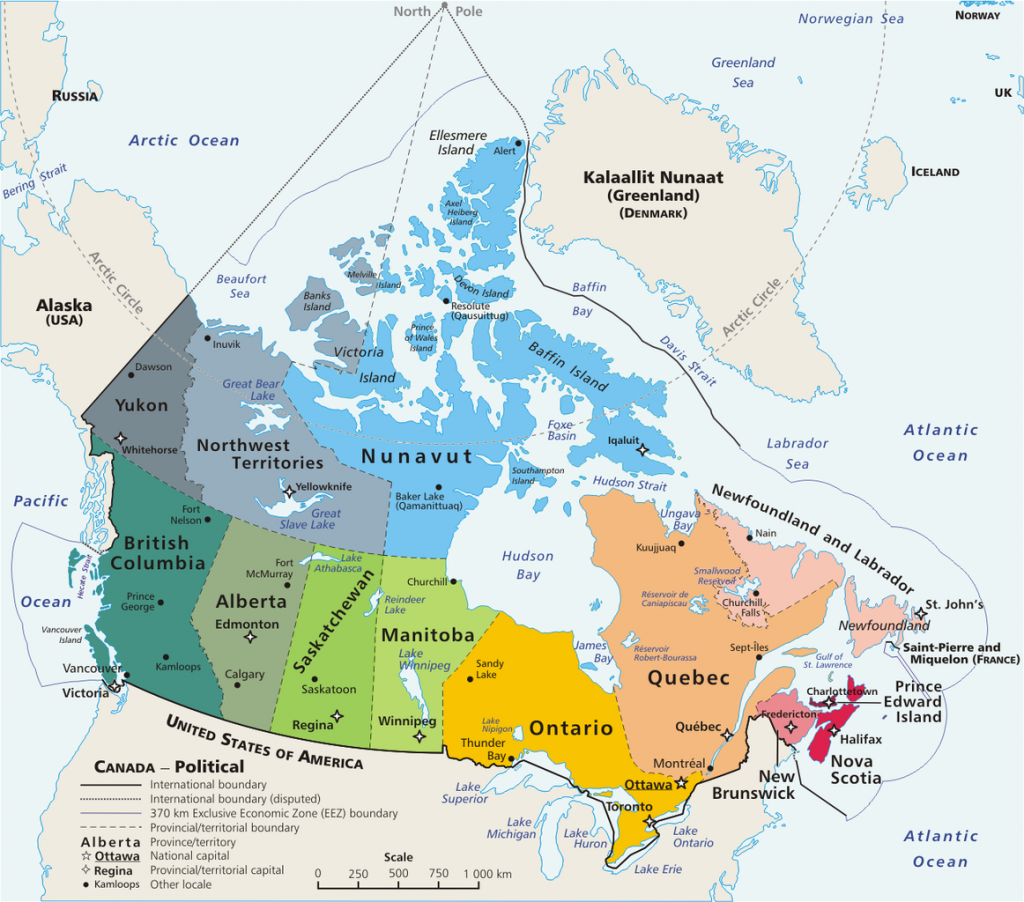
Quick background on Canada: We have 10 provinces and 4 territories. The provinces and territories did not come into being at the same time. In 1867 at our founding, Canada consisted of New Brunswick, Nova Scotia, Ontario, and Quebec. The province that I am from is Manitoba- if you fold a map of Canada in half, we are exactly in the middle. Manitoba is a diverse province, with Indigenous, French, English, Scottish, and Ukrainian communities all playing important roles in our early development (not to mention all of the cultural communities from later immigration). We did not enter the Dominion of Canada until 1870, after quite a complicated slew of events. Riel’s role in the creation of Manitoba as a political entity was crucial, and he has a complicated position in our history.
Louis Riel: Métis
Louis Riel was Métis. For anyone who doesn’t know, the Métis is an Indigenous group that are descendants of local Indigenous populations that intermixed with European fur traders and settlers. They have an incredibly rich and unique culture, blending Indigenous, French, Scottish, and English cultures together. Riel was born in 1844 to Louis Riel, Sr, a Métis politician, and was one of eleven children. The family was notably Catholic; Riel actually began studying at the seminary at age thirteen to become a priest. He withdrew at the age of twenty after learning of his father’s early death, and attempted to stay in Montreal doing legal work. He had a brief relationship with a woman in Montreal and it actually progressed to the point of a marriage contract, but her family objected to a marriage to a Métis. And so back to Manitoba he went! (FYI, there are 2, 266 km between Winnipeg and Montreal, or 1408 miles. Not a small journey….)

Louis Riel: Rebel
Riel arrived back to the Red River settlement (now Winnipeg) to find that Anglo-Protestant settlers from Ontario had heightened religious and racial tensions. And remember Rupert’s Land from my HBC history bite? Well, that land was being transferred from the HBC to the Dominion of Canada, but there was a lot of uncertainty as to what that would actually mean politically and legally. The Métis did not have legal land deeds for their property, as per the European system, and were incredibly concerned about what would happen to their land with the transfer. Riel became a leader of the Métis who were disputing the survey, and announced that the federal government could not assume authority of the region without first negotiating with the Métis.
He invited Anglophone leaders to a convention to discuss alongside the Métis. At the beginning, talks were going quite well, but a pro-federal group emerged. This pro-Canadian group attempted to stage a coup to seize power, but most Anglo-settlers ignored them. The pro-Canadian leaders were surrounded, and taken as prisoners to Upper Fort Garry. The federal government in response sent emissaries to the settlement, buuuuuut they didn’t make it time…

Louis Riel: President
The Métis National Committee declared themselves a provisional government, with Louis Riel as their President, in December 1869. The emissaries from Ottawa did arrive, and held talks with Riel and the Métis National Committee, though nothing helpful came of them. From March to June of 1870, the newly established Legislative Assembly of Assinboia was in session and passed legislation. On the legal side, it progressed quite strongly.
Everything was going as well as could be hoped in the beginning, until a pro-Canadian group of men were arrested near the settlement in February of . After being put on trial, the leader of the group, Boulton, was sentenced to death. He was however pardoned, and another leader of the group, Thomas Scott, took this to mean that the Métis were weak and easily-manipulated. After continuing to argue and fight against the guards, he was tried and also sentenced to death. This sentence would stay… Scott was executed by firing squad on 4 March 1870. As you can imagine, executing an Anglophone Protestant settler did not send the best message to the federal government (whether or not it was justified).

Louis Riel: Fugitive
Discussions in the spring of 1870 between the Assembly and the federal government brought about the Manitoba Act of 1870, by which Manitoba formally entered Canada. Although many of the demands were met and established in the Act, one was not: the provisional government did not secure amnesty. Riel learned that a military expedition was planning to capture and lynch him, so not unexpectedly fled to the Dakota territories across the border.
He returned back to Manitoba in 1871, and was actually elected as the Member of Parliament for the Provencher riding in 1873 (showing the support he carried), although fled again given that a warrant was issued. He made his way to Montreal, unsure as to whether or not he should keep his seat in the Commons. Meanwhile, the Conservative federal government fell, and an interim Liberal government took to power. He signed the Register book in a false disguise, although was stricken from the rolls later. Re-elected for a final time, and expelled again, Riel felt that his point had been made.

Louis Riel: Rebel Again
Riel made his way to New York where he spent time with an Obate Order, and became somewhat of a religious fanatic. He believed that he was the divinely chosen leader of the Métis people. He returned to live with family in Montreal, who eventually ended up placing him in an asylum, due to continual irrational outbursts. Throughout this time, he focused his energy on religious matters which would play a role in the years to come.
Once Riel had returned to the West again, he involved himself in Métis politics once again. The difference this time is that he was still suffering from quite serious mental health issues, as well as aggravating the Catholic Church who had so strongly supported him in the past. Because he believed that he was chosen by God to lead the Métis people, in the 1880s he continued to speak out and lost the support of Anglophones, the Church, most Indigenous populations, and even the Métis themselves. In 1885, he was declared the political AND spiritual leader of the Provisional Government of Saskatchewan. However, the tactics that had worked in Manitoba in 1870 did not work again, and Riel surrendered himself to Canadian forces on 15 May 1885.

Louis Riel: Executed
Riel was tried by a jury of 6 men in Regina, Saskatchewan for treason. He was convicted, though the jury recommended mercy- the judge ignored this, and ordered death by hanging. He was hanged on 15 November 1885 in Regina, and his body was sent back to his mother in St. Vital (now Winnipeg). The execution divided the provinces for years to come, with Conservative Ontario supporting the execution and Francophone Quebec stalwartly opposed.
Louis Riel: Legacy
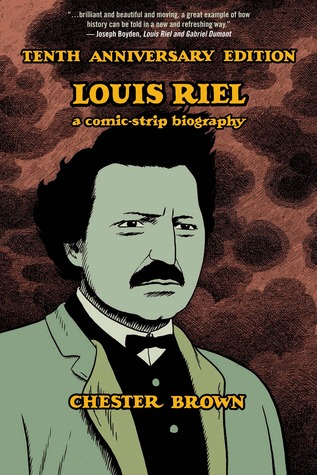
Although much of Canada has largely forgotten Louis Riel, he is very much a central figure in Manitoban history, and is quite forcefully remembered here. You can visit his grave in St. Vital here in Winnipeg, we observe Louis Riel Day on the third Monday of February, and you learn about him at several points throughout your primary and secondary education. He was a fascinating man, and an incredibly brave man, and though you could argue that he was a criminal who committed treason, you have to admire his commitment to his causes. My home would most certainly be radically different had Riel not led the provisional government here. If you are interested in learning more about Louis Riel, Louis Riel: A Comic Strip Biography is a fantastic read.
What do you think of Louis Riel? And for anyone in Manitoba, I hope you are having a wonderful Louis Riel Day!
Cheers,
The Historian
Facebook | Twitter | Instagram | Pinterest | Bloglovin’