I’m quite fortunate that I have been able to travel as much as I have. Living in Ireland for a year for graduate school, and then several more trips have allowed me to check off most of my bucket list. However, the reality is: I live in the middle of Canada. Flights are expensive for Canadians to fly domestically, let alone internationally. I am always asked, “How do I find history and culture when I live where I do?”, which is a fair question. These are my favourite tips to find culture and history, no matter where you are!
Sometimes I really hate other history bloggers. They can travel to several different historical sites in Europe in a weekend, when I can maybe go once every 2-3 years. And when you are a history blogger, that makes it difficult. (I don’t actually hate them, either- once you’ve met them, you can’t!) Anyone who hasn’t lived in North America doesn’t truly understand our scale of distance here. In the last two weeks, I’ve had four different people tell me I should just go to Toronto. Well, that is either 26-30 hours of driving OR an $800 flight. (If you would like to sponsor that flight, please let me know…) It isn’t like popping over to the next village, it is further than a lot of flights between European countries. And that isn’t even the furthest city. So, all of this is to say that I have to be creative and careful!

Online Exhibitions
Online exhibitions are a wonderful child of the internet and museums, and I for one, am eternally grateful. No, online exhibitions do not give you the same experience as walking through a museum in person, it is still a wonderful feeling to spend hours pouring over them. I’ve found that certain areas of history offer more of these than others. Scientific and art history seem quite interested in online exhibitions, while cultural, social, fashion, and religious history is more difficult to find. Yes, I understand that some items show better in person than online, but for many patrons like myself, in person visits just are not possible. It is better than nothing!
Google Arts and Culture is a wonderful source for online exhibitions. If you have an hour or two, I would really recommend looking through some of their exhibitions- you will be impressed! This Verona Textiles exhibition is short but gives you some fantastic insight into Italian fashion in the 1950s, and this Portraits From the Empire exhibition from the Pera Museum is an indepth look at Ottoman portraiture. And the huge benefit of an online exhibition is that you may be exposed to something that you otherwise may have never discovered! And remember, experiencing it online is no less valuable.

Look for Connections Between Arts Organisations
If you patronise an arts or cultural organisation in your town or city, pay attention to which other groups they link up with. The Royal Winnipeg Ballet has put on some of my favourite productions, like The Handmaid’s Tale and Sleeping Beauty, as well as my favourite event of the year- Barre After Hours. However, they also do a lot of work with the Winnipeg Symphony Orchestra, a fantastic and affordable cultural night out. The Royal Manitoba Theatre Company is also just across the street, and they have some pretty incredible productions of their own. I will be heading to Miss Bennet: Christmas at Pemberley in December, as well as The New Canadian Curling Club if I can make it! If you are really enjoying the production and work of a particular organisation, ask them who else they would recommend. It is a wonderful way to discover culture in your own town!

Reach Out
If you read my Online Style Resources post, you will know that social media is one of the best ways to discover current work being done in history and culture. My favourite part of it is that when people are releasing new books, articles, or documentaries you often find out about it far ahead of the release. It also means that you have more than one way to contact them! If you have read a new monograph from your favourite historian, reach out to them to chat about it. Ask you questions, share your favourite parts, and pick their brain. I can guarantee it is their favourite topic, and we all enjoy it when people show interest in what we love. You can also get a lot more out of the book or documentary (or painting or clothing or whatever it is) when you do that digging.

Plan Trips Carefully
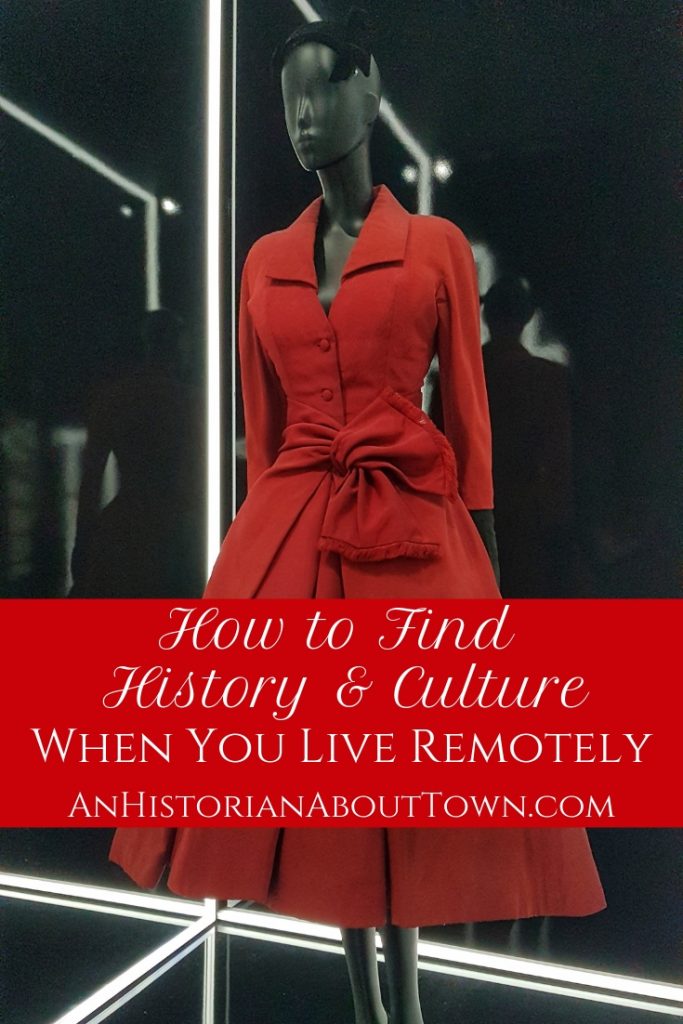
If you are lucky enough to travel, plan your trip carefully and thoughtfully. Make the most of your travel, and plan to see as many things as you can while you are there. When I went to the UK in the winter, I went to the Dior exhibition at the V&A, Bath Abbey, Six the Musical, and literally about 50 other things. I timed my trip to see certain exhibitions and shows, and then filled out more permanent things. If there are any temporary shows, performances, or exhibitions that you want to see, research and find out what all of your other options at the same time are. You might end up with an insanely busy trip like me, but you have to take advantage of it while you can. And there were some things I saw that I thought I would be rather meh about that I ended up loving, so it really is worth filling your diary. (Know your own stamina, though. If you are going to end up being miserable or bailing on things because you are exhausted, it isn’t worth it.)
What are your best tips for how to find history and culture when you live remotely? Any hidden gems to help the rest of us make the most of everything?
Cheers,
The Historian
Facebook | Twitter | Instagram | Pinterest | Bloglovin’