Sticking with this week’s theme of spooky and macabre, I’ve decided to look at some of history’s most popular mysteries. What are the cases that people keep coming back to, time and time again? If I could go back in time, it would not be to live in the past (because I like having modern medicine, rights as a woman, a global world…) but simply to solve these. So, today, let’s dig into the greatest historical mysteries and why people are so fascinated by them!
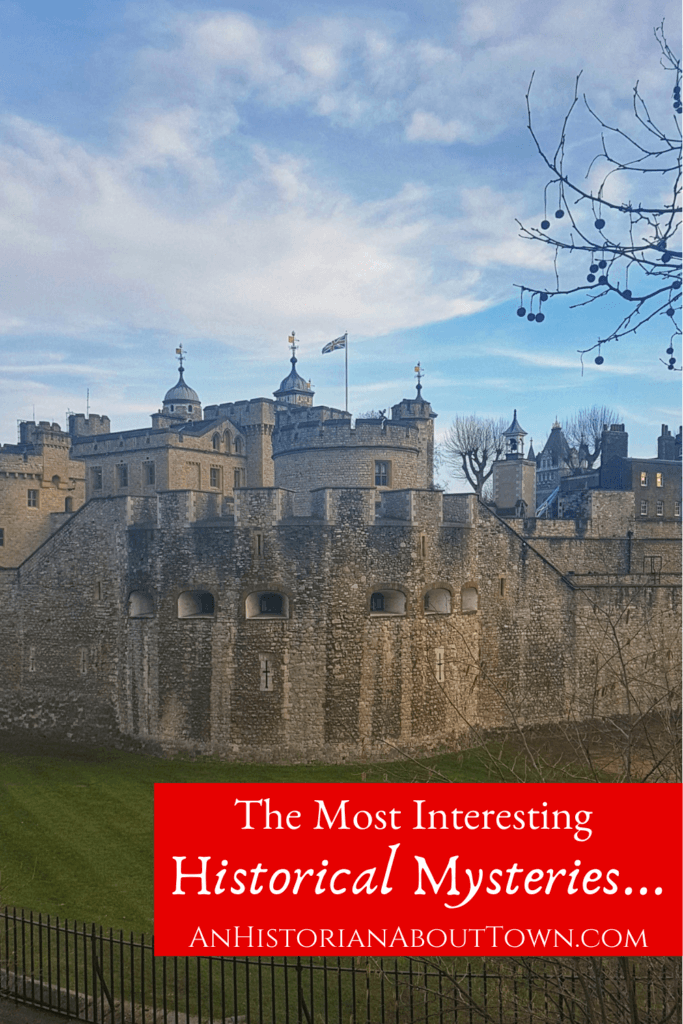
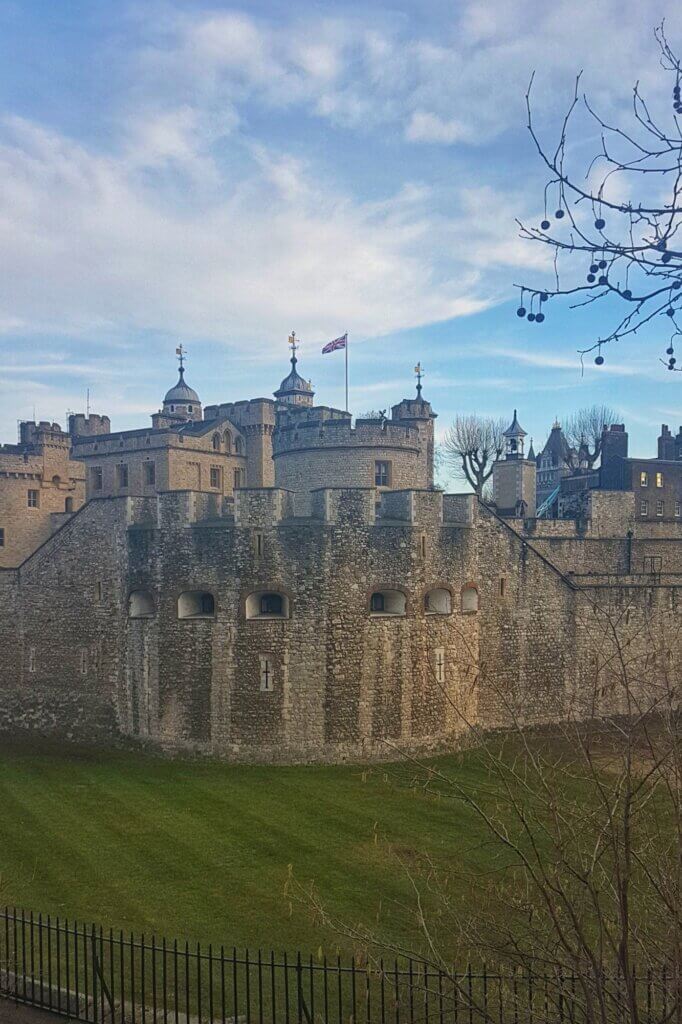
The Princes in the Tower
I will point blank admit, I have no personal interest in the Princes in the Tower. I find that people get far too invested and it quickly becomes an obsession. However, a list of historical mysteries wouldn’t be complete without the Princes in the Tower.
When: 1483
Where: The Tower of London
Who: Princes Edward and Richard, aka King Edward V and Prince Richard, Duke of York
What: After their father, Edward IV, died, the two young princes (aged 12 and 9) were taken to the Tower of London for protection, under their uncle, Prince Richard, Duke of Gloucester. The Princes went into the Tower, and never emerged again, leading us all to ask: what happened to the princes? Doctors regularly visited Edward, leading some people to think that he died of disease (though what happened to Richard?). Given that their uncle seized the throne to become King Richard III, it is not unrealistic to think that he may have had a hand in their death, either. To this day, we do not know what happened to the Princes in the Tower!
The Death of Amy Robsart
This mystery reappears any time that television show or film about Elizabeth I comes out, but I think it is a very modern mystery all the same. A potentially cheating spouse, politics, and possible illness are all at play for Amy, and it is still an unsolved mystery to this day.
When: 8 September 1560
Where: Cumnor Hall/Place
Who: Amy Robsart, aka Amy Dudley
What: Amy was wife to Robert Dudley, Earl of Leicester, a favourite of Queen Elizabeth I. Elizabeth would toy with the idea of marriage throughout her reign but never go through with it, and it is thought that Dudley had a role in that. Amy married Dudley in 1550, and records show that they probably married for love. However, Elizabeth also loved Dudley. On a Sunday morning, Amy was found dead at the bottom of a staircase at Cumnor Hall. She was there by herself, and an inquest was launched to find out what had happened. It showed that Amy had two head wounds, and had snapped her neck upon impact. Rumours floated that Elizabeth may have had her killed so that she could marry Dudley. Others said that she had died by suicide. There are suggestions that her bones were weakened by breast cancer, and thus her fall was fatal when it normally wouldn’t have been, but there is no substantive proof of this. Did Elizabeth have her killed?
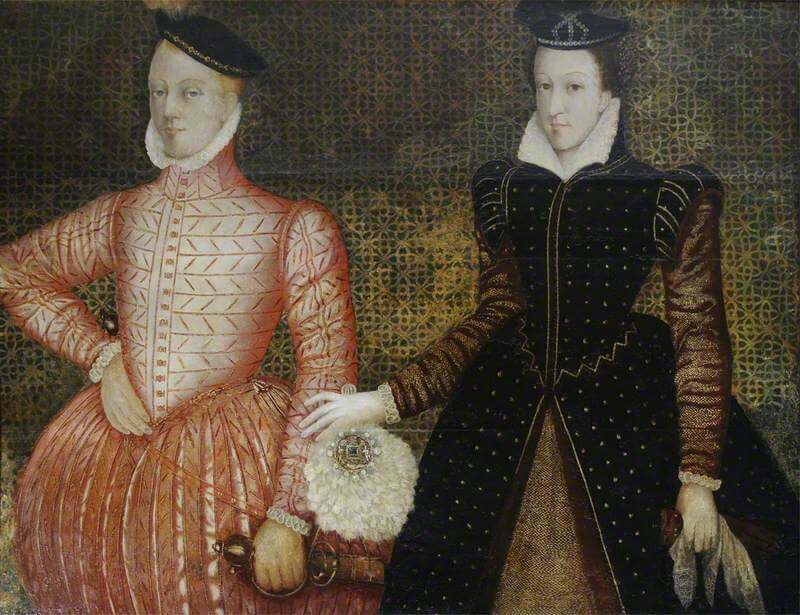
The Murder of Lord Darnley
Now, if there was a historical mystery that did keep me awake at night, it would be Lord Darnley. Mary, Queen of Scots has long been one of my favourite historical figures. Yes, she absolutely made many bad choices, but you can easily follow the emotion and logic of her choices- she made human choices. So, what happened to her her second husband??
When: 10 February 1567
Where: Kirk o’Field
Who: Henry Stuart, Lord Darnley
What: Darnley, the second husband of Mary, Queen of Scots, was continually pushing for the Crown Matrimonial- to be made King of Scotland in his own right. He had also helped plan and execute the murder of one of Mary’s closest courtiers (David Rizzio). He was recovering from smallpox (syphilis?) in Kirk o’Field in Edinburgh when a massive explosion rocked the city. The house he was in was blown to pieces, though Darnley and his valet were found dead in the garden, suggesting they had fled earlier. The big question is, did Mary herself have any role in Darnley’s death?
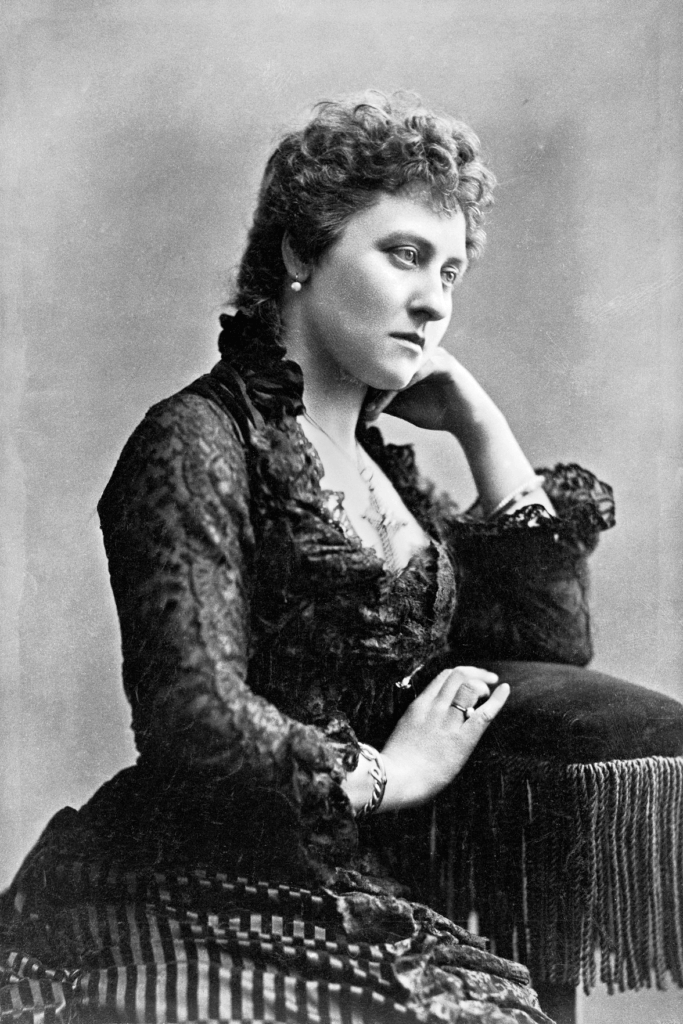
Did Princess Louise Have a Secret Child?
I fully admit- I’ve written a piece on this for Royal Central! (You can find it here.) However, Louise is one of my favourite royals, and I think that this mystery speaks to her radical and modern nature.
When: 1867
Where: England
Who: Princess Louise
What: Louise, the sixth child of Queen Victoria and Prince Albert, was comparatively a bit of a wild-child. She studied arts and would go on to sculpt the statue of Queen Victoria that you see outside of Kensington Palace today. She had no children with her husband, the Duke of Argyll, but there are persistent rumours that she had a love child with one of her brother’s tutors, Walter Sitrling. The son of Sir Charles Locock (Victoria’s obstetrician) and his wife adopted a child in 1867, and they told him that he was Louise’s child. There isn’t any conclusive evidence- the Locock family has pushed for genetic testing, but the Royal Family has not acquiesced.

Where Are the Romanov Jewels?
This is an object mystery, rather than a personal one. (We sadly know what happened to the Romanov family*.) Missing objects are not uncommon in history- however, these were very public, and they went missing in the twentieth century. Where did the Romanov jewels go?
When: 1917-?
Where: Russia, Europe
Who: The Imperial Family of Russia (the Romanovs)
What: After the Romanovs were put under guard, their possessions and properties were seized. The Bolshevik government claimed that everything was public property, and therefore belonged to the government. Inventories and photographs of their jewellery and tiaras were taken, but many went missing in the years following their execution. The prevailing theory is that many pieces went missing in Siberia, where the family was held, but none have been recovered thus far. There are several notable, invaluable pieces that are seemingly lost forever.
*Although Anastasia/a missing Grand Duchess who managed to escape is often listed in lists of historical mysteries, all of the Romanov family’s remains are now accounted for. I will live my Romanov dreams out through Anastasia instead!
What are your favourite historical mysteries?
Cheers,
The Historian
Facebook | Twitter | Instagram | Pinterest | Bloglovin’