When people picture ballet, they often think of the Sugar Plum Fairy leading Clara and her Prince to the Magic Kingdom. Or the various fairies of Sleeping Beauty, celebrating the young princess with each of their solos. However, ballet does have a darker side to it. Murder, death, dystopian society, they’ve all found their place in different ballets. So in honour of Halloween and the time of all things spooky and scary, today I’m exploring death in ballet! I’ll explore how you can recognise it, what productions you can see it in, and the role of the macabre onstage.

How to Spot Death in Ballet
One of the reasons that I love ballet is that it is largely language free- you don’t have to be able to speak or read any particular languages to enjoy what you see on the stage. However, the one “language” that does run through many ballets is miming. Miming can play a substantial role in classical ballet, where one pose or motion can tell you a specific plot point. And yes, there is a miming action for death- it is quite easy to spot, with one wrist crossed over the other in front of the body. You can see it in the image below, in the middle of the right hand column:

And now that you know it, you will start spotting it all over the place in ballets. Even when you don’t think it will appear, it will. (I would recommend saving the photo, it is handy to have!) And even if they don’t mime this action, death is usually pretty easy to spot- some sort of cause of death (like a fight/ sword/ poison), and then someone laying on the ground.
Death in Classical Ballet
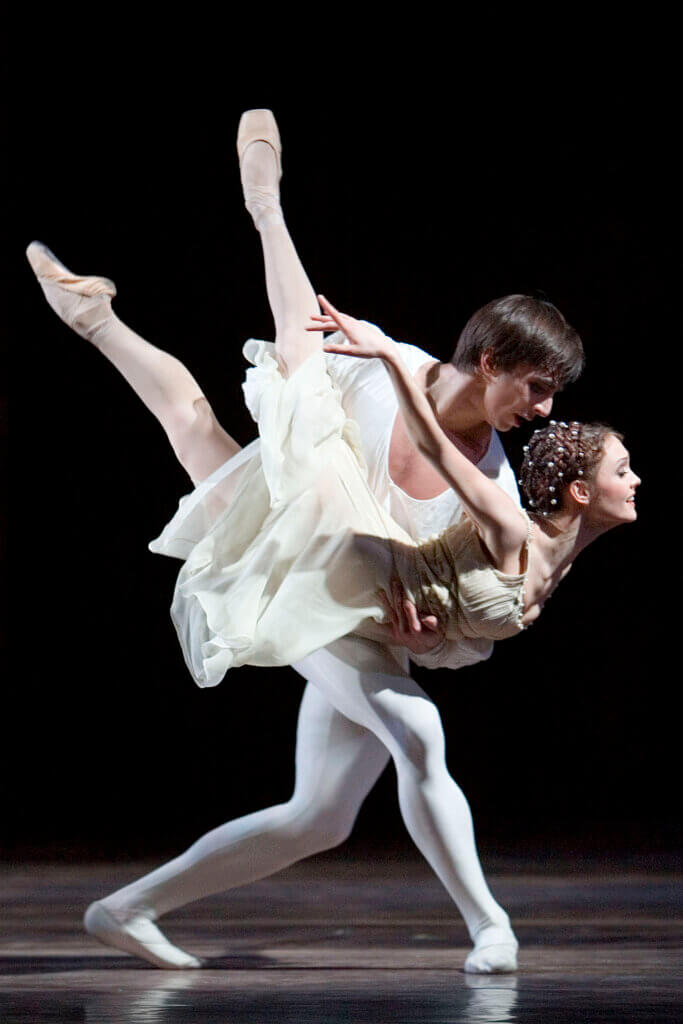
Much like Disney movies, classical ballet features death as a plot point countless times. The obvious ballet that first comes to mind is Romeo and Juliet. (I mean, it’s not shocking that they don’t escape from the ballet alive, either.) However, there are several other notable deaths in ballet. The love interest of Swan Lake, Siegfried, dies and tragically does not end up with his true love, Odette. Giselle, the titular character of Giselle, dances herself to death out of grief in the first act after finding out that her love is betrothed to another. We then spend the second act with the Wilis, the ghosts of women who were betrayed by their lovers- it is beautiful in a way that only Romantic ballets can be, but also pretty badass.

I don’t think that I can discuss death in classical ballet without looking at La Bayadère, though. Nikiya, the temple girl (a Bayadère), dies after being bitten by a snake and refusing the antidote if she cannot marry her love. In the second act, Solor (her love) is haunted by her ghost and many others. In the third act, everyone dies and Nikiya and Solor are reunited in death. If there was a one-word tagline for La Bayadère, it would be “death”.

Death in Contemporary Ballet
Death in ballet is not limited to classical ballet, either- we see it in all sorts of contemporary ballets, as well. Though I’ve not been lucky enough to see it myself, I think that Fall River Legend has to be one of the most notable contemporary ballets with the theme of death. Famed American choreographer Agnes de Mille created a ballet entirely about Lizzie Borden, who may or may not have hacked her family to pieces. And de Mille doesn’t shy away from controversy- she gives Borden a guilty verdict.

Another of my favourite contemporary ballets that features death is The Handmaid’s Tale, created by Lila York. The ballet was actually first performed in 2012, long before Hulu’s tv show premiered. And it starts with a dead body swinging from the rafters on stage, pure Gileadean style. As one might imagine, nearly every character is terrified of being murdered, and you really can’t escape death. (Sidenote: it isn’t quite as grim as the show- it ends on a more hopeful note than any episode has!)

Death From Ballet
And what would a discussion of death and ballet be without touching on the dancers who died from ballet? Yes, you are reading that correctly. In the mid-nineteenth century, at the height of Romantic ballet, dancers wore skirts made of several layers of gauze. As you might imagine, gauze is a very flammable material. Obviously, they didn’t have electric lighting, so it was open flame lighting in the wings. And sadly, more than one dancer’s skirts caught on fire while waiting in the wings, and it usually did not end well. The most well-known dancer to die by fire on stage was Emma Livry, in 1862. She ran around the stage, covered in flames, and the firemen were able to save her, but she died 8 months after the accident of blood poisoning. I can only imagine the ghosts in theatres where dancers have died by fire… (Let me know if you know of one!)
Death in ballet- did you know that ballet has a macabre side to it?
Cheers,
The Historian
Facebook | Twitter | Instagram | Pinterest | Bloglovin’