Hans Holbein is intimately connected with the English royal family. Most people’s mental image of Henry VIII is Holbein’s portrait. And I think the same is true for many other historical figures from Henry’s court. (Incorrect as it may be, in my mind, Holbein just lived at Hampton Court Palace to paint Henry whenever he wanted…) However, there is a Georgian Holbein connection, as well. Kensington Palace is known for its modern royals (and usually their fashion), but there is quite an impressive art collection. And if you are lucky enough to spot it, there is some hidden Holbein at Kensington Palace!
Who Was Hans Holbein?
In case you aren’t overly familiar with Tudor era painters, or were lost during Haus of Holbein in Six, I thought I would quickly introduce Holbein himself. Known fully as Hans Holbein the Younger, he was born in roughly 1497 in Augsburg (Bavaria) and was the son of a painter. Both Hans and his brother trained under their father as journeyman painters. He first came to international prominence in 1523 when he painted a portrait of the scholar Desiderius Erasmus. (Erasmus sent copies of the portrait to friends across Europe.) Ersamus recommended Holbein to SIr Thomas More, friend and Chancellor to Henry VIII, and the rest was history. Holbein stayed from 1526 to 1528, and then returned home. He decided to go back to England in 1532, and arrived in a very different England than the one he left. He painted several portraits of Anne Boleyn and her friends, but none survive after she was purged from the historical record.
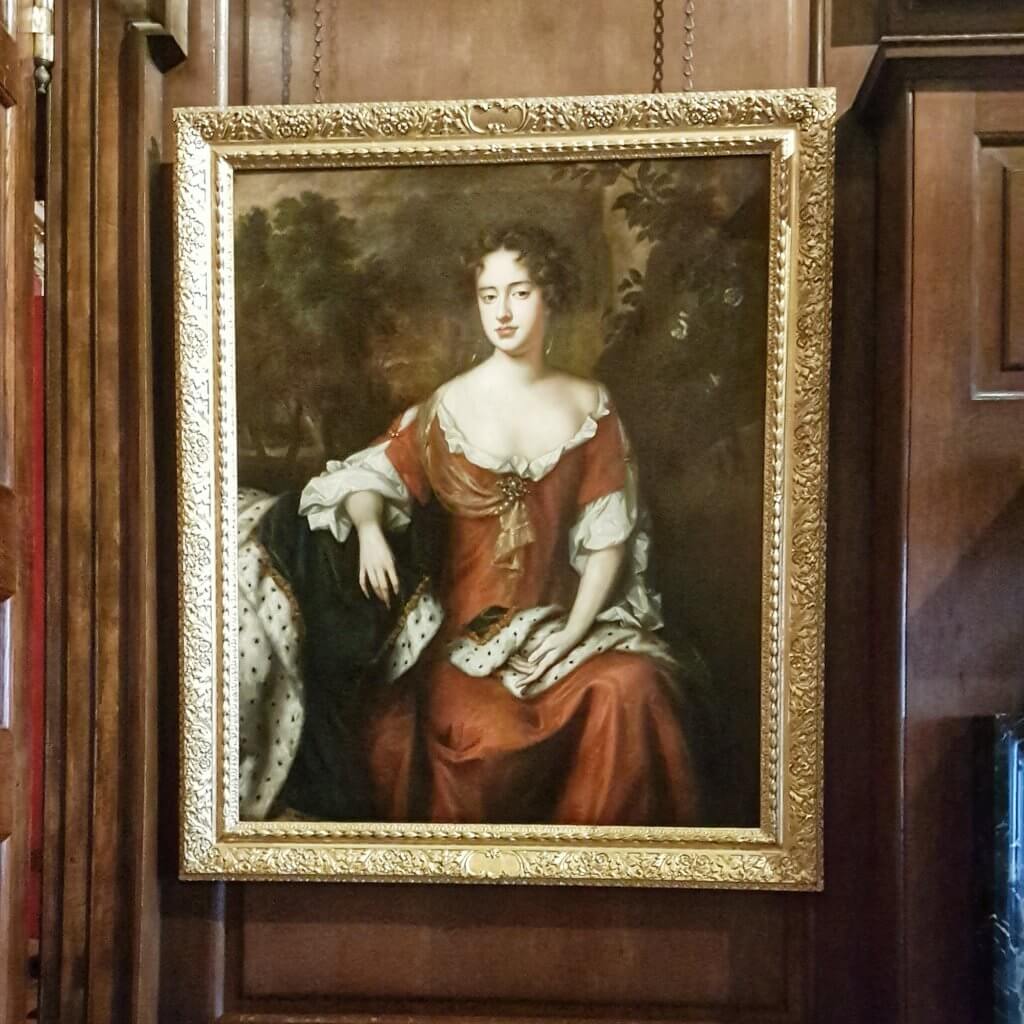
Looking for more royal portraits at Kensington? Visit my post here!
Why Are These at Kensington Palace?
Queen Caroline of Ansbach, Queen Consort to George II, was an interesting woman. Often known for feuding with her son Frederick, she was a dedicated supporter of academics and the arts. She collected jewellery, paintings, and sculptures, and commissioned countless pieces from leading European artists. She spent a lot of her time at Kensington Palace, and the Queen’s Gallery was put to good use. And of all the things to discover, Caroline discovered these Holbein sketches in a drawer at Kensington, that had been forgotten since William III’s reign. (Along with some Leonardo da Vinci sketches- what must that be like!) These sketches are in the Royal Collection, but the Royal Collection Trust very kindly lent them to Historic Royal Palaces.

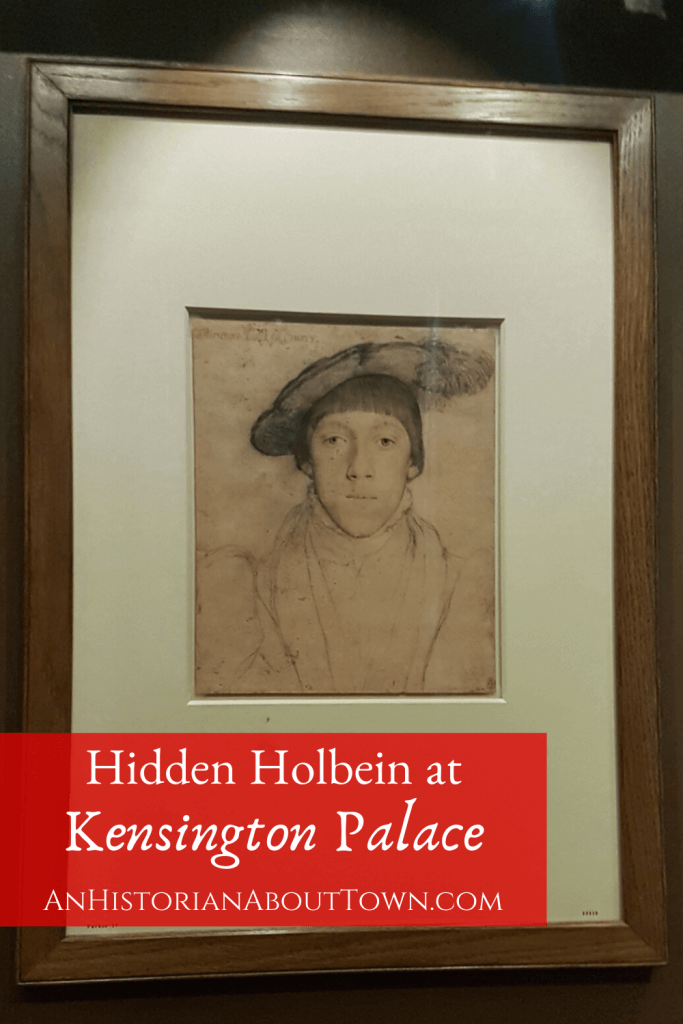
Holbein Sketch- Henry Howard, Earl of Surrey
So this directing and somewhat daunting fellow is Henry Howard, Earl of Surrey. He was born in 1516/17 and died in 1547. (Howard was related to THE Howard family, connected to both Anne Boleyn and Katherine Howard, and those connections would play a large part in his downfall. He spent his childhood as a companion to Henry Fitzroy, the king’s illegitimate son. (Thankfully he did survive Fitzroy, who died at 17.) However, he is also known as the poet who introduced blank verse to England. If you know your English Reformation history, you may known him for working under his father to suppress the Pilgrimage of Grace in the mid-1530s.
This is a somewhat unique Holbein sketch of Howard and portrait in general, in that he is facing directly forward. The Royal Collection Trust dates it to 1532-3, meaning that he was in his late teens when it was completed. Holbein worked with both black and coloured chalks to create this, as well as ink. (And that label in the upper left corner? That was added in the eighteenth century.) There are several completed portraits of Surrey, but this Holbein sketch feels quite different. (I actually find that it feels quite different from completed Holbein portraits.)
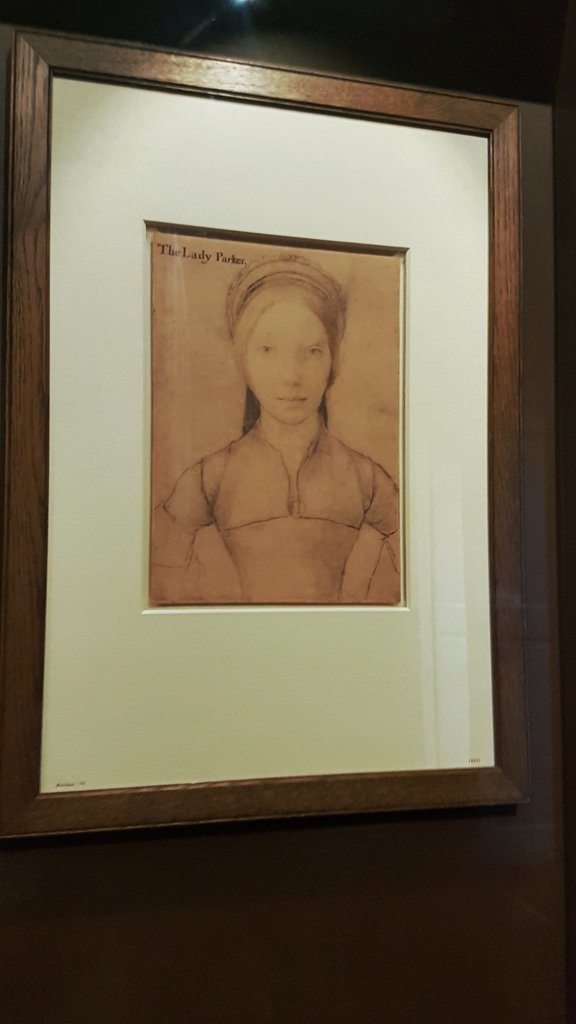
Holbein Sketch- Grace, Lady Parker
Grace, Lady Parker is an interesting woman that I didn’t know anything about before researching this post! Grace was the daughter of Sir John Newport, and married Sir Henry Parker at the ripe old age of eight. Yes, 8. (Don’t worry, marriages weren’t consummated until both parties were at least adolescents.) It is thought that she was one of Jane Seymour’s Ladies in Waiting, and that she attended Prince Edward’s christening in 1537. She also attended the Queen’s funeral shortly afterwards. (A fairly well-connected lady, if you ask me.)
This sketch is in the same style as the Howard sketch. She is shown directly facing the viewer, and it is done in chalks and ink. She is shown wearing the French hood style that was popular in Anne Boleyn’s reign, which is interesting given that this dates to 1540-43 (long after her execution). Unfortunately, there is not a corresponding portrait to this sketch, or a portrait from any other artist. I find that women (other than the queens) were particularly “lost” from Henry VIII’s reign, and it is a true shame.
Looking to read more about Tudor women? Find my post on Henry VIII’s queens here!
Have you spotted the hidden Holbein at Kensington Palace?
Cheers,
The Historian
Facebook | Twitter | Instagram | Pinterest | Bloglovin’