With it being Women’s History Month, I obviously have to take this opportunity to share books written by female authors. I have made it a personal reading goal of mine for 80% or more of the books I read to be written by women, and as a result, I have discovered some fantastic authors. For this book list, I wanted to focus specifically on non-fiction books, as the majority of non-fiction books are still authored by men when there are female historians doing incredible work. These are five must-read history books written by women!

5 Must-Read History Books Written By Women
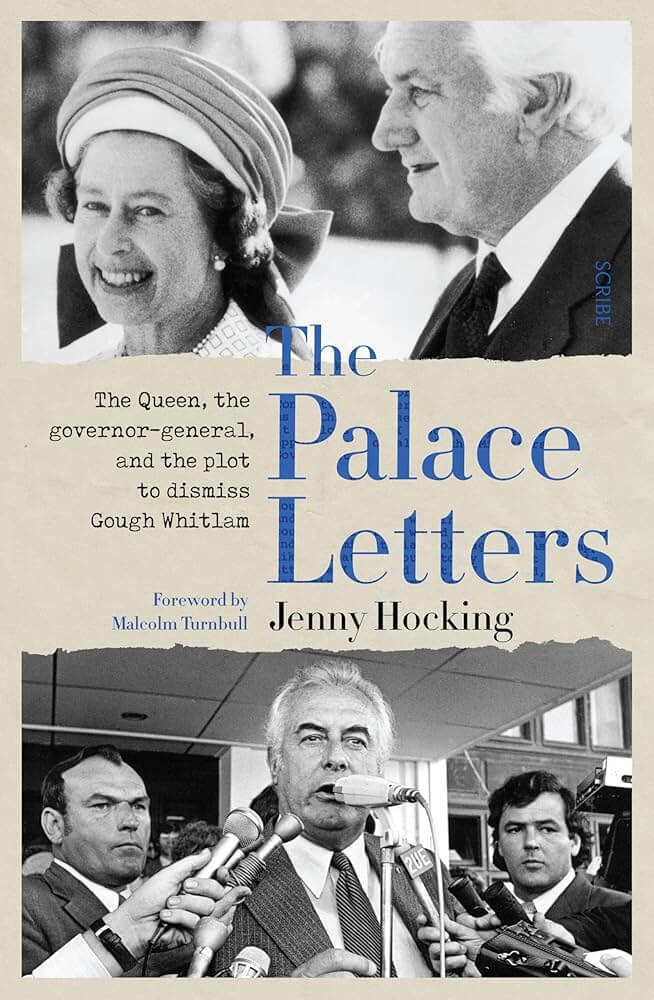
The Palace Letters: The Queen, the Governor-General, and the Plot to Dismiss Gough Whitlam, Jenny Hocking
Under the cover of being designated as private correspondence, the letters between the queen and the governor-general about the dismissal have been locked away for decades in the National Archives of Australia, and embargoed by the queen potentially forever. This ruse has furthered the fiction that the queen and the Palace had no warning of or role in Kerr’s actions.
In the face of this, Professor Jenny Hocking embarked on a four-year legal battle to force the Archives to release the letters. In 2015, she mounted a crowd-funded campaign, securing a stellar pro bono team that took her case all the way to the High Court of Australia.
Now, drawing on never-before-published material from Kerr’s archives and her submissions to the court, Hocking traces the collusion and deception behind the dismissal, and charts the private role of High Court judges, the queen’s private secretary, and the leader of the opposition, Malcolm Fraser, in Kerr’s actions, and the prior knowledge of the queen and Prince Charles.
Hocking also reveals the obstruction, intrigue, and duplicity she faced, raising disturbing questions about the role of the National Archives in preventing access to its own historical material and in enforcing royal secrecy over its documents.
Why You Should Read This….
The surprise removal of Australian Prime Minister Gough Whitlam is not that well-known outside of Australia but it is a fascinating situation. Jenny Hocking pursued this story that was largely hidden by the government, and The Palace Letters covers both Whitlam’s dismissal and her work to uncover the truth. If you are at all interested in modern royal history, this is absolutely a must-read.

The Weaker Vessel, Antonia Fraser
Just how weak were the women of the Civil War era? What could they expect beyond marriage and childbirth in an age where infant and maternal mortality was frequent and contraception unknown? Did anyone marry for love? Could a woman divorce? What rights had the unmarried? What expectations the widows? An expert on the period, Antonia Fraser brings to life the many and various women she has encountered in her considerable research: governesses, milkmaids, fishwives, nuns, defenders of castles, courtesans, countesses, witches and widows.
Why You Should Read This….
I will say, I love all of Antonia Fraser’s books. Her Mary, Queen of Scots and Marie Antoinette biographies are brilliant and I still regularly recommend both. However, I wanted to recommend one of her books that gets less publicity. The Weaker Vessel is rather a general history of women in the seventeenth century and covers all aspects of life for women. That might sound like it would be dry but it is one of the most entertaining histories I’ve read!
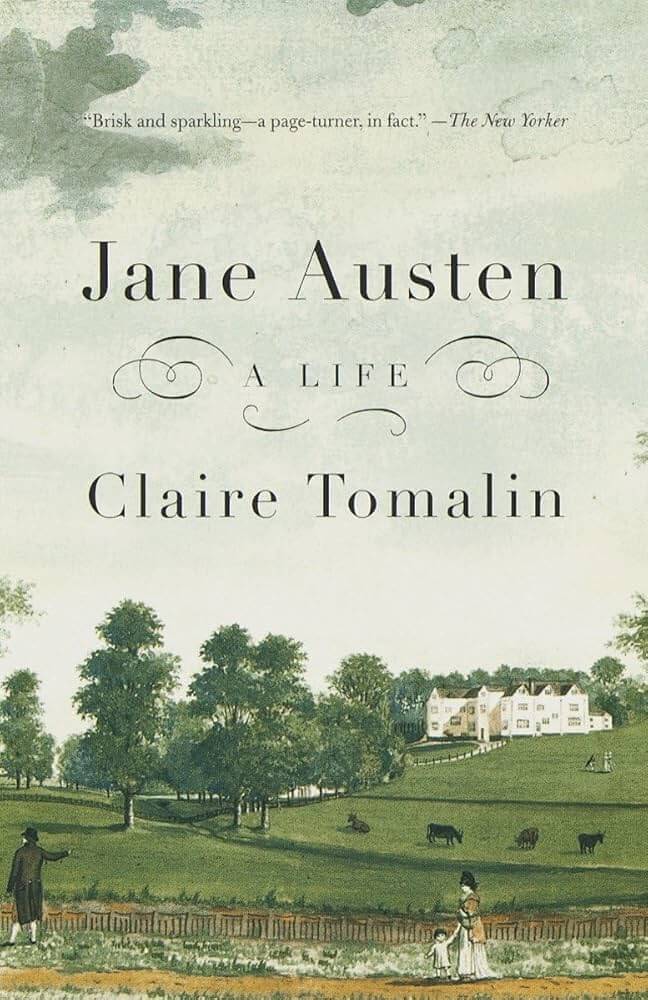
Jane Austen: A Life, Claire Tomalin
At her death in 1817, Jane Austen left the world six of the most beloved novels written in English–but her shortsighted family destroyed the bulk of her letters; and if she kept any diaries, they did not survive her. Now acclaimed biographer Claire Tomalin, author of A Life of My Own, has filled the gaps in the record, creating a remarkably fresh and convincing portrait of the woman and the writer.
While most Austen biographers have accepted the assertion of Jane’s brother Henry that My dear Sister’s life was not a life of events, Tomalin shows that, on the contrary, Austen’s brief life was fraught with upheaval. Tomalin provides detailed and absorbing accounts of Austen’s ill-fated love for a young Irishman, her frequent travels and extended visits to London, her close friendship with a worldly cousin whose French husband met his death on the guillotine, her brothers’ naval service in the Napoleonic wars and in the colonies, and thus shatters the myth of Jane Austen as a sheltered and homebound spinster whose knowledge of the world was limited to the view from a Hampshire village.
Why You Should Read This….
I, like many people, am still fascinated by Jane Austen’s life and works. And I will read almost anything written about her life. Tomalin’s biography truly stands out in the wide number that I’ve read. She may seem like she led a quiet life in Regency England where she wrote her novels and spent time with family. However, her life was much more than that and Jane Austen: A Life takes you through all of the highs and all of the lows.
The Scandal of the Century, Lisa Hilton
In 1682, a young woman in the throes of a passionate affair flees her parents’ home in Surrey to seek a new life in London. A scandal in its own right, but this is no ordinary young woman: Lady Henrietta Berkeley is the daughter of one of England’s most powerful men, and her lover is her own sister’s husband. As news of this notorious adulteress spreads, her flight, capture and the lawsuit that follow tear through society as the scandal of the century.
To Aphra Behn, England’s first professional female writer – herself condemned as a scarlet woman of loose morals – Henrietta’s trial would be more than a source of shock and intrigue: it would inspire her to write Love Letters Between a Nobleman and His Sister, an outrageous and bestselling political fiction and arguably the first novel in English literature.
Aphra herself is an enigma, the facts about her life continually disputed. By revealing the story of these two rebellious and ruthless women, Lisa Hilton’s new history offers a surprisingly original theory on the origins of one of England’s most celebrated playwrights. Against the backdrop of seventeenth-century England, with its strict traditional conventions of love, duty and identity, The Scandal of the Century shows just how far both women will go to break free.
Why You Should Read This….
Aphra Behn, seventeenth century playwright and potential spy- she’s got one hell of a catchline for a biography. Hilton’s biography digs into Behn’s life and career(s) and weeds through a ridiculous number of sources and layers to get to the heart of her story. I will say, I was not 100% convinced by every single argument (though there were only a few instances) but it is still a great read on an incredibly talented woman.
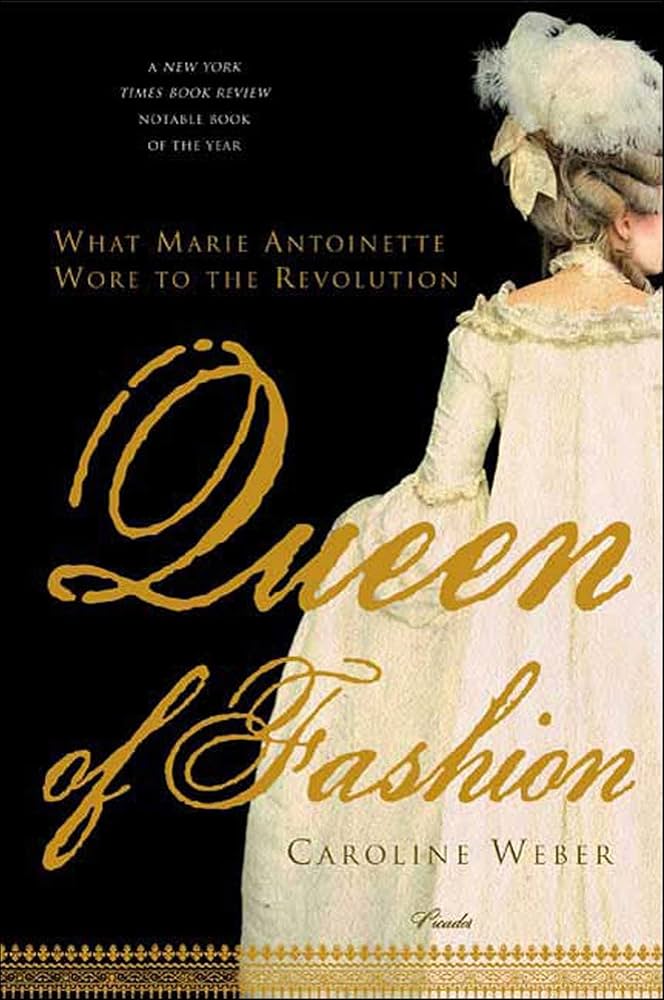
Queen of Fashion: What Marie Antoinette Wore to the Revolution, Caroline Weber
Marie Antoinette has always stood as an icon of supreme style, but surprisingly none of her biographers have paid sustained attention to her clothes. In Queen of Fashion, Caroline Weber shows how Marie Antoinette developed her reputation for fashionable excess, and explains through lively, illuminating new research the political controversies that her clothing provoked. Weber surveys Marie Antoinette’s “Revolution in Dress,” covering each phase of the queen’s tumultuous life, beginning with the young girl, struggling to survive Versailles’s rigid traditions of royal glamour (twelve-foot-wide hoopskirts, whalebone corsets that crushed her organs). As queen, Marie Antoinette used stunning, often extreme costumes to project an image of power and wage war against her enemies. Gradually, however, she began to lose her hold on the French when she started to adopt “unqueenly” outfits (the provocative chemise) that, surprisingly, would be adopted by the revolutionaries who executed her.
Weber’s queen is sublime, human, and surprising: a sometimes courageous monarch unwilling to allow others to determine her destiny. The paradox of her tragic story, according to Weber, is that fashion–the vehicle she used to secure her triumphs–was also the means of her undoing. Weber’s book is not only a stylish and original addition to Marie Antoinette scholarship, but also a moving, revelatory reinterpretation of one of history’s most controversial figures.
Why You Should Read This….
Weber’s book is my favourite example to point to when people ask why fashion history matters or say that it is shallow. Fashion matters and plays a role in politics, economics, society, and more. Marie Antoinette’s relationship with fashion is quite possibly one of the most complex examples in history, and Weber does an incredible job of taking us through it. Not only is this an intelligent book, it is a book you won’t be able to put down!
What are your favourite history books written by women?
Cheers,
The Historian
Facebook | Twitter | Instagram | Pinterest | Threads