Every month I feature a different royal consort. So many of them have largely been forgotten and their work and accomplishments along with them, and they deserve our attention. However, there is another group of royal-adjacent women who are either mocked, shamed, or ignored by many- mistresses. Given that most royals historically married for political and diplomatic reasons, it makes sense that royals would often seek outside relationships with people that they can choose. (This post is not about moral judgement!) Today, I’m exploring several mistresses from history who led interesting lives. Onto our 5 captivating royal mistresses!
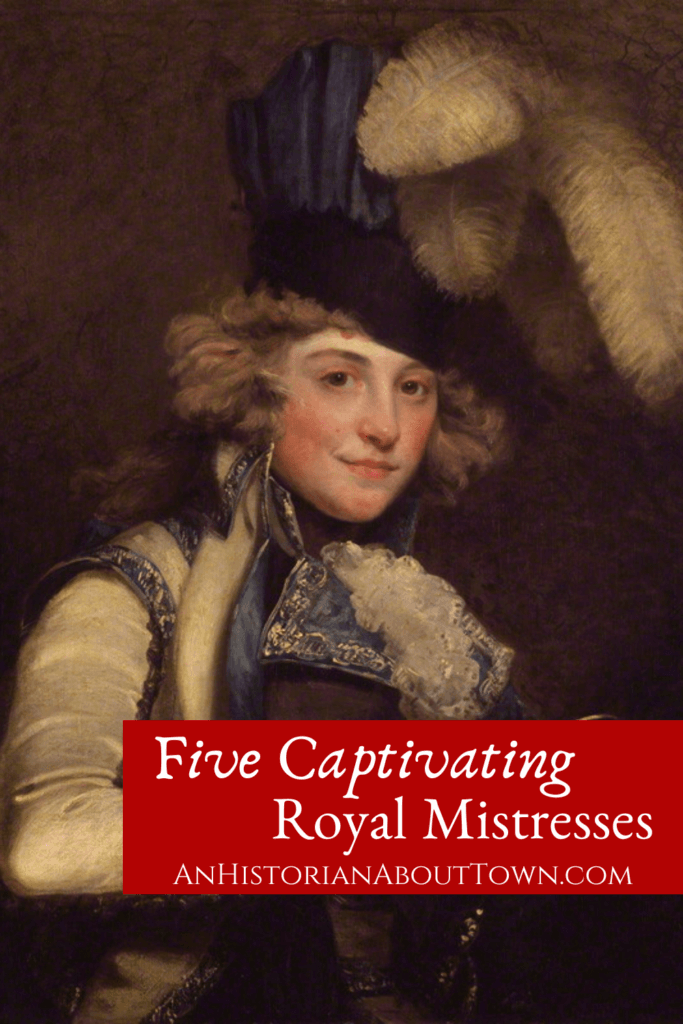
5 Captivating Royal Mistresses
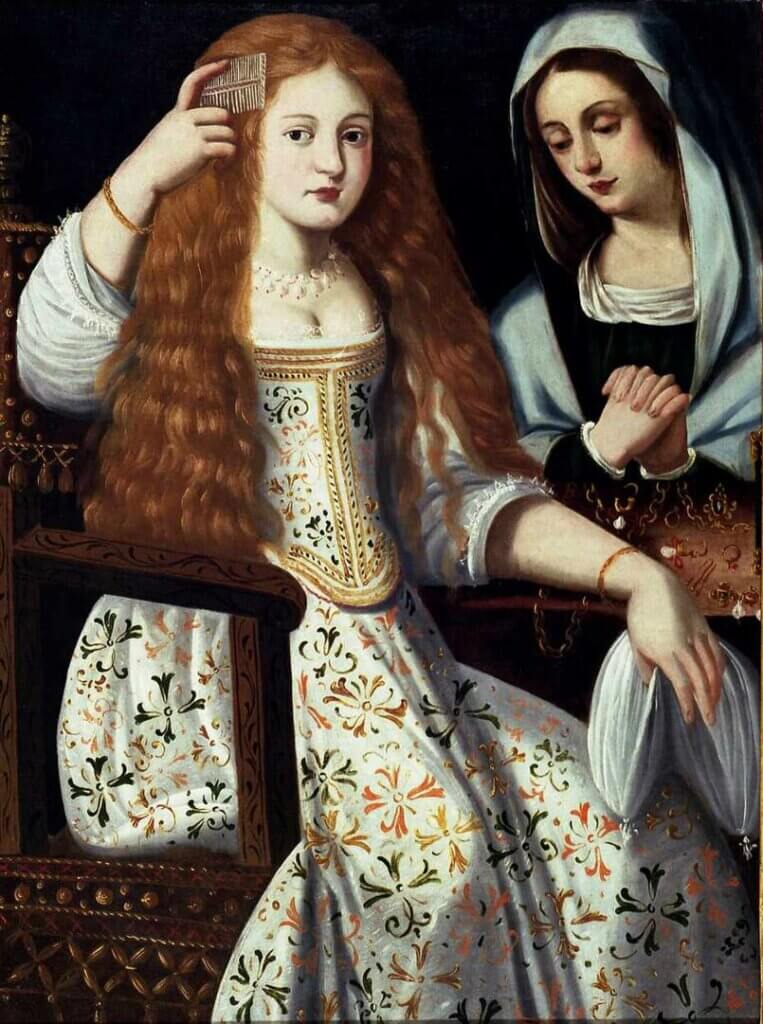
María Inés Calderón (King Philip IV of Spain)
Calderón first caught the young King of Spain’s eye as an actress in Madrid in 1627; the talented actress was widely sought after and was in a relationship with the Duke of Medina de las Torres at the time. However, Philip was so infatuated with her that he not only forced her to break off the relationship, she had to quit acting (despite being considered very talented) and was moved into a palace.
She gave birth to the King’s only recognised illegitimate son, known as John of Austria the Younger, in 1629. However, the relationship immediately soured after. Philip took sole custody of the child and refused to see Calderón. Further to that, she was forced to become a nun in 1643 at the monastery of San Juan Bautista of Valfermoso of the Nuns. While she would become abbess a year later, I cannot imagine that that is the life she originally envisioned for herself.
John, however, was considered fairly successful. His father formally recognised him, and with a strong education and training, he held several political positions, as well as military roles.
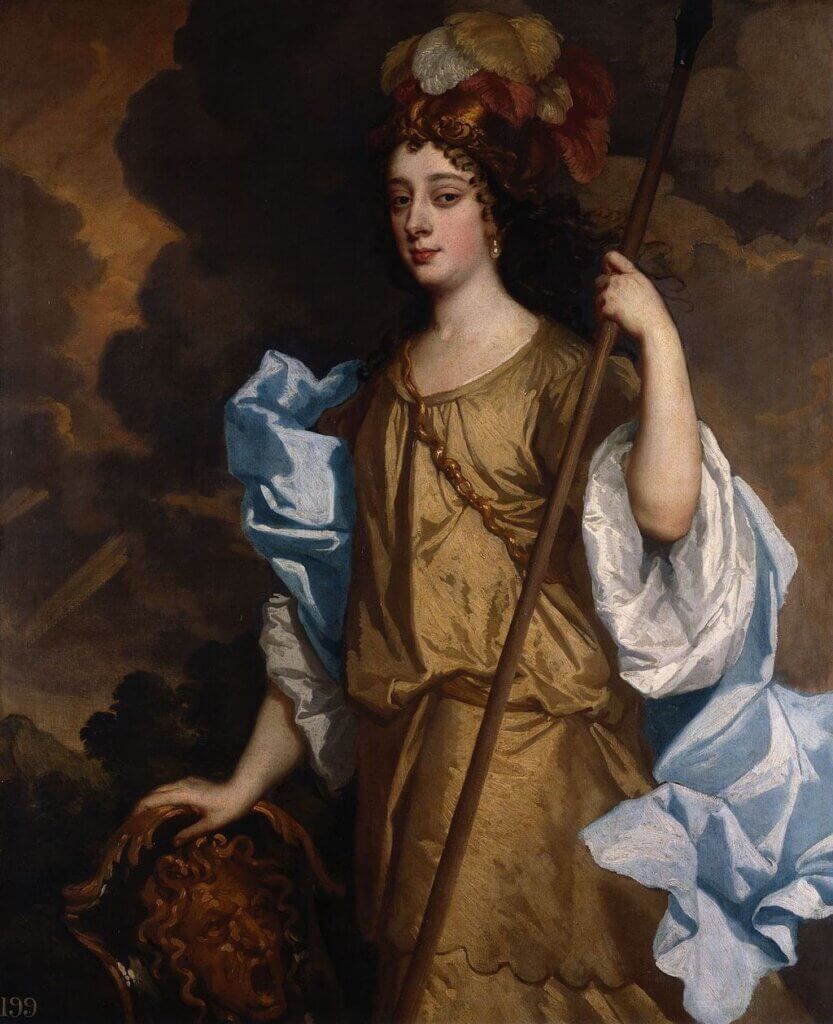
Barbara Palmer (King Charles II of England)
King Charles II is appropriately nicknamed the Merry Monarch, with well over ten documented and publicly accepted mistresses. I knew that I wanted to feature one, and while Nell Gwynn has remained one of my favourite historical figures, I wanted to focus on Barbara Palmer today.
Born as Barbara Villiers, she was born into a Royalist family but her father was killed during the English Civil Wars. While she was considered to be a great beauty, she had no fortune and struggled to find a husband. She eventually married Roger Palmer, a Roman Catholic, in 1659. The new King also happened to return to England in 1659, and the two almost immediately began a relationship.
The couple had five- possibly six- children together and for a period, Barbara was considered the “Uncrowned Queen”. Notably, Palmer did not get along with Queen Catherine (of Braganza) in any way; she gave birth to the King’s child at Hampton Court Palace while Charles and Catherine were there on their honeymoon, if that is any indication. Palmer held political power and influence over Charles and the court, not only romantic, too.
The relationship eventually fizzled out but she did escape with her own title of Duchess of Cleveland. She also has been immortalised in Peter Lely’s painting set, The Windsor Beauties.
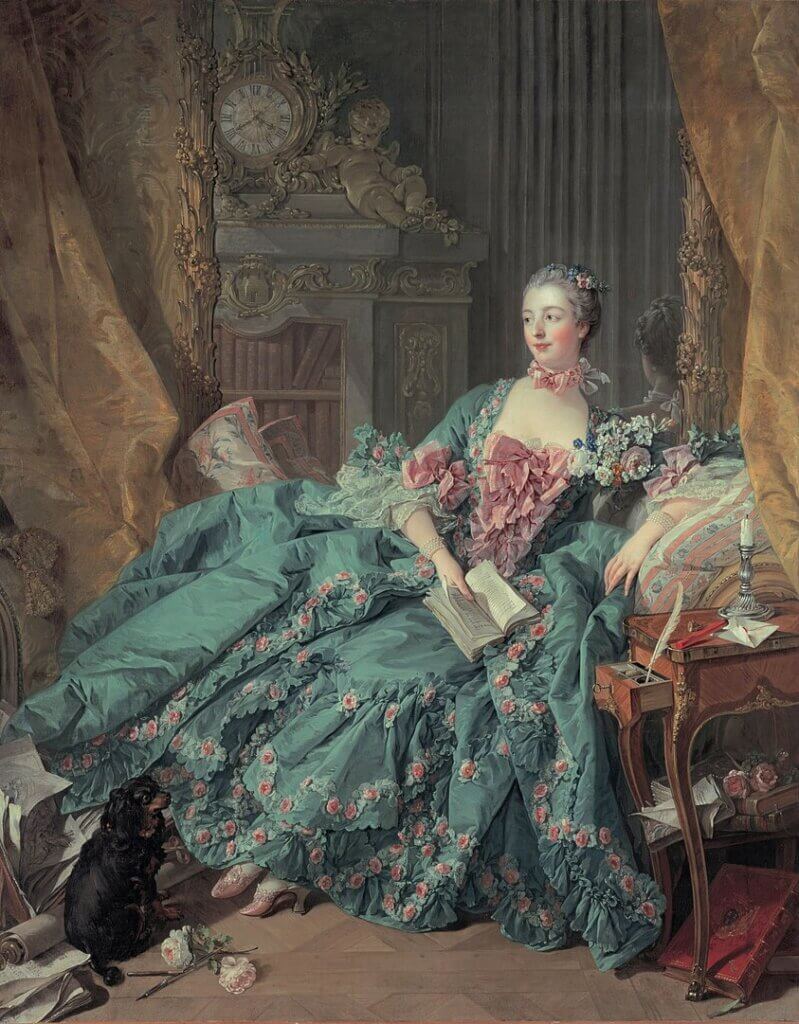
Madame de Pompadour (King Louis XV of France)
Of course we needed to explore the life of at least one French royal mistress, and one with the somewhat official title of maîtresse-en-titre, Madame de Pompadour. Although she was a commoner (Jeanne Antoinette Poisson), she became a trusted friend and advisor to King Louis XV, in addition to being his mistress.
Louis officially introduced her to the court in 1745 as his maîtresse-en-titre. She was given an estate in the country, as well as an apartment above the King’s at Versailles. Poisson used the position to her advantage, securing political and administrative roles for her friends and family (a fairly normal occurrence for a mistress).
Although she only remained King Louis’s official mistress until 1750, she did remain his advisor in a number of matters, including construction at Versailles and elsewhere, and his friend. Madame de Pompadour also remained a well-connected patroness of the arts, supporting many painters, jewellers, sculpturists, architects, and more. Sadly, she died of tuberculosis in 1764 at the age of 42.
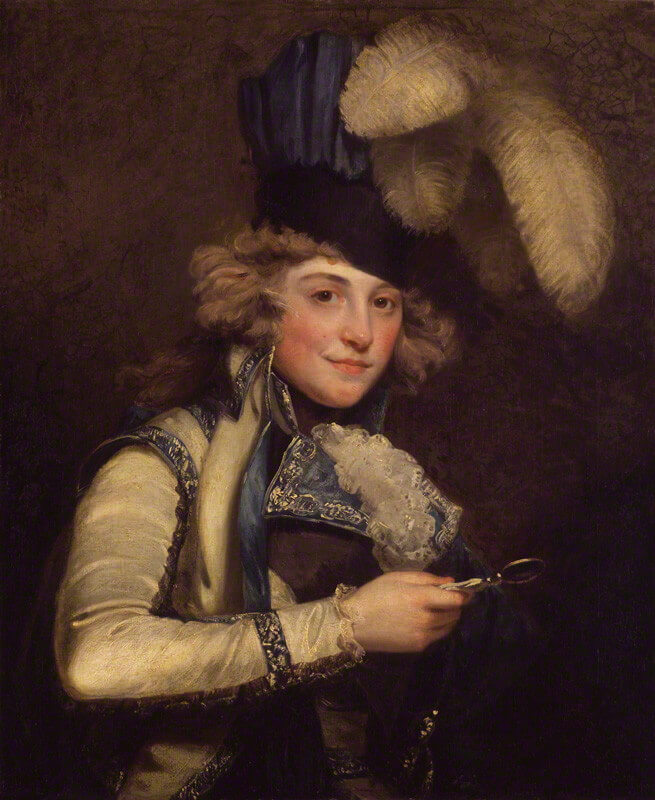
Dorothea Jordan (King William IV of the United Kingdom)
Dorothea Jordan is equally fascinating and heartbreaking for me. Born near Waterford in Ireland, Jordan was a talented actress in Ireland who was forced to leave after having an illegitimate daughter. She moved to England to escape gossip and quickly established herself in Leeds; however, she was once again forced to leave amongst rumours.
Jordan was hired to perform at Drury Lane, one of the most popular theatres in London, and became one of the most beloved comic actresses of the period. By 1790, she had caught the eye of the then-Prince William, Duke of Clarence. She continued to act for some time and had ten of the Duke’s children. They took the surname FitzClarence, Fitz denoting “son of” and used by the British royals for illegitimate children, and Clarence for his dukedom.
Things turned upside down for Jordan in 1811 with the Regency period beginning and William forced to look for a legitimate bride to hopefully have an heir. Jordan was given custody of their daughters and a decent annual stipend on the condition that she not act again. In 1814, she was forced to begin acting once again after one of her sons-in-law found himself heavily in debt. The Duke cut off her stipend and took custody of their daughters, and Jordan’s life never recovered. She eventually ended up moving to France where she died in debt and in poor health.

Mathilde Kschessinska (the future Tsar Nicholas II of Russia)
Tsar Nicholas II and Tsarina Alexandra Feodorovna were devotedly in love, so many people are surprised to know that Nicholas had a mistress. Kschessinska was a Polish-Russian ballet dancer who joined the Imperial Theatre School at eight. She performed for the Imperial family as a child and teen and was praised by Tsar Alexander III. And it was at her graduating performance in 1890 that she caught Nicholas’ eye.
The Tsarevich kept Kschessinska as a mistress from 1890 to 1893. He “kept her”, meaning he paid for her apartment, clothing, jewellery, travel, etc (as one would typically do for a mistress). However, it is believed that he did break off the relationship before he ever proposed to the then-Princess Alix of Hesse.
Interestingly, Kschessinska’s life as a mistress did not end there. She was a mistress to not one but two other Romanov Grand Dukes after, and at the same time. She carried out relationships with both Grand Duke Sergei Mikhailovich and Grand Duke Andrei Vladimirovich. Kschessinska and Andrei would marry in Paris in 1921, and he was legally considered the father of her son.
Are there any royal mistresses that you are interested in?
Cheers,
The Historian
Facebook | Threads | Instagram | Pinterest