Although the world of ballet (and really performing arts everywhere) still has a long way to go in terms of representation and diversity, it has not been that long that women were largely on the outside. Despite much of the artform being created on and for female dancers, women in the industry were on the outside. Even now, there are far fewer female artistic directors and choreographers than there are male. For Women’s History Month, we are going to explore the lives of several different female ballet trailblazers and all of their accomplishments.
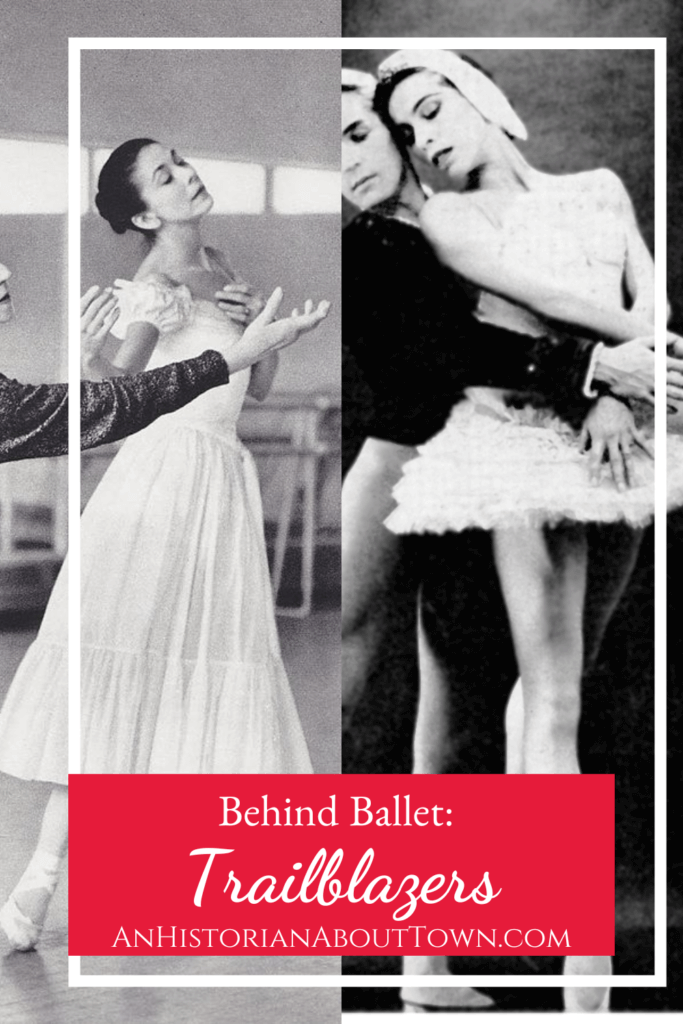
5 Female Ballet Trailblazers

Margot Fonteyn
Fonteyn is still considered one of the greatest modern ballet dancers, and for good reason. Although she did not have the best feet (an issue for a ballet dancer), she was incredibly expressive and captivated audiences around the globe. She spent her entire career dancing at the Royal Ballet and was given the title of prima ballerina assoluta in 1979 as a 60th birthday gift. She went into semi-retirement in 1972 but did continue dancing professionally until 1979, much later than we see dancers working today.
Fonteyn was also a global celebrity and brought ballet into mainstream media and public knowledge. She worked as a model for several designers and was known in the fashion industry.
She was known for several roles created on her, including Odette/Odile in Swan Lake, Ondine in Ondine, and Juliet in Romeo and Juliet. She worked closely with choreographer Sir Frederick Ashton, and later Sir Kenneth MacMillan, and many of these roles are still associated with Fonteyn.
Want more on Margot Fonteyn? See my posts on her life, her career, her costumes, and sources on her!
Raven Wilkinson
Wilkinson was one of the first black female dancers, and unfortunately, she is not remembered in the way that she should be. (Misty Copeland is often cited when you search this question, but she is the first black female principal dancer at the American Ballet Theatre.) In 1955, she signed a contract to dance with the Ballet Russes de Monte Carlo where she danced for six years. After a brief break, she then danced with the Het Nationale Ballet (also known as the Dutch National Ballet) for seven years.
Wilkinson then returned to the US and danced with the New York City Opera from 1974 through 1985; she continued to work with the company as a character performer until 2011.
She was a mentor to Copeland at ABT; Copeland herself has widely spoken on how important the relationship was to her, and how much Wilkinson helped.
Wilkinson was included in the documentary, Black Ballerina, as was Copeland- it follows the careers and lives of six black ballet dancers.
Alicia Markova
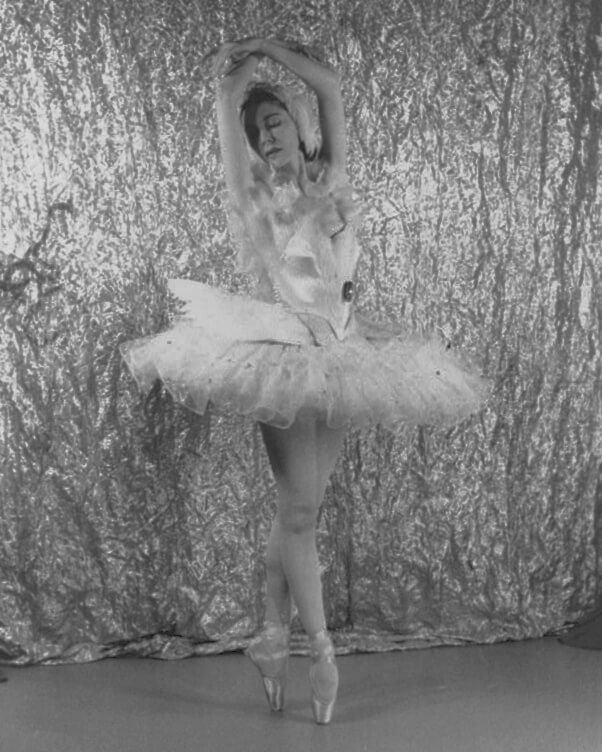
Markova, like Fonteyn, left her mark on British ballet and beyond. A Jewish dancer born Lillian Alicia Marks, she first danced with the Ballet Russes in 1925 at the age of 14. She returned to England in 1929, and was a founding dancer of the Rambert Dance Company. In 1931, she then became a founding dancer of the Vic-Wells Ballet company- the company that would go on to become the Royal Ballet. By 1933, she had been named a principal dancer of the company. In the late 1930s, she also danced with a fledgling company in the US that would become the American Ballet Theatre.
In 1950, Markova then founded the touring company that would become the English National Ballet. Until her death in 2004, she continued to serve in different positions for the Royal Ballet, the English National Ballet, the Royal Academy of Dance, and more. She also continued to coach dancers in her earlier roles for decades.
Markova is also cited as a prima ballerina assoluta but there is no confirmed date.
Maria Tallchief
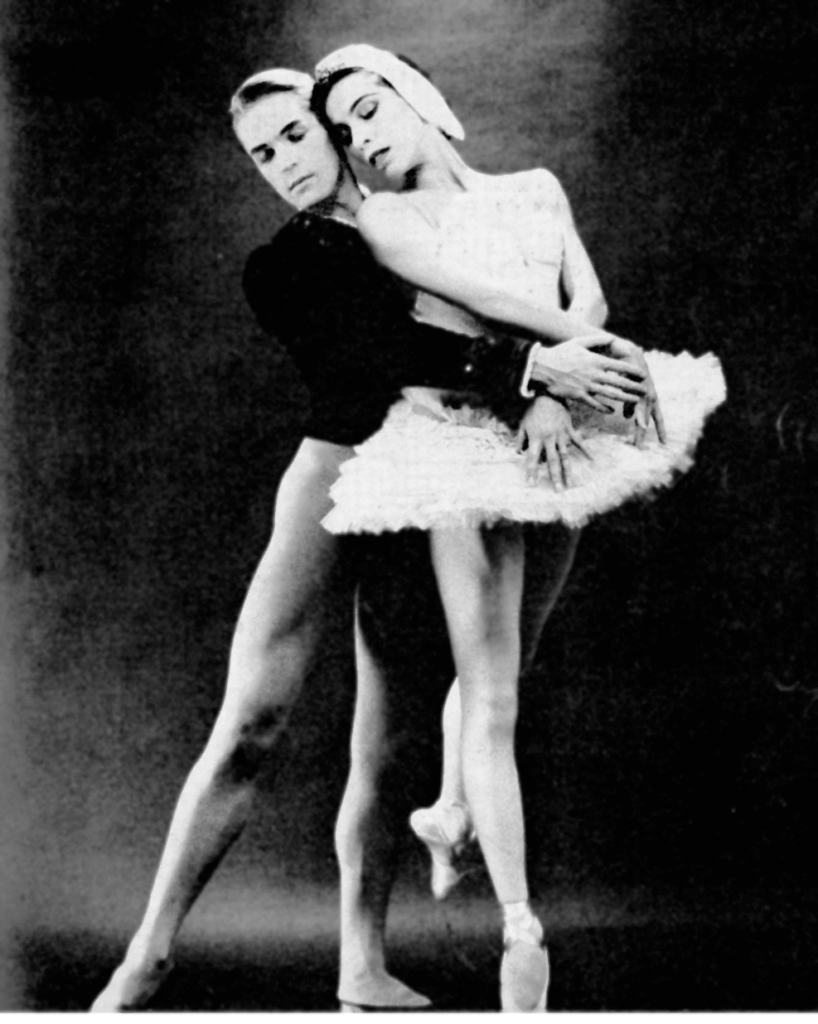
Tallchief was the first American prima ballerina, and the first Indigenous principal dancer. Her father was a member of the Osage tribe. Tallchief was able to start taking ballet lessons at a young age, and by 12, she was studying under Bronislava Nijinska (sister of Vaslav Nijinsky). This Russian training would prove invaluable for her career, and she was able to build up a dedicated work ethic alongside her talent. In 1942, she was chosen to dance for the Ballet Russes de Monte Carlo as she had a passport and could travel for international tours.
Tallchief first began working with the Russian-trained George Balanchine in 1944 when he began creating works for the Ballet Russes. She would play a key role in his new company, the Ballet Society which would go on to be known as the New York City Ballet. Her talent, technique, and physique worked perfectly for his fast, demanding, and strong style of choreography. (She was largely known for her titular role in The Firebird, which Balanchine created for her.)
Notably, Tallchief was married to Balanchine from 1946 to 1952; she was 21 and he was 42 at the time. (He was married four times, all to different dancers.)

Ninette de Valois
Despite her name, de Valois was an Anglo-Irish dancer who moved to England in her childhood and began studying ballet. At the age of 21, she became a principal dancer at the Royal Opera House, and in 1923, she joined Diaghilev’s Ballet Russes. (Yes, his company and its resulting legacy was felt across the entire ballet world.) Although she enjoyed working with Diaghilev and rose to the rank of soloist, she had to stop dancing in 1924 after finding out that she had had polio in her childhood.
In 1927, she established ballet schools in both Dublin and London. The London school had a joint company, the Vic-Wells Ballet. The company would go on to become the Royal Ballet, and de Valois’ work was a crucial piece. In addition to classical Russian works, she commissioned countless British ballets from Frederick Ashton. She also chose dancers such as Fonteyn, Markova, Moira Shearer, and Beryl Grey.
De Valois also helped to establish the Turkish State Ballet in the 1950s, at the request of the Turkish government. (It now exists as the State Opera and Ballet.)
I hope you’ve enjoyed these 5 female ballet trailblazers!
Cheers,
The Historian
Facebook | Twitter | Instagram | Pinterest | Threads


It was nice to see dancers I had not heard about before. In particular Maria Tallchief as ballet is still so white.