We are continuing on with Margot Fonteyn Month here on the blog! Fonteyn was one of the biggest celebrities of the twentieth century, and one of the most legendary dancers in ballet history, but sadly, she seems to be disappearing from public memory rapidly. Last week we looked at her life, focusing on her early years. Today we turn the spotlight onto her career on the stage- the several decades she spent as a ballet dancer. She had one of the lengthiest and most impressive ballet careers in history lasting from 1934 to 1979, and her achievements still stand today. Without further adieu, onto Margot Fonteyn’s career!

If you missed my earlier post, learn more about Margot Fonteyn’s early life!

Fonteyn’s Early Career
Like many a dancer who would come after her, Fonteyn started her career as a snowflake in The Nutcracker at the Vic-Wells Ballet in 1934. In the following year, she had her first solo role as Young Tregannis in Dame Ninette de Valois’ The Haunted Ballroom; Sir Frederick Ashton also began creating roles on her at that time. And 1935 would prove to be a particularly momentous year in her career, as she quickly became a principal dancer in the theatre after Alicia Markova retired.
Fonteyn’s early career flourished largely due in part to her working relationship with Ashton. He used her graceful and emotive quality of movement as inspiration for several different roles, and he remained his favourite dancer to work with for decades. (We don’t tend to see quite as close relationships between dancers and choreographers in the twenty-first century.)

Margot Fonteyn and Robert Helpmann
Fonteyn’s first notable on-stage partnership was with Robert Helpmann. The Australian dancer joined the Vic-Wells Ballet in 1932 and partnered Markova before he danced with Fonteyn. The pair were widely praised in the press for their chemistry while performing, and they would continue to dance together through the late 1950s.
While Sir Frederick Ashton was called up to serve in the Second World War, Helpmann took over many of his duties. And once he returned to Australia, he became co-director of the Australia Ballet in 1965.

Fonteyn at Covent Garden
The Vic-Wells Ballet continued to perform throughout the war for the troops, and the company travelled throughout Europe, including Fonteyn. In 1946, the ballet moved to the Royal Opera House at Covent Garden.
They opened a new Ashton production, a new Sleeping Beauty, with Fonteyn as Aurora. Despite post-war rationing in place, the company was able to create a full set of luxurious costumes and sets. And incredibly- Fonteyn was able to create her role with no dancers to model herself on. (Typically a dancer would learn a new role from the dancer(s) who previously performed it, but Fonteyn was incredible despite a lack of dancers to call on.) And it was Aurora that catapulted Fonteyn’s status as a celebrity- when the company toured the US, she was instantaneously adored as Aurora.
The company received their Royal charter in 1956, and has been known as the Royal Ballet since. Ashton continued to create ballets for the company, and Fonteyn starred in most of them.

Margot Fonteyn and Rudolf Nureyev
You cannot discuss Margot Fonteyn’s career without this. The Fonteyn- Nureyev partnership remains one of the greatest in ballet history. (It’s a theme with Fonteyn…) Nureyev defected from the USSR in 1961 after dancing with the Kirov Ballet. Obviously, it was a fraught situation but he was able to defect while in Paris, and joined the Royal Ballet in 1962.
Many people had assumed by this point in time that Fonteyn was ready for retirement, but it would be the most fruitful period in her career. The pair danced together from 1962 to 1979, and they first performed together in a February 1962 matinee performance of Giselle to raise money for the Royal Academy of Dance (Fonteyn was president at the time.) They quickly became rock stars in the ballet world, and rapturous fans would have them do upwards of 15 curtain calls.
Ashton worked with the couple extensively, and created Marguerite and Armand for the couple. (This is one of my favourite ballets- if you can see it performed live, it is a must-see! And if you can’t find it live, it is available on Marquee TV.) They also worked with notable choreographers like Sir Kenneth Macmillan, and held the title roles in countless classical ballets.
Fonteyn and Nureyev were polar opposites in personality, but danced beautifully together and brought out the best of the other on stage. They also were close friends for the rest of their lives.
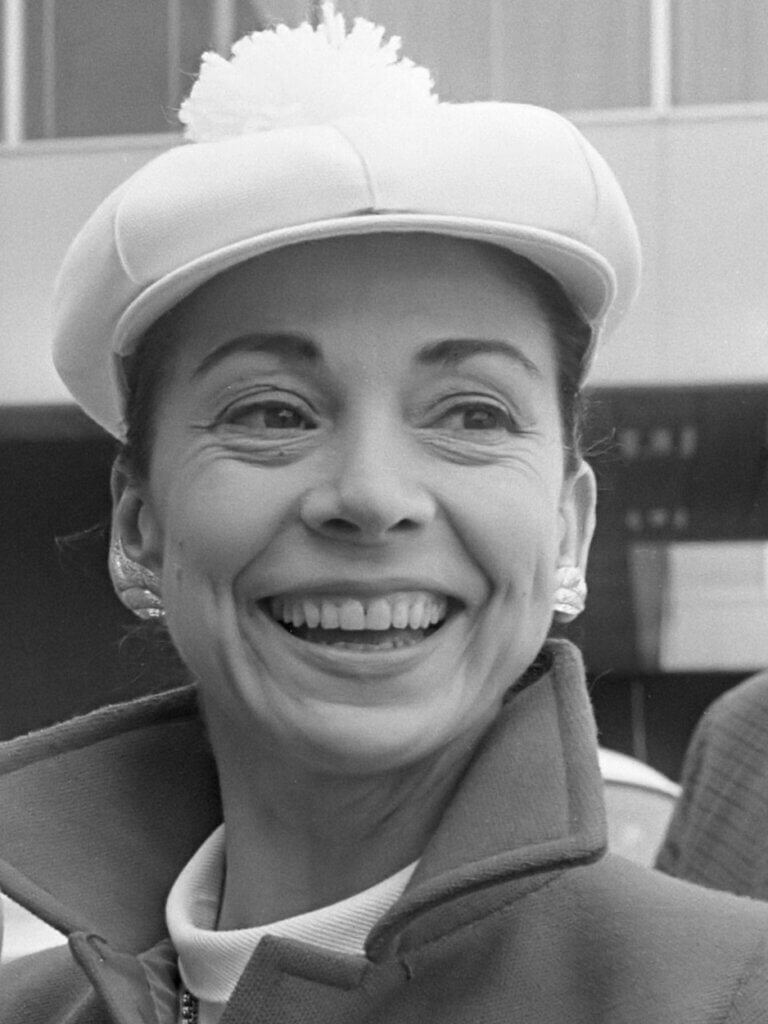
*10 juli 1968
A Lengthy Career on Stage
My next post on Fonteyn’s adult life will delve into the why, but she danced through to 1979. Yes, that means she was dancing until she was 60. She had semi-retired in 1972 and wasn’t dancing full-length ballets, but to dance until 60 is incredible. (And sport science had not advanced to anywhere near where it is today, and even still today most people retire in their mid to late 30s.)
She was widely celebrated by the Royal Ballet, and the ballet world in general. In the ballet world, Fonteyn is still a sort-of shorthand for those incredibly rare dancers who can take your breath away.
Were you familiar with Margot Fonteyn’s career?
Cheers,
The Historian
Facebook | Twitter | Instagram | Pinterest
.jpg)
-crop.jpg)
