We welcome a new series on the blog here for 2025, another culture series! As someone who grew up at the ballet studio and still follows several companies, culture is still a big part of my life. And I like to do what I can to help make culture as accessible as possible for anyone who is interested. Each month, we will be exploring the history of an iconic theatre from around the globe. This month we are beginning with one of the most ornate and well-known (particular thanks to Emily in Paris recently) theatres in Europe. Let’s get into the history of the Palais Garnier in Paris.

The Early History of the Palais Garnier
The Paris Opera (and associated ballet company) had been searching for a permanent home for decades after they moved into a temporary building in 1821. Moves were made to begin work on a new opera house in the mid 1840s but the revolution in 1848 halted that. It was not until the Second Empire was created in 1852 that a concentrated effort began again.
French architect Charles Rohault de Fleury suggested the site in 1860 and then a competition launched to select the building’s architect. Charles Garnier, another French architect, was the successful winner of the second phase of the competition.
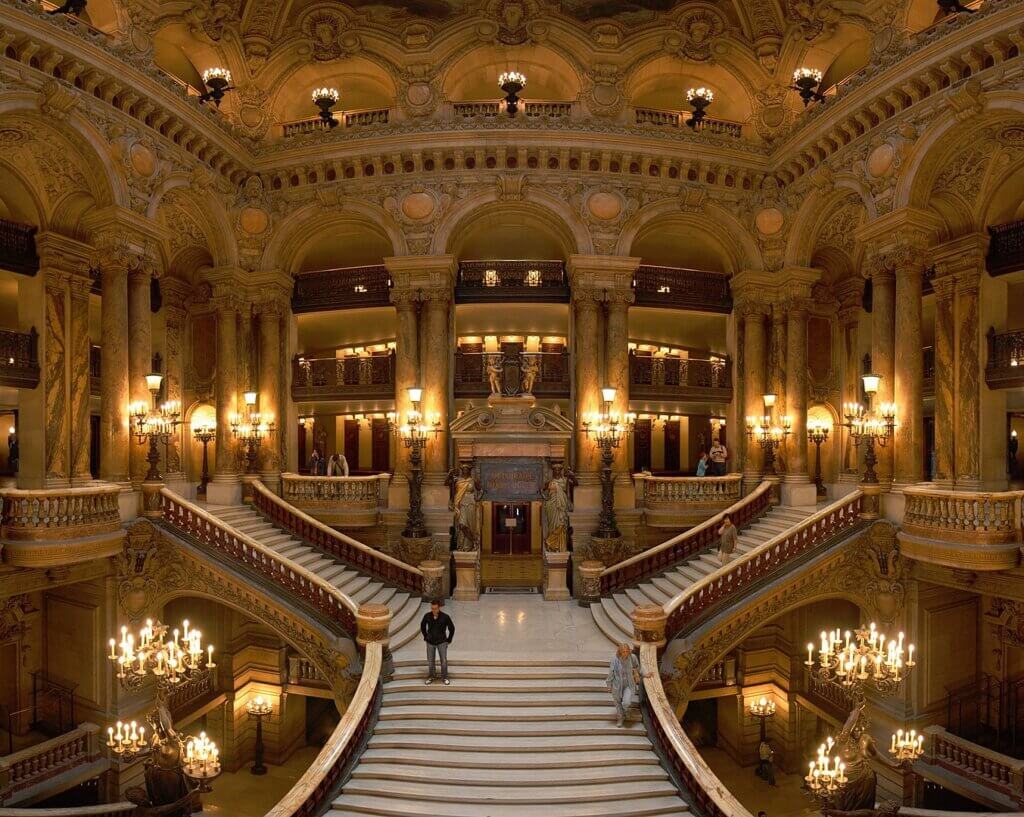
Construction Begins… And Then Stops…
Excavation began in August 1861 and continued through the end of December. Once work on the foundation began, Garnier realised that the groundwater was continuously running in (making it very difficult to build). Several wells and pumps were put in place, but Garnier was forced to adjust his design and create an underground cistern to help with water management. While it was helpful in case of a fire, it also provided the setting/idea of Gaston Leroux’s The Phantom of the Opera.
Construction continued for a decade on and off, at great cost. However, in late 1873, the opera was forced to speed up their building (and increase their cost), as the temporary theatre burned down.
A Fully Operating Theatre
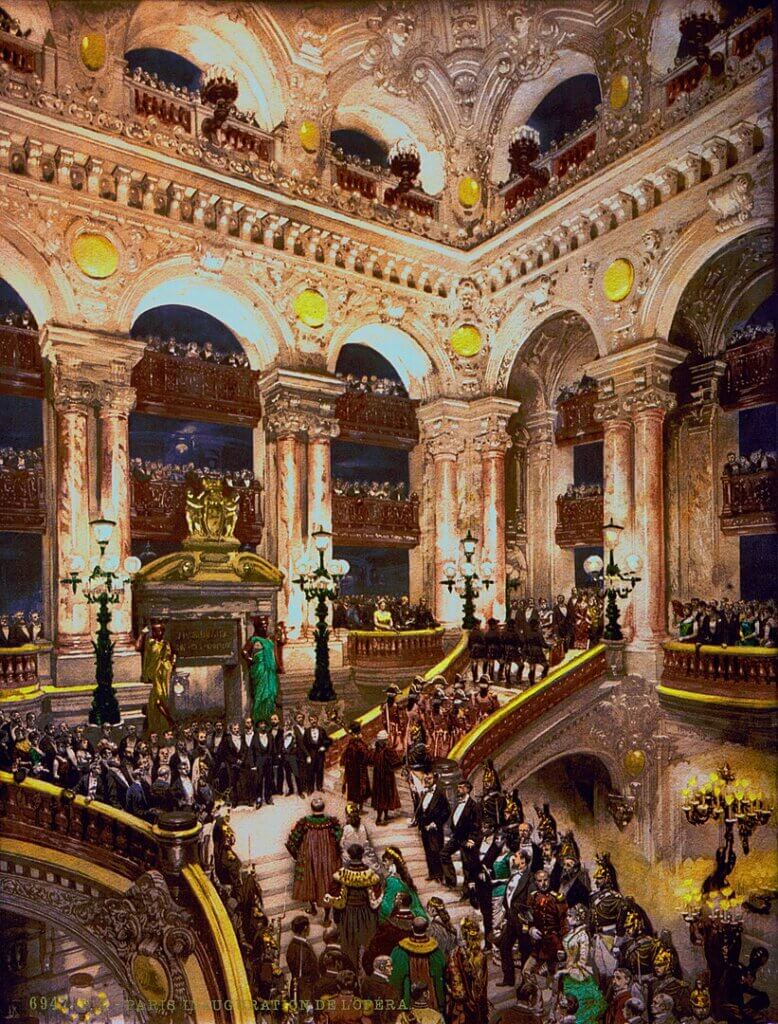
By October of 1874, Garnier was having acoustic tests done in the theatre to ensure that it was ready for opera performances. The Paris Opera Ballet performed for the first time on 12 December. And on 5 January 1875, the new theatre hosted its official inauguration gala with guests like King Alfonso XII of Spain.
The theatre did not stop its evolution there, though. In the early 1880s, electrical lighting was installed. Throughout the twentieth century, continual electrical and system updates went through, including a major restoration project in the 1990s.
While the Paris Opera does not often perform at the Palais Garnier anymore (they are at a larger venue now, the Opéra Bastille), the Paris Opera Ballet still calls the Palais Garnier home.
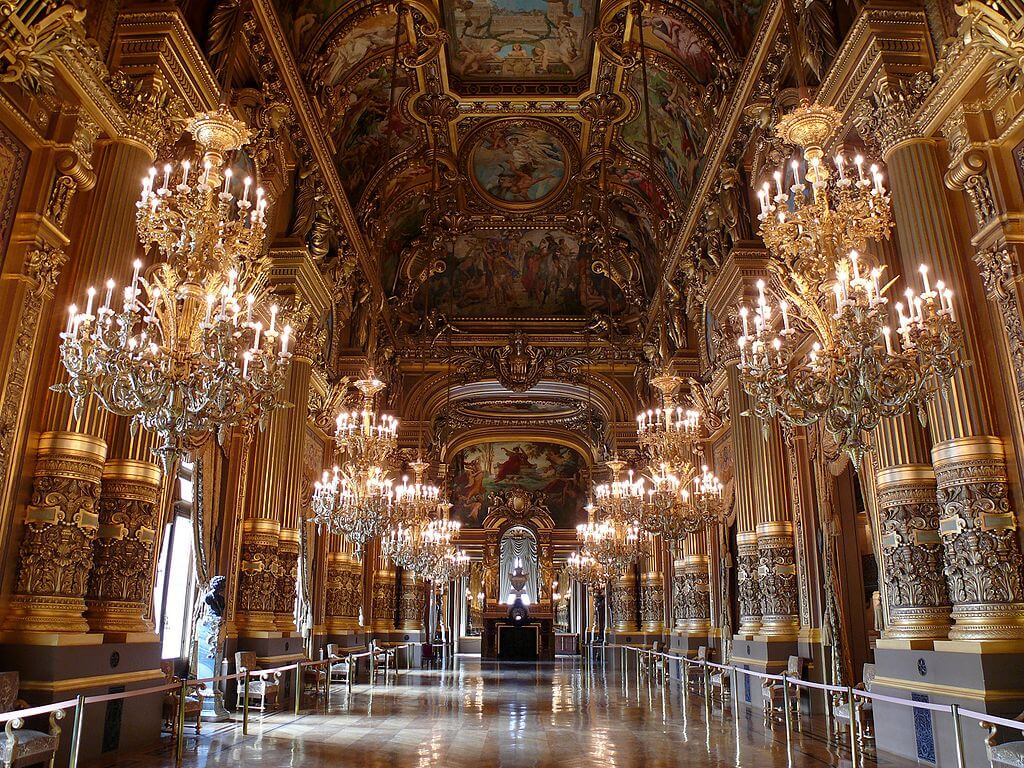
The Palais Garnier in the wild!
Several opera houses around the world were inspired by the Palais Garnier. The Juliusz Słowacki Theatre in Krakow draws on Garnier’s work, as well as the Thomas Jefferson Building in Washington DC.
The theatre has also been featured in several notable television and film projects. Like I said above, Emily in Emily in Paris visits the Palais Garnier to see the Paris Opera Ballet perform Swan Lake. However, parts of The Phantom of the Opera were filmed there, as well as one of my favourite movies, Funny Face.
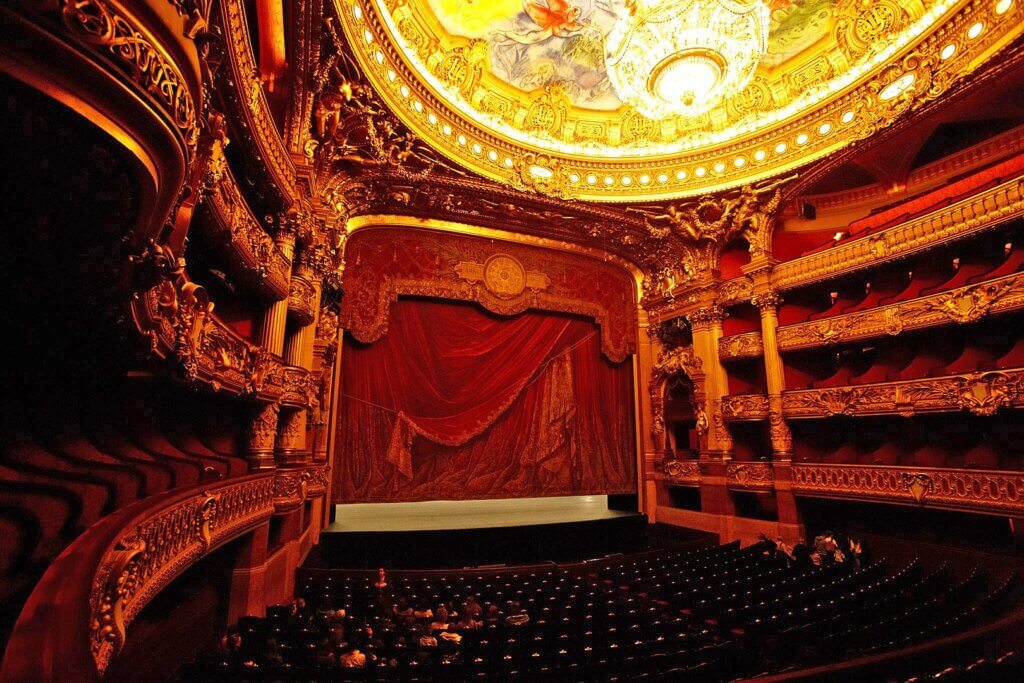
Want to see the Palais Garnier for yourself?
If you are not able to get to Paris but want to see more of the Palais Garnier, you can actually do a virtual tour with Google Arts and Culture. I know, I know- it is different than actually being there. However, I would absolutely say it is 100% better than nothing at all.
You can find the virtual tour (along with exhibitions) here!
Were you familiar with the history of the Palais Garnier in Paris?
Cheers,
The Historian
Facebook | Twitter | Instagram | Pinterest | Threads