Kensington Palace has long been one of my favourite historical sites. The gardens are just gorgeous, and it’s in a wonderful part of London. Sadly it is dismissed as the “girly” or feminine palace, but I think that there is something for everyone there. (If I can power through a LOT of military history at the Tower of London, I think everyone can enjoy some clothing.) The King’s Apartments at Kensington Palace are not a female or a male place, but a historical hub of Georgian court life. I’m going to share some of my highlights of the King’s Apartments and what you should look out for!

What are the King’s Apartments?
The King’s State Apartments are just that- the public rooms that the King would use to see courtiers, host events, and generally hold court. You will often see private spaces where they lived their private lives, separate from the State Apartments. (You can see a really good example of this at Hampton Court Palace.) The rooms progress from larger open rooms to smaller, more private rooms. In theory, the closer you are to the King, the further in the rooms you can go. The King’s Apartments at Kensington Palace has eight rooms. You will find the King’s Staircase, the Presence Chamber, the Privy Chamber, the Cupola Room, the King’s Drawing Room, the Council Chamber, Queen Caroline’s Close, and the King’s Gallery.
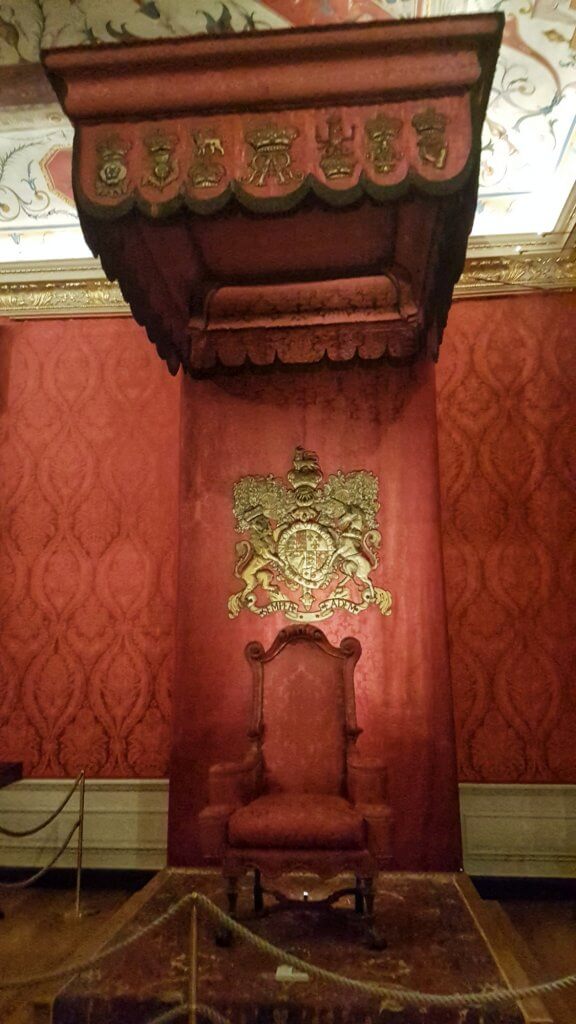
Historic Royal Palaces has staged the King’s Apartments in the Georgian period, during the reign of King George II (and Queen Caroline).

The King’s Staircase
Perhaps it isn’t technically a room, but the King’s Staircase is one of the highlights of Kensington Palace for most visitors. You can see the style of the original plain wood panelling from Sir Christopher Wren’s design in the Queen’s Staircase, but it was replaced by the grand murals you see in 1724. A newcomer to court circles, William Kent offered a much cheaper rate to decorate the King’s Apartments than established court painters, and thus ended up with the job.
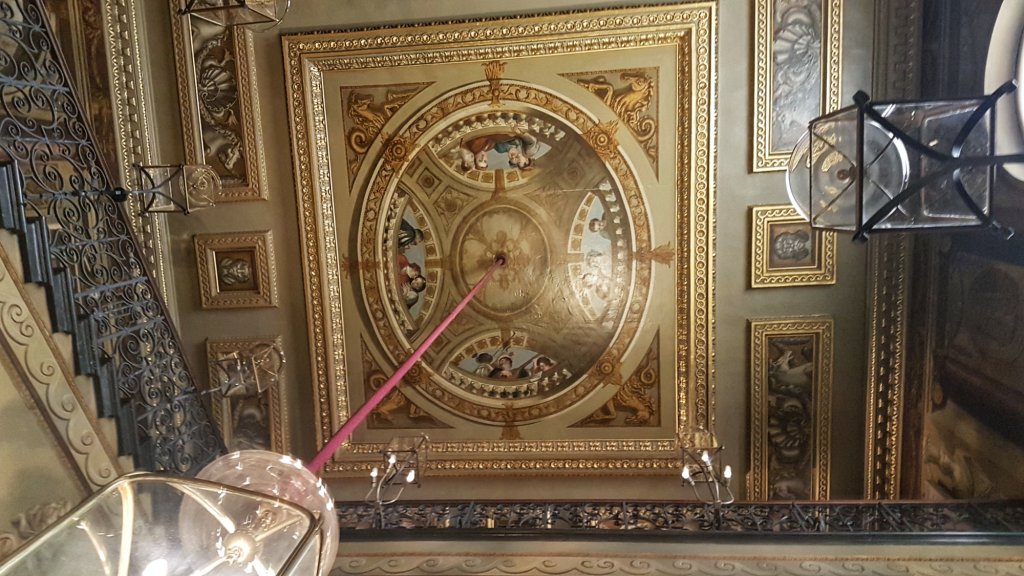
There are over 40 different figures in the mural, and most historians believe that they were all real people in the Georgian court at the time. In her book Courtiers, Lucy Worsley has named and discussed several of them and their lives. (And yes, you can spot Kent himself in the mural…) However, even if you don’t recognise any of the figures, allow yourself a little bit of time to admire the staircase from the bottom and the top! (You will notice different things from different viewpoints.)
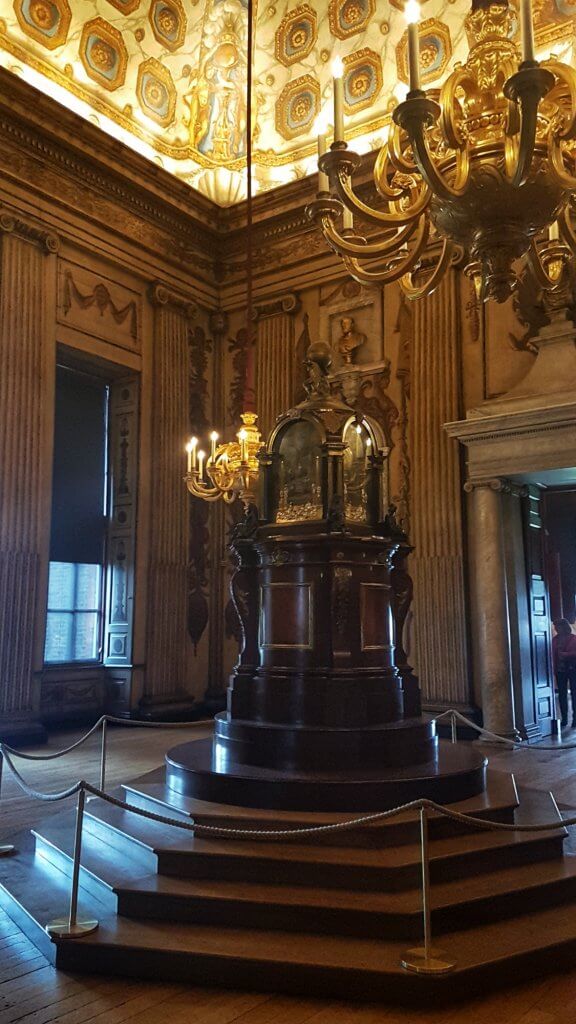
The Cupola Room- Bored at the Baptism
The Cupola Room is one of the most photographed rooms in the King’s Apartments. Also decorated by Kent, it is the “most splendidly-decorated room in the palace… The Cupola Room was the first royal commission of …Kent, the artist and designer who would go on first to decorate the rest of the State Apartments, and then to create a distinctive visual look for the Georgian age. Here, he re-created in paint a baroque Roman palace but with the Star of the Order of the Garter as the ceiling’s centrepiece.” (HRP, 20.) It might take a bit of waiting depending on how busy it is, but make sure you take a few moments to look up and enjoy the ceiling.
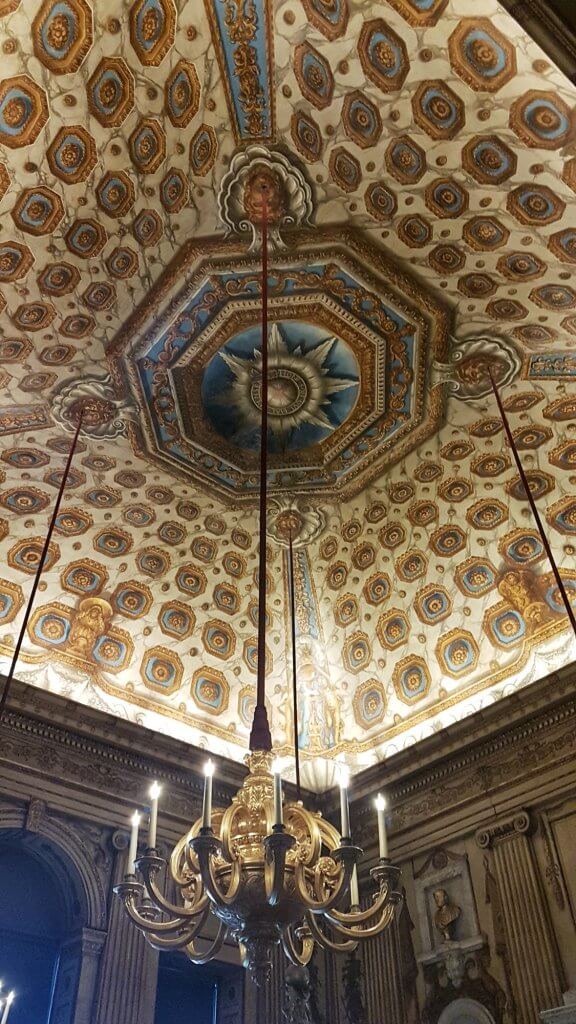
If you know your Victorian history, you will know that this room played a n important role in her life. In 1819, a very young Princess Victoria was christened in the Cupola Room. Her uncle, the then-Prince Regent (future George IV) was not particularly thrilled with the young princess’ arrival. George vetoed several different names until accepting Alexandrina, in honour of the Russian Tsar, and Victoria, in honour of her mother.
You can read my post on Finding Victoria at Kensington Palace for more Victorian history!
Queen Caroline’s Closet- Priceless Discoveries
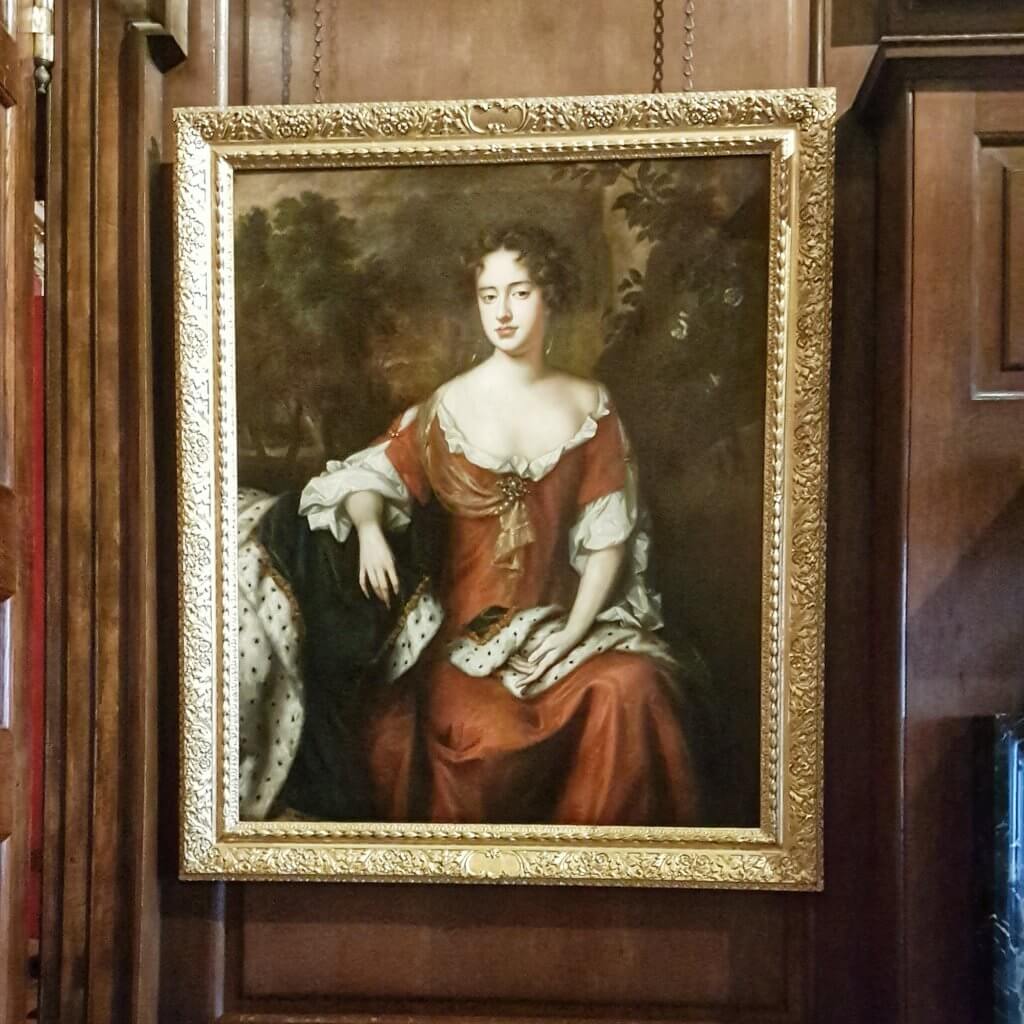
It may seem odd in the King’s Apartments to have a room titled Queen Caroline’s Closet. However, she more than earned it. It is quite a small room, but an important one. “In 1727, [Caroline] found hidden in a cabinet a portfolio containing many drawings made by Hans Holbein the Younger of Henry VIII and his courtiers. Caroline made this room a Gallery of the English. With the Holbein drawings as star exhibits she crowded the walls with three hundred small paintings, miniatures and embroideries.” (HRP, 21)
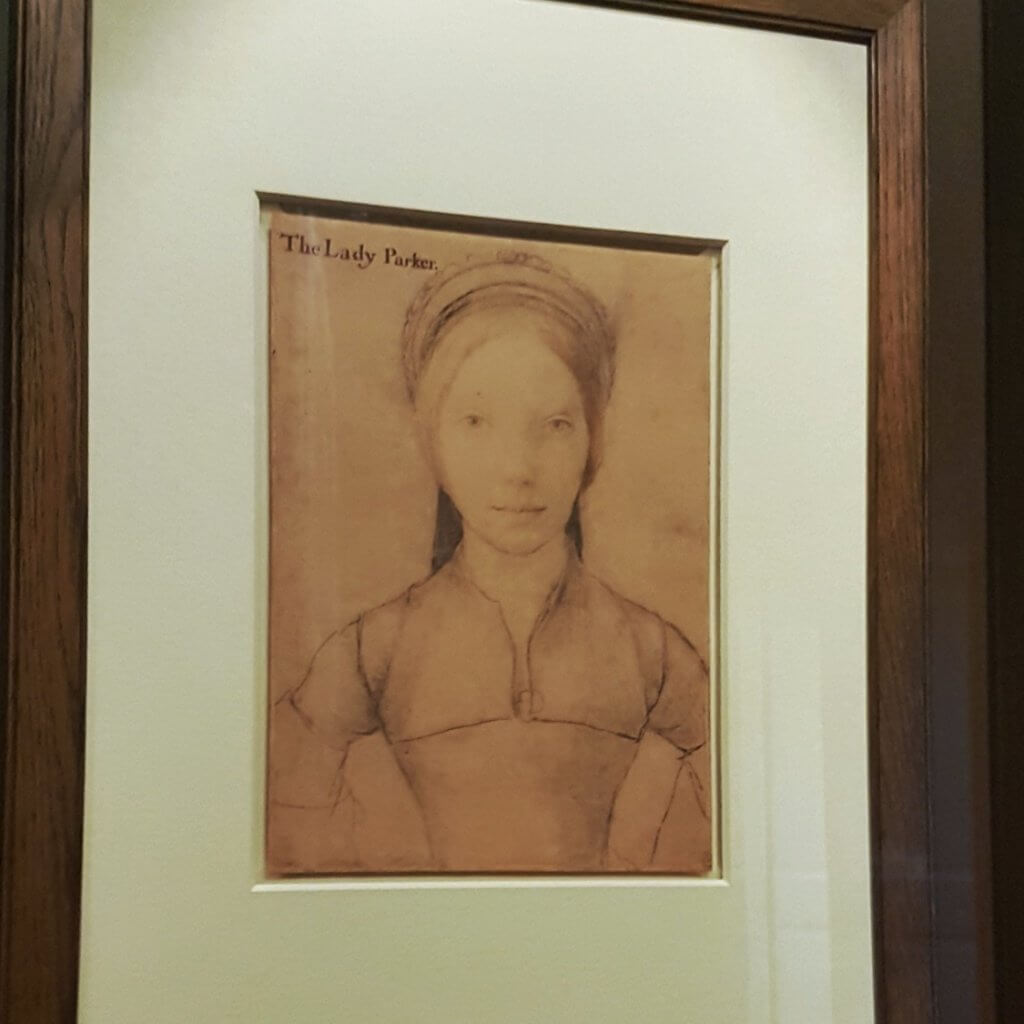
This room is really something to stumble upon when you are visiting. I wasn’t expecting much- closets in palaces tend to be smaller, cosier rooms where the occupants can visit with closer friends. However, walking in to find Holbein sketches is quite the surprise. While there aren’t three hundred paintings displayed now, you can still see a few Holbein sketches and several impressive royal portraits.
I’ve shared some of my favourite pieces on display in my post here!

The King’s Gallery- A Beautiful Gallery or A Sitting Room?
The King’s Gallery is one of my favourite galleries across all of the palaces/ castles that I’ve visited. I can’t say that I’ve ever seen a more striking design than the red damask, and it uses it to best effect. Obviously there are countless incredible paintings and artworks on display in the Gallery. However, I would pay special attention to the frames around the paintings- in addition to the ceiling, Kent also designed the picture frames. (Talk about a Renaissance man…)
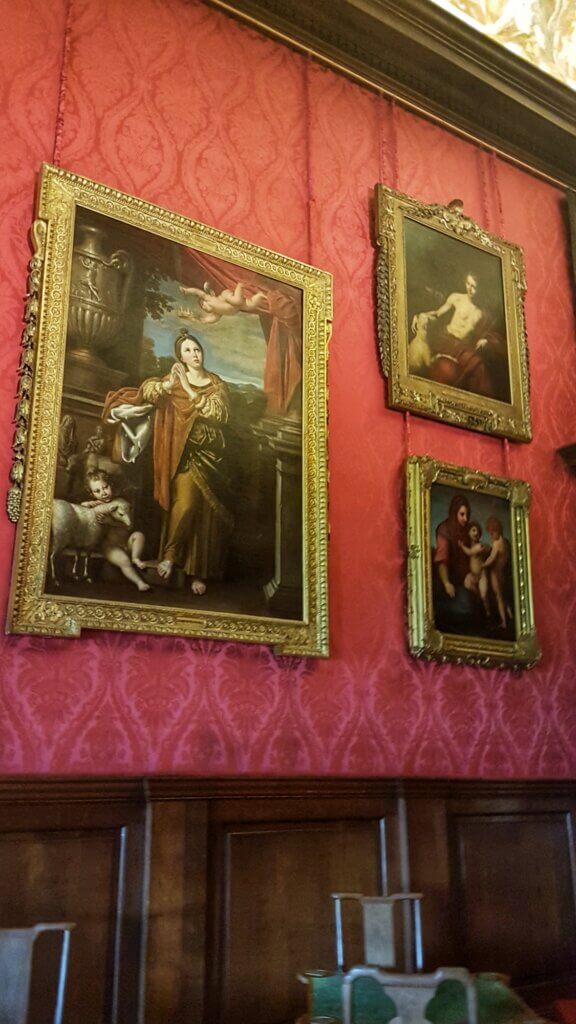
However, in the nineteenth century, the King’s Gallery had an identity crisis. “In 1835 the gallery was controversially divided at the instruction of the Duchess of Kent to make three new rooms for Princess Victoria. Although her uncle, King William IV, was furious at the audacity of this, Victoria herself was delighted.” (HRP, 22) The teenaged Victoria adored her new rooms, but in the later nineteenth century, the gallery was restored. It always amazes me that the nineteenth century fascination with remodelling affected even royal palaces. (You can see the Duchess and the King’s spats in various film and television adaptations of Victoria’s life.)
Further Readings
Want to read more on Kensington Palace?
Historic Royal Palaces. Discover Kensington Palace. Historic Royal Palaces: Surrey, 2012. (This is what is cited in this post!)
Historic Royal Palaces. Kensington Palace: essential tales. Historic Royal Palaces: Surrey, 2011.
Worsley, Lucy. Courtiers: Splendor and Intrigue in the Georgian Court at Kensington Palace. Walker Books: 2010.
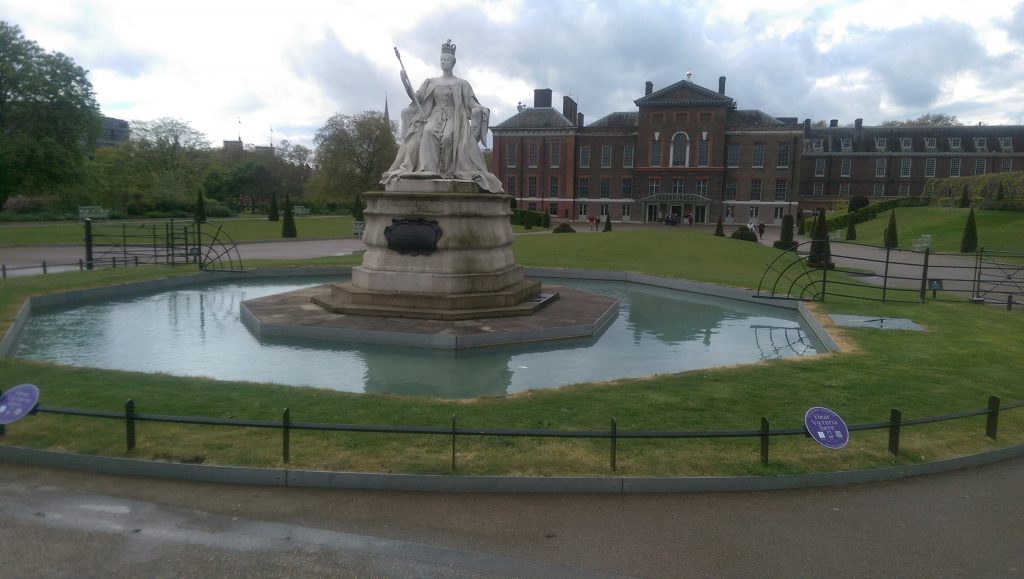
Have you visited the King’s Apartments at Kensington Palace?
Cheers,
The Historian
Facebook | Twitter | Instagram | Pinterest | Bloglovin’