Kensington Palace is a fascinating location for royal history. Of course we have the Stuarts with the mourning William III and troubled Anne, both navigating an emerging political system while balancing complex relationships. And then the modern royals like Diana, Princess of Wales and Princess Margaret, navigating difficult marriages. (Not to mention the Duke and Duchess of Cambridge, who are currently establishing their modern royal roles!) However one of Kensington’s most infamous residents was a particular Princess Victoria, to be the future Queen Victoria. Today we are going to be looking at some memories of Queen Victoria at Kensington Palace and how you can still see them.
Queen Victoria spent much of her life at different palaces and homes. Osborne House was a favourite, Buckingham Palace was a staple, and Balmoral was the perfect escape. You don’t tend to hear a lot about Kensington Palace with Victoria, though, even though she spent the first two decades of her life there. She had a difficult childhood, and preferred to keep her distance from Kensington. However, it is one of my favourite palaces, and Historic Royal Palaces do a wonderful job of bringing her time there to life.
The Kensington System
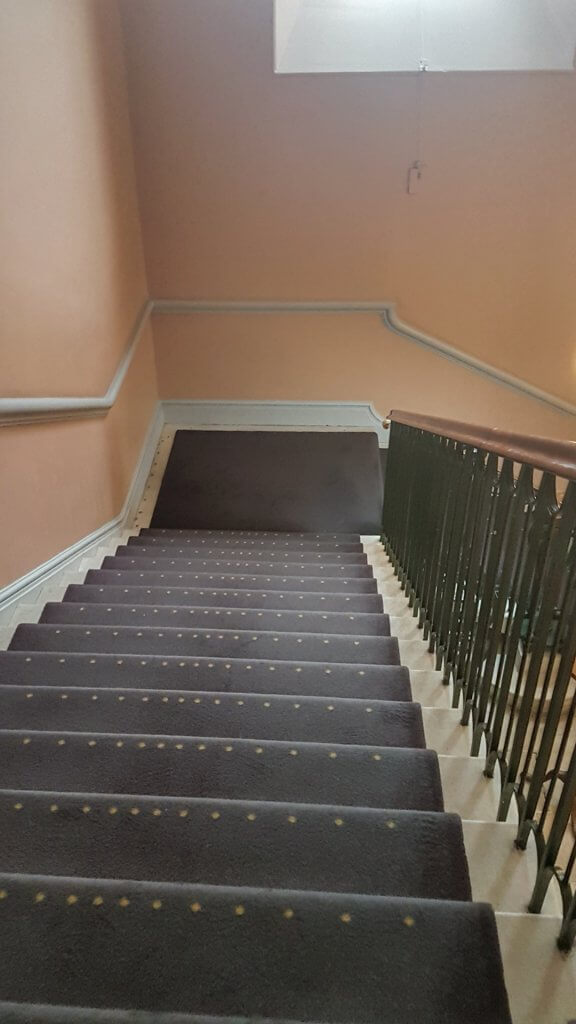
This does appear to be a fairly standard staircase- the carpet is nice, but nothing particular? However, it is emblematic of a difficult and trying period in Victoria’s life, her childhood. Her father, the Duke of Kent, died before she was a year old, and her mother, a foreigner, was left to raise a potential Queen of England. The Duchess kept John Conroy, an army officer, as her comptroller- and he sought to control Victoria’s life in the hopes of a future regency.
The Duchess and Conroy sought to control every aspect of Victoria’s life, and developed the Kensington System. The System included a strict schedule and keeping her away and isolated from other children. And notably, she was not allowed to walk down a staircase by herself. With one hand on the bannister and the other held by her mother or he governes (Lehzen), Victoria was accompanied everywhere she went. As soon as she took the throne, she ended the practice, but Kensington would forever be a reminder.

Queen Victoria’s Dollhouses
Victoria had a rather lonely childhood- never seeing other children forced her to be quite creative. She was allowed to play with Conroy’s children, but never felt comfortable with them around. Henceforth, she truly loved her dolls. She would make her own dolls, and spent hours playing with them with Lehzen. Victoria would even write to her half-sister in Germany and include updates on how the dolls were doing and what was happening to them. She would create clothing for them, and different stories for them. This dollhouse still survives at Kensington Palace, showing some of her dolls. (It is no shock that as an adolescent and young adult, her passions were theatre, ballet, and opera.) Queen Mary’s dollhouse is not the only royal dollhouse around!

Queen Victoria’s 1856 Military Tunic
This particular piece was on loan from the Royal Collection Trust, and it makes me incredibly happy that they have such a close working relationship. Once Queen, Victoria took her military role seriously. She obviously did not attempt to lead anyone in battle, but she paid close attention to her army and navy, and showed the utmost respect to them. This red tunic is rather striking person, and I can only imagine it would have made quite the show on the day of.
Victoria wore this tunic in 1856 when she was inspecting troops that were returning from the Crimean War. It is clearly meant for military wear, and the buttons and piping on the sleeves emphasis that. (It could be one of my favourite pieces of her clothing!) The RCT describes this as:
Red wool military jacket with 8 evenly spaced brass buttons down the centre front, and a flared back skirt with 8 buttons. 3 buttons on either cuff. Black twill, metal lace & white wool piping on cuffs & collar, and a cream silk lining.

A Wedding Dress
And not just any wedding dress, Queen Victoria’s wedding dress. Victoria was a leader in many ways, and her wedding dress was one of those ways. In the nineteenth century, royal and aristocratic women would typically have a new dress made for their wedding, although it usually wasn’t a specific colour or style. However, white has been the bridal colour of choice for well over a century now, thanks to Victoria. People have suggested that she wore white to highlight her pure, virginal status. That isn’t the actual reason though (purity would have been given, looking at her status and isolated upbringing).
You will notice that both her neckline and sleeves are fully trimmed with lace, as well as the flounce of her skirt. And that very beautiful Honiton lace was incredibly expensive. In 1840, Brussels lace was considered to be the most fashionable. However, Victoria wanted to support English craftsmen, and went with Hontiton lace, produced in Devon. (She would also use it on her regular clothing, and her children used it as well.) She also adorned the dress not with a tiara or a crown, as you might expect, but a crown of orange blossoms. Although she isn’t remembered for being particularly stylish in her widow’s weeds, she really set the trends in her youth.
It is thought that the dress was made by Mary Bettans. Bettans was her longest serving dressmaker.

An Immortal Queen Victoria at Kensington Palace
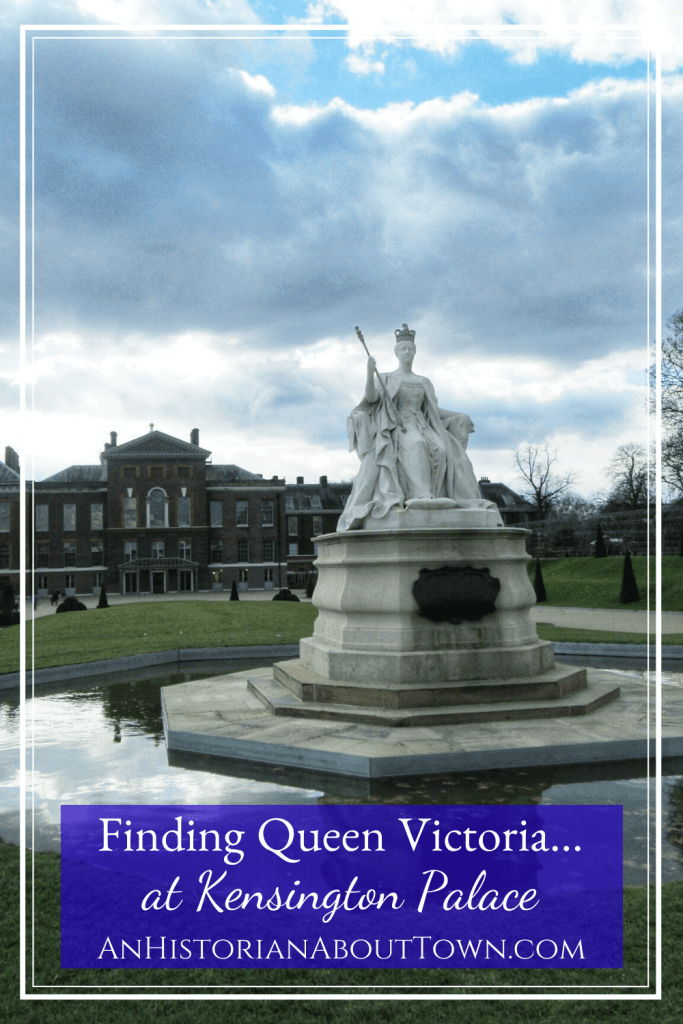
What would Kensington Palace be without an immortal and imposing Queen Victoria staring down at you as you walk to the Palace from the gardens? Erected in 1893, this statue was actually sculpted by her fourth daughter and sixth child, Princess Louise (Duchess of Argyll). Louise was an active sculptor and painter, and created this statue to honour her mother’s Golden Jubilee in 1887. (It took a few years to actually be erected…)
It is based on the painting of Victoria in her coronation robes by Sir George Hayter. The statue was commissioned by the Kensington Golden Jubilee Memorial Executive Committee, and Louise’s anonymous entry won. Although she may not have had the closest relationship with her mother, her sculpture has immortalised her. However, there is one piece that is not original- Victoria’s nose. It was originally blasted off by bombing in the Second World War, and then was replaced again before the Queen’s Diamond Jubilee in 2012. No matter how you feel about Victoria, it is a striking “postcard picture” as you walk up to Kensington.
Looking for more Victoria? Check out my reading guide!
What do you know of Queen Victoria at Kensington Palace?
Cheers,
The Historian
Facebook | Twitter | Instagram | Pinterest | Bloglovin’