Although I tend to focus on fashion history and royal history exhibitions at museums, I do try to visit as many different history museums as I can. When I was in Toronto, I made sure to stop by the Royal Ontario Museum. And when I headed to Edmonton to see Six, my friend graciously agreed to do the Royal Alberta Museum with me! The RAM has 13 different curatorial programs, with one being Indigenous studies. I saw one of the most fascinating and heart-wrenching museum pieces, in their Indigenous collections, and being that it is Indigenous History Month, I wanted to share it. The Indigenous beading work at the RAM is gorgeous, but also heartbreaking…

Indigenous Beading
Indigenous beading is a beautiful art. Different Indigenous groups have different methods of beading- some use the beads in weaving, some string the beads, and others use them in an embroidery style. They are all gorgeous, and are a wonderful source of insight into their cultural histories. Prior to the arrival of European traders and settlers, Indigenous peoples would make beads out of naturally occurring elements, like bone and rock. Europeans brought glass and ceramic beads with them, often in bright colours. These were used as trading items.
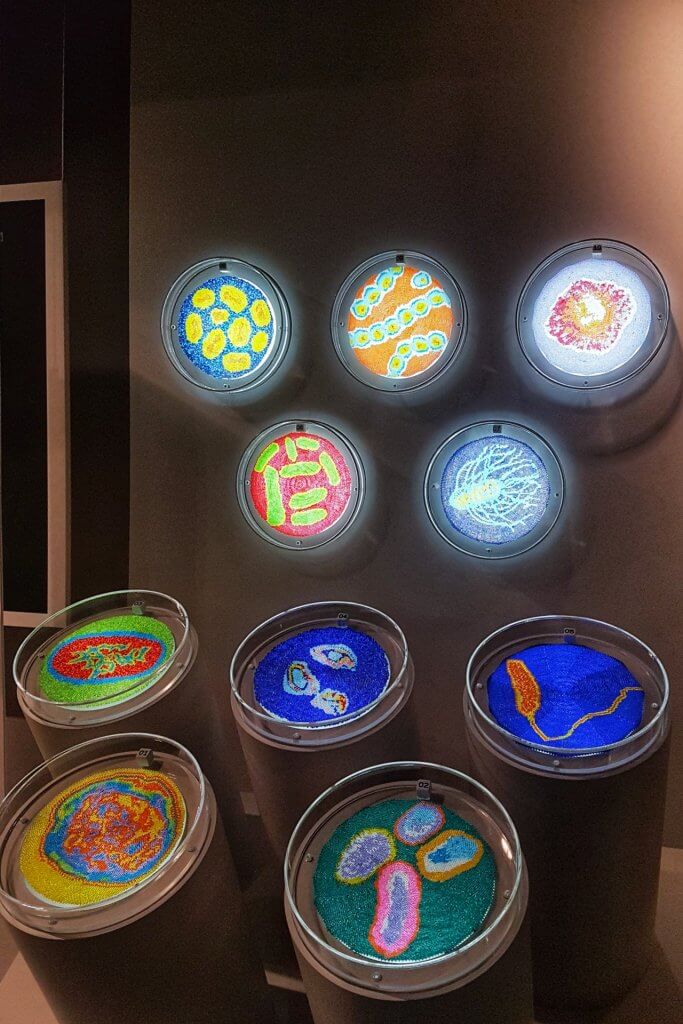
Beaded… Germs?
Ruth Cuthand’s 2018 installation of Indigenous beading work at the RAM is quite incredible. It explores the relationship between trading and disease, including these prized beads. Europeans brought these beads, but they also brought numerous diseases with them. Diseases that North American Indigenous populations had no immunity from. Cuthland beaded 10 different diseases that were carried to North American and spread to Indigenous populations. Although they look quite beautiful, these are actually what the diseases look like, biologically. You can find measles, influenza, whooping cough, bubonic plague, cholera, diphtheria, typhoid fever, smallpox, scarlet fever, and chicken pox. (Quite the “gift”…) These diseases would often decimate communities, and could kill upwards of 60% of a population.
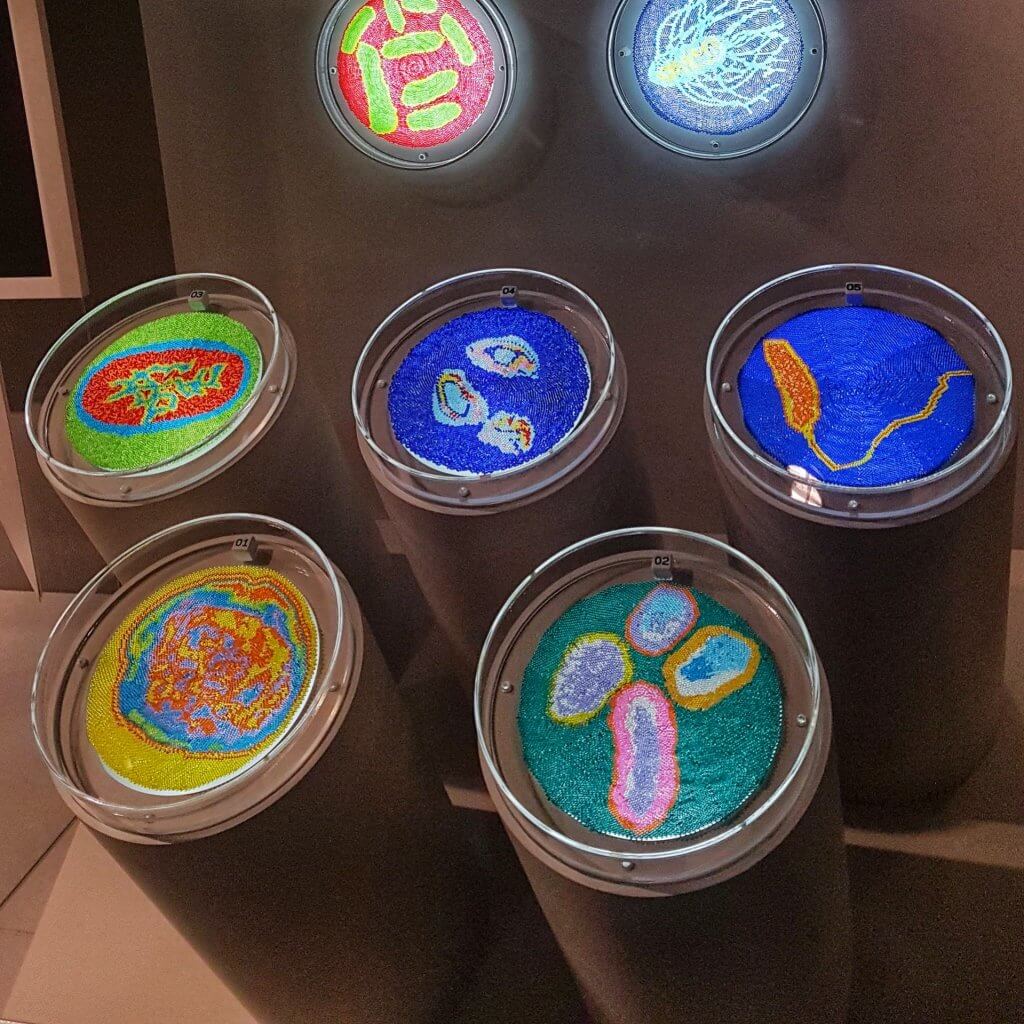
This Indigenous beading work at the RAM is a wonderful example of how textiles can be used in museums, and that we all need to look at history from a different perspective.
Cheers,
The Historian
Facebook | Twitter | Instagram | Pinterest | Bloglovin’