Fashion history is littered with different honorifics for designers. Jeanne Lanvin was the Mother of Fashion. And Norman Hartnell was the First Knight of Fashion. But do you know who the King of Fashion was? Paul Poiret was born in the nineteenth century and made his mark on fashion in the early twentieth century, but I think that he is a particularly relatable designer to us in the twenty-first century. Today’s post is all about the history of Paul Poiret, the King of Fashion- who was he and why is he crucial to fashion history!

The Early History of Paul Poiret
Born in April 1879 to a cloth maker and his wife in Paris, Poiret was surrounded by textiles from birth. He was interested in art from quite a young age, colouring and drawing whenever he could, much like many of the other designers I’ve covered. And he had a rather high opinion of himself. According to his autobiography, “My schoolfellows liked me for my whimsical spirit, for my notebook was always covered with comic drawings, and they were competed for like the masterpieces of some great library.” (King of Fashion, p 13.) He also spent many evenings at the theatre, taking in the costumes of theatricality of stage productions.
Poiret’s parents weren’t a huge fan of his excessive confidence, and sent him to be an apprentice to an umbrella maker in the city. He was giving many of the leftover tasks, like stopping up holes in umbrellas with black gum. Poiret didn’t seem to overly enjoy this job, but he was able to take silk scraps from the workroom, and create clothing for his sister’s dolls. The turning point came in his teen years, when the designer Louise Chéruit purchased a dozen of his sketches.

Poiret’s Start in Fashion
Designer Jacques Doucet hired Poiret in 1896. His designs for Doucet were quite popular. His first design, a red cape, was particularly so, with 400 sold. He enjoyed his time with Doucet but was called to serve in the military in 1900, for nearly a year. As we have seen with so many other people, he did not have a particularly “good” time in the military. He was stubborn and questioned a lot, not desired qualities when you are in the army. Poiret eventually got himself moved to convalescent leave, but all in all, not a success on either side.

Poiret and the House of Worth
In 1901 though, Poiret moved on to bigger and better, when he joined the House of Worth. Founded in 1858 by Charles Frederick Worth, the House of Worth was operated by Worth and his descendents until 1952. (It closed in 1956, and was revived in 1999 but did not succeed.) The House dressed the rich, royal, and powerful people across Western society. Women travelled from England, Europe, the US, and further to purchase Worth wardrobes. Luckily for Poiret, he joined Worth just before Edward VII’s coronation in August of 1902. The House was commissioned to create the sumptuous Robes of State, and everyone worked on them for months. (Poiret wasn’t a fan of them…) He learned a lot while working for Worth, but his own designs weren’t overly welcome at the House.
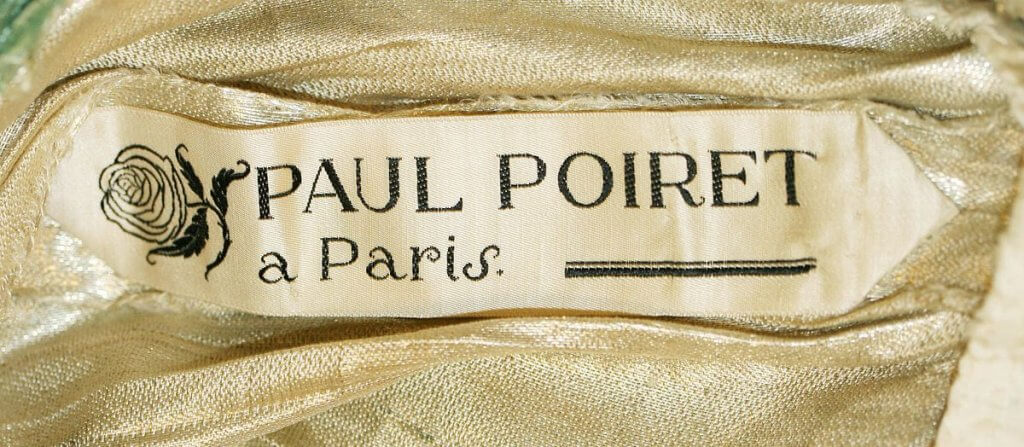
Poiret and the Princess
One of the most well-known Poiret anecdotes is the story of how he met the Princess Bariatinsky, and it is a good indication of how the House felt about his designs. The Russian Princess came to Worth to see new designs, and Poiret showed her one of his Confucius coats, a kimono-style wrapped coat. She was instantly offended, as it reminded her of the clothing that slaves wore in Russia. He was ahead of his time, and perhaps not the best fit for the House of Worth.

The House of Poiret
Poiret founded his own fashion house in 1903, to create more of his loose-fitting designs. He aimed to free women from their corsets, a bold premise in the early twentieth century. (It seems that people either loved or hated his designs.) Interestingly, Poiret could not sew. Although there are many designers now who cannot sew, it was not common in the period. His draped designs feature minimal stitching for that reason.
He promoted his designs through loud and colourful window displays, and by hosting elaborate society parties throughout Paris. There were elaborate forests created, and hired actors and dancers to perform dramas and act as statues. He would also have his mannequins (aka models) walk throughout the party with his new designs. It was at these parties that two of his legendary designs, the harem pants and the lampshade dress, debuted. It was an incredibly effective way to promote his work, though he wouldn’t admit that until he published his autobiography.

The House Expands
In 1910, Poiret expanded his business to include fragrances and even interior design. This isn’t surprising given that his father worked in home textiles! (Interestingly, when the House was revived in 1999, the fragrances were the most popular.) Like many other artists in France and Europe as a whole, Poiret was enamoured with Orientalism. The Ballet Russes performed Schéhérazade in 1910 in Paris, and his designs took on even more Eastern qualities. It was during this time that his harem pants and lampshade dress appeared, and customers adored these designs.

The End of Poiret
During the First World War, Poiret returned to the military to serve as a tailor. The position was much better suited to his skills and personality than his previous assignment, but the House did suffer during this time. Not only had life in general changed, fashion had also changed. When he returned in 1919, the House of Poiret was near bankruptcy, and his designs were no longer in style. Chanel and newer designers were creating sleek, androgynous pieces, while Poiret’s larger coats and dresses felt oversized and sloppy. By 1929, the House of Poiret had closed, and he ended his life in poverty. He spent the last years of his life doing odd jobs, including selling sketches in cafes and bartending. Designer Elsa Schiaparelli was a friend of Poiret, and paid for his burial in 1944.
Further Readings
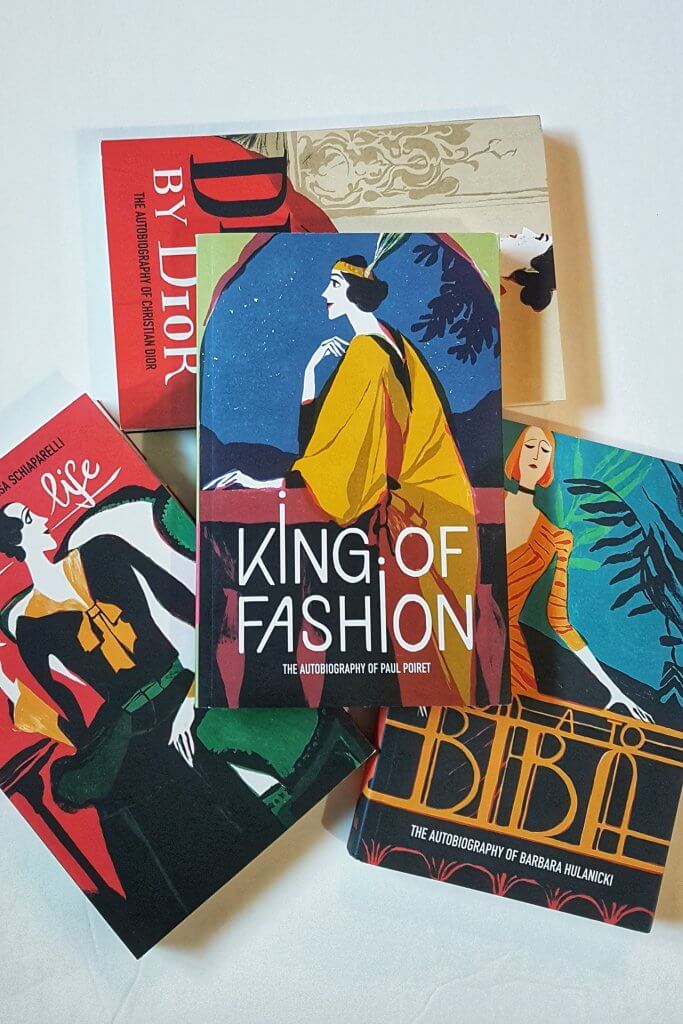
Although Poiret made a large and clear impression on fashion and its history, there aren’t many full length, English language sources on him. These are some that I have found useful, but please let me know if you can recommend any more!
King of Fashion, Paul Poiret- This is Poiret’s autobiography, and although it doesn’t have a lot of information about his work in fashion, it does give an excellent background to his life
“Poiret: King of Fashion” Exhibition at the Metropolitan Museum- From 2007, it includes quite a bit of information on the designer, as well as several images of his garments.
Paul Poiret Episode of Dressed: A History of Fashion podcast
♠
If you are interested in reading some of my other Style History profiles, you can find them below:
What do you know of the history of Paul Poiret, the King of Fashion?
Cheers,
The Historian
Facebook | Twitter | Instagram | Pinterest | Bloglovin’