Blogmas continues on with another holiday history bite! And what’s on the docket? A holiday classic: carols. We are inundated with festive music from 1 December on, and sometimes it gets lost in a haze of joy and bells. Today I’m going to shine the spotlight on the soundtrack of the festive season. (I promise, I won’t sing them at you, if that helps…) What is the history of Christmas carols?

What are Christmas carols?
According The World Encyclopedia of Christmas, a carol is a “song celebrating the events of the Nativity or the people involved in it.” (Gerry Bowler. The World Encyclopedia of Christmas. McClelland & Stewart Ltd: Toronto, 2000. p.37) So, that means that “All I Want for Christmas Is You”, “Jingle Bell Rock”, and “The Christmas Song” are just, well, songs. Carols are tied to the historical religious holiday, but are now used widely. The original carols were solemn but “in the 13th century Christian teaching shifted away from a vengeful God to the more human aspects of Jesus, and with this came an interest in the details of the… Nativity…. the new type of sacred song popularised by the Franciscans, the use of carol music with poetry”. (Encyclopedia, 37)
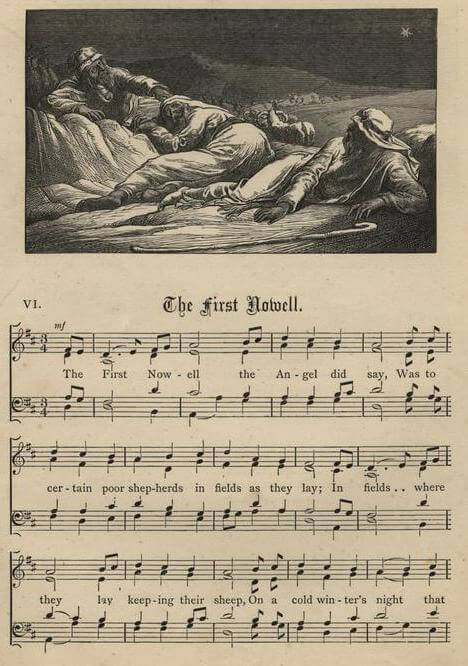
Puritans and Their Carols
Or should I say Puritans and their lack of carols… Carols reached their heydey in the 15th and 16th centuries, and were sung in public and in private. However, the Reformation rather replaced carols with “the chanting of metrical psalms” (Encyclopedia, 38). (Doesn’t that sound…festive?) In Puritan England in the 1640s and 1650s, even the metrical chanting was too much. The Restoration ended the serious and silent Puritan Christmas and carols were once again allowed, but didn’t regain popularity.
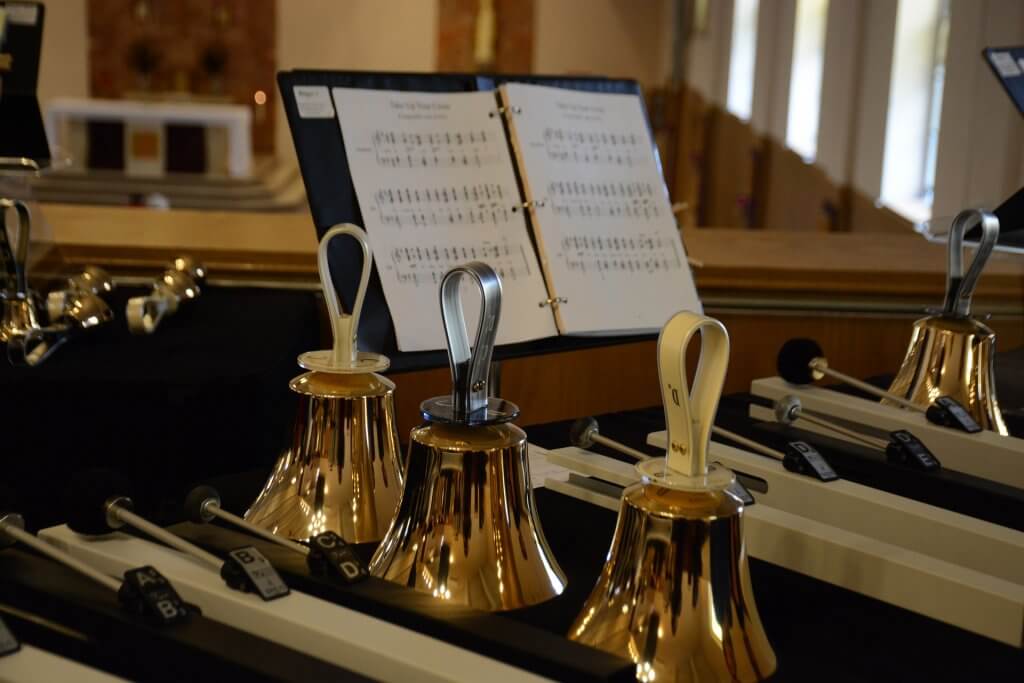
Modern Carols
We have established that many modern Christmas songs aren’t carols, but there are some modern carols. “Carol of the Bells” and “Do You Hear What I Hear?” were both written in the 20th century. Unfortunately, the modern era has rather done a number on carols, though. “The relentless use of carols in advertising or as shopping-music has robbed some of this music of its original form; who can hear “The Little Drummer Boy” for the thousandth time without wincing?” (Encyclopedia, 38) My coping mechanism? Listen to a classical or jazz version; it tends to be more enjoyable and less grating!
Looking for other holiday history bites? You can find my holiday greenery post here and the Lord of Misrule here!
Did you know the history of Christmas carols?
Cheers,
The Historian
Facebook | Twitter | Instagram | Pinterest | Bloglovin’

I love carols, but I love more traditional and religious ones. I think because I grew up in Catholic school and singing in my church choir. Even though I’m a defunct Catholic now, it’s still not Christmas to me without these types of carols. I listen to the Mormon Tabernacle Choir Holiday station on Pandora 24/7 in December. Beautiful renditions of traditional carols there, with some funky instrumental versions from Trans-Siberian Orchestra and Mannheim Steamroller thrown in. 😀 It’s also excellent zen Christmas music for baking!